Hanoi Opera House
Opera House in Hanoi
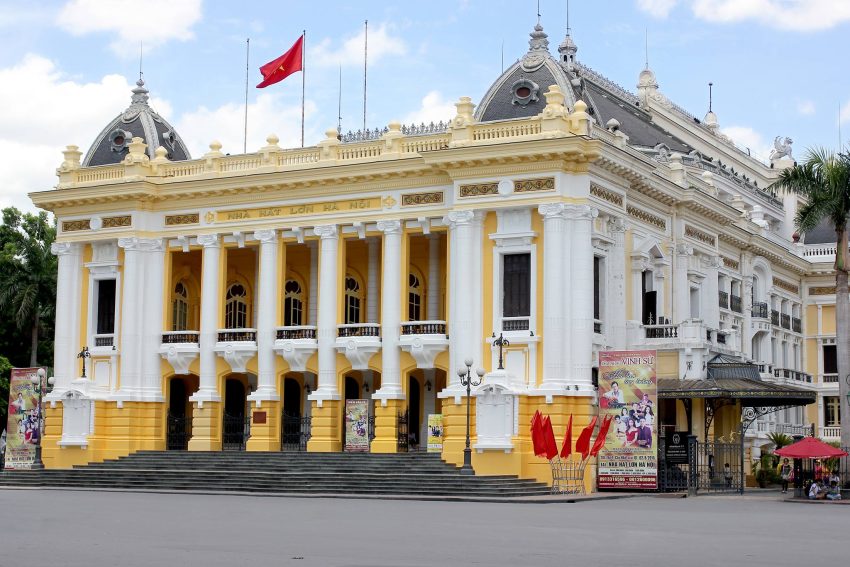
The Hanoi Opera House is a striking landmark in the heart of the city, instantly recognisable for its sweeping façade and Parisian-inspired design. Built in 1911 by French colonial authorities, it was modelled closely on the Palais Garnier, giving Hanoi a touch of European glamour that still feels remarkable today. Its dramatic steps, ornate columns, and richly decorated interiors make it one of the must-see places in Hanoi, especially for travellers who appreciate architecture and cultural heritage.
Beyond its beauty, the opera house carries deep historical significance. It was from its own balcony on August 16, 1945, that the Viet Minh announced their control of Hanoi, marking a pivotal moment in Vietnamese history. Today, the building remains a great place to visit on a walking tour of Hanoi's French Quarter, especially for those who want to pair history with visual splendour.
Table of Contents
- History and Significance of Hanoi Opera House
- Things to See and Do in Hanoi Opera House
- How to Get to Hanoi Opera House
- Practical Tips on Visiting Hanoi Opera House
- Where to Stay close to Hanoi Opera House
- Is Hanoi Opera House Worth Visiting?
- FAQs for Visiting Hanoi Opera House
- Nearby Attractions to Hanoi Opera House
History and Significance of Hanoi Opera House
The Hanoi Opera House was constructed between 1901 and 1911 over what was once a drained swampy pond, requiring significant engineering to stabilise the foundations. The design, created by architects Harley and Broyer, merges elements of Greek, Gothic, and Beaux-Arts styles, mirroring the aesthetic ambition of its Parisian counterpart. Supervision of the project was handled by M. Travary and M. Savelon, ensuring the building matched the standards of French metropolitan architecture.
Throughout the 20th century, the opera house played an important cultural role, hosting classical European performances that catered to colonial elites. Its significance grew after the August Revolution, when the Viet Minh addressed crowds from the opera house balcony to declare their takeover of the city. This transformed the site into a symbol of national pride as well as artistic expression.
In 1997, the building underwent an extensive restoration led by French-Vietnamese architects Ho Thieu Thri and Hoang Phuc Sinh. Modern acoustic systems, updated staging equipment, and sensitive architectural conservation ensured that the opera house retained its heritage character while functioning as a world-class performance venue.
Things to See and Do in Hanoi Opera House
While the opera house can only be entered by ticket holders, attending a performance is one of the things to do in Hanoi for culture lovers. The programme ranges from traditional Vietnamese operetta and folk music to western symphonies, ballets, and contemporary concerts. Even if you cannot catch a show, admiring its façade at sunset is a memorable experience.
Outside, the grand staircase has become a favourite photo spot for travellers. Its neoclassical angles and sweeping symmetry give you a sense of standing in front of a European masterpiece. Inside, the main audience hall features elegant balconies, plush seating, and refined detailing that reflect the lavish tastes of early 20th-century French patrons.
Visitors may also appreciate the building’s scale: it is the largest theatre in Vietnam, complete with 18 makeup rooms, voice training spaces, a library, and backstage meeting rooms. Though much of this remains behind the scenes, knowing the extent of the structure adds depth to your appreciation of its grandeur.
How to Get to Hanoi Opera House
Hanoi Opera House sits in the French Quarter, making it quite accessible. Travellers flying into the city will arrive at Noi Bai International Airport, around 30 kilometres away. For the best deals and a seamless booking experience, check out these flights to Hanoi on Booking.com.
For those coming by train, Hanoi Railway Station provides the nearest major rail connection to the site. Train schedules and bookings can be found on Omio.
If you are driving or using a hired car, the French Quarter has several parking areas and drop-off points nearby, though traffic can be busy.
Practical Tips on Visiting Hanoi Opera House
- Suggested tips: Arrive early if attending a show to enjoy the exterior architecture in daylight before it’s illuminated at night.
- Best time to visit: Evenings offer the most atmospheric views, especially when performances are taking place.
- Entrance fee: Roughly 400,000 VND
- Opening hours: 10:30 am to 12:00 pm Performances usually start at 7:30 pm
- Official website: https://hanoioperahouse.org.vn/
- How long to spend: Around 30 minutes for exterior viewing; 2-3 hours if attending a performance.
- Accessibility: The area around the opera house is generally accessible, though interior access depends on event arrangements.
- Facilities: Facilities are reserved for ticket holders, including restrooms, seating areas, and staffed service points.
- Photography tip: The best photos are taken from the plaza directly across the street, capturing the full façade.
- Guided tours: Hanoi Opera House does not offer regular public tours, but cultural organisations sometimes arrange special access events.
- Nearby food options: The French Quarter has cafés, bakeries, and restaurants within a short walk, making it easy to dine before or after a performance.
Where to Stay close to Hanoi Opera House
Staying near the opera house places you in one of Hanoi’s most elegant districts. The area has a mix of boutique accommodation and upscale hotels. Consider Sofitel Legend Metropole Hanoi for an iconic luxury stay steps from the opera house. Another excellent choice is Hilton Hanoi Opera, long known for its comfort and unbeatable location. Travellers seeking a stylish boutique option may also enjoy Hotel de l’Opera Hanoi, which reflects the artistic spirit of the neighbourhood.
Is Hanoi Opera House Worth Visiting?
Yes, the Hanoi Opera House is absolutely worth visiting. Even if you do not attend a performance, the stunning exterior alone captures the elegance of Hanoi's French Quarter. Its architecture, history, and cultural legacy make it a rewarding stop for anyone interested in the city's past and its vibrant artistic scene today.
What Other Travellers Say...

Hanoi Opera House, on Tràng Tiền in central Hanoi, is an ornate French colonial performing arts venue known for classical music, dance and opera; visitors praise its elegant, well-lit façade that makes a striking photo spot and popular meeting point, and many recommend catching a performance when possible. Some reviewers note maintenance issues inside—worn cushions, a stage needing attention and occasional closures—so consider checking availability before you go.


FAQs for Visiting Hanoi Opera House
Nearby Attractions to Hanoi Opera House
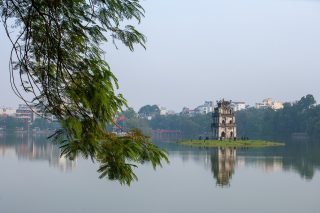
- Hoan Kiem Lake: A peaceful lake with a scenic walking path and the historic Turtle Tower at its centre.
- St. Joseph's Cathedral: A striking neo-Gothic church built during the French colonial era.
- Vietnamese Women's Museum: A fascinating look at the role of women in Vietnamese culture and history.
- Trang Tien Plaza: A modern shopping centre offering international and local brands.
- Hanoi Old Quarter: A dense network of historic streets filled with traditional shops, cafés, and street food.
The Hanoi Opera House appears in our Complete Guide to Visiting Hanoi!

Moira & Andy
Hey! We're Moira & Andy. From hiking the Camino to trips around Europe in Bert our campervan — we've been traveling together since retirement in 2020!
This website uses affiliate links which may earn a commission at no additional cost to you!
Planning Your Visit
10:30 am to 12:00 pm
Performances usually start at 7:30 pm
Roughly 400,000 VND
Nearby Attractions
- Vietnam National Museum of History (0.2) km
Museum - State Guest House (0.4) km
Historic Building - Trang Tien Plaza (0.5) km
Shopping Centre - Hanoi Post Office (0.5) km
Historic Building - Ly Thai To Statue & Park (0.5) km
Park and Statue - Hoa Phong Tower (0.5) km
Tower - Museum of Vietnamese Women (0.7) km
Museum - Hoan Kiem Lake (0.8) km
Lake - Ba Kieu Temple (0.9) km
Chinese Shrine - Ngoc Son Temple (0.9) km
Buddhist Temple