Hallstatt Bone House
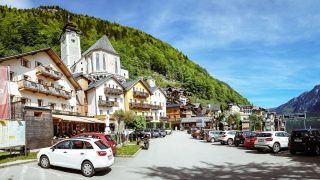
Church in Hallstatt
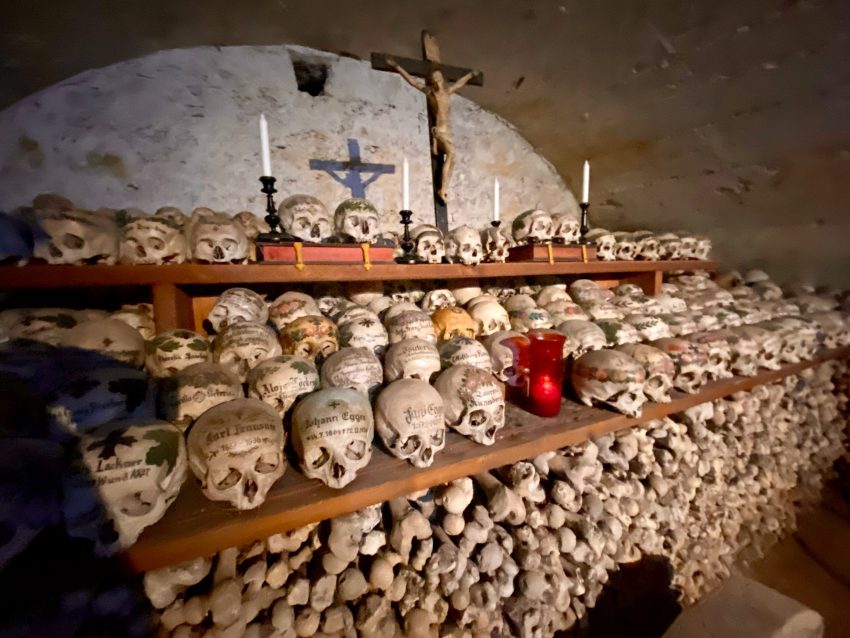
Tucked beside Hallstatt's Catholic parish church and small mountain cemetery, the Hallstatt Bone House is one of those places that stays with you long after you leave. It is not large, grand, or theatrical, yet that is exactly why it feels so affecting. In a village known for lake views and postcard beauty, this tiny ossuary offers something far more intimate: a direct encounter with the way a small Alpine community made peace with death, memory, and limited space.
For travelers following a Hallstatt walking route through the old town, this is one of the most distinctive stops you can make, and arguably one of the best places to visit if you want to understand that the village is more than a pretty backdrop. The chapel sits above the lanes of the centre, and the short climb adds to the sense that you are stepping into a quieter, older layer of Hallstatt. It is easy to pair with the parish church, the cemetery, and a slow wander through the surrounding streets.
Table of Contents
- History and Significance of the Hallstatt Bone House
- Things to See and Do in the Hallstatt Bone House
- How to Get to the Hallstatt Bone House
- Practical Tips on Visiting the Hallstatt Bone House
- Where to Stay Close to the Hallstatt Bone House
- Is the Hallstatt Bone House Worth Visiting?
- For Different Travelers
- FAQs for Visiting Hallstatt Bone House
- Nearby Attractions to the Hallstatt Bone House
History and Significance of the Hallstatt Bone House
The Hallstatt Bone House, also known as the ossuary or charnel house in St. Michael's Chapel, has roots that reach back to the medieval period. The chapel itself dates to the 12th century, and the long-standing practice of keeping human remains here grew out of a practical reality: Hallstatt's cemetery had very little room to expand. Because cremation was not permitted for much of the town's history, older graves were reopened after a number of years so that bones could be transferred to the ossuary, freeing space for new burials.
What makes Hallstatt’s ossuary exceptional is not simply the number of skulls, but the way identity was preserved through decoration. The tradition of painting and dating skulls began in 1720, and today the collection includes around 1,200 skulls, with more than 600 painted examples arranged by family and marked with names or dates. Floral wreaths, ivy, crosses, and other motifs turned what could have been a purely functional practice into something deeply personal, almost tender in its symbolism.
The place also matters because it shows how belief, ritual, and local necessity shaped daily life in Hallstatt. This was not a curiosity created for visitors, but a real community tradition that continued into modern times, with the youngest skull added in 1995 after the deceased had requested inclusion in her will. That continuity gives the Bone House a rare emotional force. It is not merely about mortality in the abstract; it is about remembrance in a village where family histories were literally written onto the dead.
Things to See and Do in the Hallstatt Bone House
The main draw is, of course, the ossuary itself. The painted skulls are arranged in careful rows, and once you begin looking closely, the details become the real story. Some skulls are decorated with dark wreaths that suggest older painting styles, while later examples include ivy branches, names in Latin script, and narrow crosses. Even if your visit lasts only fifteen or twenty minutes, there is a surprising amount to absorb if you slow down and look at the symbols rather than only the overall spectacle.
It is also worth spending time in St. Michael’s Chapel above the ossuary. The upper chapel contains a Baroque altar donated in the early 17th century and stained glass depicting the Archangel Michael, traditionally associated with judgement and the weighing of souls. Those details add context and keep the visit from feeling like a stand-alone oddity. You start to see the Bone House as part of a broader religious and cultural setting rather than an isolated attraction.
Afterward, step back outside and take in the setting around the chapel. The cemetery, parish church, and elevated position above Hallstatt’s lanes make this a rewarding stop for atmosphere as much as history. It works especially well as part of a compact old-town walk, and the contrast between the peaceful village views and the intimate reality of the ossuary is part of what makes the visit so memorable.
How to Get to the Hallstatt Bone House
Reaching the Hallstatt Bone House is straightforward once you are in the village, but getting to Hallstatt itself takes a bit of planning. The nearest major airport for most international travelers is Salzburg Airport, with onward travel by road or public transport into the Salzkammergut region. For the best deals and a seamless booking experience, check out these flights to Hallstatt on Booking.com.
By train, the usual route is to travel on the Attnang-Puchheim - Stainach-Irdning line to Hallstatt station, then take the ferry across the lake to the village centre before walking uphill to the chapel. It is one of the most scenic rail arrivals in Austria, and for many visitors it is the most enjoyable way to come in. You can easily check timetables and book train tickets through the ÖBB (Austrian Federal Railways) website. However, for a smoother experience, we recommend using Omio, which simplifies the booking process and lets you compare routes, prices, and departure times all in one place.
Buses also serve Hallstatt, with the nearest stop listed as Hallstatt Lahn. From there, it is a manageable walk into the centre and up toward the church area. If you are already touring nearby places in the Salzkammergut, the bus can be a practical option, though it is usually less memorable than the train-and-ferry approach. You can easily check timetables and book train tickets through the ÖBB (Austrian Federal Railways) website. However, for a smoother experience, we recommend using Omio, which simplifies the booking process and lets you compare routes, prices, and departure times all in one place.
If you are driving, you will need to use Hallstatt’s designated car parks rather than expect door-to-door access through the old centre. From the parking areas, you continue on foot to the historic core and then climb the steps or the sloping Kirchenweg to the chapel. Driving gives you flexibility for a wider regional itinerary, but for this particular stop the final approach is always partly pedestrian. If you are looking to rent a car in Austria I recommend having a look at Discover Cars, first, as they compare prices and review multiple car rental agencies for you.
Practical Tips on Visiting the Hallstatt Bone House
- Entrance fee: (Winter) Wednesday – Sunday: 11:30–15:30. Closed on Monday and Tuesday. (Summer) Daily: 10:00–18:00. (October) Daily: 10:00–17:00.
- Opening hours: (Winter) Wednesday – Sunday: 11:30–15:30. Closed on Monday and Tuesday. (Summer) Daily: 10:00–18:00. (October) Daily: 10:00–17:00.
- Best time to visit: Earlier in the day is usually best if you want a quieter atmosphere in Hallstatt. In winter, go with a flexible mindset because short-notice weather closures can happen.
- How long to spend: Around 15-30 minutes is enough for the Bone House itself. Allow longer if you also want to see the parish church, cemetery, and nearby viewpoints.
- Accessibility: Access is not ideal for everyone because the chapel sits above the village centre and involves an uphill approach with steps or a steeper path. Travelers with limited mobility should expect some difficulty.
- Facilities: Visitor facilities are limited at the chapel itself, so it is better to use cafés, restaurants, or public amenities down in the village before you climb up.
Where to Stay Close to the Hallstatt Bone House
If your priority is culture and easy access to Hallstatt’s main sights, base yourself in the historic centre so you can walk everywhere and experience the village once day-trippers thin out.
Staying in central Hallstatt makes the most sense for the Bone House, because the chapel is a short uphill walk from the lakeside core and it is best appreciated as part of a slower old-town visit rather than a rushed stop. Heritage.Hotel Hallstatt is a strong choice if you want a more polished stay right in the heart of the village, with the advantage of being close to the waterfront, ferry area, and the historic lanes. Seewirt Zauner works well if you prefer a traditional central base with everything on your doorstep.
For a stay that feels atmospheric and tied to Hallstatt’s older character, Bräugasthof Hallstatt is another good fit. It places you close to the centre while giving you an easy walk back from the chapel after your visit. In a village this compact, the real benefit is not shaving off huge distances, but being able to move around on foot in the early morning and evening when Hallstatt feels far more personal.
Is the Hallstatt Bone House Worth Visiting?
Yes, definitely, provided you are interested in places with genuine cultural depth rather than only big-ticket scenery. The Hallstatt Bone House is small, but it offers something unusual, historically grounded, and emotionally resonant that most travelers will not find elsewhere. It adds substance to a Hallstatt visit and helps explain the village as a living community with its own customs rather than just a photogenic stop.
The honest pivot is that not everyone will enjoy it. Travelers who dislike funerary spaces, feel uneasy around human remains, or want only light, scenic sightseeing may prefer to skip it and spend more time by the lake, at the viewpoints, or on a broader village walk. If you are comfortable with the subject matter, though, it is one of Hallstatt’s most compelling stops.
What Other Travellers Say...

Visitors describe the Hallstatt Charnel House as a unique, well-preserved and surprisingly peaceful site, notable for its painted, labeled skulls and the strong sense of local history and tradition. The setting by St. Michael's Chapel/Catholic church is often praised for its serene atmosphere and lake views, even when the interior is closed. Practical notes recur: it's small and typically a short visit, with a low entry fee that may be cash-only and limited opening hours. A minor downside mentioned is that it can feel smaller than expected, and access/ticketing may vary at certain times.


For Different Travelers
Families with Kids
For families, this stop works best with older children who are curious about history and can handle the subject respectfully. The visit is short, which helps, and the unusual painted skulls often make it more engaging than a standard chapel interior.
With younger children, it really depends on temperament. Some will be fascinated, while others may find it unsettling, so it is best treated as a brief stop within a larger Hallstatt walk that also includes open-air breaks and lakeside viewpoints.
Couples & Romantic Getaways
For couples, the Bone House adds a more thoughtful and memorable layer to Hallstatt’s famously romantic setting. It balances the soft beauty of the lake and alpine streets with something quieter and more reflective, which can make the day feel richer and less predictable.
It is especially worthwhile if you enjoy destinations with a strong sense of story. Visit in the morning or late afternoon, then continue with a slow walk through the village and a waterside meal to create a day that feels both intimate and culturally grounded.
Budget Travelers
Budget travelers will appreciate that this is one of Hallstatt’s most distinctive low-cost attractions. The entry price is minimal, and because the stop is compact, it is easy to fold into a self-guided day without needing a tour.
It also pairs well with other inexpensive experiences in the village, such as walking the historic lanes, taking in viewpoints, and exploring the churchyard area. If you are trying to keep costs down in a place that can otherwise feel expensive, this is a very good-value stop.
History Buffs
If you are interested in burial customs, Alpine religious culture, or the ways communities adapted to limited space and strict church rules, this is one of the most rewarding places in Hallstatt. The Bone House is not just visually striking; it preserves a very specific local practice with unusual continuity.
The painted skulls, family groupings, and symbols give history buffs plenty to study, and the upper chapel adds further architectural and devotional context. In practical terms, it is one of the stops in Hallstatt most likely to reward careful reading and close observation rather than a quick glance.
FAQs for Visiting Hallstatt Bone House
Getting There
Tickets & Entry
Visiting Experience
Tours, Context & Itineraries
Photography
Accessibility & Facilities
Food & Breaks Nearby
Safety & Timing
Nearby Attractions to the Hallstatt Bone House
- Hallstatt Catholic Parish Church: The church next to the ossuary adds architectural and religious context to the visit and is the most natural stop to combine with it.
- Hallstatt Cemetery: This compact churchyard helps explain why the ossuary tradition developed in the first place and has a striking mountain setting.
- Hallstatt Market Square: The heart of the village is a short walk away and works well for cafés, photos, and a slower look at old-town life.
- Hallstatt Waterfront Promenade: This is the place for the classic lake views and a gentler contrast after the more reflective mood of the chapel.
- Salzwelten Hallstatt: The famous salt mine offers the wider historical backdrop for understanding how Hallstatt grew into such an unusual and important settlement.
The Hallstatt Bone House appears in our Complete Guide to Visiting Hallstatt!

Moira & Andy
Hey! We're Moira & Andy. From hiking the Camino to trips around Europe in Bert our campervan — we've been traveling together since retirement in 2020!
This website uses affiliate links which may earn a commission at no additional cost to you!
Planning Your Visit
(Winter) Wednesday - Sunday: 11:30-15:30.
Closed on Monday and Tuesday.
(Summer) Daily: 10:00-18:00.
(October) Daily: 10:00-17:00.
(Winter) Wednesday - Sunday: 11:30-15:30. Closed on Monday and Tuesday. (Summer) Daily: 10:00-18:00. (October) Daily: 10:00-17:00.
Nearby Attractions
- Christuskirche (0.1) km
Church - Hallstatt Market Square (0.1) km
Square - World Heritage Museum Hallstatt (0.2) km
Museum - Archaeological Excavations in Hallstatt (0.3) km
Historic Site - Hallstatt Skywalk (0.5) km
- Rudolf Tower (0.5) km
Hotel and Viewing Point - Hallstatt Salt Mine Funicular (0.7) km
Funicular - Salt Mine Visitor Center (0.9) km
- Hallstatt Salt Mine (1) km
Mine - Waldbachstrub Waterfall (2.9) km
Waterfalls