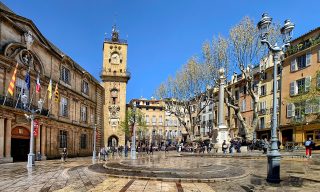
Halle aux Grains, Aix en Provence
Historic Building in Aix en Provence
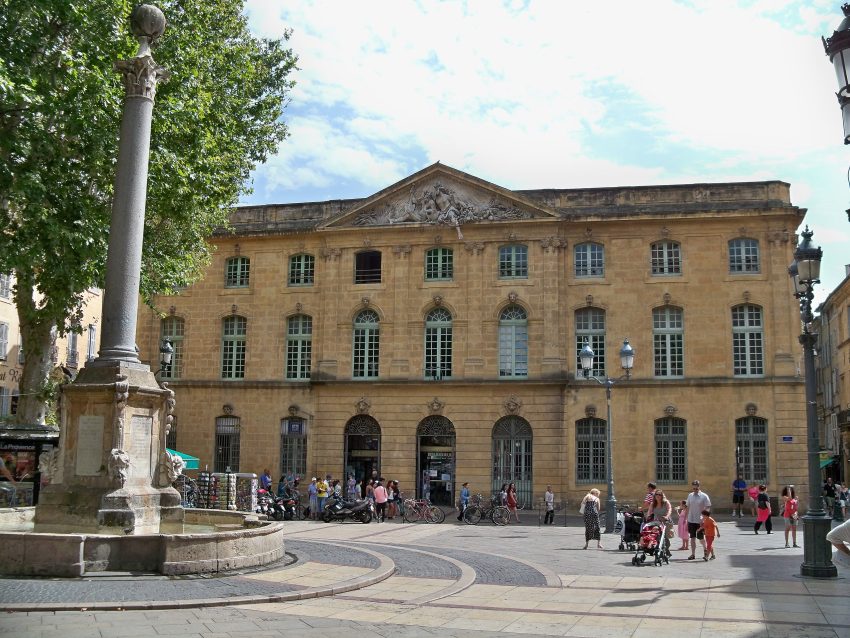
Standing gracefully on Place de l'Hôtel-de-Ville, the Halle aux Grains is one of the top sights in Aix-en-Provence - a remarkable example of how history and culture intertwine. Once a bustling market hall where farmers sold grain, this elegant Neoclassical building now serves as the home of the Orchestre Philharmonique de l'Opéra de Marseille during the Festival d'Aix-en-Provence. With its beautifully restored façade and refined symmetry, it's a great place to visit on a walking tour of Aix, offering visitors both architectural splendor and a touch of musical magic.
The transformation of the Halle aux Grains into a performance venue reflects Aix's commitment to preserving its heritage while embracing modern creativity. Whether you admire its façade by day or attend a concert inside, the building captures the city's spirit - cultured, timeless, and deeply Provençal.
History and Significance of Halle aux Grains
The Halle aux Grains was constructed between 1759 and 1761 by architect Georges Vallon, whose designs left a lasting mark on Aix-en-Provence. Intended as a covered grain market, the hall provided a sheltered space for merchants to trade cereals and other agricultural goods essential to the local economy. The building's architecture, with its columned portico and pediment adorned with allegorical sculptures of Abundance and Commerce, reflects the prosperity of Aix during the 18th century.
Over time, as trade patterns changed, the building’s role evolved. By the 19th century, it had hosted civic events and exhibitions, and in the 20th century, it found new life as a concert hall and cultural venue. Its 2019 renovation further enhanced the acoustics and interior spaces, establishing it as one of the region’s most respected music venues and a central stage for the annual Festival d’Aix-en-Provence.
Things to See and Do in Halle aux Grains
Even if you don't attend a performance, the Halle aux Grains is worth a stop to admire its dignified façade and the fine sculptural work that crowns it. The reliefs depicting agricultural themes recall the building's original function while celebrating Aix's enduring connection to art and abundance. Inside, the renovated auditorium features state-of-the-art design and acoustics that attract orchestras and musicians from around the world.
For those visiting during the Festival d'Aix-en-Provence in summer, attending a concert here is one of the best things to do in Aix-en-Provence. The hall's intimate size ensures an immersive experience, whether it's a classical recital, a chamber music performance, or an opera ensemble. When the festival isn't in session, guided visits occasionally allow guests to explore the interior and learn about the restoration project that brought the Halle aux Grains back to life.
How to Get There
The Halle aux Grains is centrally located on Place de l'Hôtel-de-Ville, just a short walk from Cours Mirabeau and the city's main pedestrian streets. The nearest train station is Gare SNCF d’Aix-en-Provence. You can use SNCF Connect to check schedules, compare routes, and purchase tickets for National (SNCF ) and regional trains (TER). For a more streamlined experience, we recommend using Omio, which allows you to easily compare prices, schedules, and book tickets for both National and Regional travel across all of Europe, all in one place. For those arriving by car, the most convenient parking options are Rotonde or Pasteur Car Park, both within a 10-minute walk of the square. If you are looking to rent a car in France I recommend having a look at Discover Cars, first, as they compare prices and review multiple car rental agencies for you.
Practical Tips on Visiting Halle aux Grains
- Best time to visit Halle aux Grains: During the summer Festival d’Aix-en-Provence or when concerts are scheduled.
- Entrance fee: Free to view the exterior; ticket prices vary for concerts.
- Opening hours: Dependent on scheduled events.
- Website: https://www.festival-aix.com/
- How long to spend: 30 minutes for an exterior visit, 2-3 hours if attending a concert.
- Accessibility: Fully accessible with ramps and adapted seating.
- Facilities: Restrooms, cloakroom, and nearby cafés.
- Photography tip: Capture the façade’s sculptural detail in the golden light of late afternoon.
- Guided tours: Offered occasionally by the tourism office or during heritage days.
- Nearby food options: Restaurants and cafés around Place de l'Hôtel-de-Ville and Cours Mirabeau.
Is Halle aux Grains Worth Visiting?
Absolutely. The Halle aux Grains is one of the must-see places in Aix-en-Provence for anyone who appreciates history, architecture, or music. Its elegant design tells the story of a city that has evolved from commerce to culture without losing its soul. Whether you attend a concert or simply admire its graceful exterior, the building embodies the spirit of Aix - refined, vibrant, and full of life.
What Other Travellers Say...

Halle aux grains at 5 Place Richelme in Aix-en-Provence is an 18th-century grain hall notable for its sculpted pediment depicting figures representing the Rhône and the Durance and agricultural abundance; visitors note its historical role in the city's grain trade and later uses for municipal services and a library annex, and it is open weekdays and Saturdays with midday and afternoon hours (closed Monday and Sunday).


FAQs for Visiting
Nearby Attractions to Halle aux Grains
- Place de l'Hôtel-de-Ville - Historic square with the Clock Tower and flower market.
- Cours Mirabeau - Aix's elegant tree-lined boulevard filled with cafés and shops.
- Saint-Sauveur Cathedral - A beautiful blend of Romanesque and Gothic architecture.
- Musée Granet - One of southern France's leading art museums, with works by Cézanne.
- Pavillon de Vendôme - A Baroque mansion surrounded by tranquil French gardens.
The Halle aux Grains appears in our Complete Guide to Visiting Aix en Provence!

Moira & Andy
Hey! We're Moira & Andy. From hiking the Camino to trips around Europe in Bert our campervan — we've been traveling together since retirement in 2020!
This website uses affiliate links which may earn a commission at no additional cost to you!
Planning Your Visit
Dependent on scheduled events.
Free to view the exterior; ticket prices vary for concerts.
Nearby Attractions
- Town Hall of Aix-en-Provence (0) km
Historic Building, Square and Town Hall - Place de l'Hôtel de Ville (0) km
Town Hall - Place Richelme (0.1) km
Market and Square - Tour de l’Horloge (0.1) km
Tower - Musée du Vieil-Aix (0.1) km
Historic Building, Historic Site and Museum - Place des Trois Ormeaux (0.2) km
Area, Square and Walk - Place d’Albertas (0.2) km
Fountain - Musee des Tapisserie (0.2) km
Museum - Palais de Justice (0.2) km
Historic Building - Cathedrale Saint-Sauveur (0.3) km
Cathedral