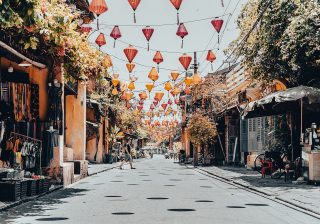
Hainan Assembly Hall, Hoi An
Historic Building in Hoi An

The Hainan Assembly Hall, also known as Quynh Phu Assembly Hall, is one of the must-see places in Hoi An for travelers interested in culture, architecture, and untold history. Built by Hainanese immigrants in 1883, the hall commemorates 108 merchants who were tragically killed in 1851 when their ship was mistaken for a pirate vessel. Today, the restored complex stands as both a memorial and a striking example of southern Chinese architectural design in the heart of the Ancient Town.
Quiet, atmospheric, and deeply symbolic, the hall is often visited on walking tours of Hoi An and provides a refreshing contrast to the more crowded temples nearby. Its courtyards, shrines, and wooden halls create a calm space where history, remembrance, and craftsmanship blend beautifully together.
Table of Contents
- History and Significance of the Hainan Assembly Hall
- Things to See and Do in the Hainan Assembly Hall
- How to Get to the Hainan Assembly Hall
- Practical Tips on Visiting the Hainan Assembly Hall
- Where to Stay Close to the Hainan Assembly Hall
- Is the Hainan Assembly Hall Worth Visiting?
- FAQs for Visiting the Hainan Assembly Hall
- Nearby Attractions to the Hainan Assembly Hall
History and Significance of the Hainan Assembly Hall
The story behind the hall dates back to 1851, when 108 Hainanese merchants sailing to Hoi An were mistakenly attacked and killed by Nguyen Dynasty soldiers who believed their vessel to be a pirate ship. After a lengthy investigation, Emperor Tu Duc acknowledged the mistake, granted deity status to the victims, and authorized funds for a temple to be built in their memory. Construction began in 1883 and was completed in 1891.
The assembly hall functioned as a gathering place for the local Hainanese community, serving both social and spiritual purposes. In 2016, following careful restoration, it opened fully to the public as one of Hoi An’s most meaningful heritage sites.
Things to See and Do in the Hainan Assembly Hall
Visitors enter through the Front Hall, a modest structure from the outside but surprisingly spacious within, designed for greeting guests and community gatherings. A small shrine dedicated to the Earth God stands to the right, along with a plaque recounting the tragic origins of the hall and the story of the ‘108 Brothers.’
Beyond this lies the beautifully arranged open-air courtyard, one of the most serene in Hoi An. Filled with potted plants that form a pathway toward the Main Hall, the space reflects the hall's peaceful purpose and meticulous upkeep.
On either side of the courtyard are the Eastern and Western halls, known as Protective Dragons in Chinese architecture. Historically used for meetings and cultural gatherings, these wings still contain tables, chairs, and ancestral shrines dedicated to Hainanese migrants who settled in Hoi An.
The Main Hall is the spiritual heart of the complex. Instead of statues, you will find Spirit Tablets, with the central shrine devoted to the deified ‘108 Brothers,’ also called Xiongdi Gong. Additional shrines honor the hall’s founders and the Chinese God of Wealth.
How to Get to the Hainan Assembly Hall
The hall is located on Tran Phu Street in Hoi An Ancient Town and is easily reached on foot from most points within the heritage zone.
Visitors traveling by train to Da Nang Railway Station can reach Hoi An in around 45 minutes by taxi or shuttle. Train schedules and bookings can be found on Omio.
Those flying into Da Nang International Airport can travel onward to Hoi An and walk to the hall from nearby accommodations. For the best deals and a seamless booking experience, check out these flights to Hoi An on Booking.com.
Access by car from Da Nang or nearby coastal towns is straightforward, with designated parking areas outside the pedestrianized Ancient Town.
Practical Tips on Visiting the Hainan Assembly Hall
- Suggested tips: Visit early for a quiet, reflective atmosphere
- Best time to visit: Morning or late afternoon
- Price: Hoi An Old Town Ticket Required (120,000 VND)
- Opening hours: Typically 8:00–17:00
- Official website: None
- How long to spend: 20-40 minutes
- Accessibility: Mostly accessible, though some uneven flooring
- Facilities: Limited facilities inside; amenities available nearby
- Photography tip: The courtyard is ideal for soft natural light shots
- Guided tours: Available as part of heritage walking tours
- Nearby food options: Plenty of cafes and restaurants around Tran Phu Street
Where to Stay Close to the Hainan Assembly Hall
A convenient option nearby is Vinh Hung Heritage Hotel, set within a beautifully preserved historic building. Another excellent choice is Little Hoi An Boutique Hotel & Spa, offering comfort and easy access to the Ancient Town.
Is the Hainan Assembly Hall Worth Visiting?
Yes. The hall's moving history, elegant architecture, and peaceful courtyards make it a standout site in Hoi An. It offers a quieter, more reflective experience than many other landmarks in the Ancient Town, making it especially rewarding for culturally curious travelers.
What Other Travellers Say...

Hainan Assembly Hall at 10 Trần Phú in Hội An is an assembly hall noted in the summary for honoring 108 Chinese merchants who died at sea; visitors describe it as well maintained and quiet, with evocative interior decorations and wall art being made by local artists, and several reviewers praise an enthusiastic gate attendant who offers engaging mini tours; it's a compact, easy stop that reflects the Chinese merchant community's presence in town, though some visitors have encountered temporary closures or renovation work when arriving.


FAQs for Visiting the Hainan Assembly Hall
Nearby Attractions to the Hainan Assembly Hall
- Fujian Assembly Hall: A colourful and atmospheric hall dedicated to Thien Hau, filled with incense, intricate carvings, and vibrant courtyards.
- Cantonese Assembly Hall: A beautifully detailed heritage site honouring Quan Cong, known for its dragon sculptures and rich architectural artistry.
- Japanese Covered Bridge: Hoi An's iconic landmark, offering a glimpse into the town's multicultural trading past.
- Old House of Tan Ky: A well-preserved merchant home showcasing centuries of history through its architecture and family heirlooms.
- Hoi An Night Market: A lively riverside market famous for lantern stalls, street food, and local crafts.
The Hainan Assembly Hall appears in our Complete Guide to Visiting Hoi An!

Moira & Andy
Hey! We're Moira & Andy. From hiking the Camino to trips around Europe in Bert our campervan — we've been traveling together since retirement in 2020!
This website uses affiliate links which may earn a commission at no additional cost to you!
Planning Your Visit
Typically 8:00-17:00
Hoi An Old Town Ticket Required (120,000 VND)
Nearby Attractions
- Quan Cong Temple (0.1) km
Buddhist Temple - Trieu Chau Assembly Hall (0.1) km
Historic Building - Fujian Assembly Hall (0.1) km
Historic Building - Trung Hoa Assembly Hall (0.2) km
Historic Building - Museum of Trade Ceramics (0.3) km
Museum - Tran Family Chapel (0.4) km
Historic Building - Museum of History and Culture (0.4) km
Museum - Ancient House of Tan Ky (0.5) km
Historic Building - Duc An Ancient House (0.5) km
Historic Building - Ba Mu Temple (0.6) km
Buddhist Temple