Grazer Burg
Castle, Courtyard and Historic Building in Graz
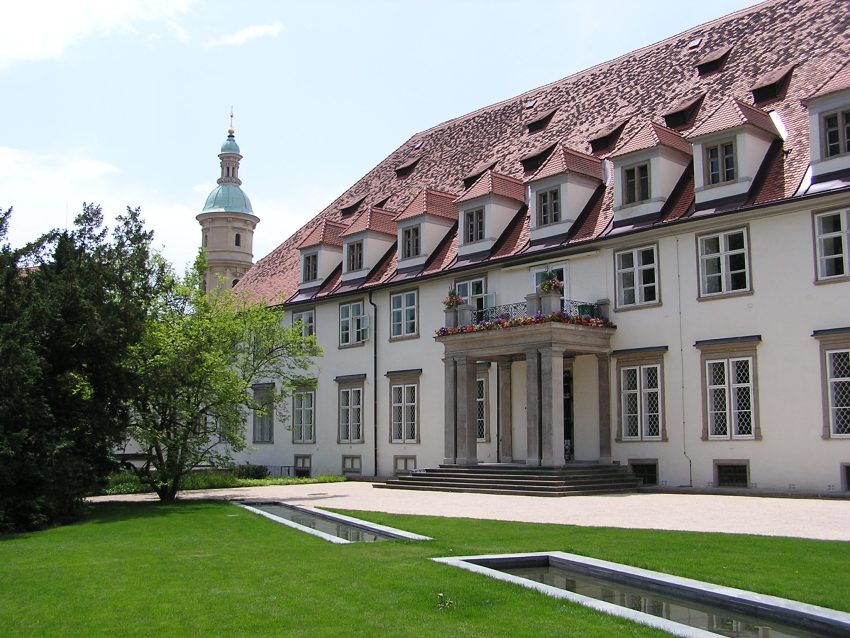
Grazer Burg is one of Graz's most low-key historic sights: a former Habsburg residence and today part of the regional government complex, tucked just behind the Cathedral in the UNESCO-listed old town. It's best known for the Doppelwendeltreppe, a striking double spiral staircase that feels like a clever architectural illusion as two stairways separate and meet again.
Because it sits right on the edge of the main Old Town lanes, Grazer Burg is an easy add-on to a walking tour, especially if you're already visiting Graz Cathedral, the Mausoleum of Emperor Ferdinand II, or heading toward Schlossberg. The best places to focus your time are the double spiral staircase itself, the inner courtyard atmosphere, and the small green areas nearby.
Table of Contents
- History and Significance of the Grazer Burg
- Things to See and Do in the Grazer Burg
- How to Get to the Grazer Burg
- Practical Tips on Visiting the Grazer Burg
- Where to Stay Close to the Grazer Burg
- Is the Grazer Burg Worth Visiting?
- For Different Travelers
- FAQs for Visiting Grazer Burg
- Nearby Attractions to the Grazer Burg
History and Significance of the Grazer Burg
Grazer Burg began as a late-medieval Habsburg residence, developed from the 15th century onward as Graz grew in importance as a political center for Inner Austria. Over time, additions and reconstructions layered different architectural eras into the complex, which is why the site feels more like a living government quarter than a single “storybook castle.”
Its most famous feature, the Doppelwendeltreppe (double spiral staircase), dates to around 1499–1500 and is often described as a symbolic “staircase of reconciliation,” because the two spirals repeatedly split apart and rejoin. Even if you’re not deeply into architecture, it’s one of those rare details that makes you stop, look twice, and appreciate the craft.
Today, the Burg’s significance is as much about continuity as it is about spectacle: it’s a historic seat of administration embedded in the everyday life of the city, rather than a fully curated museum experience.
Things to See and Do in the Grazer Burg
Start with the Doppelwendeltreppe. Walk up and down at least one level to really understand the geometry, then pause to watch how other visitors move through the space; the visual effect changes depending on where you stand.
After that, take a slow loop through the inner courtyard areas and any accessible passages. The Burg is not a “rooms and collections” visit, so treat it like an architectural stop: textures, inscriptions, façades, and small details are the point.
If you have a few extra minutes, look for the small garden/green spaces and the busts and memorial-style elements nearby. It’s a pleasant breather between more intensive sights like museums, and it pairs well with a coffee stop in the Old Town.
How to Get to the Grazer Burg
The nearest airport is Graz Airport (GRZ), with Vienna Airport (VIE) as a larger international alternative if you're connecting from farther away. For the best deals and a seamless booking experience, check out these flights to Graz on Booking.com.
Graz is well connected by rail, and Graz Hauptbahnhof (main station) makes it straightforward to arrive from Vienna and other Austrian cities before continuing into the Old Town by tram or taxi. You can easily check timetables and book train tickets through the ÖBB (Austrian Federal Railways) website. However, for a smoother experience, we recommend using Omio, which simplifies the booking process and lets you compare routes, prices, and departure times all in one place..
If you’re traveling by car, aim for a central parking garage and finish the last stretch on foot, since the Old Town has restricted traffic and narrow streets. If you are looking to rent a car in Austria I recommend having a look at Discover Cars, first, as they compare prices and review multiple car rental agencies for you.
Practical Tips on Visiting the Grazer Burg
- Entrance fee: Free.
- Opening hours: Daily: 07:30–20:00.
- Best time to visit: Go in the morning or late afternoon for softer light on the staircase and fewer people passing through.
- How long to spend: Plan 20–45 minutes if you’re focusing on the staircase and courtyard; longer if you like slow-paced photography.
- Accessibility: Expect steps and historic surfaces around the staircase area; barrier-free routing may be limited depending on which sections are open.
- Facilities: This is more of a pass-through historic complex than a visitor center; rely on nearby Old Town cafés and public amenities.
Where to Stay Close to the Grazer Burg
Base yourself in Graz’s Old Town (Innere Stadt) for the easiest, most walkable access to the Burg, Cathedral, and the rest of the historic center.
Grand Hôtel Wiesler A stylish, design-forward classic near the Mur River that’s great if you want a memorable hotel vibe while still being a short walk or quick tram ride to the Old Town sights.
Hotel Weitzer Graz A reliable, comfortable choice with a central location that works well for first-time visitors who want easy access to both the Old Town and riverfront strolls.
Schlossberghotel A boutique option close to Schlossberg, ideal if you want a quieter-feeling stay with quick access to scenic viewpoints and a short walk to the Burg.
NH Graz City A practical, modern base right in the historic core, especially convenient if you want to maximize sightseeing time without relying on transport.
Hotel Daniel Graz Best for travelers prioritizing transit convenience, with a location by the main station that makes day trips and early departures much easier.
Is the Grazer Burg Worth Visiting?
Yes, Grazer Burg is worth visiting if you're already exploring central Graz: it's free, quick, and home to one of the city's most distinctive architectural details. The double spiral staircase alone is a genuine “only-in-Graz” moment, and the courtyard stop adds a calm, local-feeling pause between bigger attractions.
Honest Pivot: If you're expecting a fully furnished castle interior, exhibitions, or a long route of rooms to tour, you may feel underwhelmed. In that case, treat it as a short photo-and-architecture stop and put your longer time blocks toward Schlossberg, Schloss Eggenberg, or a museum.
What Other Travellers Say...

Reviewers are very positive overall, highlighting that it's free to enter and an easy stop in central Graz. The double spiral staircase is consistently described as the standout feature, with the courtyard and small garden/park also appreciated for a calm break and a few historic details. A common downside is that there isn't much else to visit inside beyond the staircase and outdoor areas, and some informational material may be limited or primarily in German.


For Different Travelers
Grazer Burg works best as a flexible, low-commitment stop that adds texture to an Old Town day. Because it's central and typically quick, it's easy to tailor the visit to your pace, whether you're moving fast between highlights or lingering for photos.
It’s also a good “connector” sight: you can use it to stitch together nearby landmarks into a smooth walking loop without needing extra transit.
Families with Kids
Kids often enjoy the staircase because it feels like a puzzle you can walk through, and it’s a nice change of pace from quieter museum galleries. Keep the visit short and turn it into a mini-challenge: spot where the stairs meet and separate.
Because the Burg visit doesn't require a long attention span, it fits well between playground time on Schlossberg and a snack stop in the Old Town. Just keep a close eye on little ones around steps and landings.
Couples & Romantic Getaways
The “reconciliation staircase” story gives the place a sweet, symbolic angle for couples, and it’s an easy spot for a quick photo together without committing to a long attraction. Late afternoon can feel especially atmospheric as the light shifts in the courtyard.
Pair it with a slow wander past the Cathedral and a sunset viewpoint on Schlossberg for a simple, romantic Graz itinerary that doesn't feel rushed.
Budget Travelers
Grazer Burg is a strong budget-friendly highlight: it's central, free to enter, and delivers a genuinely memorable feature in the staircase. It's also an easy win if you're doing Graz mostly on foot.
Use it as part of a free self-guided walking loop through the Old Town, then spend your money where it counts more, like a museum ticket, a funicular ride, or a great Styrian meal.
History Buffs
History lovers will appreciate the Burg as part of Graz’s Habsburg-era cityscape and its long role in administration and power. Even without extensive interiors to tour, the site helps you read the city’s layers and understand why this area is packed with landmark buildings.
For deeper context, combine the Burg with nearby sites like the Cathedral and mausoleum, then continue to Schloss Eggenberg for a more “rooms and collections” style historic visit.
FAQs for Visiting Grazer Burg
Getting There
Tickets & Entry
Visiting Experience
Tours, Context & Itineraries
Photography
Accessibility & Facilities
Food & Breaks Nearby
Safety & Timing
Nearby Attractions to the Grazer Burg
- Graz Cathedral (Dom): A major Gothic landmark next door, easy to combine in the same stop.
- Mausoleum of Emperor Ferdinand II: An ornate mausoleum close by that adds strong historical context to the area.
- Schlossberg: The city's signature hill with viewpoints and paths, perfect after an Old Town walk.
- Hauptplatz (Main Square): Graz's central square for people-watching, architecture, and quick connections across the center.
- Kunsthaus Graz: A modern art museum with striking “friendly alien” architecture, great for contrast after historic sights.
The Grazer Burg appears in our Complete Guide to Visiting Graz!

Moira & Andy
Hey! We're Moira & Andy. From hiking the Camino to trips around Europe in Bert our campervan — we've been traveling together since retirement in 2020!
This website uses affiliate links which may earn a commission at no additional cost to you!
Planning Your Visit
Daily: 07:30-20:00.
Free.
Nearby Attractions
- Burgtor (0.0) km
City Gate - St. Catherine's Church and Mausoleum (0.1) km
Church, Historic Building and Mausoleum - Cathedral of St. Giles (0.1) km
Cathedral, Church and Religious Building - Diocese Museum (0.1) km
Gallery, Museum and Religious Building - Glockenspiel (0.2) km
Attraction, Historic Building and Square - Sporgasse (0.3) km
Area and Street - Landhaus (0.3) km
Courtyard, Historic Building and Historic Site - Gemaltes Haus (0.3) km
Historic Building, Historic Site and Notable Building - Landeszeughaus (0.3) km
Armory and Museum - Herrengasse (0.3) km
Street