Forum Baths, Pompeii
Roman Site in Pompeii
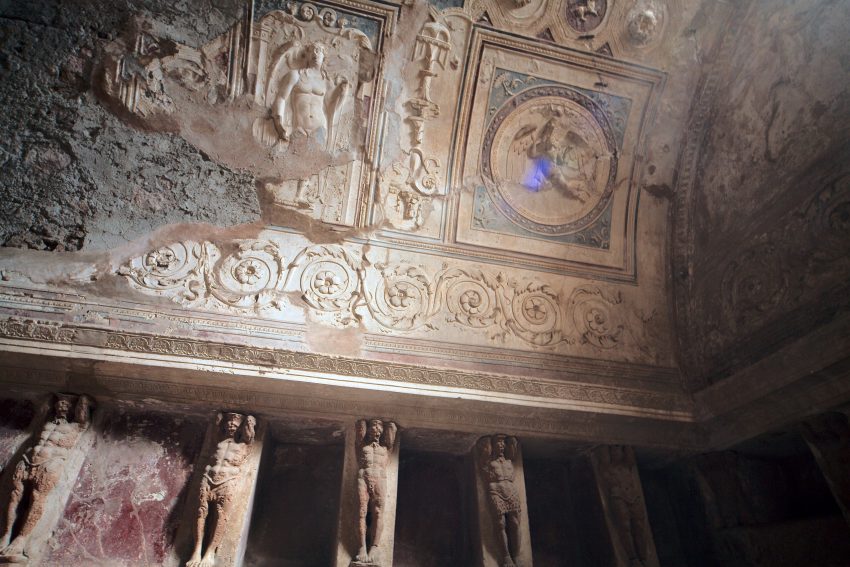
Tucked just behind the Temple of Jupiter, the Forum Baths (Terme del Foro) are one of the top attractions in Pompeii for understanding how ordinary people experienced comfort and leisure in the ancient city. Built soon after the veteran colony was founded by Sulla around 80 BCE, this compact but elegant complex welcomed citizens looking to wash, warm up, cool down, and socialise within sight of the bustling Forum. Separate entrances led to men's and women's sections, and in the men's quarters you can still walk through the sequence of rooms that made up a classic Roman bath circuit: apodyterium, tepidarium, frigidarium, and calidarium.
Much of what you see today owes its appearance to the restoration carried out after the major earthquake of AD 62, just years before Vesuvius erupted. Stuccoed vaults, terracotta telamones decorating niches, and the impressive bronze brazier in the apodyterium show how much care and money went into making these baths both functional and beautiful. Even in ruins, the Forum Baths help bring the city's daily routine to life, and they are often visited on walking tours of Pompeii that explore how people worked, worshipped, and relaxed around the Forum.
Table of Contents
- History and Significance of the Forum Baths
- Things to See and Do in the Forum Baths
- How to Get to the Forum Baths
- Practical Tips on Visiting the Forum Baths
- Where to Stay close to the Forum Baths
- Is the Forum Baths Pompeii Worth Visiting
- FAQs for Visiting Forum Baths Pompeii
- Nearby Attractions to the Forum Baths Pompeii
History and Significance of the Forum Baths
The Forum Baths were constructed in the years following the establishment of Sulla's colony of veterans in 80 BCE, at a time when Pompeii was being reshaped to reflect Roman civic ideals. Placing the baths directly behind the Forum made practical and symbolic sense: this was where citizens came to conduct business, attend legal hearings, worship, and then step into a nearby facility to wash, warm their muscles, and catch up on the latest gossip. The layout with separate men's and women's entrances reflects both modesty and the high demand for bathing in a growing urban community.
In the men’s section, the sequence of rooms followed a well-established Roman pattern. Visitors entered the apodyterium, which also served as a tepidarium, where they undressed and acclimatised to a medium temperature. From there, they could move into the frigidarium for a cold plunge or into the calidarium for a hot bath, with hypocaust heating and hot water providing the necessary warmth. The baths were not merely utilitarian; they were social clubs, wellness centres, and places to reinforce status and networks in a setting that felt indulgent yet everyday.
The earthquake of AD 62 heavily damaged the complex, but restoration work was already well under way when Vesuvius erupted in AD 79. The state in which we see the Forum Baths today largely reflects this post-earthquake rebuilding: decorated vaults, niches adorned with terracotta telamones, and the substantial bronze brazier used for heating all date to this final phase. Archaeologists also found more than 500 lamps in the entrance to the men's quarters, evidence of evening openings that extended social life well beyond daylight hours. Together, the Forum and its baths paint a vivid picture of Pompeii's sophisticated urban culture before it was frozen in time by the volcanic catastrophe.
Things to See and Do in the Forum Baths
Start in the men’s entrance and apodyterium, where you can still recognise the benches, niches, and overall layout of the dressing room. Look closely at the wall niches used to store clothes and personal items; many are decorated with small terracotta telamones, sculpted male figures that seem to support the upper structure with their bodies. This decorative touch transforms a practical storage space into a showcase of craftsmanship, hinting at the pride Pompeiians took in their public buildings.
Raise your eyes to the vaulted ceiling of the apodyterium tepidarium, where elaborate stucco reliefs once gave bathers something beautiful to look at as they warmed up or cooled down. Even in their worn state, these decorations suggest a world of mythological scenes, floral motifs, and geometric patterns. In the same room, do not miss the large bronze brazier that would have glowed with coals, supplementing the heating system and keeping the room at a comfortable temperature in cooler months.
As you move through to the frigidarium and calidarium, imagine the sensory experience of a visit here: the change in temperature from room to room, the sound of water splashing, the hum of conversation, and lamplight flickering on painted and stuccoed surfaces in the evenings. The smaller women’s quarters, still under renovation at the time of the eruption, offer a contrast in scale but echo the same basic functions. Walking through the complex, you get a tangible sense of how essential bathing was to Roman identity, bridging the gap between hygiene, relaxation, and social life.
How to Get to the Forum Baths
To reach the Forum Baths you first need to access the archaeological site of Pompeii in the modern town of Pompei, near Naples. The closest major gateway is Naples International Airport, which connects with cities across Italy and Europe and serves as the main arrival point for most visitors heading to the ruins. For the best deals and a seamless booking experience, check out these flights to Pompeii on Booking.com. From the airport, you can continue your journey to Pompei by public transport, taxi, or rental car.
By train, the most popular route is to take the Circumvesuviana line from Napoli Centrale or Piazza Garibaldi towards Sorrento and get off at Pompei Scavi Villa dei Misteri, just a short walk from the main entrance to the archaeological park.Use Omnio to easily compare schedules, book train tickets, and find the best prices all in one place for a hassle-free journey across Italy. Regional trains also stop at Pompei station in the modern town, where you can transfer on foot or by local bus or taxi to the site entrances.
If you are driving, Pompei is easily reached via the A3 motorway and well-marked local roads.If you are looking to rent a car in Italy I recommend having a look at Discover Cars, first, as they compare prices and review multiple car rental agencies for you. Dedicated parking areas near the archaeological park entrances make it convenient to leave your car and explore on foot. Once inside the site, head for the Forum; you will find the Forum Baths located behind the Temple of Jupiter, clearly indicated on official maps and signposted routes.
Practical Tips on Visiting the Forum Baths
- Suggested tips: Visit the baths soon after exploring the Forum so you can picture how people moved from public business to private relaxation in just a few steps.
- Best time to visit: Early morning or late afternoon are ideal for avoiding the heaviest crowds and the strongest sun on the exposed streets leading to the baths.
- Entrance fee: Adults: €22.00 (General Pompei Tickets)
- Opening hours: Daily: 9:00 - 15:30
- Official website: https://pompeiisites.org
- How long to spend: Plan 20 to 40 minutes to walk through the different rooms, study the decorations, and imagine the full bathing ritual.
- Accessibility: Paths and thresholds can be uneven, with some steps and narrow passages, so visitors with reduced mobility should check current access information and use designated accessible routes where available.
- Facilities: There are no toilets or cafés inside the baths themselves; use facilities elsewhere in the archaeological park and carry water, especially in warmer months.
- Photography tip: Focus on details such as the telamones in the niches, the stuccoed vaults, and the bronze brazier, as well as wide shots that show the sequence of rooms.
- Guided tours: Consider a tour that includes both the Forum and Forum Baths to understand how bathing fitted into politics, trade, and social status in everyday Pompeii.
- Nearby food options: Plan to eat at cafés and restaurants just outside the park entrances in modern Pompei or at refreshment points inside the site during longer visits.
Where to Stay close to the Forum Baths
Staying near the archaeological park makes it easy to reach the Forum and Forum Baths early in the day, before tour groups fill the main streets. A well-located option is Hotel Forum, which places you within a short walk of one of the principal entrances to the ruins. For views towards Vesuvius and the archaeological area, Hotel del Sole Pompei offers convenient access and makes popping back to your room during a hot day simple. Another friendly base in the modern town is Hotel Diana Pompei, close to shops, restaurants, and transport, while still keeping the Forum Baths and other key sites within comfortable walking distance.
Is the Forum Baths Pompeii Worth Visiting
The Forum Baths are definitely worth visiting if you want to move beyond streets and temples and understand how people actually lived in Pompeii. Their compact size, clear layout, and rich decoration make them one of the most evocative examples of Roman bathing culture on the site. Together with the Forum just outside, they show how closely daily comfort, socialising, and civic life were intertwined in the ancient city. For many visitors, stepping through these rooms makes life in Pompeii feel suddenly intimate and real.
What Other Travellers Say...

Forum Baths, located at Via del Foro 26 in Pompei, are the remains of a first-century Roman bath complex featuring ornate ceilings, stucco-decorated walls, well-preserved mosaics and frescoes, and the typical sequence of rooms—changing room (apodyterium), frigidarium (cold bath), tepidarium (warm bath) and calidarium (hot bath) fed by a shared boiler/boiler room; visitors note the site's elegant preservation, the separate men's and women's sections with independent entrances, visible storage benches and wardrobes in the changing room, and architectural details such as vaulted ceilings, skylights and bathing fittings that convey how central bathing was to daily life in ancient Pompeii.


FAQs for Visiting Forum Baths Pompeii
Nearby Attractions to the Forum Baths Pompeii
- Pompeii Forum: The central civic square of the ancient city, surrounded by temples, the basilica, and key public buildings with views towards Vesuvius.
- Temple of Jupiter: Dominating one end of the Forum, this temple frames the classic view of the volcano behind its podium and columns.
- Basilica of Pompeii: A large hall near the Forum that served as a law court and business centre, showcasing impressive interior architecture.
- House of the Faun: One of Pompeii s largest and most luxurious private homes, famed for its dancing faun statue and mosaics.
- Macellum: The ancient food market near the Forum, where stalls and counters reveal how everyday shopping and trade were organised.
The Forum Baths appears in our Complete Guide to Visiting Pompeii!

Moira & Andy
Hey! We're Moira & Andy. From hiking the Camino to trips around Europe in Bert our campervan — we've been traveling together since retirement in 2020!
This website uses affiliate links which may earn a commission at no additional cost to you!
Planning Your Visit
Daily: 9:00 – 15:30
Adults: €22.00 (General Pompei Tickets)
Nearby Attractions
- House of the Tragic Poet (0.0) km
Roman Site - House of the Faun (0.1) km
Roman Site - Pompeii’s Forum (0.1) km
Roman Site - House of the Vettii (0.2) km
Roman Site - Lupanar (0.2) km
Roman Site - House of Menander (0.5) km
Roman Site - Villa of Diomedes (0.5) km
Roman Site - Villa dei Misteri (0.7) km
Roman Site - Mount Vesuvius (9.2) km
Hike - Positano (13.5) km
Town