Fort de la Pompelle, Reims
Historic Site and Museum in Reims
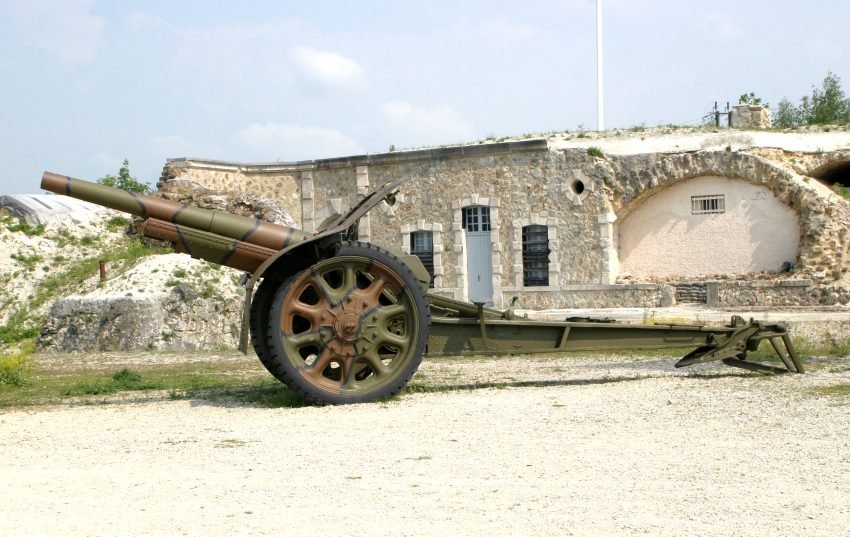
Fort de la Pompelle is one of the most moving places to visit near Reims because it brings the First World War out of abstract dates and into a physical landscape you can walk through. Sitting on the edge of the city's wartime defensive ring, it feels exposed and purposeful, with battered masonry and open spaces that still suggest the violence it endured. You don't come here for polished grandeur; you come for atmosphere, memory, and the sense of standing at a place that mattered.
It's one of the things to do in Reims if you want the city's story to include the 20th century in a way that feels real and immediate, and it's often visited on walking tours of Reims that expand beyond the centre to include WWI heritage. Even if you're not a military-history specialist, the fort's setting and museum help you understand why Reims was such a contested and symbolic place during the war.
Table of Contents
- History and Significance of the Fort de la Pompelle
- Things to See and Do in the Fort de la Pompelle
- How to Get to the Fort de la Pompelle
- Practical Tips on Visiting the Fort de la Pompelle
- Where to Stay close to the Fort de la Pompelle
- Add a Is the Fort de la Pompelle Worth Visiting?
- FAQs for Visiting Fort de la Pompelle
- For Different Travelers
- Nearby Attractions to the Fort de la Pompelle
History and Significance of the Fort de la Pompelle
Fort de la Pompelle was built in the late 19th century as part of the Séré de Rivières fortification system that France developed after the Franco-Prussian War. It was conceived as a supporting fort within a wider defensive belt around Reims, designed to reinforce larger positions and control approaches to the city. Although its armaments were removed shortly before the war, the fort became strategically vital once fighting reached the Reims sector.
During the First World War, Fort de la Pompelle saw some of the most intense combat of the Reims forts. It was briefly occupied by German troops in early September 1914, then recaptured later that month by French forces, and it remained in Allied hands despite repeated bombardment and assaults. Its story is also international: many different regiments rotated through its defence, including Russian brigades sent to France in 1916, reflecting how the Western Front drew in people far beyond the local landscape.
After the war the fort was left to decline, and its later rescue is part of its significance too. Classified as a historic monument in the early 20th century and later transformed into a museum, it represents a wider French effort to protect the physical sites of the conflict and preserve objects and testimony that would otherwise have vanished with time. The museum’s collection gives the fort a second life: not as a fighting position, but as a place of learning and remembrance.
Things to See and Do in the Fort de la Pompelle
Start with the fort itself. Walk the perimeter slowly and pay attention to how the site is organised: the ditch, the defensive angles, and the way the fort sits low and compact rather than tall and theatrical. It helps you understand what these structures were meant to do-absorb fire, protect men, and hold ground-rather than impress.
Inside, the museum provides the narrative that the ruins alone can't fully deliver. Give yourself time for the displays that explain the Reims sector and the fort's role in defending it, especially the sections that make the timeline clear from 1914 through the major fighting in 1918. If you've already visited the Musée de la Reddition, this is a compelling contrast: surrender history in a room, frontline history in a fort.
One of the most distinctive elements is the collection of German military headgear. Even for visitors who don’t usually focus on uniforms, it can be surprisingly impactful because it turns “armies” into individuals-different units, different roles, different lives-all reduced to objects that survived when people did not.
Finally, take a quiet moment outside before you leave. The fort’s edges and open views make it easier to imagine how exposed the position was, and why holding it mattered. It’s the kind of site that benefits from a few minutes of stillness rather than rushing straight back to city sightseeing.
How to Get to the Fort de la Pompelle
Most international visitors reach the Reims area via Paris Charles de Gaulle Airport or Paris Orly Airport, then continue overland to Reims. For the best deals and a seamless booking experience, check out these flights to Reims on Booking.com.
Reims is easy to reach by train from Paris Gare de l'Est, and once in the city you can connect onward toward the fort by local transport, taxi, or a planned day tour, since it sits outside the central sightseeing loop. You can use SNCF Connect to check schedules, compare routes, and purchase tickets for National (SNCF ) and regional trains (TER). For a more streamlined experience, we recommend using Omio, which allows you to easily compare prices, schedules, and book tickets for both National and Regional travel across all of Europe, all in one place.
If you’re travelling by car, the fort is straightforward to reach via the N44 corridor, and driving is often the simplest option for fitting it into a half-day visit. If you are looking to rent a car in France I recommend having a look at Discover Cars, first, as they compare prices and review multiple car rental agencies for you.
Practical Tips on Visiting the Fort de la Pompelle
- Suggested tips: Go with sturdy shoes and plan for uneven surfaces; this is a site where walking the fort matters as much as reading the displays.
- Best time to visit: Late morning or early afternoon with clear weather, so you can spend time outdoors without rushing.
- Entrance fee: Adults: €5.50
- Opening hours: 10 a.m. to 6 p.m. Closed on Mondays
- Official website: https://musees-reims.fr/fr/musees/musee-du-fort-de-la-pompelle/
- How long to spend: 1.5 to 2.5 hours, depending on how thoroughly you explore the fort’s exterior and museum.
- Accessibility: Expect steps, uneven ground, and historic structures; accessibility can be limited, so check current arrangements in advance if needed.
- Facilities: Basic facilities may be limited; bring water and plan cafés back in Reims for a longer break.
- Photography tip: Wide shots capture the fort’s layout best; for details, focus on textures-brick, chalk, and the scars of bombardment.
- Guided tours: A guided visit can add real value here by explaining the defensive design and the specific battles around the Reims sector.
- Nearby food options: Treat this as a half-day excursion, then return to Reims for lunch or an early dinner in the centre.
Where to Stay close to the Fort de la Pompelle
Most visitors will still be happiest staying in central Reims and visiting the fort as a dedicated outing, since evenings are better spent in the historic centre. Best Western Premier Hôtel de la Paix is a comfortable base near restaurants and easy taxi connections for day trips. Holiday Inn Reims - Centre is a practical choice if you want simple logistics and quick access back to the station area. If you prefer to stay right beside the cathedral for early starts and late strolls, La Caserne Chanzy Hotel & Spa, Autograph Collection gives you a classic Reims base while keeping the fort within easy reach by car or taxi.
Add a Is the Fort de la Pompelle Worth Visiting?
Yes, particularly if you want to understand Reims beyond medieval art and Champagne. Fort de la Pompelle offers a direct encounter with the city's wartime geography and the kind of defensive positions that shaped the Western Front. It's sobering, but it's also clarifying: you leave with a better sense of why this region carries so much memory.
It's also worth visiting because the museum and site work together. The fort gives you the physical reality-space, exposure, damage-while the museum helps you place that reality in a timeline and a human story. That combination makes it one of the strongest modern-history excursions from Reims.
FAQs for Visiting Fort de la Pompelle
What Other Travellers Say...
Reviews Summary
Fort de la Pompelle Museum in Puisieulx is a military museum set in an historic fort that focuses on World War I, with a main corridor outlining the fort's role and the war's progress and side rooms filled with weapons, uniforms, dioramas and many everyday objects and unique artifacts; visitors praise detailed displays and informative plaques (some multilingual in the main corridor, though many smaller labels are French only), outdoor plaques and large cannons around the fort, a monument to the Russian expeditionary corps, interactive elements and period footage, and note that you can walk the exterior even when the museum is closed, parking is free, visits typically take one to several hours, and staff are welcoming.
For Different Travelers
Families with Kids
This can be a strong family visit if your children are old enough to engage with serious history and handle uneven terrain. The fort layout can feel like an “exploration” site, but it needs clear boundaries and supervision, especially around ruined areas and steps.
To keep it balanced, choose a few museum highlights, then spend time outside walking the fort, and plan something lighter afterward-like a café stop in Reims-so the day doesn't feel emotionally intense from start to finish.
Couples & Romantic Getaways
For couples, this is less about romance and more about depth. Fort de la Pompelle adds emotional weight and perspective to a Reims trip that might otherwise focus on Champagne and Gothic architecture, and it often becomes one of the most talked-about visits afterward.
The best approach is to do it earlier in the day, then transition back to the city for a calmer afternoon-cathedral light, a long lunch, or a Champagne tasting-so the day has both reflection and ease.
Budget Travelers
This is a good-value stop if you want a meaningful historical experience outside the city centre. Even if you keep ticket spending minimal, the site's outdoor component makes it feel substantial, and you can build the rest of the day around free Reims highlights.
If you’re trying to keep transport costs down, consider pairing it with another nearby site on the same side of the city so one taxi ride or one drive covers multiple stops.
History Buffs
For history buffs, this is essential. The fort's Séré de Rivières design context, its repeated WWII-era cultural echoes, and the museum's collections make it one of the best places in the Reims area to connect battlefield geography with human-scale artifacts.
Give yourself extra time for the museum’s details and for walking the fort slowly. It’s a site that rewards patience, because the most revealing moments are often found in layout and scars rather than in a single “headline” exhibit.
Nearby Attractions to the Fort de la Pompelle
- Basilique Saint-Remi: A UNESCO basilica with a serene Romanesque nave and major place in Reims' spiritual history.
- Musée Saint-Remi: A former royal abbey museum exploring Reims from Roman times through later centuries.
- Champagne Pommery: Crayères cellar tours with contemporary art installations, close to Villa Demoiselle.
- Villa Demoiselle: A Belle Époque mansion blending Art Nouveau and Art Deco interiors beside the Pommery estate.
- Musée de la Reddition: A modern-history museum in the building where Germany's surrender was signed on 7 May 1945.
The Fort de la Pompelle appears in our Complete Guide to Visiting Reims!

Moira & Andy
Hey! We're Moira & Andy. From hiking the Camino to trips around Europe in Bert our campervan — we've been traveling together since retirement in 2020!
This website uses affiliate links which may earn a commission at no additional cost to you!
Planning Your Visit
10 a.m. to 6 p.m. Closed on Mondays
Adults: €5.50
Nearby Attractions
- Parc de Champagne (6.0) km
Park - Maison Ruinart (6.3) km
Vinyard - Champagne Pommery (6.4) km
Historic Site - Villa Demoiselle (6.5) km
Historic Building - Maison Veuve Clicquot (6.6) km
Historic Site - Taittinger (6.8) km
Historic Site - Reims Champagne Automobile Museum (6.9) km
Museum - Basilique Saint-Rémi (7.0) km
Church - Musée Saint-Rémi (7.1) km
Museum - Carnegie Library of Reims (7.9) km
Historic Building and Library


