Fort Bokar, Dubrovnik
Castle, City Walls and Historic Site in Dubrovnik
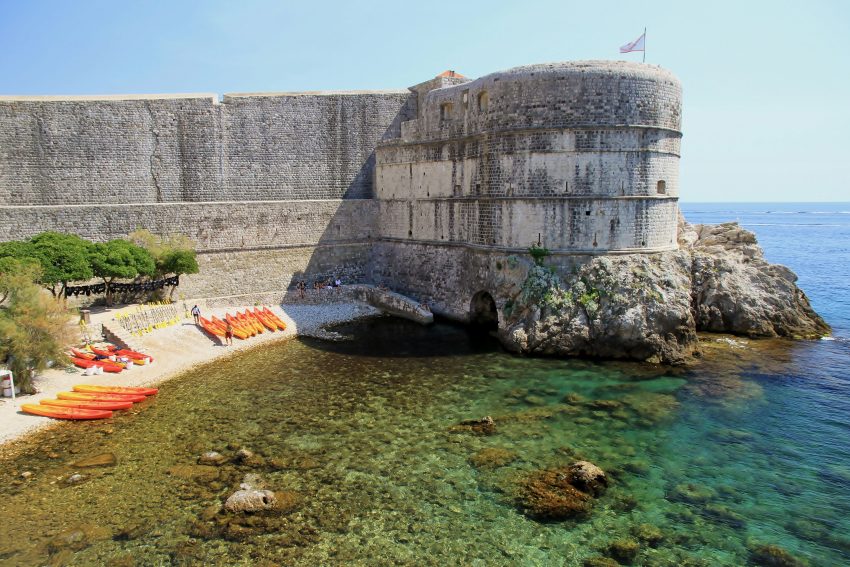
Fort Bokar (Tvrđava Bokar) is a compact, sea-facing fortress built into the western edge of Dubrovnik's famous city walls, where the ramparts meet the cliffs above the Adriatic. It's not a standalone “castle visit” so much as a dramatic highlight along the wall walk, with sweeping views of the open sea on one side and the terracotta rooftops of the Old Town on the other.
Most travelers experience Fort Bokar as part of a self-guided circuit on the City Walls or on a guided walking tour that explains how Dubrovnik's defenses protected the Pile Gate and the vulnerable western approach. For the best views, linger on the wall section around Bokar in late afternoon light, or aim for early morning if you want the ramparts to feel quieter.
Table of Contents
- History and Significance of the Fort Bokar
- Things to See and Do in the Fort Bokar
- How to Get to the Fort Bokar
- Practical Tips on Visiting the Fort Bokar
- Where to Stay Close to the Fort Bokar
- Is the Fort Bokar Worth Visiting?
- For Different Travelers
- FAQs for Visiting Fort Bokar
- Nearby Attractions to the Fort Bokar
History and Significance of the Fort Bokar
Fort Bokar is closely tied to Dubrovnik's long story of maritime power and self-defense. As the city's fortifications evolved, the western flank needed especially strong protection because it guarded key access points and the approaches from land and sea.
The fortress you see today is part of a broader defensive system that includes the City Walls, nearby towers, and the outer wall complex. Its rounded, robust form was designed to withstand artillery and to provide overlapping fields of fire toward the Pile area and the sea.
Even if you're not a military-history specialist, Fort Bokar helps you read Dubrovnik's walls as a working system rather than a scenic promenade: every bend, platform, and opening had a purpose, and Bokar is one of the clearest places to feel that logic.
Things to See and Do in the Fort Bokar
The main “activity” here is the view. From the wall walk near Fort Bokar, you get a classic Dubrovnik contrast: deep blue water and rocky coastline on one side, and the dense grid of Old Town roofs and lanes on the other. It's one of the best spots to pause, cool down in the sea breeze, and take wide-angle photos.
Look for the fortress’s distinctive curved structure and how it integrates into the cliffside defenses. Even without entering separate rooms, you can appreciate the thickness of the walls, the defensive angles, and the way the ramparts funnel foot traffic through strategic points.
If you're doing the full City Walls circuit, Fort Bokar also makes a natural “checkpoint” to pace your walk. Take a short break here, then continue toward other major highlights like Minčeta Tower for panoramic city views.
How to Get to the Fort Bokar
The nearest airport is Dubrovnik Airport (DBV), about a 25–35 minute drive from the Old Town depending on traffic and your exact drop-off point. For the best deals and a seamless booking experience, check out these flights to Dubrovnik on Booking.com.
Dubrovnik does not have a direct passenger train station, so train travel typically means arriving by rail to another Croatian city and continuing by bus to Dubrovnik's main bus station, then taking a local bus or taxi to the Old Town. Train schedules and bookings can be found on Omio.
If you’re traveling by car, plan to park outside the Old Town walls and walk in, since driving and parking near the historic center can be limited and expensive in peak season.
Once you're in the Old Town area, Fort Bokar is reached on foot via the City Walls entrances (commonly near Pile Gate), then following the signed one-way flow along the ramparts.
Practical Tips on Visiting the Fort Bokar
- Official website: https://citywallsdubrovnik.hr/
- Entrance fee: Included with Dubrovnik City Walls ticket or Dubrovnik Pass.
- Opening hours: Daily: 08:00–18:30.
- Best time to visit: Go early in the morning for cooler temperatures and fewer crowds, or late afternoon for softer light over the sea and rooftops.
- How long to spend: Budget 60–120 minutes for the City Walls loop with photo stops; Fort Bokar itself is a short but memorable section.
- Accessibility: Expect many steps, uneven stone surfaces, and narrow passages; it’s not wheelchair-friendly and can be challenging with strollers.
- Facilities: Bring water and sun protection; along the walls you’ll usually find a couple of small refreshment stops, but options are limited and pricier than street-level cafés.
Where to Stay Close to the Fort Bokar
The best area to base yourself is inside Dubrovnik Old Town if you want to be steps from the walls and able to visit early or late without commuting.
Staying in (or just outside) the Old Town makes Fort Bokar an easy add-on to sunrise walks, evening strolls, and quick photo runs between meals. If you prefer a calmer vibe and easier parking or beach access, consider Lapad or Ploče and commute in by bus or taxi.
Hilton Imperial Dubrovnik Chosen for its classic grand-hotel feel right by Pile Gate, making early wall entry and Fort Bokar visits especially convenient.
Hotel Stari Grad A boutique Old Town option that’s ideal if you want to sleep inside the walls and step straight into the historic lanes before day-trippers arrive.
The Pucic Palace A splurge-worthy heritage stay on a central square, great for travelers who want atmosphere, service, and an Old Town base between sightseeing breaks.
Hotel Excelsior Dubrovnik Included for its iconic sea views and upscale comfort; it’s a scenic walk or short ride to the Old Town entrances.
Hotel Lero A practical mid-range pick with easier access for arrivals and a straightforward route into the Old Town for the walls.
Is the Fort Bokar Worth Visiting?
Yes, Fort Bokar is absolutely worth visiting if you're already planning to walk Dubrovnik's City Walls. It's one of the most dramatic sea-facing sections, and it delivers the kind of “this is why Dubrovnik is famous” view that feels just as impressive in person as it does in photos.
Honest Pivot: If you dislike stairs, heat, and exposed walks with limited shade, you may want to skip the walls (and therefore Fort Bokar) and instead enjoy the fortifications from below on a coastal walk, from a café terrace, or from viewpoints like Mount Srđ.
What Other Travellers Say...

Reviews are overwhelmingly positive, with travelers calling Fort Bokar and the surrounding city walls spectacular and highly photogenic in both daylight and moonlight. Common highlights include sweeping sea-and-rooftop views, the sense of history from the 15th-century fortifications, and the convenience of visiting as part of the City Walls walk or with the Dubrovnik Pass. The main downsides mentioned are the amount of walking and steps, plus the need to come prepared with water—especially in warmer weather.


For Different Travelers
Fort Bokar works best when you treat it as a highlight on a broader Old Town and walls day. Your experience will depend less on “what's inside” and more on timing, weather, and how much you enjoy walking.
Families with Kids
Kids often love the idea of ramparts and fortifications, and Fort Bokar’s cliffside setting makes the story feel real. Plan frequent stops, keep snacks and water handy, and set expectations that it’s a lot of walking rather than an interactive museum.
For younger children, consider doing a shorter walls segment at a relaxed pace rather than pushing for the full loop. If you’re visiting in warmer months, prioritize morning hours to avoid mid-day heat.
Couples & Romantic Getaways
Fort Bokar is a strong “shared wow moment,” especially when the light turns golden and the sea looks impossibly blue. It's also a great place to slow down, take photos together, and enjoy the contrast between the quiet sea side and the bustle of the Old Town.
Pair the walls with a sunset drink afterward at street level, or plan a late-afternoon circuit that ends near dinner plans. If crowds are a concern, aim for the first entry window of the day.
Budget Travelers
If you're watching costs, Fort Bokar is best approached as part of a single paid experience that delivers maximum value: the City Walls walk. Bring your own water and a small snack to avoid paying premium prices at refreshment stops.
Budget travelers also benefit from starting early: you’ll be more comfortable, you’ll take better photos, and you’ll be less tempted to stop for expensive “cool-down” drinks along the route.
History Buffs
Fort Bokar is a satisfying stop because it helps you understand the walls as a layered defensive machine rather than a single medieval ring. Pay attention to how the outer wall system and fortress placement protect the western approach and key gates.
To deepen the context, consider a guided walls tour or a guidebook that explains the Republic of Ragusa’s diplomacy and defense strategy. You’ll get more out of the site by connecting what you see to the broader fortification network.
FAQs for Visiting Fort Bokar
Getting There
Tickets & Entry
Visiting Experience
Tours, Context & Itineraries
Photography
Accessibility & Facilities
Food & Breaks Nearby
Safety & Timing
Nearby Attractions to the Fort Bokar
- Pile Gate: Dubrovnik's main western entrance, ideal for orienting yourself before or after the walls.
- Fort Lovrijenac: A dramatic standalone fortress on a rocky outcrop with sweeping views back toward the Old Town.
- Minčeta Tower: One of the highest points on the walls, famous for panoramic city and hillside views.
- Stradun (Placa): The Old Town's main limestone street, perfect for a post-walls stroll and people-watching.
- Franciscan Church and Monastery: A peaceful cultural stop near Pile Gate, often paired with a walls visit.
The Fort Bokar appears in our Complete Guide to Visiting Dubrovnik!

Moira & Andy
Hey! We're Moira & Andy. From hiking the Camino to trips around Europe in Bert our campervan — we've been traveling together since retirement in 2020!
This website uses affiliate links which may earn a commission at no additional cost to you!
Planning Your Visit
Daily: 08:00-18:30.
Included with Dubrovnik City Walls ticket or Dubrovnik Pass.
Nearby Attractions
- Pile Gate (0.1) km
Attraction, City Gate and Historic Site - Large Onofrio's Fountain (0.1) km
Fountain, Historic Site and Monument - Dubrovnik West Harbour and Pier (0.1) km
Docks, Harbour and Pier - Dubrovnik Ethnographic Museum (0.1) km
Museum - Saint Saviour's Church (0.1) km
Church, Historic Building and Religious Building - Franciscan Monastery & Museum (0.1) km
Monastery, Museum and Religious Building - Stradun Street (0.2) km
Attraction, Promenade and Street - Fort Lovrijenac (0.2) km
Attraction, Castle and Historic Site - Gradac Park (0.3) km
Park and Viewing Point - Minceta Tower (0.3) km
City Walls, Tower and Viewing Point