Forbidden Purple City, Hue
Historic Building in Hue
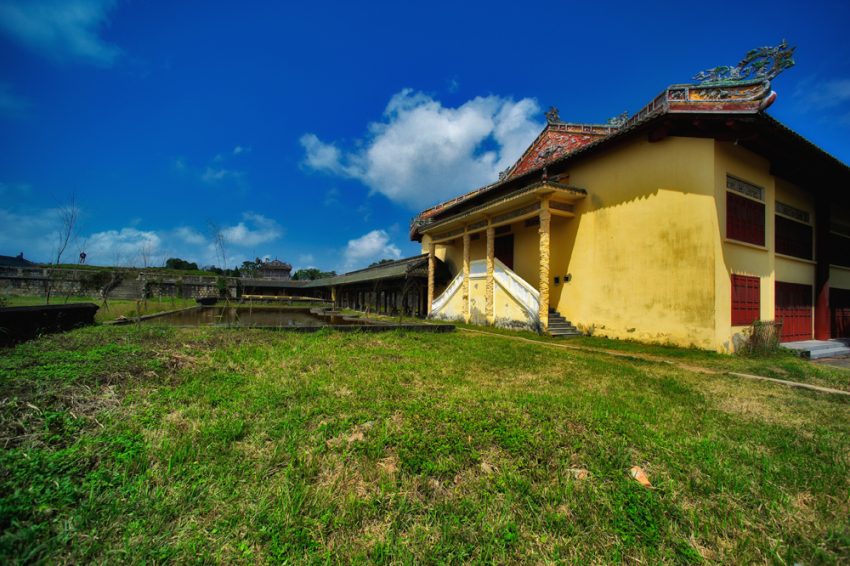
The Forbidden Purple City is one of the must-see places in Hue, offering a rare glimpse into the secretive world of Vietnam's emperors. Hidden behind Thai Hoa Palace and once accessible only to the royal family, it was the most exclusive section of the Imperial City. Although much of it was destroyed by fire and wartime damage, the remaining structures still evoke the beauty and prestige this complex once embodied. It is often visited on walking tours of Hue, and wandering through its open courtyards and restored halls gives a vivid sense of how life unfolded in this royal sanctuary.
Today, visitors find a compelling mix of quiet ruins and carefully restored buildings such as the Left House, Right House, Royal Theatre, and Thai Binh Reading Pavilion. Each structure offers insight into imperial rituals, daily routines, and the refined artistic tastes of the Nguyen Dynasty. This spot is one of the best places to see in Forbidden Purple City for travellers curious about Vietnam's royal heritage.
Table of Contents
- History and Significance of the Forbidden Purple City
- Things to See and Do in the Forbidden Purple City
- How to Get to the Forbidden Purple City
- Practical Tips on Visiting the Forbidden Purple City
- Where to Stay close to the Forbidden Purple City
- Is the Forbidden Purple City Worth Visiting?
- FAQs for Visiting the Forbidden Purple City
- Nearby Attractions to the Forbidden Purple City
History and Significance of the Forbidden Purple City
The Forbidden Purple City was modeled after Beijing's famed Forbidden City and served as the most private core of the Nguyen Dynasty's imperial residence. Entry was strictly limited; only the emperor, select family members, and specifically permitted attendants could pass through its gates. It symbolised the heart of royal authority and the emperor's divine status, offering a protected world where daily life unfolded behind high walls.
The area once housed an intricate network of palaces, living quarters, altars, gardens, kitchens, and entertainment spaces. Tragically, a major fire in 1947 destroyed most of the wooden structures, and later battles during the Tet Offensive caused further damage. Today, the site remains largely open ground dotted with vestiges of foundations, terrace steps, and small surviving structures, giving it an evocative, contemplative atmosphere.
Despite its losses, the Forbidden Purple City remains historically significant as part of the UNESCO-listed Complex of Hue Monuments. The recovered and restored buildings offer valuable insight into royal customs and architectural traditions, preserving what remains of this once-magnificent imperial enclave.
Things to See and Do in the Forbidden Purple City
Start at the Left House and Right House, which flank the area behind Thai Hoa Palace. These restored halls were where civil and military mandarins gathered to prepare before meeting the emperor. The Right House is particularly impressive, featuring elegant murals and the large French gift mirror presented to Emperor Dong Khanh.
The restored Royal Theatre, built in 1826, is one of the most atmospheric buildings within the Forbidden Purple City. Painted in vivid red and gold, it remains a lively place thanks to short musical performances staged throughout the day. Its restoration in 2004 has allowed visitors to experience a touch of courtly entertainment.
The Thai Binh Reading Pavilion is another highlight. Surrounded by bonsai gardens and decorated with ornate mosaics added by Emperor Khai Dinh, it was a relaxing refuge for emperors seeking quiet, poetry, and music. Its peaceful setting offers a beautiful contrast to the open ruins that dominate the rest of the grounds, making it one of the top sights in Hue for travellers looking for a serene cultural stop.
How to Get to the Forbidden Purple City
Hue is served by Phu Bai International Airport, located about 30 minutes south of the city. For the best deals and a seamless booking experience, check out these flights to Hue on Booking.com. Frequent domestic flights from Hanoi and Ho Chi Minh City make it easy for travellers to reach Hue before continuing to the Imperial City.
For those arriving by train, Hue Railway Station is a convenient gateway to the city centre and the Citadel. Train schedules and bookings can be found on Omio. The station connects Hue with major cities along Vietnam’s Reunification Line.
Reaching the Forbidden Purple City by car is straightforward, whether you're driving independently or arriving by taxi from central hotels. The Citadel's main entrances are well signposted, and parking areas are available near the Ngo Mon Gate.
Practical Tips on Visiting the Forbidden Purple City
- Suggested tips: Wear comfortable shoes as the site involves long walks across open courtyards and uneven surfaces.
- Best time to visit: Early morning or late afternoon for cooler temperatures and softer light.
- Entrance fee: Included within the general Imperial City ticket.
- Opening hours: Typically 7:00–17:00, with longer hours in peak season.
- Official website: Check the Hue Monuments Conservation Center for updated details.
- How long to spend: Two hours is ideal to explore the main restored buildings and surrounding grounds.
- Accessibility: Large open areas are accessible, but some pavilions have steps.
- Facilities: Toilets, shade areas, and small souvenir kiosks are available within the Imperial City.
- Photography tip: The restored Royal Theatre and Thai Binh Pavilion offer the best architectural shots.
- Guided tours: Local guides inside the Imperial City provide helpful context on Nguyen Dynasty traditions.
- Nearby food options: Restaurants line the streets just south of the Citadel, especially along Le Loi and Chu Van An.
Where to Stay close to the Forbidden Purple City
Hue offers a selection of comfortable hotels within easy reach of the Citadel. A popular riverside choice is Azerai La Residence Hue, known for its colonial charm and scenic Perfume River views. Travellers seeking boutique comfort can try Pilgrimage Village Boutique Resort & Spa, which offers a tranquil garden setting. Another convenient option is Saigon Morin Hotel, a historic property close to the river and a short drive from the Citadel.
Is the Forbidden Purple City Worth Visiting?
Yes, the Forbidden Purple City is absolutely worth visiting, especially for travellers interested in imperial Vietnam and UNESCO World Heritage sites. Its restored buildings, historic atmosphere, and quiet open spaces provide a poignant look into the lives of Nguyen emperors. Even with much of it lost, the remaining structures offer a memorable and meaningful experience.
What Other Travellers Say...

Hue Historic Citadel, located in Huế City, is a sprawling walled complex and former royal palace where visitors can wander among grand palace buildings, temples and fortifications that many find photogenic and evocative of the past; guided tours, audio guides via QR codes, or self-guided walking let you explore at your own pace, though expect a lot of walking and bring water and sun protection, and note ongoing restoration work with locals sometimes in traditional dress adding to the atmosphere.


FAQs for Visiting the Forbidden Purple City
Nearby Attractions to the Forbidden Purple City
- Thai Hoa Palace: The grand audience hall where emperors held important ceremonies.
- Ngo Mon Gate: The imposing southern entrance to the Imperial City.
- Dien Tho Residence: The elegant residence of the Queen Mother.
- Truong Sanh Residence: A peaceful complex with gardens and traditional architecture.
- The Imperial City Walls: A scenic area ideal for walking and understanding Hue’s defensive design.
The Forbidden Purple City appears in our Complete Guide to Visiting Hue!

Moira & Andy
Hey! We're Moira & Andy. From hiking the Camino to trips around Europe in Bert our campervan — we've been traveling together since retirement in 2020!
This website uses affiliate links which may earn a commission at no additional cost to you!
Planning Your Visit
Typically 7:00-17:00, with longer hours in peak season.
Included within the general Imperial City ticket.
Nearby Attractions
- Nhat Thanh Lau (0.1) km
Historic Building - Halls of the Mandarins (0.1) km
Historic Building - The Royal Theatre (0.1) km
Historic Building - The Royal Library (0.1) km
Historic Building - Thai Hoa Palace (0.1) km
Palace - Meridian Gate (0.3) km
City Gate - Dien Tho Residence (0.3) km
Historic Building - Tu Phuong Vo Su Tower (0.3) km
Historic Building - Hung Mieu Temple (0.3) km
Historic Building - Noon Gate (0.3) km
City Gate