Durrës Amphitheatre
Ruins in Durrës
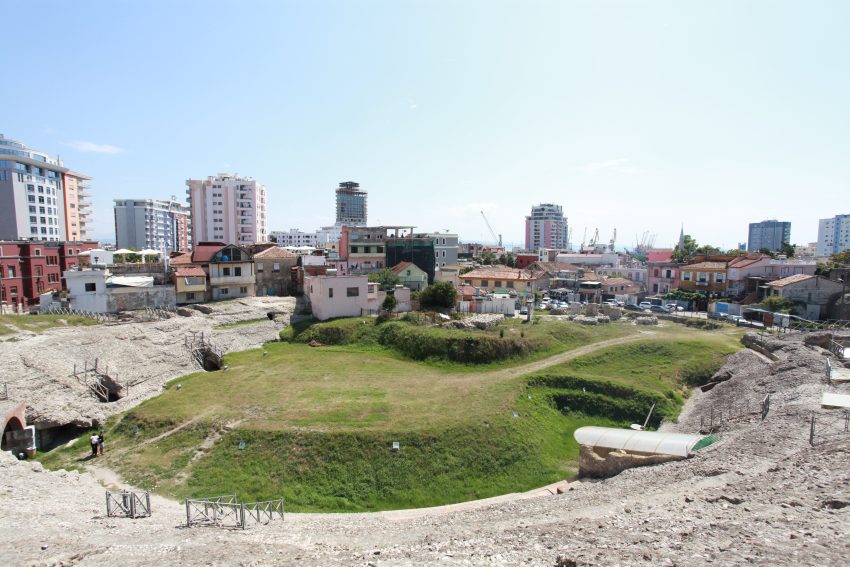
Hidden among the winding streets of Durrës lies one of the must-see places in Durrës - a vast Roman amphitheater that once echoed with the roar of crowds and the clash of gladiators. Built during the reign of Emperor Trajan in the 2nd century AD, the Durrës Amphitheater is a powerful reminder of the city's importance as an Adriatic hub of the Roman Empire. Today, it stands half-buried under modern homes, a haunting contrast between past and present.
Walking through its exposed ruins gives a sense of discovery that few other ancient sites can match. You can descend into the cool, vaulted corridors beneath the stands, tracing the Roman engineering that alternates brickwork and irregular stone, known as opus incertum. This spot is a highlight of any walking tour of Durrës, where ancient history hides in plain sight among the city's vibrant coastal life.
History and Significance of Durrës Amphitheater
The Durrës Amphitheater was constructed in the early 2nd century AD, during the prosperous reign of Emperor Trajan - one of the most revered rulers of Rome's golden age. At its peak, the structure could hold between 15,000 and 20,000 spectators, making it one of the region's largest Roman buildings. Gladiatorial games and theatrical performances were staged here, entertaining the citizens of Dyrrachium, as Durrës was then known.
Over the centuries, the amphitheater faced the ravages of time and nature, suffering significant damage from earthquakes in the 6th and 10th centuries. With the decline of the Roman Empire in the 4th century, the arena took on new meaning. It became a burial ground, and later, a small Christian chapel was built within its walls. This church was richly decorated with mosaics of saints including St. Stephen, the patron martyr of Durrës. Rediscovered only in 1966, the site remains partly unexcavated, hidden beneath houses that crowd around its elliptical form. Its survival offers a rare glimpse into both pagan and early Christian Durrës.
Things to See and Do in Durrës Amphitheater
Exploring the amphitheater is one of the top attractions in Durrës for history lovers. The arena itself measures roughly 60 by 40 meters, enclosed in an impressive 130-meter-wide oval. Visitors can walk the ancient steps, venture beneath the seating area to see Roman construction techniques up close, and admire the restored sections of mosaic that once adorned the chapel walls.
Guided tours are available daily until 3 pm, provided by knowledgeable local guides who work on a tipping basis. Their insights bring the ruins to life, revealing stories of gladiators, earthquakes, and faith. As you wander through the exposed vaults and shaded chambers, it's easy to imagine the amphitheater bustling with citizens two millennia ago. With its central location, it's a great place to visit on a walking tour of Durrës, connecting seamlessly with nearby Roman walls, Byzantine towers, and the city's modern seafront promenade.
How to Get There
The Durrës Amphitheater is located in the heart of Durrës, a short walk from the city's main boulevard and the seafront. Durrës is about 35 km west of Tirana, and can be reached easily by bus or taxi from Tirana International Airport. Trains between Tirana and Durrës are currently not in operation, but regional buses run frequently throughout the day.
If you are driving, parking can be found in nearby streets or small paid car parks close to the site. If you are looking to rent a car in Albania I recommend having a look at Discover Cars, first, as they compare prices and review multiple car rental agencies for you. The amphitheater’s location within the old town means some narrow lanes, so walking from your accommodation or the main square is often easiest.
Practical Tips on Visiting Durrës Amphitheater
- Best time to visit Durrës Amphitheater: Spring and autumn, when the weather is pleasant for exploring outdoor ruins.
- Entrance fee in Euros: Around €3 per adult (subject to change).
- Opening hours: Typically open daily from 9 am to 4 pm.
- Official website: No dedicated site, but information is available through the Durrës Tourism Office.
- How long to spend: 45 minutes to 1 hour.
- Accessibility: Uneven surfaces; some steps and areas are not suitable for wheelchair users.
- Facilities: Small ticket booth and guide area; no toilets on site.
- Photography tip: Visit early in the morning for softer light and fewer crowds.
- Guided tours: Local English-speaking guides are available on-site until 3 pm.
- Nearby food options: Cafés and restaurants are within a few minutes’ walk in the city center.
Is Durrës Amphitheater Worth Visiting?
Absolutely. The Durrës Amphitheater is not just a relic of the Roman Empire, but a layered historical site that tells the story of Durrës through centuries of change. Its blend of Roman grandeur, Christian heritage, and modern surroundings make it one of the most atmospheric places to explore in Albania. Whether you're interested in ancient engineering, early Christian art, or simply want to experience a site that feels like a hidden discovery, it's well worth your time.
What Other Travellers Say...

Durrës Amphitheatre sits near the city centre and a short walk from the beach; its remains date to the 2nd century CE and the site once held around 20,000 spectators. Visitors say it feels like an active archaeological site with ongoing excavations, informative signs, and staff or guides available; entry is modestly priced and can be paid by cash or card, though some guests saw most of it from outside without paying. The area has steep, narrow streets so it's best explored on foot, it's generally not crowded, and nearby you'll find shops and places to eat, but facilities such as toilets may be limited.


FAQs for Visiting Durrës Amphitheater
Nearby Attractions to Durrës Amphitheater
- Venetian Tower - A striking medieval tower once part of the city's defensive walls.
- Durrës Archaeological Museum - Showcasing artifacts from ancient Dyrrachium to the Byzantine era.
- Byzantine Forum - The remains of an ancient square surrounded by marble columns.
- Fatih Mosque - A 16th-century Ottoman mosque built on Roman foundations.
- Durrës Beach Promenade - Perfect for a relaxing stroll or seaside meal after exploring the ruins.
The Durrës Amphitheatre appears in our Complete Guide to Visiting Durrës!

Moira & Andy
Hey! We're Moira & Andy. From hiking the Camino to trips around Europe in Bert our campervan — we've been traveling together since retirement in 2020!
This website uses affiliate links which may earn a commission at no additional cost to you!
Planning Your Visit
9am-7pm Apr-mid-Oct, to 6pm mid-Oct-Mar
200 lekë
Nearby Attractions
- Aleksandër Moisiu’s House-Museum (0.1) km
Historic Building and Museum - Durrës Great Mosque (0.2) km
Mosque - Sheshi Liria (0.2) km
Square - Durrës Castle (0.2) km
Castle - Venetian Tower (0.2) km
Tower - Byzantine Forum (0.4) km
Ruins - Durrës Archaeological Museum (0.4) km
Museum - Well of Tophane (0.5) km
Historic Site - Royal Villa of Durrës (0.7) km
Historic Building - Museum of Martyrs and Hall of War Relics (0.8) km
Museum