Cung Truong Sanh, Hue
Historic Building in Hue
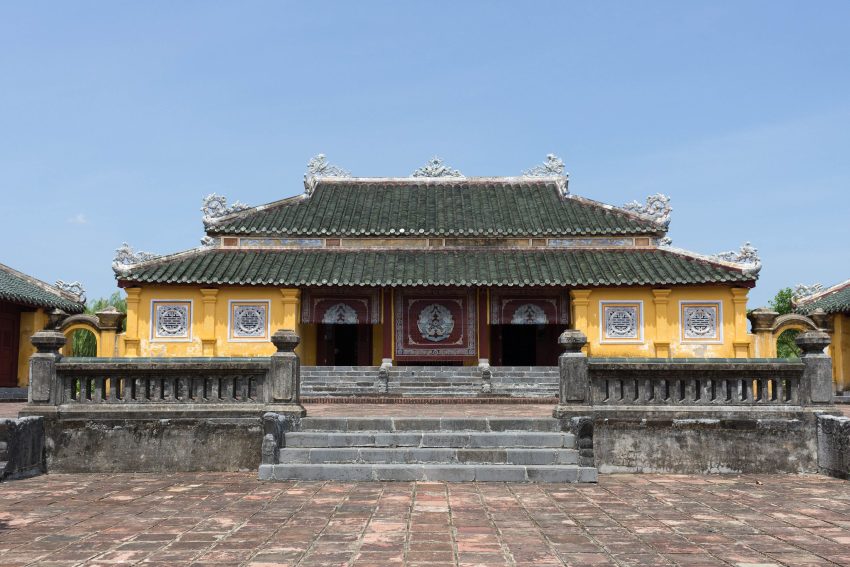
Cung Truong Sanh, also known as the Grand Queen Mother's Residence, sits in the northwest corner of the Hue Imperial Citadel and offers one of the most atmospheric glimpses into royal domestic life. Originally built in 1821 during the reign of Emperor Minh Mang, it began as a tranquil flower garden where emperors could invite their mothers to relax amidst streams, rockeries, and elegant pavilions. Over time, it evolved into a residence and working space for several Queen Mothers, becoming one of the top attractions in Hue and a great place to visit on a tour of Hue.
Known for its refined landscapes, symbolic layout, and poetic charm, the palace complex was once regarded as one of the 20 scenic spots of the imperial capital. Today, after major restoration work in 2005-2007, visitors can once again appreciate its quiet courtyards, reconstructed halls, and garden features that reflect the aesthetic values of the Nguyen Dynasty.
Table of Contents
- History and Significance of Cung Trường Sanh
- Things to See and Do in Cung Trường Sanh
- How to Get to Cung Trường Sanh
- Practical Tips on Visiting Cung Trường Sanh
- Where to Stay close to Cung Trường Sanh
- Is Cung Trường Sanh Worth Visiting?
- FAQs for Visiting Cung Trường Sanh
- Nearby Attractions to Cung Trường Sanh
History and Significance of Cung Trường Sanh
Cung Trường Sanh was initially conceived as a garden retreat, offering a peaceful sanctuary for the mothers of Nguyen rulers. Its early name and function emphasised filial piety, a core Confucian value, while its landscape design encouraged rest, contemplation, and poetic inspiration. The layout originally symbolised the number “three,” with a main palace in the centre, buildings in front, and a pavilion at the rear, all surrounded by subsidiary structures.
Under King Thieu Tri, the palace was significantly expanded and linked by covered corridors, transforming it into a more complex residential compound. Key elements included Tho Khang Palace at the centre, Ngu Dai Dong Duong to the front, and Van Phuc Tower to the back. The gardens featured artificial rock formations, flowing streams, and graceful red bridges that enhanced the palace’s lyrical scenery.
During the final years of the Nguyen Dynasty, Cung Trường Sanh became home to several queen consorts, including Le Thien Anh, Tu Minh, and Tien Cung. These women shaped the palace’s daily rhythms and helped preserve its ceremonial and domestic functions. In 1923, King Khai Dinh renovated the complex further and officially renamed it Truong Sanh Palace, continuing its evolution as a significant royal enclave.
Things to See and Do in Cung Trường Sanh
Visitors entering Cung Trường Sanh will find a peaceful compound filled with reconstructed halls, shady corridors, and landscaped corners. The restored Tho Khang Palace forms the heart of the complex, offering insight into how Queen Mothers once lived and conducted their daily activities. The layout encourages slow, reflective exploration, much like its original garden design intended.
The grounds include artificial rockeries and remnants of streams, crossed by red-painted bridges that once defined the palace’s scenic charm. Though not all features survive in their original form, the restored landscape successfully preserves the tranquil ambience that made the palace a favourite residence within the citadel.
Walking through the network of connected buildings also reveals architectural transitions from Minh Mang’s era to later 19th- and early 20th-century styles. Visitors can trace these changes through decorative motifs, building materials, and the layout of the complex, offering a richer understanding of how the Nguyen court adapted its private spaces over time.
How to Get to Cung Trường Sanh
Phu Bai International Airport, the closest airport to Hue, is located about 16 kilometres from the city centre and offers regular domestic flights. For the best deals and a seamless booking experience, check out these flights to Hue on Booking.com.
Hue Railway Station provides convenient connections to major Vietnamese cities, including Da Nang, Hanoi, and Ho Chi Minh City. Train schedules and bookings can be found on Omio. From the station, it is a short drive to the Imperial Citadel.
Travelling by car is simple, with parking areas located near the main entrances of the Citadel. From there, visitors can walk through the Imperial Enclosure to reach the northwest corner where Cung Trường Sanh is located.
Practical Tips on Visiting Cung Trường Sanh
- Suggested tips: Wander slowly to appreciate the garden features and architectural details that define this palace.
- Best time to visit: Early morning or late afternoon for cooler temperatures and soft, atmospheric light.
- Entrance fee: Included with the Imperial City ticket.
- Opening hours: Typically 8:00-17:30, though seasonal variations may occur.
- How long to spend: Around 30-45 minutes exploring the residence and gardens.
- Accessibility: Mostly accessible, though some uneven paths and restored bridges require care.
- Facilities: Restrooms and small drink stalls are available elsewhere within the Imperial City.
- Photography tip: Capture the red bridges and rockeries to evoke the palace’s classical garden aesthetic.
- Guided tours: Many guided tours include this palace for its insight into royal domestic life.
- Nearby food options: Various cafés and restaurants can be found just outside the Citadel.
Where to Stay close to Cung Trường Sanh
Staying near the Imperial City makes visiting sites like Cung Trường Sanh especially convenient. The refined Azerai La Residence offers elegant riverside rooms close to the citadel. Visitors seeking boutique tranquillity may enjoy Le Domaine de Cocodo, known for its peaceful setting. Alternatively, Villa Hue provides an intimate stay with easy access to key historic landmarks.
Is Cung Trường Sanh Worth Visiting?
Cung Trường Sanh is definitely worth visiting for those interested in the personal lives of the Nguyen royal family, garden architecture, and the quieter corners of the Imperial City. Its restored structures, poetic landscapes, and historical depth make it one of Hue’s most rewarding palace complexes, especially for travellers who appreciate serene, culturally rich environments.
What Other Travellers Say...

Truong Sanh Palace, also called the Longevity Palace, is a tranquil, somewhat secluded residence within the Imperial City of Huế noted for its authentic atmosphere, mustard-yellow buildings, gardens, ponds and a moon- or semi-circular canal with a small artificial island; visitors highlight its peaceful park setting and that many interior rooms are closed while the grounds and waterside views remain the main attractions.


FAQs for Visiting Cung Trường Sanh
Nearby Attractions to Cung Trường Sanh
- Purple Forbidden City: Former private residence of the Nguyen emperors.
- Dien Tho Residence: Home and audience hall of the Queen Mothers.
- Hien Lam Pavilion: A grand memorial structure within the Dynastic Temple complex.
- Thai Hoa Palace: The primary throne hall of the Nguyen emperors.
- The Mieu Temple: Ancestral shrine dedicated to the Nguyen emperors.
The Cung Truong Sanh appears in our Complete Guide to Visiting Hue!

Moira & Andy
Hey! We're Moira & Andy. From hiking the Camino to trips around Europe in Bert our campervan — we've been traveling together since retirement in 2020!
This website uses affiliate links which may earn a commission at no additional cost to you!
Planning Your Visit
Nearby Attractions
- Dien Tho Residence (0.1) km
Historic Building - Tu Phuong Vo Su Tower (0.3) km
Historic Building - Forbidden Purple City (0.3) km
Historic Building - Hung Mieu Temple (0.3) km
Historic Building - The Royal Library (0.3) km
Historic Building - Nhat Thanh Lau (0.3) km
Historic Building - Halls of the Mandarins (0.4) km
Historic Building - Mieu Temple (0.4) km
Historic Building - The Royal Theatre (0.4) km
Historic Building - Thai Hoa Palace (0.4) km
Palace