Civic Museum at Palazzo della Penna, Perugia
Historic Building and Museum in Perugia
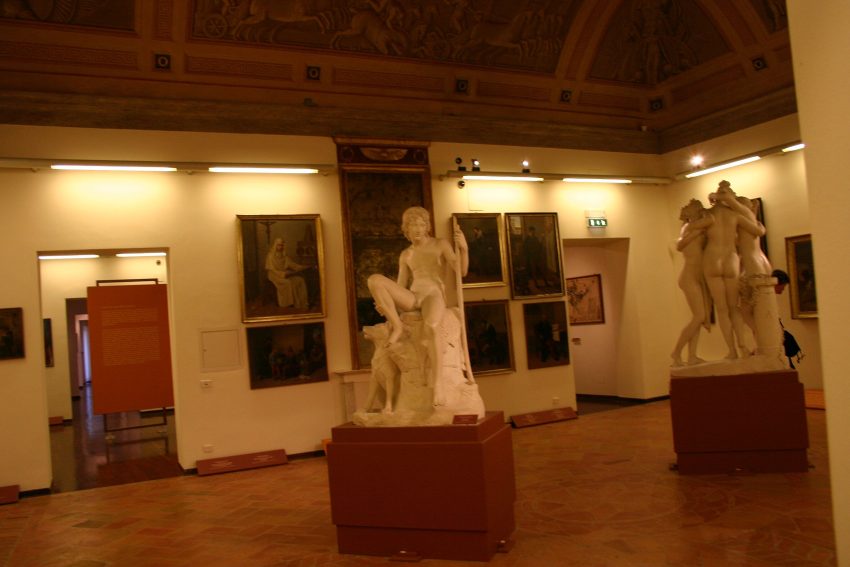
Set just below the historic centre, the Civic Museum at Palazzo della Penna feels like a bridge between Perugia's many historical layers and its contemporary cultural scene. Once the 17th century residence of Ascanio della Penna, a nobleman and art lover in the service of the Grand Duke of Tuscany, the building literally sits on top of a Roman amphitheatre and an ancient road. As you move through the lower galleries, stretches of medieval city wall emerge in the corridors, reminding you that this refined townhouse is rooted in far older stone. This combination of archaeology, frescoed ceilings and modern art makes the museum one of the best places to visit in Perugia if you enjoy seeing how a city continually reuses and reimagines its spaces.
The interiors are as eclectic as the building's history. Ceiling frescoes by Umbrian painter Antonio Castelletti tell the myth of Paris of Troy, while the Sala dei Paesaggi, or Landscape Room, surrounds you with trompe l'oeil vistas of the Umbrian countryside beneath a richly painted coffered ceiling. Add permanent collections devoted to Futurist artist Gerardo Dottori, multimedia galleries remembering the 1980 “Beuys Burri” meeting, and the relaxing BIOO Café at the entrance, and you have a museum that feels lived in and current rather than dusty or static, often visited on walking tours of Perugia that focus on modern and contemporary art.
Table of Contents
- History and Significance of the Civic Museum at Palazzo della Penna
- Things to See and Do in the Civic Museum at Palazzo della Penna
- How to Get to the Civic Museum at Palazzo della Penna
- Practical Tips on Visiting the Civic Museum at Palazzo della Penna
- Where to Stay close to the Civic Museum at Palazzo della Penna
- Is the Civic Museum at Palazzo della Penna Worth Visiting?
- FAQs for Visiting Civic Museum at Palazzo della Penna
- Nearby Attractions to the Civic Museum at Palazzo della Penna
History and Significance of the Civic Museum at Palazzo della Penna
Palazzo della Penna began life in the 17th century as the residence of Ascanio della Penna, a nobleman whose career in the service of the Grand Duke of Tuscany went hand in hand with a passion for collecting art. Choosing to build over the ruins of a Roman amphitheatre and an ancient road, he anchored his home in layers of Perugia's past, and even today parts of those foundations and sections of the medieval city walls are visible in the lower halls. The result is a building that reads almost like a cross section of Perugian history: Roman substructure, medieval fortifications and a Baroque noble residence all fused together.
As time passed and private palaces in Italian cities began to find new public roles, Palazzo della Penna was gradually transformed from noble residence into civic museum. The decision to keep and highlight elements such as the old walls and archaeological remains reflects a modern appreciation for the continuity of the site. Rather than sweeping away the past, the museum weaves it into the visitor route, so that you become aware not only of the artworks on display but also of the centuries of urban evolution beneath your feet.
Today, the Civic Museum at Palazzo della Penna plays an important role in Perugia's cultural ecosystem, complementing the National Gallery of Umbria's focus on older works with more recent art and interdisciplinary exhibitions. Its permanent collections honour figures like Gerardo Dottori, whose Futurist visions helped define an Umbrian modernity, and it preserves the memory of the influential “Beuys Burri” encounter in 1980 at Rocca Paolina, which brought together two very different approaches to contemporary art. In this sense, the museum is both archive and laboratory, documenting key moments while continuing to host new projects.
Things to See and Do in the Civic Museum at Palazzo della Penna
As you enter, pay attention to the building itself before you even start on the exhibitions. In the lower galleries, look for stretches of medieval wall and hints of the Roman structures that once occupied this ground; they give a tangible sense of how the museum sits on top of an ancient amphitheatre and road. Moving upstairs, lift your eyes to the ceilings: Umbrian artist Antonio Castelletti’s frescoes narrate the story of Paris of Troy, with mythological scenes unfolding above you like a painted tapestry.
One of the most atmospheric spaces is the Sala dei Paesaggi, where every wall is decorated with trompe l’oeil landscapes of the Umbrian countryside. These painted “windows” blur the line between interior and exterior, and the coffered, intricately painted ceiling completes the illusion that you are standing at the centre of an idealised landscape. Take your time here; it is easy to imagine how a 17th century noble family and their guests would have used this room for social gatherings, conversations and quiet reflection.
In the permanent collections, seek out the rooms dedicated to Gerardo Dottori, the Futurist painter whose work often captures the dynamism of modern life and the unique light of Umbria. His paintings sit in productive tension with the historic interiors, underlining the museum's mission to connect past and present. On the lower floor, the galleries devoted to the 1980 “Beuys Burri” meeting use photographs and multimedia displays to evoke that encounter between Joseph Beuys and Alberto Burri, whose contrasting methods of artistic expression helped redefine contemporary art discourse in Italy and beyond. After exploring the exhibitions, pause at the BIOO Café near the entrance, where you can enjoy coffee, tea, wine, sandwiches, cheeses and cured meats, sometimes accompanied by themed dinners, book presentations, lectures or concerts. It is a relaxed way to end a visit that blends art, history and everyday Perugian life.
How to Get to the Civic Museum at Palazzo della Penna
The Civic Museum at Palazzo della Penna is located in central Perugia, within easy walking distance of the main historic streets and squares. Perugia is served by the San Francesco d'Assisi - Umbria International Airport and is also reachable from major airports such as Rome or Florence, with onward travel by regional train, coach or hire car into the city. For the best deals and a seamless booking experience, check out these flights to Perugia on Booking.com. From arrival points in town, local buses, the minimetrò and taxis will bring you close to the historic centre, from where you can follow signs towards Palazzo della Penna.
If you are travelling by train, Perugia’s main station at Fontivegge has frequent connections with other cities in central Italy. Use Omnio to easily compare schedules, book train tickets, and find the best prices all in one place for a hassle-free journey across Italy. From the station, take the minimetrò or a city bus up to the centro storico, then walk downhill a short distance following local signage or a map to reach the museum; the route also allows you to combine a visit here with other central sights on foot.
Arriving by car, follow signs for Perugia and then for the historic centre, bearing in mind that much of the old town is a restricted traffic zone. Park in one of the public car parks on the outskirts or below the hilltop centre and use escalators, lifts or short walks along pedestrian streets to reach Palazzo della Penna. If you are looking to rent a car in Italy I recommend having a look at Discover Cars, first, as they compare prices and review multiple car rental agencies for you. Once in the vicinity, the museum is well signposted, and its location makes it easy to pair with nearby attractions and café stops.
Practical Tips on Visiting the Civic Museum at Palazzo della Penna
- Suggested tips: Combine your visit with a walk through nearby historic streets and a stop at Rocca Paolina or Piazza IV Novembre to see how Palazzo della Penna fits into Perugia's wider urban story.
- Best time to visit: Late morning or mid-afternoon tends to be quieter, giving you more space in the galleries; evenings are ideal if you are attending a special event or concert at the BIOO Café.
- Entrance fee: € 3
- Opening hours: Summer Season (May-October): Tuesdays – Sundays 10:00 am–7:00 pm April and August Only: Open 7 days a week: 10:00 am–7:00 pm Winter Season (November – March): Tuesdays – Sundays 10:00 am-6:00 pm
- How long to spend: Plan 60-90 minutes to explore the permanent collections, temporary exhibitions and the building’s historic rooms at a relaxed pace.
- Accessibility: The museum is housed in a historic building with multiple levels; lifts or ramps may be available on some routes, so visitors with reduced mobility should enquire at the entrance for the most accessible path.
- Facilities: The BIOO Café at the entrance serves drinks and light food and sometimes hosts cultural events; basic facilities such as toilets and information desks are available on site.
- Photography tip: Focus on ceiling frescoes, the trompe l’oeil landscapes in the Sala dei Paesaggi, and the contrast between historic architectural details and modern artworks; always respect any no-flash or photography restrictions.
- Guided tours: Look out for themed tours or talks linked to specific exhibitions, as well as events that delve into the “Beuys Burri” meeting or Gerardo Dottori’s work.
- Nearby food options: In addition to the café, the nearby streets offer plenty of trattorias, wine bars and gelaterias where you can continue your exploration of Umbrian flavours after the museum.
Where to Stay close to the Civic Museum at Palazzo della Penna
Staying near Palazzo della Penna puts you within easy walking distance of Perugia’s museums, squares and viewpoints. For a classic hotel with impressive views and good access to both the museum and the historic core, Sina Brufani offers an elegant base on the main ridge of the old town. If you prefer something more intimate and characterful, Hotel Priori Secret Garden places you in the medieval streets within a short stroll of Palazzo della Penna, Piazza IV Novembre and Rocca Paolina. A relaxed, budget-friendly option is Albergo Morlacchi, which provides a central location and easy access on foot to the museum and many of Perugia’s best restaurants and bars.
Is the Civic Museum at Palazzo della Penna Worth Visiting?
The Civic Museum at Palazzo della Penna is definitely worth visiting, especially if you want to see how Perugia has moved from ancient amphitheatre to Baroque townhouse to contemporary cultural hub. The mix of historic spaces, mythological frescoes, Futurist paintings, and multimedia installations about the “Beuys Burri” meeting gives the museum a distinctive profile compared with more traditional art galleries. Add in the traces of Roman and medieval structures under your feet and the welcoming BIOO Café at the entrance, and you have a place where you can easily spend a rewarding hour or two, whether you are an art enthusiast or a curious city explorer.
What Other Travellers Say...

Civic Museum of Palazzo della Penna on Via Prospero Podiani in Perugia is a compact, well-curated art museum housed in a palazzo just outside the city wall; visitors praise its thoughtful, modern exhibitions—especially displays of the Perugian painter Gerardo Dottori—and note striking features like interesting stair architecture and a church space with notable medieval frescoes, plus preserved ground-floor displays related to Franciscan monks' winemaking; tickets may offer discounts or combined entry with nearby sites, and there is a small café on site.


FAQs for Visiting Civic Museum at Palazzo della Penna
Nearby Attractions to the Civic Museum at Palazzo della Penna
- Rocca Paolina: Atmospheric remains of a 16th century fortress built into and under the city, offering tunnels, vaulted spaces and dramatic viewpoints.
- Piazza IV Novembre: Perugia's main square, home to the Great Fountain, Cathedral of San Lorenzo and Palazzo dei Priori, and the traditional heart of civic life.
- National Gallery of Umbria: Major regional art museum housed in Palazzo dei Priori, with masterpieces from the Middle Ages to the modern era.
- Cathedral of San Lorenzo: Historic cathedral overlooking Piazza IV Novembre, marking the site of the ancient Roman forum and Perugia's religious centre.
- Etruscan Well (Pozzo Etrusco): Ancient waterwork hidden within the old town, showcasing the engineering ingenuity that sustained Perugia long before modern times.
The Civic Museum at Palazzo della Penna appears in our Complete Guide to Visiting Perugia!

Moira & Andy
Hey! We're Moira & Andy. From hiking the Camino to trips around Europe in Bert our campervan — we've been traveling together since retirement in 2020!
This website uses affiliate links which may earn a commission at no additional cost to you!
Planning Your Visit
Summer Season (May-October): Tuesdays - Sundays 10:00 am-7:00 pm
April and August Only: Open 7 days a week: 10:00 am-7:00 pm
Winter Season (November - March): Tuesdays - Sundays 10:00 am-6:00 pm
€ 3
Nearby Attractions
- Rocca Paolina (0.1) km
Castle and Gallery - Piazza Italia (0.1) km
Square - National Archeological Museum of Perugia (0.2) km
Museum - Palazzo Baldeschi al Corso (0.3) km
Palace - Perugino Monument (0.3) km
Monument - Palazzo del Capitano del Popolo (0.4) km
Palace - Corso Vannucci (0.4) km
Street - Nobile Collegio del Cambio (0.4) km
Museum - National Gallery of Umbria (0.4) km
Gallery - Nobile Collegio della Mercanzia (0.4) km
Historic Building and Museum