Cidade da Cultura de Galicia, Santiago de Compostela
Arts Venue, Museum and Notable Building in Santiago de Compostela
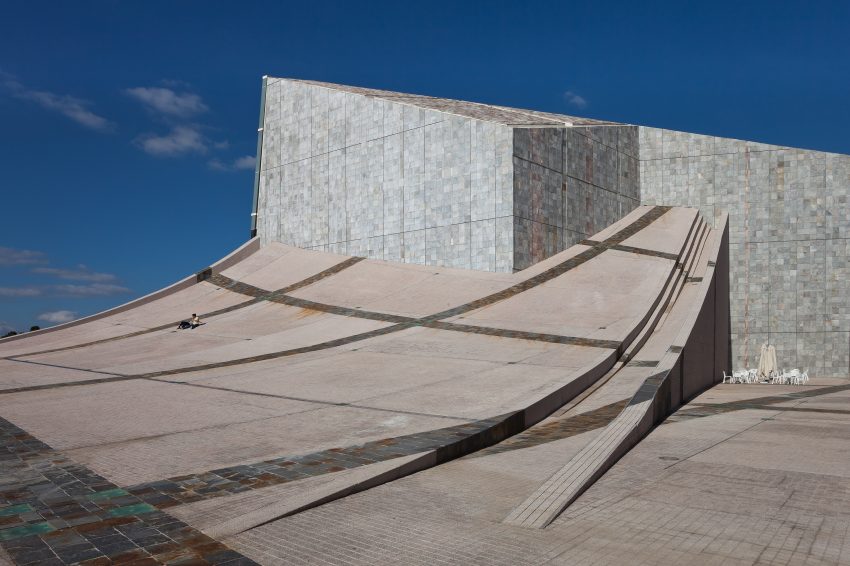
Cidade da Cultura de Galicia in Santiago de Compostela is a large contemporary cultural complex on Monte Gaiás, set above the city rather than in the old town. It brings together museum spaces, public institutions, and open plazas in a campus designed around sweeping stone-and-glass forms that are easy to notice from a distance. The setting is part of the experience: you arrive on a hillside, step into wide open spaces, and see the buildings change as you move around them.
The site matters because it gives Santiago a very different architectural and cultural stop from the cathedral quarter. Visitors usually notice the broad terraces, sculptures, and long sightlines over the city, along with rotating exhibitions in the museum areas when they are open. It works best for travelers interested in contemporary architecture, quieter outdoor spaces, and a visit that can be as short or as unhurried as they want.
Table of Contents
- History and Significance of the Cidade da Cultura de Galicia
- Things to See and Do in the Cidade da Cultura de Galicia
- How to Get to the Cidade da Cultura de Galicia
- Practical Tips on Visiting the Cidade da Cultura de Galicia
- Where to Stay Close to the Cidade da Cultura de Galicia
- Is the Cidade da Cultura de Galicia Worth Visiting?
- For Different Travelers
- FAQs for Visiting Cidade da Cultura de Galicia
History and Significance of the Cidade da Cultura de Galicia
The Cidade da Cultura de Galicia was conceived as a major cultural landmark for the region, designed to bring together exhibitions, research, and public life in one futuristic campus. Its hilltop location on Monte Gaiás was chosen to create a new cultural “acropolis” overlooking Santiago de Compostela.
Architecturally, the complex is closely associated with Peter Eisenman’s vision: sweeping, topographic lines that appear to rise from the terrain. That design ambition is a big part of why the site is so polarizing and memorable-some visitors come primarily to admire the forms, while others treat the museums and library as the main event.
Today, the Cidade da Cultura functions as a mix of cultural venues (including the Museo Centro Gaiás), public institutions (library and archives), and outdoor public space. That blend makes it feel less like a single museum and more like a modern district you can explore at your own pace.
Things to See and Do in the Cidade da Cultura de Galicia
Start outdoors: the plazas, ramps, and terraces are made for wandering, with sculpture installations and playful open areas that many travelers find unexpectedly fun. On misty mornings, the atmosphere can be dramatic, and on clear days the viewpoints are a highlight.
Inside, the Museo Centro Gaiás is the most straightforward “visitor” stop, often hosting rotating exhibitions that can be a great add-on even if you’re not an art specialist. Many travelers mention that the exhibitions are free, which makes it easy to pop in without overcommitting.
If you enjoy quieter cultural spaces, consider visiting the library and archive areas (where accessible to the public) for a different side of the complex-more local, more civic, and a nice contrast to the monumental architecture. If you prefer structure, look for guided visits that explain the design ideas and help you connect the campus to Santiago’s broader story.
How to Get to the Cidade da Cultura de Galicia
The nearest airport is Santiago-Rosalía de Castro Airport (SCQ); Porto Airport (OPO) and A Coruña Airport (LCG) are also useful alternatives depending on your route and flight prices. For the best deals and a seamless booking experience, check out these flights to Santiago de Compostela on Booking.com.
Santiago de Compostela is well connected by rail, and arriving by train is often the easiest way to reach the city center before continuing on to Monte Gaiás by local transport, taxi, or on foot. Train schedules and bookings can be found on Omio.
If you're driving, you can reach Monte Gaiás by road and park near the complex, which is convenient if you're combining it with other day trips around Galicia. If you are looking to rent a car in Spain I recommend having a look at Discover Cars, first, as they compare prices and review multiple car rental agencies for you.
Practical Tips on Visiting the Cidade da Cultura de Galicia
- Official website: https://www.cidadedacultura.gal/
- Entrance fee: Free (exhibitions often free; guided visits and special events may require a ticket).
- Opening hours: Daily: 08:00–23:00.
- Best time to visit: Go in the morning for softer light on the architecture and fewer people on the plazas, or late afternoon for views and photos. If the weather is changeable, plan a flexible visit so you can enjoy both interiors and exteriors.
- How long to spend: Allow 1-2 hours for a relaxed walk around the outdoor spaces and a quick exhibition stop. Add another hour if you want to see multiple buildings or take a guided visit.
- Accessibility: The site is large and built on a hill, with long ramps and wide open spaces, so it can feel demanding on foot. If mobility is a concern, consider arriving by taxi/bus and focusing on one building plus the nearest viewpoints.
- Facilities: Expect a mix of museum-style amenities (restrooms, information desk when open) and big outdoor areas with limited shelter. Bring water and a layer-wind and mist are common on the hill.
Where to Stay Close to the Cidade da Cultura de Galicia
The best area to base yourself is Santiago’s historic center (Cidade Vella) for walkability, atmosphere, and easy access to the main sights.
If you want to pair the Cidade da Cultura with classic Santiago highlights, staying central makes it simple to explore the old town by day and head up to Monte Gaiás when you’re ready. These five options cover different budgets and travel styles, while keeping you well placed for both the historic core and transport links.
Parador de Santiago de Compostela (Hostal dos Reis Católicos) Chosen for its once-in-a-lifetime setting right on the main square and a deeply historic feel that contrasts beautifully with the modern Cidade da Cultura.
NH Collection Santiago de Compostela A strong pick for comfort and consistency, with an easy walk or quick ride into the center and a calmer, more spacious vibe.
Hotel Costa Vella Included for its boutique character and garden-like calm, ideal if you want a quieter stay while remaining close to the old town.
Eurostars Gran Hotel Santiago A practical choice with good access to the city’s main roads and transport, helpful if you’re mixing city time with day trips.
Hotel Gelmírez Recommended for convenience near the train station-great for short stays, early departures, or travelers arriving by rail.
Is the Cidade da Cultura de Galicia Worth Visiting?
Yes-especially if you enjoy contemporary architecture, big public spaces, and the idea of seeing a different side of Santiago beyond the cathedral and medieval lanes. The complex is visually striking, the views can be excellent, and the ability to drop into free exhibitions makes it a low-risk addition to your itinerary.
Honest Pivot: If you’re short on time, dislike long walks in exposed, hilly areas, or prefer lively, intimate neighborhoods, you may find the site feels too spread out and quiet. In that case, prioritize Santiago’s old town and consider the Cidade da Cultura only if you have extra time or a specific exhibition you want to see.
What Other Travellers Say...
Reviews are largely positive, with many travelers praising the bold, futuristic architecture and the way the complex blends into the hillside, plus the sweeping views from Monte Gaiás. Visitors also commonly mention enjoyable (often free) exhibitions and the option to explore both indoor spaces and large outdoor plazas with sculptures. The main downsides are that the site can feel quiet or deserted and that some people find it confusing to locate open entrances or arrive when a museum/exhibition area seems unexpectedly closed.





For Different Travelers
The Cidade da Cultura can be a quick “wow” stop or a half-day wander, depending on your interests. Think of it as part architecture park, part cultural venue-best enjoyed with a flexible plan and a willingness to explore.
Families with Kids
Families often appreciate the open-air spaces: there’s room for kids to move around, and the outdoor sculptures and plazas can feel like a giant playground with a view. It’s also easy to keep the visit short if attention spans run out.
To make it smoother, pick one indoor stop (usually the museum) and then spend the rest of the time outside. On windy or rainy days, plan for more indoor time so the visit doesn’t become a battle with the weather.
Couples & Romantic Getaways
For couples, the appeal is the atmosphere: sweeping lines, dramatic perspectives, and that “we’re somewhere unusual” feeling you don’t get in the old town. It’s a strong spot for photos together, especially in late afternoon light.
Pair it with a slow stroll back toward the center (if you like walking) or a quick taxi ride to a cozy dinner in the historic streets. The contrast between ultra-modern design and Santiago’s stone lanes makes for a memorable day.
Budget Travelers
Budget travelers tend to like the value: you can enjoy the architecture and outdoor spaces without spending anything, and many exhibitions are free. It’s also a satisfying “big sight” that doesn’t require a ticket commitment.
The main cost to watch is transport if you don’t want to walk up the hill. If you’re comfortable with hills, turning the visit into a scenic walk from the center can be part of the experience.
FAQs for Visiting Cidade da Cultura de Galicia
Getting There
Tickets & Entry
Visiting Experience
Tours, Context & Itineraries
Photography
Accessibility & Facilities
Food & Breaks Nearby
Safety & Timing
The Cidade da Cultura de Galicia appears in our Complete Guide to Visiting Santiago de Compostela!

Moira & Andy
Hey! We're Moira & Andy. From hiking the Camino to trips around Europe in Bert our campervan — we've been traveling together since retirement in 2020!
This website uses affiliate links which may earn a commission at no additional cost to you!
Planning Your Visit
Daily: 08:00-23:00.
Free (exhibitions often free; guided visits and special events may require a ticket).
Nearby Attractions
- Colexiata de Santa María do Sar (0.8) km
Church, Historic Building and Museum - Mercado de Abastos (1.6) km
Attraction, Bazaar and Market - Rúa Nova (1.6) km
Street - Praza do Toural (1.6) km
Area, Attraction and Square - Porta do Camiño (1.6) km
Attraction, Café and City Gate - Monasterio de San Paio de Antealtares (1.6) km
Church, Monastery and Museum - Museum of the Galician People (1.6) km
Historic Building, Historic Site and Museum - Parque de San Domingos de Bonaval (1.7) km
Gardens, Park and Viewing Point - Rúa do Vilar (1.7) km
Area, Street and Walk - Praza de Cervantes (1.7) km
Historic Site and Square