Cathédrale Saint-Étienne de Toulouse
Attraction, Cathedral and Religious Building in Toulouse
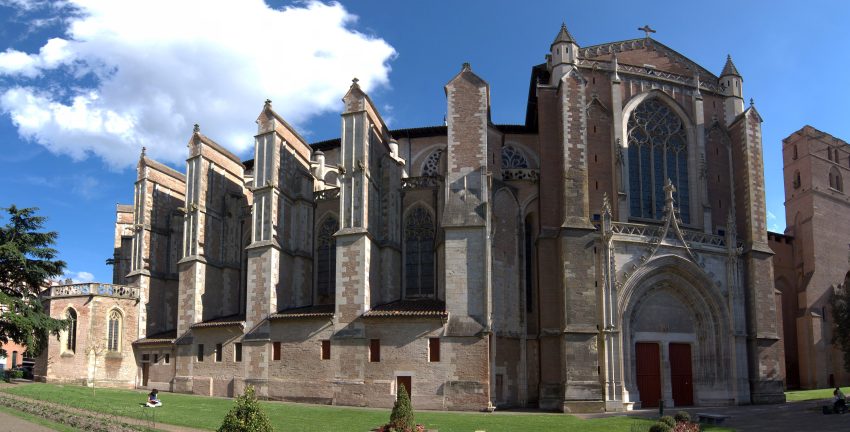
Cathédrale Saint-Étienne de Toulouse is one of the city's most distinctive landmarks, set on Place Saint-Étienne in the historic center of Toulouse, France. It's famous for its striking mix of architectural styles and materials, where soaring Gothic elements meet the warm, pinkish brick that gives Toulouse its “Ville Rose” nickname.
It's an easy add-on to a self-guided stroll or a walking tour that links Toulouse's major sights, and it also works beautifully as a quiet pause between busier stops. For the best first impression, approach from the surrounding old-town streets so the cathedral's unusual proportions and contrasting sections reveal themselves gradually.
Table of Contents
- History and Significance of the Cathédrale Saint-Étienne de Toulouse
- Things to See and Do in the Cathédrale Saint-Étienne de Toulouse
- How to Get to the Cathédrale Saint-Étienne de Toulouse
- Practical Tips on Visiting the Cathédrale Saint-Étienne de Toulouse
- Where to Stay Close to the Cathédrale Saint-Étienne de Toulouse
- Is the Cathédrale Saint-Étienne de Toulouse Worth Visiting?
- For Different Travelers
- FAQs for Visiting Cathédrale Saint-Étienne de Toulouse
- Nearby Attractions to the Cathédrale Saint-Étienne de Toulouse
History and Significance of the Cathédrale Saint-Étienne de Toulouse
Cathédrale Saint-Étienne is a living timeline of Toulouse: rather than presenting one perfectly uniform style, it reflects centuries of changes, ambitions, and rebuilding. That layered history is exactly what makes it so memorable, even for travelers who have seen many European cathedrals.
Beyond its role as a major place of worship, the cathedral anchors the Saint-Étienne neighborhood and helps explain Toulouse's identity as a southern French city with its own building traditions. The contrast between the brickwork and the more “northern” Gothic feel in parts of the interior is part of the story, not a flaw.
Today, it remains both a spiritual site and a cultural one, where visitors come for architecture, art, and a sense of calm in the middle of the city. Because restoration work can happen in phases, the experience may vary slightly from visit to visit.
Things to See and Do in the Cathédrale Saint-Étienne de Toulouse
Start by taking in the overall layout and the dramatic verticality inside: the height, vaulting, and shifting styles from one section to another are the cathedral’s signature. Move slowly and look back often; the perspective changes are part of the “wow” factor here.
Spend time with the details: chapels, carved elements, and the interplay of light across stone and brick. Even if you’re not an architecture specialist, you’ll notice how the building feels like two different cathedrals stitched into one, which makes exploring it more like a discovery than a checklist.
Before you leave, step back outside and walk a short loop around the immediate square to appreciate the exterior massing and brickwork. If parts are closed for restoration, treat it as a reason to focus on what is open and return later in your trip for a second look.
How to Get to the Cathédrale Saint-Étienne de Toulouse
The nearest major airport is Toulouse–Blagnac Airport (TLS), with additional regional options farther afield depending on your itinerary. For the best deals and a seamless booking experience, check out these flights to Toulouse on Booking.com.
Toulouse is well connected by rail, and arriving at Toulouse-Matabiau station makes it easy to continue by metro, bus, taxi, or on foot into the center. You can use SNCF Connect to check schedules, compare routes, and purchase tickets for National (SNCF ) and regional trains (TER). For a more streamlined experience, we recommend using Omio, which allows you to easily compare prices, schedules, and book tickets for both National and Regional travel across all of Europe, all in one place.
If you're traveling by car, aim for central Toulouse parking garages and plan to finish the last stretch on foot due to city-center traffic patterns. If you are looking to rent a car in France I recommend having a look at Discover Cars, first, as they compare prices and review multiple car rental agencies for you.
Practical Tips on Visiting the Cathédrale Saint-Étienne de Toulouse
- Official website: https://paroissescathedraletoulouse.fr/
- Entrance fee: Free; donations appreciated.
- Opening hours: Monday – Saturday: 08:00–19:00. Sunday: 09:00–19:00.
- Best time to visit: Go early in the day for a quieter interior and softer light, or later in the afternoon when the city center feels more relaxed.
- How long to spend: Plan for 30–60 minutes for a satisfying visit, longer if you like photographing details or lingering in side chapels.
- Accessibility: Entry routes can be a little confusing, and restoration areas may change circulation; allow extra time if you need step-free access.
- Facilities: Expect limited on-site amenities typical of an active cathedral; use nearby cafés and public facilities in the surrounding center.
Where to Stay Close to the Cathédrale Saint-Étienne de Toulouse
Base yourself in central Toulouse (Capitole/Saint-Étienne/Esquirol) for the easiest walking access to major sights, dining, and transit.
Grand Hotel de l’Opéra A classic, high-comfort choice right on the city’s most iconic square, ideal if you want a polished stay with instant access to the historic core.
Plaza Hotel Capitole Toulouse A reliable central option with a prime location for sightseeing on foot, especially convenient if you want to be near the main city buzz.
Hôtel des Arts A smaller, characterful stay that suits travelers who prefer boutique vibes and a quieter feel while still being close to the center.
Ibis Styles Toulouse Centre Capitole Good value for a central base, practical for short stays and travelers who prioritize location and simplicity over extras.
Mercure Toulouse Centre Wilson Capitole A comfortable mid-to-upscale pick near Place Wilson, handy for shopping, dining, and easy walks to the cathedral and riverfront.
Is the Cathédrale Saint-Étienne de Toulouse Worth Visiting?
Yes, it's worth visiting, especially if you enjoy architecture, city history, or simply want a beautiful, reflective stop in the heart of Toulouse. The cathedral's unusual blend of styles makes it stand out from “standard” cathedral visits, and it fits effortlessly into a day of walking the old town.
Honest Pivot: If you’re short on time and only want one religious interior, or if restoration closures would frustrate you, you might prefer focusing on a single fully open highlight and spending the rest of your time along the Garonne or in Toulouse’s museums. But for most travelers, even a brief visit here delivers a strong sense of place.
What Other Travellers Say...

Travelers rate the cathedral very highly overall, praising its impressive scale, soaring interior, and the unusual mix of architectural styles that makes it feel distinct from other churches in the city. Many visitors highlight the brickwork and the atmosphere inside, and several mention it as a must-see stop on a Toulouse itinerary. The most common downsides are restoration work that can close off sections and occasional confusion about which entrance to use or whether it's open.


For Different Travelers
Cathédrale Saint-Étienne works well as a flexible stop: you can keep it quick and visual, or slow down and let the details pull you in. It's also easy to combine with nearby squares, cafés, and a broader old-town walk.
Families with Kids
Kids often respond well to the cathedral’s sense of scale, especially the height and the “maze” feeling of moving between different sections. Keep it interactive by turning it into a short scavenger hunt for shapes, colors, and light.
Because quiet is expected, this is best as a shorter visit with a clear plan: step in, pick a few highlights, then head back outside to the square for a break. If any areas are closed, it can actually help keep the visit simple.
Couples & Romantic Getaways
For couples, the cathedral is a calm, atmospheric pause between meals, shopping, and riverside walks. The contrast of brick and Gothic elements gives it a distinctive mood that feels very Toulouse.
Pair it with a slow wander through Saint-Étienne and nearby streets, then choose a café terrace for people-watching. It's a low-effort, high-reward stop that adds texture to a romantic city break.
Budget Travelers
This is a strong budget-friendly attraction because it’s easy to reach on foot and doesn’t require a long time commitment. It also delivers a “big sight” experience without needing to book anything in advance.
If you're building a low-cost day, combine the cathedral with a self-guided walking route through the historic center and a picnic-style lunch from a bakery. Restoration closures can limit what you see, but the core experience remains worthwhile.
History Buffs
History lovers will appreciate how the cathedral’s mismatched elements tell a story of long construction timelines and shifting tastes. It’s the kind of building where the “why does this look like that?” questions are the point.
To get more from the visit, read a short overview beforehand or join a city walking tour that explains the neighborhood context. Even without a guide, taking time to compare sections and materials makes the history feel tangible.
FAQs for Visiting Cathédrale Saint-Étienne de Toulouse
Getting There
Tickets & Entry
Visiting Experience
Tours, Context & Itineraries
Photography
Accessibility & Facilities
Food & Breaks Nearby
Safety & Timing
Nearby Attractions to the Cathédrale Saint-Étienne de Toulouse
- Place du Capitole: Toulouse's grand central square, perfect for architecture, photos, and people-watching.
- Basilique Saint-Sernin: A major Romanesque landmark with a very different feel from Saint-Étienne.
- Couvent des Jacobins: A serene Gothic complex known for its elegant interior and calm atmosphere.
- Musée des Augustins: A strong art stop in a former convent setting, ideal for a culture-focused afternoon.
- Jardin Royal: A nearby green space for a quiet stroll and a break from city streets.
The Cathédrale Saint-Étienne de Toulouse appears in our Complete Guide to Visiting Toulouse!

Moira & Andy
Hey! We're Moira & Andy. From hiking the Camino to trips around Europe in Bert our campervan — we've been traveling together since retirement in 2020!
This website uses affiliate links which may earn a commission at no additional cost to you!
Planning Your Visit
Monday - Saturday: 08:00-19:00.
Sunday: 09:00-19:00.
Free; donations appreciated.
Nearby Attractions
- Place Saint-Georges (0.3) km
Square - Musée des Augustins (0.3) km
Convent, Historic Building and Museum - Halle aux Grains (0.3) km
Arts Venue, Attraction and Theatre - Jardin Royal (0.5) km
Gardens - Rue Saint-Rome (0.5) km
Area, Attraction and Street - Saint Aubin Church (0.6) km
Church, Market and Religious Building - Musée du Vieux Toulouse (0.6) km
Museum - Hotel d'Assezat and Bemberg Foundation (0.6) km
Gallery, Historic Building and Museum - Rue d'Alsace-Lorraine (0.7) km
Area and Street - Capitole de Toulouse (0.7) km
Historic Building, Square and Town Hall