Castle Sinclair Girnigoe, Caithness
Castle near Caithness
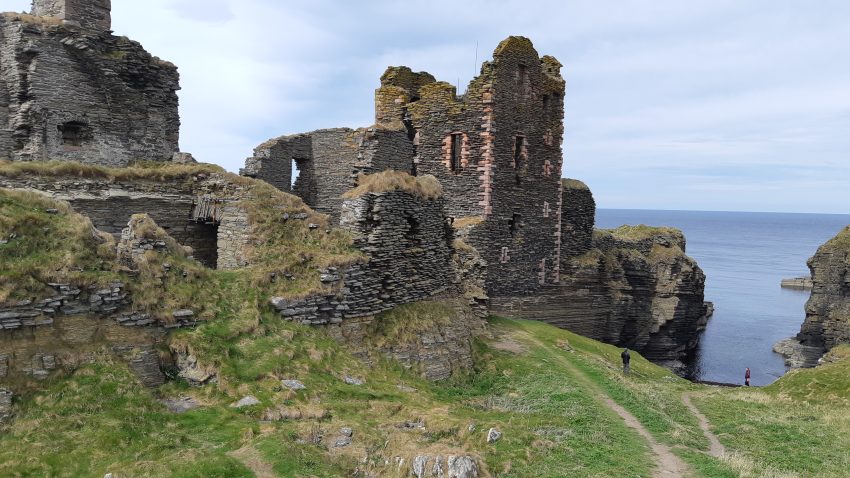
Castle Sinclair Girnigoe is one of the must-see places in Wick, a spectacular ruined stronghold perched on a narrow promontory above Sinclair Bay. Located about three miles north of Wick, this dramatic site is made up of two interconnected ruins: 15th-century Castle Girnigoe and early 17th-century Castle Sinclair. Few places in Scotland offer such a powerful blend of raw coastal scenery, clan history, and intriguing architectural remains.
A highlight of any tour of Wick and its coast, the castle stands in a place shaped by storms, battles, betrayals, and centuries of Sinclair ambition. With its sea cliffs, ravines, and windswept headlands, the approach alone is an unforgettable experience.
Table of Contents
- History and Significance of Castle Sinclair Girnigoe
- Things to See and Do in Castle Sinclair Girnigoe
- How to Get There
- Practical Tips on Visiting Castle Sinclair Girnigoe
- Where to Stay close to Castle Sinclair Girnigoe
- Is Castle Sinclair Girnigoe Worth Visiting?
- FAQs for Visiting Castle Sinclair Girnigoe
- Nearby Attractions to Castle Sinclair Girnigoe
History and Significance of Castle Sinclair Girnigoe
Castle Girnigoe, the earlier of the two structures, was built by William Sinclair, 2nd Earl of Caithness, sometime between 1476 and 1496. Some evidence suggests it may stand on the foundations of an even earlier fortalice, reinforcing its significance as one of the earliest seats of Clan Sinclair. Its position atop a rocky promontory provided both dramatic presence and strong natural defense.
The castle's history is marked by rivalry and tragedy. In 1577, George Sinclair, 4th Earl of Caithness, imprisoned his own son, John Sinclair, Master of Caithness, within the castle walls on suspicion of rebellion. The younger Sinclair endured seven years of harsh captivity before being subjected to a final, cruel punishment-a diet of salted beef without water-leading to his eventual madness and death. The rebel Earl of Bothwell also sought refuge at the castle in 1594, adding to its storied past.
In 1606, the site expanded significantly with the construction of Castle Sinclair, including a gatehouse, curtain wall, and new domestic buildings. These were connected to Castle Girnigoe by a drawbridge spanning a deep ravine, binding the two structures into one formidable fortress. Political struggles between branches of the Sinclair family and their rivals continued into the late 17th century, culminating in sieges, battles, and shifting allegiances. By the time George Sinclair of Keiss reclaimed the earldom in 1681, the castle had already entered its long decline.
Things to See and Do in Castle Sinclair Girnigoe
Castle Sinclair Girnigoe offers one of Scotland's most atmospheric castle experiences. Visitors can walk across the modern footbridge that spans the same ravine once crossed by the medieval drawbridge, arriving at a ruin surrounded by sheer cliffs and crashing waves.
The remains of Castle Girnigoe reveal its L-plan tower house form, complete with crow-stepped gables, vaulted chambers, and the intriguing secret room hidden above the kitchen ceiling. Castle Sinclair’s later additions show how the site grew into a larger, more refined complex, with the outlines of domestic buildings still visible. The combination of medieval and early-modern elements provides a fascinating architectural study.
The site is also exceptional for photography. The interplay of stone, sea, and sky-along with views across Sinclair Bay-is particularly striking at sunrise or in shifting coastal weather. Nearby interpretive boards help visitors understand the castle’s layout, its turbulent history, and its role in Clan Sinclair heritage.
How to Get There
Castle Sinclair Girnigoe is located about three miles north of Wick along minor coastal roads and is best reached by car. Visitors arriving by train can travel to Wick Station and take a taxi or walk the longer coastal route toward Noss Head. Train schedules and bookings can be found on Omio. Those traveling regionally can fly into Wick John O’Groats Airport, located close to the town. For the best deals and a seamless booking experience, check out these flights to Caithness on Booking.com.
Practical Tips on Visiting Castle Sinclair Girnigoe
- Best time to visit Castle Sinclair Girnigoe: Late afternoon or evening for dramatic coastal light.
- Entrance fee in Euros: Free; the site is open to the public.
- Opening hours: Open year-round; best visited in daylight.
- Official website: VisitScotland and Clan Sinclair Trust pages offer further information.
- How long to spend: 45 minutes to 1.5 hours.
- Accessibility: The path is uneven and exposed to coastal winds; sturdy footwear essential.
- Facilities: None on-site; Wick has restaurants, shops, and restrooms.
- Photography tip: Frame the ruined tower with the bay behind it for an iconic Caithness shot.
- Guided tours: Occasionally available through local heritage groups.
- Nearby food options: Wick offers a range of cafés and restaurants within a short drive.
Where to Stay close to Castle Sinclair Girnigoe
Wick provides the best base for exploring Castle Sinclair Girnigoe and the surrounding coastline. A comfortable and welcoming option is Mackays Hotel. Another convenient choice is Norseman Hotel, ideal for accessing Wick’s attractions as well as the northern coast. For a dramatic coastal getaway nearby, Ackergill Tower Hotel offers a uniquely atmospheric stay.
Is Castle Sinclair Girnigoe Worth Visiting?
Absolutely-Castle Sinclair Girnigoe is one of Scotland's most dramatic ruined fortresses, offering an unforgettable blend of history, scenery, and storytelling. Its remote feel, turbulent clan history, and breathtaking setting make it an essential stop for anyone exploring Caithness or the North Coast 500.
What Other Travellers Say...

Castle Sinclair Girnigoe in Wick sits dramatically on coastal cliffs and is reached by an easy short walk from the car park; visitors praise the stunning sea views, atmospheric ruins and easy access via a bridge, note some restoration work has been done, and mention parking is free for the first hour but there are no toilets — also please stick to marked paths and follow signage (drones are prohibited).



FAQs for Visiting Castle Sinclair Girnigoe
Nearby Attractions to Castle Sinclair Girnigoe
- Noss Head Lighthouse: A pioneering 19th-century lighthouse with wide coastal views.
- Whaligoe Haven: A dramatic cliff-surrounded harbour reached via the Whaligoe Steps.
- Old Wick Castle: One of Scotland's oldest tower houses perched on a coastal promontory.
- Wick Heritage Museum: Chronicling the town's rich fishing and maritime past.
- Duncansby Stacks: Iconic sea stacks near John O'Groats offering superb viewpoints.
The Castle Sinclair Girnigoe appears in our Complete Guide to Visiting Caithness!

Moira & Andy
Hey! We're Moira & Andy. From hiking the Camino to trips around Europe in Bert our campervan — we've been traveling together since retirement in 2020!
This website uses affiliate links which may earn a commission at no additional cost to you!
Planning Your Visit
Nearby Attractions
- Wick Harbour (4.3) km
Harbour - Wick Heritage Museum (4.4) km
Museum - Castle of Old Wick (6.1) km
Castle - Whaligoe Haven (15.7) km
Natural Phenomenon - Grey Cairns of Camster (15.9) km
Historic Site - Duncansby Head (18.6) km
Lighthouse - Noss Head Lighthouse (18.6) km
Lighthouse - Castle of Mey (20.9) km
Castle and Historic Building - Dunnet Head & Dunnet Head Lighthouse (28.0) km
Lighthouse, Nature Reserve and Walk - Badbea (45.2) km
Historic Site and Walk