Casa di Marco Polo, Venice
Historic Building in Venice
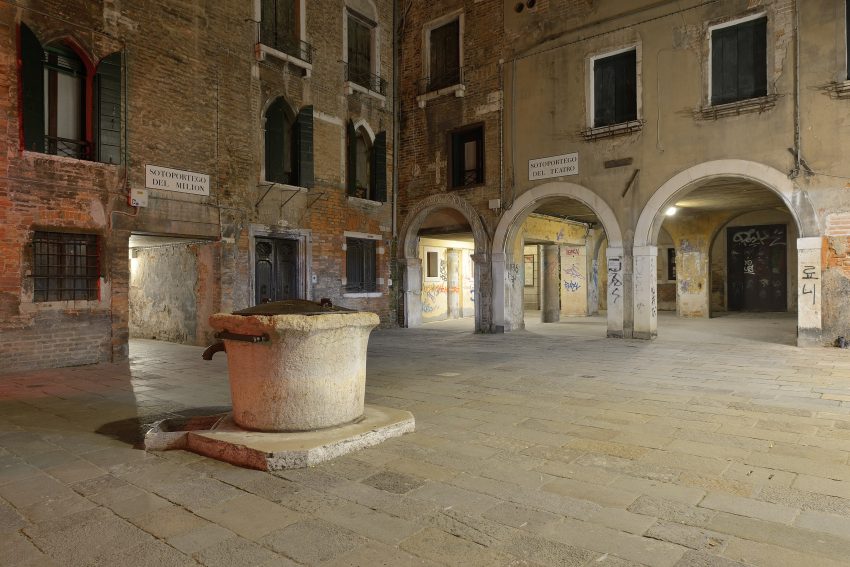
Casa di Marco Polo in Venice is less a “museum stop” and more a miniature treasure hunt: a quiet set of courtyards near Teatro Malibran where a small wall plaque marks the traditional site of Marco Polo's former family home. It's close to the Rialto Bridge and the Grand Canal, yet it feels tucked away behind the city's retail lanes and busy vaporetto flow-exactly the kind of place you can walk past without noticing.
If you like the idea of peeling back Venice's layers, this spot is one of the must-see places in Venice for the sheer experience of getting there, even if the reveal is understated. It also works well as a quick detour on a walking tour of Venice, especially if you're already exploring Rialto, the Mercerie, or the backstreets around San Giovanni Crisostomo.
Table of Contents
- History and Significance of the Casa di Marco Polo
- Things to See and Do in the Casa di Marco Polo
- How to Get to the Casa di Marco Polo
- Practical Tips on Visiting the Casa di Marco Polo
- Where to Stay Close to the Casa di Marco Polo
- Is the Casa di Marco Polo Worth Visiting?
- For Different Travelers
- FAQs for Visiting Casa di Marco Polo
- Nearby Attractions to the Casa di Marco Polo
History and Significance of the Casa di Marco Polo
Marco Polo's story is inseparable from Venice's identity as a city of merchants, maritime ambition, and far-reaching connections. After years of travel in Asia, he returned to Venice and became famous for the account of his journeys, a text that shaped how generations of Europeans imagined the wider world.
The “house” you're looking for today is not an intact residence but a historically associated site: what survives is a courtyard setting, a commemorative plaque, and architectural fragments that tradition links to the Polo family's home complex. Understanding that context matters, because it reframes the visit from “seeing a house” to standing in a small, surviving pocket of medieval Venice where the Polo name still echoes through place names like Corte del Milion.
Things to See and Do in the Casa di Marco Polo
The main “sight” is the plaque that identifies the location as the former home of Marco Polo, and the satisfaction is in spotting it after navigating Venice’s deliberately confusing geometry. Take a moment to look around the courtyards rather than locking onto the wall immediately-the wellhead, façades, and tight passageways help you imagine how densely layered these family compounds once were.
If you want the visit to feel richer, pair the plaque with the nearby stone arch in the Corte del Milion area, which is often described as one of the most tangible remnants connected to the Polo legacy. It's also worth treating this as a micro-itinerary moment: pause, reorient, then continue toward Rialto for canal views, markets, and the classic Venice bustle that makes this quiet detour feel even more contrasting.
How to Get to the Casa di Marco Polo
From Rialto Bridge, head toward Teatro Malibran and the church area around San Giovanni Crisostomo, then look for the little sequence of courtyards known as Corte Prima del Milion and Corte Seconda del Milion. The most reliable approach is to enter Corte Prima del Milion, continue through to Corte Seconda del Milion, and then cross the Ponte Marco Polo-at that point, look back toward the Portineria Teatro Malibran side to spot the small plaque.
By vaporetto, aim for stops around Rialto or Ca' d'Oro and finish on foot through Cannaregio's lanes toward Malibran; this is one of those Venice moments where walking is genuinely the simplest navigation tool. Buses do not run through the historic centre, but you can arrive by bus at Piazzale Roma and then continue by vaporetto or on foot to the Rialto area.
The nearest airports are Venice Marco Polo (VCE) and Treviso (TSF), and most arrivals route you to Piazzale Roma (bus) or Santa Lucia (train) before you continue into the historic centre. For the best deals and a seamless booking experience, check out these flights to Venice on Booking.com.
If you arrive by train at Venezia Santa Lucia, walk or take a vaporetto toward Rialto and then continue on foot toward Teatro Malibran. Use Omnio to easily compare schedules, book train tickets, and find the best prices all in one place for a hassle-free journey across Italy..
If you’re arriving by car, plan to park at Piazzale Roma or Tronchetto and continue into Venice on foot or by vaporetto, as cars cannot enter the historic centre. If you are looking to rent a car in Italy I recommend having a look at Discover Cars, first, as they compare prices and review multiple car rental agencies for you..
Practical Tips on Visiting the Casa di Marco Polo
- Entrance fee: Free.
- Opening hours: 24 Hours
- Best time to visit: Go when you have a little patience and buffer in your schedule, because the “hunt” is the whole point and wrong turns are part of the fun.
- How long to spend: Treat it as a quick detour rather than a standalone attraction, then continue to nearby sights without feeling you’ve lost half a day.
- Accessibility: The lanes and bridges around Rialto and Cannaregio can be uneven and crowded, so choose a straightforward route and avoid rushing if mobility is a concern.
- Facilities: There are no on-site visitor facilities, so plan a café stop around Rialto or Campo Santi Apostoli before or after.
Where to Stay Close to the Casa di Marco Polo
For a culture-heavy itinerary, base yourself around San Polo or San Marco for easy walks to the main sights; if your priority is a calmer, more local-feeling Venice with great evening atmosphere, Cannaregio is an excellent base.
Staying nearby makes this detour effortless, especially if you like stepping out early or returning late when the lanes feel quieter. Hotel Antico Doge is a strong Cannaregio option with a classic Venetian feel and quick access to both Rialto and the backstreets around Malibran. For a comfortable, well-located stay that balances quiet lanes with walkability, Hotel Al Ponte Mocenigo is ideal for reaching Rialto without feeling stuck in the busiest corridors. If you want to be right on the Grand Canal by the action, Hotel Marconi puts you steps from Rialto for maximum convenience.
Is the Casa di Marco Polo Worth Visiting?
Yes, as long as you go with the right expectations. This is a short, slightly cryptic stop that’s more about place-memory than spectacle, and it works best as a satisfying “I found it” moment woven into a broader day around Rialto and Cannaregio.
What Other Travellers Say...

Casa Marco Polo - Lido di Venezia on Via Marco Polo, 14 is a compact, off-the-beaten-path spot worth visiting for those exploring every corner of Venice; visitors note it as the house where Marco Polo lived and appreciate that it remains only lightly visited by local tourism.

For Different Travelers
Families with Kids
Kids often enjoy this as a mini scavenger hunt more than a historical landmark, especially if you frame it as “find the plaque” rather than “visit a house.” Keep it playful, let them lead through the courtyards, and pair it with a nearby snack stop so the detour feels like an adventure instead of a lecture.
Couples & Romantic Getaways
For couples, the appeal is the quietness: it's a small pocket of Venice that feels removed from the postcard crowds. Do it as a gentle detour between Rialto and a slower wander through Cannaregio, then pick a nearby bacaro for an easy, low-key continuation.
Budget Travelers
This is an easy win because it's free and fits neatly between bigger-ticket sights. If you're building a cost-smart day, combine it with canal-side wandering, church exteriors, and neighbourhood exploring where the “experience” is Venice itself.
History Buffs
Treat the site as a prompt rather than a display: read the plaque, then connect the dots to Marco Polo's life as a Venetian merchant-traveller whose reputation was built as much on storytelling as on distance travelled. It's also a good moment to think about how Venice preserves history in fragments-courtyards, inscriptions, and surviving architectural details-rather than in neatly packaged “houses of.”
FAQs for Visiting Casa di Marco Polo
Getting There
Tickets & Entry
Visiting Experience
Tours, Context & Itineraries
Photography
Accessibility & Facilities
Food & Breaks Nearby
Safety & Timing
Nearby Attractions to the Casa di Marco Polo
- Rialto Bridge - Venice's iconic crossing with classic Grand Canal viewpoints and nonstop atmosphere.
- Grand Canal - The city’s main waterway, best appreciated from bridges, vaporetto rides, and canal-side lanes.
- Teatro Malibran - A historic opera and theatre venue that anchors the neighbourhood’s cultural character.
- Church of San Giovanni Crisostomo - A nearby church that helps orient you in this quieter corner behind Rialto.
- Ca' d'Oro - A striking Gothic palazzo on the Grand Canal with a museum setting and excellent views.
The Casa di Marco Polo, Venice appears in our Complete Guide to Visiting Venice!

Moira & Andy
Hey! We're Moira & Andy. From hiking the Camino to trips around Europe in Bert our campervan — we've been traveling together since retirement in 2020!
This website uses affiliate links which may earn a commission at no additional cost to you!
Planning Your Visit
24 Hours
Free.
Nearby Attractions
- Fondaco dei Tedeschi (0.1) km
Historic Building - Rialto Bridge (0.2) km
Bridge - Mercato di Rialto (Rialto Market) (0.3) km
Market - Basilica dei Santi Giovanni e Paolo (0.3) km
Church - Ca' d'Oro (0.3) km
Arts Venue and Historic Building - Santa Maria Formosa (0.4) km
Church - St Mark’s Clock Tower (0.5) km
Tower - Piazzetta dei Leoncini (0.5) km
Square - Caffè Lavena (0.5) km
Café - Chiesa dei Gesuiti (0.5) km
Church


