Carmo Convent, Lisbon
Convent in Lisbon
The Carmo Convent ruins in Lisbon rise above Chiado like a stone skeleton against the sky, their open-air Gothic nave telling the story of a city forever marked by the 1755 earthquake. Once one of Lisbon's grandest churches, founded in the late 14th century by the noble warrior-turned-monk Nuno Álvares Pereira, the convent was shattered by the quake and never fully rebuilt. Instead, its soaring arches and roofless aisles were left exposed, creating a uniquely powerful space where history, architecture, and memory are all on display at once.
Today, the complex houses the Museu Arqueológico do Carmo, where you can wander between medieval tombs, Roman fragments, and even a pair of mummies, all set within the ruined church and adjacent chapels. The combination of sky-framed stonework, quiet cloisters, and eclectic artifacts makes this one of the best places to visit in Lisbon for anyone who loves atmospheric historic sites. Perched in Largo do Carmo and surrounded by Chiado's cafés and viewpoints, the convent is also a highlight of any walking tour of Lisbon, offering both evocative history and wide views over the city.
Table of Contents
- History and Significance of Carmo Convent Ruins
- Things to See and Do in Carmo Convent Ruins
- How to Get to Carmo Convent Ruins
- Practical Tips on Visiting Carmo Convent Ruins
- Where to Stay close to Carmo Convent Ruins
- Is Carmo Convent Ruins Worth Visiting?
- FAQs for Visiting Carmo Convent Ruins
- Nearby Attractions to Carmo Convent Ruins
History and Significance of Carmo Convent Ruins
Carmo Convent was founded in 1389 by Nuno Álvares Pereira, a key military commander in the 1383-85 Crisis who later renounced his worldly life and entered religious orders. His foundation quickly became one of the city's most impressive Gothic churches, with a large nave, lofty pointed arches, and richly decorated chapels reflecting both his status and Lisbon's growing importance. For centuries it was a spiritual and social landmark, closely connected with the city's elite and religious life.
On 1 November 1755, the great earthquake that devastated Lisbon struck during morning Mass, collapsing much of the church's vaulting and killing many of those inside. While the lower walls and some arches survived, the upper structure was left in ruins, and the combination of seismic shock, fire, and aftershocks destroyed most of the interior. Unlike other churches that were rebuilt in the Pombaline style, the decision over time was to stabilise but not fully reconstruct Carmo, leaving the broken shell as a stark reminder of the disaster and the city's resilience.
In the 19th century, the site found a new role when the Museu Arqueológico do Carmo was established within the surviving spaces. The ruined church became both an exhibit and a setting for archaeological collections drawn from across Portugal, turning the convent into a hybrid of memorial and museum. Today, this dual identity is what makes Carmo Convent one of the top attractions in Lisbon: you come for the drama of the ruined nave, but you leave with a deeper sense of how Lisbon's history has been layered, shaken, and reimagined over time.
Things to See and Do in Carmo Convent Ruins
The main draw is the roofless nave itself. As you step inside, the Gothic arches rise overhead but never meet, framing patches of blue sky where the vaults once were. Stone columns, traceried windows, and simple side chapels create a rhythm down the length of the church, and the contrast between solid masonry and open air makes even a short visit feel memorable. Take your time to walk slowly up the central aisle and look back toward the entrance; this simple change of perspective really emphasises the scale of the structure and the force of the earthquake that tore it open.
At the far end, the former chancel and adjoining spaces now house the Museu Arqueológico do Carmo. Here you will find medieval tombs, carved fragments, Roman stones, azulejo panels, and a small but striking display that includes mummies and unusual archaeological finds. The museum is compact but eclectic, with enough information to give context without feeling overwhelming. As you wander, notice the surviving Gothic and Manueline details on doorways, capitals, and vaults-these remnants hint at just how richly decorated the original church must have been.
Outside, the convent's location on Largo do Carmo adds another layer to the visit. The square is a calm pocket in central Lisbon, just a short walk from the Santa Justa Lift and Chiado's main streets, and it has its own place in modern Portuguese history as a symbolic site of the 1974 Carnation Revolution. After exploring the ruins and museum, you can linger on the square, enjoy the city views, or drop into a nearby café to let the experience sink in.
How to Get to Carmo Convent Ruins
Carmo Convent Ruins sit on Largo do Carmo in the Chiado district, making them easy to reach on foot from Baixa, Rossio, or Chiado. One of the most atmospheric approaches is via the top platform of the Santa Justa Lift, which brings you up from Baixa almost directly to the convent level, from where it is only a short walk to the entrance. Alternatively, from the Baixa-Chiado metro station, you can follow the signed routes up through Chiado's streets in just a few minutes.
If you are arriving in Lisbon by air, you will land at Humberto Delgado Airport, which connects to the city by metro, bus, and taxi in roughly 20-30 minutes depending on traffic. For the best deals and a seamless booking experience, check out these flights to Lisbon on Booking.com. From the airport, take the metro to Baixa-Chiado and then walk uphill to Largo do Carmo, combining the journey with a stroll through the historic centre.
Coming by train from elsewhere in Portugal, you will most likely arrive at Santa Apolónia or Oriente stations. From either, you can use the metro to reach Baixa-Chiado, or take a combination of train and metro via Cais do Sodré if you are staying near the river.Train schedules and bookings can be found on Omio. Once in Baixa or Chiado, the convent is clearly signposted and easy to reach on foot.
If you are driving, be prepared for narrow, one-way streets and limited parking in central Lisbon.If you are looking to rent a car in Portugal I recommend having a look at Discover Cars, first, as they compare prices and review multiple car rental agencies for you. It is usually easiest to leave your car in an underground car park near Baixa or Chiado and continue on foot or by metro and the Santa Justa Lift; that way, you can enjoy the convent and surrounding streets without worrying about navigating busy traffic.
Practical Tips on Visiting Carmo Convent Ruins
- Suggested tips: Arrive earlier in the day or later in the afternoon to avoid the busiest times, and allow yourself a few quiet minutes just standing in the nave to really take in the atmosphere.
- Best time to visit: Late afternoon on a clear day is particularly beautiful, when the low light catches the stone arches and the open sky above; in summer, this also helps you avoid the midday heat.
- Entrance fee: Adults: €7.00; Students/Seniors/Lisbon Card: €5.00; Children under 14: free.
- Opening hours: Monday–Saturday 10:00–18:00 (November–April) and 10:00–19:00 (May–October); closed on Sundays and on 1 January, 1 May, and 25 December.
- Official website: https://museuarqueologicodocarmo.pt/
- How long to spend: Most visitors will be happy with 45-60 minutes to see both the ruins and the museum exhibits, but photography enthusiasts and history lovers may want a little longer.
- Accessibility: The site includes uneven stone floors, steps, and some narrow passages, so access can be challenging for visitors with reduced mobility; check the latest accessibility information before your visit if this is a concern.
- Facilities: Basic facilities include a ticket office and restrooms; cafés and additional services are available around Largo do Carmo and throughout nearby Chiado.
- Photography tip: Bring a wide-angle lens or use your phone’s wide setting to capture the full sweep of the roofless nave and arches; on bright days, try framing the stone against the deep blue sky for dramatic contrasts.
- Guided tours: If available, consider joining a short guided tour or using an audio guide-these often include extra stories about the earthquake, the convent’s founders, and particular artifacts in the museum.
- Nearby food options: After your visit, you will find plenty of places to eat and drink in Largo do Carmo and the surrounding streets of Chiado, from casual pastelarias to wine bars and small restaurants.
Where to Stay close to Carmo Convent Ruins
Staying near Carmo Convent Ruins puts you in a wonderfully central part of Lisbon, perfect if you want to combine sightseeing with evenings in Chiado and Bairro Alto. Right on the square, Lisboa Carmo Hotel offers comfortable rooms and an unbeatable location, with the convent almost on your doorstep. For a five-star experience with a classic-meets-contemporary feel, Bairro Alto Hotel is just a short walk away and ideal if you enjoy stylish interiors and a rooftop bar with views over the river. Travelers who appreciate character and good views might also like Hotel do Chiado, where many rooms and the terrace look out across the Baixa rooftops toward the Tagus.
Is Carmo Convent Ruins Worth Visiting?
Carmo Convent Ruins are absolutely worth visiting, especially if you are drawn to places where history is written into the stones themselves. The combination of roofless Gothic architecture, the story of the 1755 earthquake, and the small but intriguing archaeological museum makes this site far more than just a pretty ruin. Add in its central location, sweeping views, and tranquil atmosphere compared with the busy streets below, and it becomes a compelling stop on any Lisbon itinerary, whether you are a dedicated history buff or simply curious about the city's past.
What Other Travellers Say...

Carmo Archaeological Museum sits in the evocative roofless nave of a ruined Gothic convent at Largo do Carmo, where dramatic arches open to the sky and offer elevated views across Lisbon; inside a compact, well‑curated museum you'll find archaeological displays including mosaics, tombs, mummies and Visigothic pieces, clear labels and an explanatory film in English and Portuguese, with knowledgeable staff and a calm atmosphere that visitors describe as stunning and well worth a stop if you're in the Chiado area.


FAQs for Visiting Carmo Convent Ruins
Nearby Attractions to Carmo Convent Ruins
- Santa Justa Lift - Iconic 19th-century iron elevator linking Baixa to the upper city, with great views and a direct connection to Largo do Carmo.
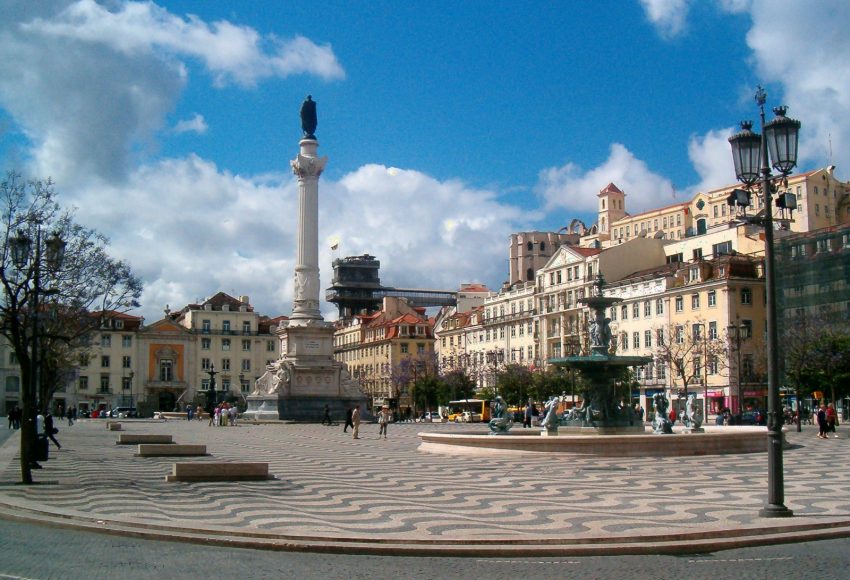
- Rossio Square - Lively central square with patterned pavements, fountains, and easy access to shops, cafés, and Rossio Station.
- Chiado District - Elegant neighbourhood of theatres, historic cafés, and bookshops, perfect for strolling before or after your visit to the convent.
- Igreja de São Roque - Former Jesuit church with a plain exterior and richly decorated chapels inside, showcasing Baroque art and craftsmanship.
- Praça Luís de Camões - Bustling square at the meeting point of Chiado and Bairro Alto, ideal as a starting or ending point for exploring the area on foot.
The Carmo Convent appears in our Complete Guide to Visiting Lisbon!

Moira & Andy
Hey! We're Moira & Andy. From hiking the Camino to trips around Europe in Bert our campervan — we've been traveling together since retirement in 2020!
This website uses affiliate links which may earn a commission at no additional cost to you!
Planning Your Visit
Monday-Saturday 10:00-18:00 (November-April) and 10:00-19:00 (May-October); closed on Sundays and on 1 January, 1 May, and 25 December.
Adults: €7.00; Students/Seniors/Lisbon Card: €5.00; Children under 14: free.
Nearby Attractions
- Elevador de Santa Justa (0.1) km
Viewing Point - Praça do Rossio (0.2) km
Square - Teatro Nacional de São Carlos (0.3) km
Theatre - Miradouro de São Pedro de Alcântara (0.5) km
Viewing Point - Arco da Rua Augusta (0.5) km
Historic Building and Viewing Point - São Jorge Castle (0.7) km
Castle - Lisbon Cathedral (0.7) km
Cathedral - Museu Nacional de História Natural e da Ciência (1.1) km
Museum - National Pantheon (1.4) km
Historic Building - São Vicente de Fora (1.4) km
Monastery