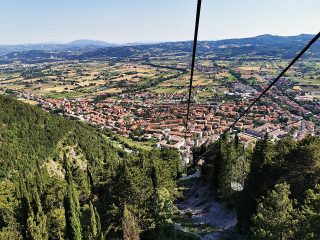
Capuchins Gate, Assisi
Attraction, City Gate and Historic Site in Assisi
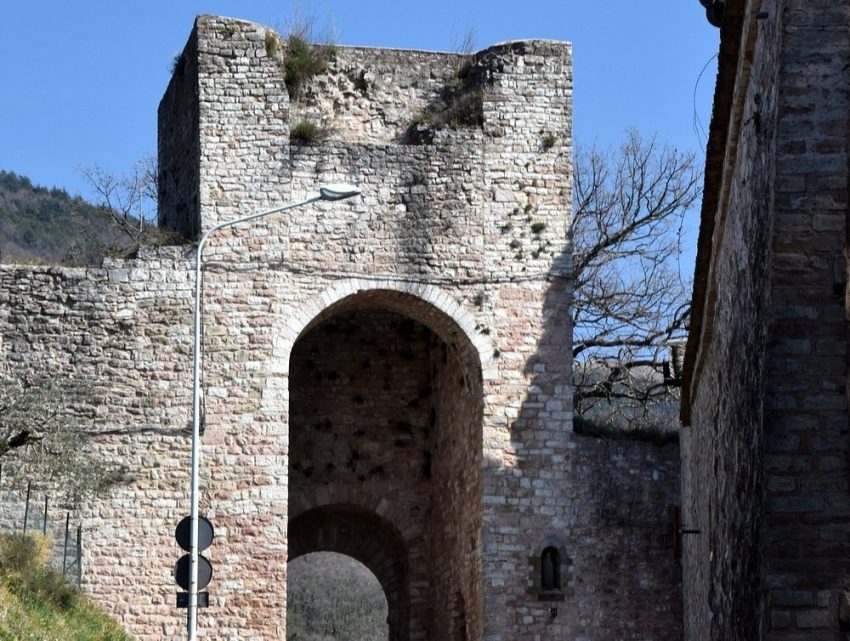
Porta Cappuccini (often referred to as the Gate of the Capuchins) is one of the historic gateways in Assisi's defensive walls, set on the upper side of town near the small fortress of Rocca Minore. It's not a “ticketed attraction” so much as a lived-in threshold: you pass under its stone arch, feel the shift from road to medieval lanes, and suddenly Assisi's uphill geography and quiet side streets make intuitive sense.
The gate is also practical in a way many Assisi sights are not. This is the most natural launch point for the town's most rewarding short hikes-particularly the well-known route toward Eremo delle Carceri and onward to Mount Subasio-so it works equally well as a scenic entryway and as the beginning of a half-day outdoors detour.
Table of Contents
- History and Significance of the Porta Cappuccini
- Things to See and Do in the Porta Cappuccini
- How to Get to the Porta Cappuccini
- Practical Tips on Visiting the Porta Cappuccini
- Where to Stay Close to the Porta Cappuccini
- Is the Porta Cappuccini Worth Visiting?
- For Different Travelers
- FAQs for Visiting Porta Cappuccini
- Nearby Attractions to the Porta Cappuccini
History and Significance of the Porta Cappuccini
Assisi’s gates are part of the city’s long story of fortification and controlled access, and Porta Cappuccini remains one of the most characterful because it still feels tied to movement rather than display. Unlike interior monuments that you “visit,” this gate is something you use, and that keeps it connected to the original purpose of the walls: managing the edge between the outside routes and the inner medieval town fabric.
The square tower structure and the devotional niche with a Madonna figure on the inner side reflect how religion and civic infrastructure overlap in Assisi. Gates were not only defensive elements; they were also symbolic thresholds, marked in ways that aligned the city's daily life with sacred protection.
Today, the gate's significance is amplified by location. With Rocca Minore immediately nearby and the trail network beginning outside the walls, Porta Cappuccini functions as a navigation anchor for visitors who want an Assisi day that is not only basilicas and frescoes.
Things to See and Do in the Porta Cappuccini
Walk through slowly and look back. Gates photograph well when you use them as frames, and the simple act of stepping under the arch is one of the cleanest “arrival moments” you can engineer in Assisi without needing a viewpoint or a ticket.
If you enjoy small architectural details, look for the tower’s devotional niche and the subtle wear patterns in the stone. It’s a good reminder that Assisi’s medieval texture is not confined to its famous churches-ordinary structures carry just as much atmosphere when you pause for them.
Most importantly, treat Porta Cappuccini as a starting line. Just outside the gate is where the walking route toward Rocca Minore and the trail to Eremo delle Carceri becomes straightforward, turning a simple city-gate stop into the beginning of one of Assisi's best short outdoor extensions.
How to Get to the Porta Cappuccini
The closest airport is Perugia San Francesco d'Assisi Airport (PEG), with Rome Fiumicino (FCO) and Florence (FLR) as common alternatives depending on your route and flight options. For the best deals and a seamless booking experience, check out these flights to Assisi on Booking.com.
By train, arrive at Assisi station (in Santa Maria degli Angeli) and continue uphill by bus or taxi into the historic centre; from there, Porta Cappuccini is a logical entry point if you're planning Santa Chiara, San Rufino, or the Monte Subasio walking routes. Use Omnio to easily compare schedules, book train tickets, and find the best prices all in one place for a hassle-free journey across Italy.
Local buses serve the town, but if your priority is Eremo delle Carceri specifically, note that public transport does not take you directly to the hermitage and walking or taxi is typically required for that leg.
If you’re driving, park once near the upper town (Piazza Matteotti is the common reference area) and do the gate, old-town lanes, and short hikes on foot from there. If you are looking to rent a car in Italy I recommend having a look at Discover Cars, first, as they compare prices and review multiple car rental agencies for you.
Practical Tips on Visiting the Porta Cappuccini
- Entrance fee: Free
- Opening hours: 24 Hours
- Best time to visit: Go early if you want a calmer “gateway” feel and cleaner photos, or late afternoon if you’re pairing it with a sunset-leaning walk near the Rocca.
- How long to spend: 10-15 minutes for the gate itself, or treat it as the start point for a longer walk to Rocca Minore and beyond.
- Accessibility: The gate is easy to pass through, but nearby streets and paths are steep and uneven, especially once you leave the town walls for trails.
- Facilities: None at the gate; plan water, restrooms, and breaks around Piazza Matteotti, San Rufino, or the larger basilica areas.
Where to Stay Close to the Porta Cappuccini
For a culture-heavy itinerary, base yourself inside Assisi’s historic centre so you can walk to the major basilicas and start early before day-trippers arrive; if your trip prioritises transport links and day trips, stay in Santa Maria degli Angeli near the station and commute up for focused sightseeing blocks.
For a high-comfort stay in the historic centre that keeps you well positioned for walking routes that begin near the upper town, use Nun Assisi Relais & Spa Museum. For a classic old-town base with a strong Assisi atmosphere and easy access to the main lanes, consider Giotto Hotel & Spa. If you prefer straightforward station logistics and a practical base for rail travel, TH Assisi - Hotel Cenacolo works well.
Is the Porta Cappuccini Worth Visiting?
Yes, particularly if you like your sightseeing to feel integrated into how a place actually works. Porta Cappuccini is not a “stand and stare” monument, but it improves the shape of an Assisi day: it's a clean entry into the historic centre, a natural pivot to Rocca Minore, and the obvious launch point for the town's best short hike extension toward Eremo delle Carceri.
Honest pivot: if your time is extremely limited and your focus is only the two main basilicas and a quick central loop, you may pass nowhere near this gate and lose nothing essential. It is most valuable for travellers who want walls, viewpoints, and trails stitched into the same itinerary.
What Other Travellers Say...


For Different Travelers
Families with Kids
Porta Cappuccini is an easy family win because it is tangible and immediate: a real medieval gate you walk through, with a simple story (old walls, old entry, up toward the “castle”). It's especially useful as a transition point-kids burn energy walking to Rocca Minore, then you decide whether to push further toward the forested trails or turn back into town.
If you plan to head toward Eremo delle Carceri on foot, keep expectations realistic for distance and uphill effort, and make the gate your “checkpoint” rather than your main destination. Short, structured goals work best here: gate, fortress, viewpoint, then reassess.
Couples & Romantic Getaways
This gate suits couples who like quieter Assisi: fewer crowds, more lanes, and the sense of moving through the town rather than sampling it in fragments. Start here in the late afternoon, stroll past the Rocca area, and you can build a gentle, atmospheric route that feels more personal than the busiest basilica approaches.
It also works well if you want a nature-leaning Assisi day. Beginning at Porta Cappuccini makes the shift from medieval stone to olive groves and mountain paths feel seamless, which is exactly the kind of rhythm Assisi does best.
Budget Travelers
Porta Cappuccini is perfect for budget travel because it costs nothing and reduces friction. If you park once or arrive by bus/taxi to the upper town, you can build a full walking day around free highlights-gates, walls, small fortresses, viewpoints, and lanes-before choosing which paid or museum-style stops you actually want.
It's also a smart anchor for avoiding unnecessary taxis. Start your walking loop here, link to San Rufino, Piazza del Comune, Santa Chiara, and finish toward San Francesco, and you've covered a lot of Assisi efficiently.
History Buffs
For history-minded travellers, Porta Cappuccini is most interesting as urban infrastructure: the point where defensive planning, devotional marking (the Madonna niche), and topography converge. It's also a good prompt to think of Assisi as a fortified hill town first, and a pilgrimage destination second-because the walls shaped movement long before tourism did.
Pair it with Rocca Minore and a short section of wall-adjacent walking, and you get a clearer mental map of how Assisi controlled access, protected its upper slopes, and connected the town to Monte Subasio routes.
FAQs for Visiting Porta Cappuccini
Getting There
Trails and Outdoor Plans
Visiting Experience
Photography
Accessibility and Logistics
Nearby Attractions to the Porta Cappuccini
- Rocca Minore: A small fortress structure just outside the gate area that rewards you with wide valley views and a calmer atmosphere than the main basilica zones.
- Eremo delle Carceri: The forest hermitage on Monte Subasio, reachable by trail from this side of town for a strong nature-and-spirituality extension.
- Cattedrale di San Rufino: Assisi's Romanesque cathedral area, an easy downhill link from the gate and a useful anchor for central walking routes.
- Basilica di Santa Chiara: A major Franciscan stop close to the eastern lanes, easy to combine with a route that begins at the upper gates.
- Rocca Maggiore: The dominant hilltop fortress above Assisi, ideal if you want to connect gates, fortifications, and viewpoints into a single walk.
The Capuchins Gate appears in our Complete Guide to Visiting Assisi!

Moira & Andy
Hey! We're Moira & Andy. From hiking the Camino to trips around Europe in Bert our campervan — we've been traveling together since retirement in 2020!
This website uses affiliate links which may earn a commission at no additional cost to you!
Planning Your Visit
24 Hours
Free
Nearby Attractions
- Rocca Minore (0.2) km
Castle - Roman Amphitheatre (0.2) km
Amphitheatre - Porta Nuova (0.3) km
City Gate - Cattedrale di San Rufino di Assisi (0.3) km
Cathedral - Basilica di Santa Chiara (0.4) km
Basilica - Diocesan Museum and San Rufino Crypt (0.4) km
Museum - Casa natale di San Francesco (0.5) km
Historic Site - Oratorio di San Francesco Piccolino (0.5) km
Religious Building - Chiesa Nuova (0.5) km
Church - Palazzo dei Priori (0.6) km
Palace