Ca' Rezzonico, Venice
Gallery and Historic Building in Venice
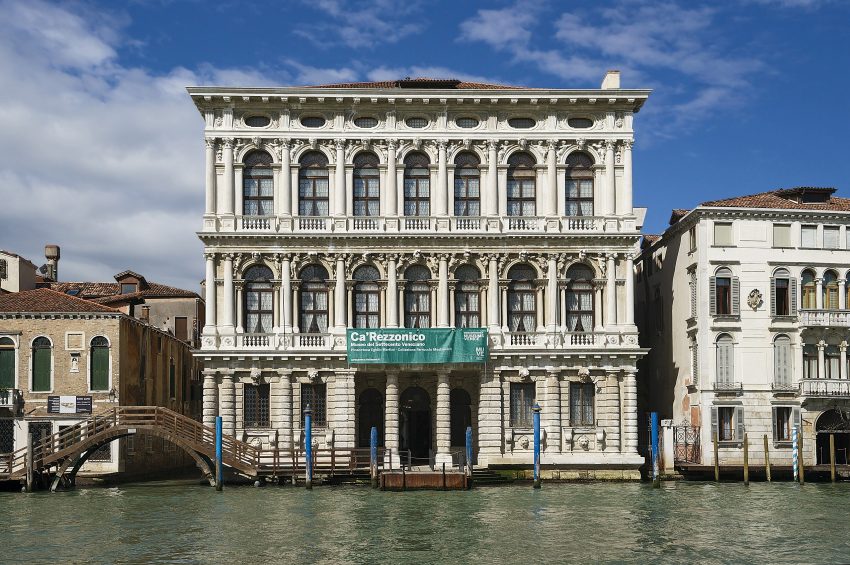
Ca' Rezzonico is one of the rare Venice museums where the building is as captivating as the art. Set in a monumental palazzo right on the Grand Canal in Dorsoduro, it pulls you into the world of the Serenissima's last glittering century, when salons, silk, chandeliers, and theatrical taste shaped daily life. You move through frescoed rooms and period interiors that feel less like a gallery and more like stepping into a lived-in stage set, with paintings and decorative details that explain how Venice wanted to be seen.
It's also a welcome change of pace from the city's busiest corridors, which is why many travellers quietly rank it as one of the top attractions in Venice once they've had their fill of bridges and crowds. If you're building a walking tour of Venice that mixes headline sights with more atmospheric stops, Ca' Rezzonico is an ideal anchor: central enough to reach easily, but calm enough to feel like you've slipped into a more private Venice.
Table of Contents
- History and Significance of the Ca’ Rezzonico
- Things to See and Do in the Ca’ Rezzonico
- How to Get to the Ca’ Rezzonico
- Practical Tips on Visiting the Ca’ Rezzonico
- Where to Stay Close to the Ca’ Rezzonico
- Is the Ca’ Rezzonico Worth Visiting?
- For Different Travelers
- FAQs for Visiting Ca’ Rezzonico
- Nearby Attractions to the Ca’ Rezzonico
History and Significance of the Ca’ Rezzonico
Ca' Rezzonico began as an ambitious Baroque project on the Grand Canal, commissioned in the 17th century and associated with the architectural language that shaped Venice's grandest palazzi. Over time, it became a symbol of status and social ambition, and today that story is part of the museum's appeal: you're not just looking at 18th-century Venice, you're standing inside the kind of space that helped define it.
The museum is dedicated to the Venetian Settecento, a period often summarised as decadence, but better understood as a complex final flourish of creativity, commerce, and performance. Venice was still projecting elegance to the world, and the city's painters, designers, and patrons turned interiors into statements, blending art, furniture, textiles, and spectacle into a single visual language.
As part of the Fondazione Musei Civici di Venezia network, Ca' Rezzonico plays a key role in explaining what the Republic looked like from the inside. It's the place where the Venice of masquerades and salons becomes tangible: not as cliché, but as a culture built room by room, detail by detail.
Things to See and Do in the Ca’ Rezzonico
The highlight is the sequence of state rooms and salons, where the scale of the palazzo and the richness of the decoration do the heavy lifting. Take your time with the ceilings and wall treatments first, then let your eyes drop to the furniture and objects that make the rooms feel inhabited rather than staged. It’s a museum that rewards slow looking, because the story lives in how everything fits together.
For art lovers, the 18th-century Venetian painting is the perfect complement to the interiors. You’ll see works associated with the era’s leading names, and the setting helps you read them differently: these paintings make more sense when you imagine them hanging in homes like this, built to impress guests and frame social rituals.
A good way to visit is to think in layers. First, absorb the palace as architecture; second, notice the decorative arts and how taste is communicated through materials; third, focus on a handful of paintings that lock the whole period into place. Done this way, the museum feels coherent rather than like a collection of beautiful but disconnected rooms.
How to Get to the Ca’ Rezzonico
The nearest airports are Venice Marco Polo (VCE) and Treviso (TSF), and the simplest onward route is into Venice via bus or taxi to Piazzale Roma, then continue by vaporetto or on foot depending on luggage and weather. For the best deals and a seamless booking experience, check out these flights to Venice on Booking.com.
By train, arrive at Venezia Santa Lucia, then take Vaporetto Line 1 along the Grand Canal to the Ca' Rezzonico stop for the most direct approach, or walk if you want a slower introduction to Dorsoduro's lanes and campos. Use Omnio to easily compare schedules, book train tickets, and find the best prices all in one place for a hassle-free journey across Italy. If you’re already based around San Marco or Rialto, a scenic walk across the Accademia area often feels easier than navigating multiple vaporetto changes.
By bus, most services end at Piazzale Roma, where you can transfer smoothly to Vaporetto Line 1 or walk into Dorsoduro if you’re travelling light. By car, park at Tronchetto or Piazzale Roma and treat the rest of the journey as a walking-and-water-bus city experience. If you are looking to rent a car in Italy I recommend having a look at Discover Cars, first, as they compare prices and review multiple car rental agencies for you.
Practical Tips on Visiting the Ca’ Rezzonico
- Entrance fee: Full €15 (until 31 December 2025) / €20 (from 01 January 2026); reduced €12 (until 31 December 2025) / €10 (from 01 January 2026).
- Opening hours: (Summer) 01 April – 31 October: Monday – Sunday: 10:00–18:00. (Winter) 01 November – 31 March: Monday – Sunday: 10:00–17:00. Closed on Tuesday.
- Official website: https://carezzonico.visitmuve.it/en/home/
- Best time to visit: Late morning on a weekday is ideal for calmer rooms, while late afternoon often feels quieter as crowds drift back toward San Marco.
- How long to spend: Plan 1.5-2.5 hours if you want to enjoy the interiors properly without rushing, and longer if you linger with the paintings and decorative details.
- Accessibility: Expect stairs and historic thresholds typical of Venetian palazzi; allow extra time if mobility is a concern and use staff guidance for the smoothest route.
- Facilities: Bring water and plan a café stop before or after, since the most enjoyable breaks are along nearby canals and squares rather than mid-visit.
Where to Stay Close to the Ca’ Rezzonico
For a culture-heavy itinerary, the best base is Dorsoduro or the San Marco side near the Grand Canal so you can reach museums and evening sights on foot; for a quieter stay with strong transport links and a more local rhythm, Cannaregio is often the smartest compromise.
If you want to stay close to the museum in a neighbourhood that still feels lived-in after day-trippers leave, Hotel Moresco is a comfortable, well-positioned option for Dorsoduro routes. For a more boutique, design-forward stay within easy walking distance of Ca' Rezzonico and the Zattere, Ca' Pisani Hotel is an excellent base. If you prefer being right on the Grand Canal mood with quick access across central Venice, Hotel L'Orologio Venezia keeps you in a prime location for both water-bus rides and evening wanders.
Is the Ca’ Rezzonico Worth Visiting?
Yes, especially if you want to understand Venice beyond its outdoor postcard views. Ca' Rezzonico gives you the texture of the city's social world: how rooms were designed, how art lived within interiors, and how the 18th century balanced elegance with performance.
It's also one of the best “reset” museums in Venice. After crowded routes and major monuments, this palazzo experience feels absorbing without being exhausting, and you leave with a clearer sense of what Venetian luxury actually looked and felt like.
What Other Travellers Say...

Ca' Rezzonico sits right on the Grand Canal in Dorsoduro and houses a museum dedicated to 18th‑century Venetian life, where you can explore opulently decorated state rooms, period furnishings, paintings and tapestries, plus upper‑floor galleries and notable sculptures such as a veiled statue; visitors praise the peaceful, uncrowded setting, helpful staff, a waterside cafe with views, a small rear garden, and practical amenities like toilets and lockers that make it an easy, relaxing few hours away from the main tourist crowds.


For Different Travelers
Families with Kids
This museum works best for families when you keep it visual and story-led. Focus on a few dramatic rooms, point out the “palace life” details like chandeliers and grand staircases, and let kids treat it as a real-world set rather than a quiet art lesson.
If attention spans are short, plan a tight route and pair it with a gelato break and a canalside walk afterward. Dorsoduro is ideal for this, because it's easy to switch from indoors to open-air Venice in minutes.
Couples & Romantic Getaways
Ca' Rezzonico is a strong couples stop because it feels intimate and elegant without needing a formal evening plan. The rooms naturally slow you down, and the Grand Canal setting adds that classic Venice romance as you arrive and leave.
To make it memorable, visit in softer light later in the day, then walk toward the Zattere for a waterside stroll. It's a refined, unhurried pairing that feels like Venice at a gentler volume.
Budget Travelers
It’s a ticketed museum, but it can be a smart budget choice if you want one paid stop that delivers both architecture and art in a single visit. You’re essentially getting a palazzo interior experience plus an 18th-century collection, which can replace multiple smaller admissions.
Keep the rest of the day walking-based and free: Dorsoduro lanes, campos, and canal edges provide some of Venice’s best atmosphere without spending anything, making the museum feel like a well-chosen highlight rather than a costly add-on.
History Buffs
For history buffs, Ca' Rezzonico is a direct window into how Venice presented itself in its later centuries, when social performance and domestic splendour carried political meaning. The museum's strength is that it shows history through spaces and objects, not just dates.
Pay attention to how interiors communicate hierarchy and taste, and how painting styles match the era's public rituals and private ambitions. It's one of the clearest places in Venice to see how a republic's identity was expressed through private wealth and public display.
FAQs for Visiting Ca’ Rezzonico
Getting There
Tickets & Entry
Visiting Experience
Tours, Context & Itineraries
Photography
Accessibility & Facilities
Food & Breaks Nearby
Safety & Timing
Nearby Attractions to the Ca’ Rezzonico
- Gallerie dell'Accademia: Venice's essential museum for pre-19th-century Venetian painting, perfect for pairing with a palazzo interior visit.
- Peggy Guggenheim Collection: A compact modern-art museum in a Grand Canal palazzo setting, ideal for contrast after 18th-century Venice.
- Basilica di Santa Maria della Salute: A landmark domed church at the Grand Canal entrance with dramatic interiors and classic viewpoints outside.
- Campo Santa Margherita: A lively local square for cafés and evening atmosphere, great for a post-museum break in Dorsoduro.
- Zattere Promenade: A relaxed waterfront walk with open lagoon views that gives you breathing space after indoor sightseeing.
The Ca' Rezzonico appears in our Complete Guide to Visiting Venice!

Moira & Andy
Hey! We're Moira & Andy. From hiking the Camino to trips around Europe in Bert our campervan — we've been traveling together since retirement in 2020!
This website uses affiliate links which may earn a commission at no additional cost to you!
Planning Your Visit
(Summer) 01 April - 31 October: Monday - Sunday: 10:00-18:00.
(Winter) 01 November - 31 March: Monday - Sunday: 10:00-17:00.
Closed on Tuesday.
Full €15 (until 31 December 2025) / €20 (from 01 January 2026); reduced €12 (until 31 December 2025) / €10 (from 01 January 2026).
Nearby Attractions
- Ponte dell'Accademia (0.3) km
Bridge - Gallerie dell'Accademia (0.3) km
Gallery and Museum - Scuola Grande di San Rocco (0.4) km
Arts Venue and Historic Building - Basilica S.Maria Gloriosa dei Frari (0.4) km
Church - Leonardo da Vinci Museum (0.4) km
Museum - Museo Fortuny (0.5) km
Museum - Peggy Guggenheim Collection (0.5) km
Arts Venue - Teatro La Fenice (0.5) km
Opera House - Palazzo Contarini del Bovolo (0.6) km
Palace - Basilica di Santa Maria della Salute (0.7) km
Church


