Ca la Garsa, Tarragona
Historic Building, Historic Site and Ruins in Tarragona
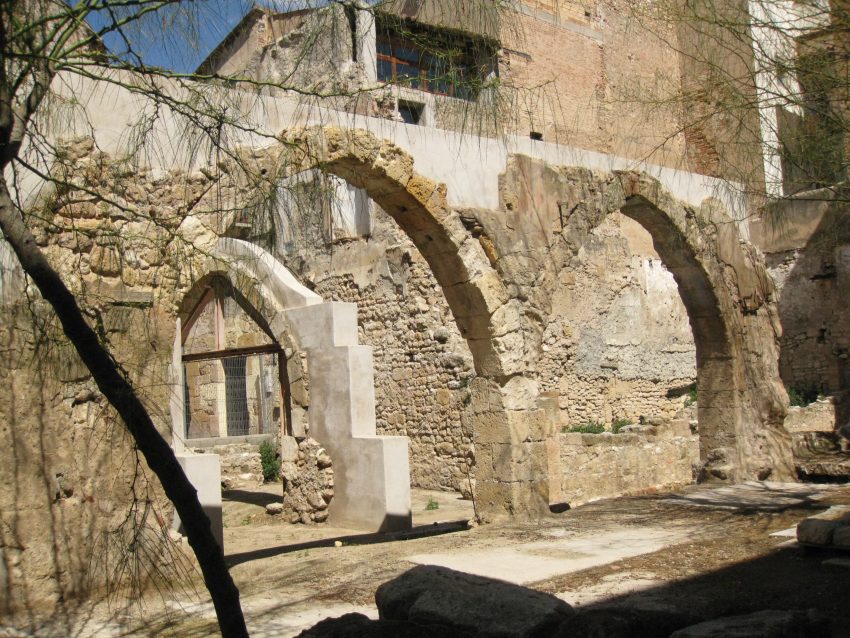
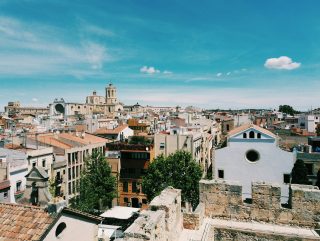
Tucked into Tarragona's Part Alta (Old Town), Ca la Garsa is a small set of medieval remains at the corner of Plaça dels Àngels and Carrer Talavera. It's not a grand monument you plan a whole day around, but rather a quiet, atmospheric fragment that hints at the layered history of this hilltop neighborhood.
Most travelers see Ca la Garsa while wandering the old streets on a self-guided walk or as a brief stop on a guided walking tour that covers the Jewish quarter (the call) alongside Tarragona's better-known Roman highlights. It's best appreciated slowly: pause, look closely at the surviving arches and masonry, and imagine the dense medieval city that once filled these lanes.
Table of Contents
- History and Significance of the Ca la Garsa
- Things to See and Do in the Ca la Garsa
- How to Get to the Ca la Garsa
- Practical Tips on Visiting the Ca la Garsa
- Where to Stay Close to the Ca la Garsa
- Is the Ca la Garsa Worth Visiting?
- For Different Travelers
- FAQs for Visiting Ca la Garsa
- Nearby Attractions to the Ca la Garsa
History and Significance of the Ca la Garsa
Ca la Garsa is closely associated with Tarragona's medieval Jewish quarter. The surrounding area around Plaça dels Àngels was historically linked to the Jewish community, and the surviving structures are among the city's most tangible reminders of that presence.
What you see today is partial: the remains correspond to an important medieval building dating broadly to the 13th–14th centuries. Over time, the structure deteriorated and the site has gone through periods of neglect and stabilization, which helps explain why the experience is more about traces and context than about entering a preserved interior.
In recent years, the city has undertaken consolidation works to stabilize what remains and improve the immediate surroundings. For visitors, that means the site’s story is still unfolding: it’s a place to understand urban memory and heritage preservation as much as it is a “sight.”
Things to See and Do in the Ca la Garsa
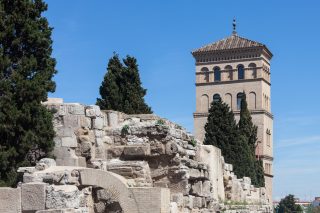
The main visual draw is the surviving medieval fabric: arches, wall sections, and the overall footprint that suggests how buildings once pressed tightly against the street. Because the remains are modest, the best “activity” here is careful looking—spot the differences in stonework and the way the structure meets the modern street line.
Ca la Garsa also works well as a reflective stop. Many visitors describe it as a place with a quiet, contemplative feel, especially early in the day or in the evening when the Part Alta streets calm down.
To get more out of the visit, pair it with a short Jewish-heritage loop through the surrounding lanes, then continue toward Tarragona Cathedral and the nearby viewpoints and squares. If you're on a walking tour, ask your guide to place Ca la Garsa in the broader story of the call and medieval Tarragona.
How to Get to the Ca la Garsa
The nearest major airports are Barcelona–El Prat (BCN) and Reus Airport (REU), both convenient for reaching Tarragona by public transport or car. For the best deals and a seamless booking experience, check out these flights to Tarragona on Booking.com.
Tarragona is well connected by rail, and arriving by train is one of the easiest ways to start exploring the city without needing a vehicle. Train schedules and bookings can be found on Omio.
If you’re driving, aim for parking outside the tightest Old Town streets and walk up into the Part Alta, where lanes are narrow and access can be restricted. If you are looking to rent a car in Spain I recommend having a look at Discover Cars, first, as they compare prices and review multiple car rental agencies for you.
Practical Tips on Visiting the Ca la Garsa
- Official website: https://www.tarragona.cat/
- Entrance fee: Free.
- Opening hours: 24 Hours.
- Best time to visit: Go in the morning for softer light and fewer people in the Part Alta, or near sunset when the Old Town feels especially atmospheric.
- How long to spend: Plan 10–20 minutes on site, then combine it with nearby Old Town stops to make the walk feel complete.
- Accessibility: Expect uneven paving and slopes typical of historic centers; step-free access right up to the remains may be limited depending on street works.
- Facilities: There are no dedicated visitor facilities on site, so use cafés and public services around the cathedral area and central Old Town.
Where to Stay Close to the Ca la Garsa
Base yourself in the Part Alta or the central area just below it so you can walk everywhere and enjoy the Old Town early and late, when it’s at its best.
Hotel Pigal A friendly, good-value option close to the Old Town approach routes, ideal if you want to walk up into the Part Alta without paying premium prices.
H10 Imperial Tarraco A polished, full-service stay with standout sea views and an easy walk to both Roman sites and the Old Town lanes.
Hotel Astari A practical choice with a classic hotel feel and good access between the beach side and the historic center.
Hotel SB Ciutat Tarragona Great for transport connections and a straightforward walk or quick bus/taxi hop to the Part Alta, especially if you’re arriving by train.
AC Hotel Tarragona A reliable, modern base with comfortable rooms—handy if you prefer contemporary amenities and don’t mind a slightly longer walk to the Old Town.
Is the Ca la Garsa Worth Visiting?
Yes—if you enjoy small, meaningful historical traces, Ca la Garsa is absolutely worth a short stop. It's one of those places where the value comes from context: seeing a surviving fragment tied to Tarragona's medieval Jewish quarter while you're already exploring the Part Alta.
Honest Pivot: If you're looking for a big, photogenic landmark or an indoor, curated experience, you may find it underwhelming. In that case, prioritize Tarragona's Roman amphitheatre, circus/pretori area, and the cathedral, and treat Ca la Garsa as an optional “if you pass by” moment.
What Other Travellers Say...

Reviews are largely positive, with visitors describing Ca la Garsa as a small but meaningful remnant of Tarragona's medieval Jewish presence. Many appreciate the quiet, reflective atmosphere and like that it's an easy stop while strolling the Part Alta. The most common downside is that there isn't much left to see, so it can feel underwhelming if you expect a major monument.


For Different Travelers
Ca la Garsa is a quick, low-commitment stop that fits neatly into most Old Town itineraries. It rewards travelers who like to connect small details to bigger stories, especially when paired with a walking route through the Part Alta.
Families with Kids
Kids who enjoy “spot the clue” exploration may like looking for arches and imagining what stood here before. Keep expectations simple: it’s a brief stop, not a hands-on museum.
Pair it with a larger nearby highlight right after—like a cathedral visit or a viewpoint—so the day still has a clear “wow” moment. A snack break in the Old Town squares can help reset attention spans.
Couples & Romantic Getaways
For couples, Ca la Garsa works best as a quiet pause during a slow wander through the Part Alta. It's the kind of place that feels intimate precisely because it's small and easy to miss.
Visit in the golden hour, then continue to a nearby square for a drink or tapas. The surrounding lanes and stone architecture do a lot of the romantic heavy lifting.
Budget Travelers
This is an easy add-on for budget travelers because it’s a short, walk-by sight in an area you’ll likely explore anyway. You can build a full Old Town afternoon around free streets, viewpoints, and atmospheric squares.
Spend your money where it counts: a good guided walking tour for context, or a combined ticket for major monuments, and keep Ca la Garsa as a meaningful “in-between” stop.
History Buffs
History lovers will appreciate Ca la Garsa as a rare, tangible pointer to Tarragona's medieval Jewish quarter. It's not about a complete structure—it's about reading the city's layers and what survives.
To deepen the visit, come with a short list of nearby medieval and Roman reference points and connect them into a timeline. A guided tour can be especially valuable here because interpretation is the main attraction.
FAQs for Visiting Ca la Garsa
Getting There
Tickets & Entry
Visiting Experience
Tours, Context & Itineraries
Photography
Accessibility & Facilities
Food & Breaks Nearby
Safety & Timing
Nearby Attractions to the Ca la Garsa
- Tarragona Cathedral: The Old Town's centerpiece, with a grand façade and a richly layered interior.
- Plaça del Rei: A historic square that often serves as a hub for exploring nearby heritage sites.
- Roman Circus (Circ Romà): One of Tarragona's most impressive Roman-era remains, woven into the modern city.
- Pretori / Torre del Pretori: A key Roman structure with great views and strong “ancient Tarragona” atmosphere.
- Balcó del Mediterrani: A classic viewpoint for sea panoramas and a breezy break from the Old Town lanes.
The Ca la Garsa appears in our Complete Guide to Visiting Tarragona!

Moira & Andy
Hey! We're Moira & Andy. From hiking the Camino to trips around Europe in Bert our campervan — we've been traveling together since retirement in 2020!
This website uses affiliate links which may earn a commission at no additional cost to you!
Planning Your Visit
24 Hours.
Free.
Nearby Attractions
- Forum Square (0.1) km
Roman Site, Ruins and Square - Torre del Pretori o Castell del Rei (0.1) km
Castle, Roman Site and Tower - Catedral de Tarragona (0.2) km
Cathedral, Historic Site and Religious Building - Torre de les Monges (0.2) km
Historic Building, Historic Site and Tower - Circ Roma (0.2) km
Historic Site, Roman Site and Ruins - Roman Amphitheater of Tarragona (0.2) km
Amphitheatre, Historic Site and Roman Site - Plaça dels Sedassos (0.3) km
Attraction, Sculpture and Square - Casa Museu Castellarnau (0.3) km
Historic Building, Historic Room and Museum - Plaça de la Font (0.3) km
Area, Attraction and Square - Maqueta de la ciutat romana de Tarraco (0.3) km
Attraction and Roman Site