Bischofshof, Linz
Attraction, Historic Building and Religious Building in Linz
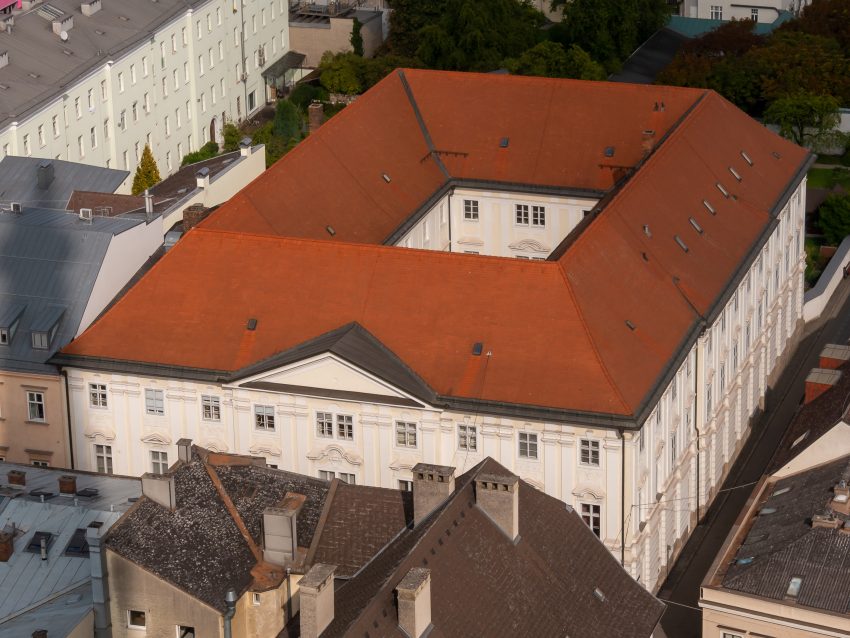
The Bischofshof is the bishop's residence in central Linz, set on Herrenstraße in the Innere Stadt and best appreciated as an exterior architectural stop rather than a long indoor visit. Its Baroque presence blends into one of Linz's most walkable streets, making it an easy add-on between the Main Square and the cathedral area.
If you're doing a self-guided walking tour of Linz, the Bischofshof fits perfectly as a quick “look up and linger” moment: come for the façade details and the much-admired gate, then continue on foot to nearby churches, courtyards, and viewpoints in the Old Town.
Table of Contents
- History and Significance of the Bischofshof
- Things to See and Do in the Bischofshof
- How to Get to the Bischofshof
- Practical Tips on Visiting the Bischofshof
- Where to Stay Close to the Bischofshof
- Is the Bischofshof Worth Visiting?
- For Different Travelers
- FAQs for Visiting Bischofshof
- Nearby Attractions to the Bischofshof
History and Significance of the Bischofshof
The Bischofshof is closely tied to Linz's ecclesiastical and civic history. The building is a notable example of secular Baroque architecture in the city, originally commissioned by the monastery of Kremsmünster in the early 18th century and associated with prominent Baroque-era planning and craftsmanship.
Over time, the property shifted roles from monastic city residence to an important administrative and representative address. With the establishment of the Diocese of Linz in the late 18th century, the building became the bishop's residence, anchoring church leadership in the heart of the city.
Today, beyond being a residence, it also functions as an administrative hub, which helps explain why many visits are primarily about appreciating the exterior and the setting along Herrenstraße rather than touring extensive public interiors.
Things to See and Do in the Bischofshof
Start with what most visitors come to photograph: the gate and entrance area. Even if you only spend a few minutes here, the craftsmanship and the way the entry frames the building make it a rewarding stop on a city stroll.
Next, take a slow lap around the immediate streetscape. Herrenstraße is a pleasant corridor for architecture-spotting, and the Bischofshof reads best in context: look for proportions, window rhythms, and the overall Baroque “order” that contrasts with more modern storefront energy nearby.
If you're building a compact itinerary, pair the Bischofshof with other Old Town highlights within a short walk. It works especially well as a connective point between major squares, churches, and museum stops, giving your route a sense of historical continuity.
How to Get to the Bischofshof
For flights, the most convenient airport for Linz is Linz Airport (LNZ), with Vienna International Airport (VIE) as a common alternative for more routes and onward connections. For the best deals and a seamless booking experience, check out these flights to Linz on Booking.com.
Linz is easy to reach by rail, and arriving at Linz Hauptbahnhof sets you up for a quick tram or taxi ride into the city center before continuing on foot to Herrenstraße. You can easily check timetables and book train tickets through the ÖBB (Austrian Federal Railways) website. However, for a smoother experience, we recommend using Omio, which simplifies the booking process and lets you compare routes, prices, and departure times all in one place..
If you’re coming by car, aim for a central garage/paid parking area and then walk the last stretch through the Innere Stadt to avoid the hassle of tight historic-center driving. If you are looking to rent a car in Austria I recommend having a look at Discover Cars, first, as they compare prices and review multiple car rental agencies for you..
Practical Tips on Visiting the Bischofshof
- Official website: https://www.dioezese-linz.at/bischof/wohnhaus-bischofshof
- Entrance fee: Free.
- Opening hours: Monday – Thursday: 07:45–17:00. Friday: 07:45–13:45. Closed on Saturday, Sunday.
- Best time to visit: Go in the morning for softer light on the façade, or late afternoon when the street feels calmer and photos are easier.
- How long to spend: Plan 10–20 minutes as a focused exterior stop, or longer if you’re photographing details and pairing it with nearby sights.
- Accessibility: The surrounding streets are generally walkable, but expect typical city-center paving; if mobility is a concern, approach at a slower pace and use curb cuts where available.
- Facilities: Treat this as a quick look-from-outside attraction; rely on nearby cafés and public venues in the center for restrooms and longer breaks.
Where to Stay Close to the Bischofshof
Base yourself in Linz's city center (Innere Stadt) for the easiest walking access to the Bischofshof, the Main Square, museums, and evening dining.
Austria Trend Hotel Schillerpark Linz Chosen for its reliable comfort and strong transport convenience, making it a practical base if you plan day trips as well as Old Town walks.
Hotel Schwarzer Bär Included because it places you right on Herrenstraße, ideal for early-morning photos and a truly central, walk-everywhere stay.
Park Inn by Radisson Linz A good pick for travelers who want modern amenities and a straightforward walk into the historic core without being directly on the busiest pedestrian stretches.
ARCOTEL Nike Linz Selected for Danube-side views and a scenic riverside approach into the center, great if you like morning runs or sunset walks.
Courtyard by Marriott Linz Recommended for business travelers or anyone who values consistent service, quiet rooms, and quick access to transit links.
Is the Bischofshof Worth Visiting?
Yes, if you enjoy architecture and like collecting small, characterful stops on a walking tour, the Bischofshof is worth it. It's not a “plan your whole day around it” attraction, but it is a satisfying slice of Baroque Linz, especially for photographers and anyone who appreciates elegant urban details like gates, stonework, and proportions.
Honest Pivot: If you're short on time and prefer attractions with guaranteed interior access or hands-on exhibits, you can skip it and focus on Linz's museums, viewpoints, or Danube experiences instead. The Bischofshof shines most as a quick exterior highlight rather than a deep-dive visit.
What Other Travellers Say...

Reviews are generally positive, with visitors most often praising the attractive gate and the elegant, opulent look of the bishop's residence along Herrenstraße. Several comments suggest it works best as a quick stop while strolling the street or doing a walking tour. A minority felt it was only average compared with other sights in Linz, so expectations are best set for an exterior highlight rather than a major standalone attraction.


For Different Travelers
The Bischofshof is a flexible stop that works best when you treat it as part of a broader Old Town loop. Think of it as a visual landmark: quick to see, easy to reach, and most rewarding when paired with nearby highlights.
Families with Kids
For families, this is best as a short “spot the details” stop: look for the gate, count decorative elements, and keep the pace moving. It’s easy to combine with a snack break nearby so kids don’t feel like they’re doing a long history lesson.
Because the visit is brief and outdoors, it can be a good reset between bigger attractions. If the group is restless, use it as a photo stop and continue to a more interactive destination.
Couples & Romantic Getaways
Couples will like the Bischofshof for its calm, elegant atmosphere and the way it fits into a slow stroll through central Linz. It's a classic “walk, talk, and take a few photos” place that feels quietly special without needing a ticket.
For a romantic rhythm, visit in late afternoon, then continue toward the river or a cozy dinner spot nearby. The architecture adds a sense of place to an evening walk.
Budget Travelers
Budget travelers will appreciate that this is a low-commitment stop that adds cultural value to a free walking route. You can see the highlight features quickly and keep your day focused on other free or low-cost sights.
It also works well as a navigation point while exploring the Innere Stadt on foot. Build a loop that includes squares, churches, and viewpoints to maximize what you see without spending much.
History Buffs
History lovers can use the Bischofshof as a gateway into Linz's Baroque era and the city's church administration story. Even from the outside, it's a strong example of how power, aesthetics, and urban planning intersected in the 18th century.
To deepen the context, connect the stop with nearby historic streets and institutions and pay attention to how the building sits within the city’s evolving center. It’s a small stop, but it points to bigger narratives.
FAQs for Visiting Bischofshof
Getting There
Tickets & Entry
Visiting Experience
Tours, Context & Itineraries
Photography
Accessibility & Facilities
Food & Breaks Nearby
Safety & Timing
Nearby Attractions to the Bischofshof
- Linz Main Square (Hauptplatz): The city's grand central square, ideal for people-watching and historic façades.
- Old Town (Altstadt): A compact area of lanes and viewpoints that rewards slow wandering.
- Mariendom (New Cathedral): A major landmark church with impressive scale and stained glass.
- Landhaus Linz: A historic government complex with courtyards and architectural details.
- Danube River Promenade: A scenic riverside walk that’s especially pleasant near sunset.
The Bischofshof appears in our Complete Guide to Visiting Linz!

Moira & Andy
Hey! We're Moira & Andy. From hiking the Camino to trips around Europe in Bert our campervan — we've been traveling together since retirement in 2020!
This website uses affiliate links which may earn a commission at no additional cost to you!
Planning Your Visit
Monday - Thursday: 07:45-17:00.
Friday: 07:45-13:45.
Closed on Saturday, Sunday.
Free.
Nearby Attractions
- Mariendom (0.1) km
Cathedral, Religious Building and Viewing Point - Ursulinenkirche (0.2) km
Church, Historic Building and Religious Building - Doctor Bloch's Office (0.3) km
Historic Building - Landhaus (0.3) km
Historic Building, Historic Site and Tower - OK Center for Contemporary Art (0.4) km
Arts Venue, Gallery and Museum - Alter Dom (0.4) km
Cathedral, Church and Historic Building - Landestheater (0.4) km
Arts Venue, Opera House and Theatre - Hauptplatz (0.4) km
Area, Historic Site and Square - Landstrasse (0.5) km
Area, Street and Walk - Altes Rathaus (0.5) km
Historic Building, Historic Site and Town Hall