Benwell Roman Temple, Newcastle upon Tyne
Roman Site in Newcastle upon Tyne
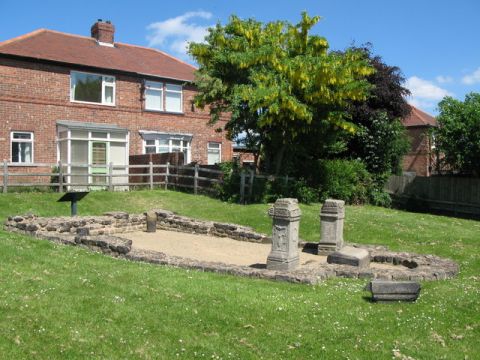
A short distance west of Newcastle's modern centre, Benwell Roman Temple offers a quiet, evocative glimpse into religious life on the northern frontier of the Roman Empire. Built around AD 178-80 beside the civilian settlement outside Condercum fort on Hadrian's Wall, this small shrine was dedicated to a local deity called Antenociticus, a god unknown from any altar stones on the continent and therefore thought to be native to Britain. Today, the low stone remains and three surviving altar bases hint at the mix of imperial power and local belief that shaped everyday life here.
The temple lies in what is now a residential area of Benwell, and visiting feels very different from exploring a large museum or fortified site. Information panels explain the history of the shrine and the people who worshipped here: cavalry officers, centurions and auxiliary commanders from units stationed at Condercum, including men originally recruited from the Rhineland. For anyone interested in Hadrian's Wall, Roman religion or the way Roman and local traditions blended, Benwell Roman Temple is one of the things to do in Newcastle upon Tyne that rewards a short but thoughtful detour, often visited on tours from Newcastle upon Tyne that focus on the city's Roman past.
Table of Contents
- History and Significance of the Benwell Roman Temple
- Things to See and Do in the Benwell Roman Temple
- How to Get to the Benwell Roman Temple
- Practical Tips on Visiting the Benwell Roman Temple
- Where to Stay close to the Benwell Roman Temple
- Is the Benwell Roman Temple Worth Visiting
- FAQs for Visiting Benwell Roman Temple
- Nearby Attractions to the Benwell Roman Temple
History and Significance of the Benwell Roman Temple
Benwell Roman Temple was constructed around AD 178-80, at a time when Hadrian's Wall and its chain of forts were firmly established as Rome's northern frontier in Britain. The temple stood in the civilian settlement (vicus) that grew up outside Condercum fort, one of the Wall's key garrisons, providing a place of worship for soldiers and locals living in the shadow of the ramparts. Unlike the official imperial cults or widely known Roman gods, the shrine here was dedicated to Antenociticus, a deity otherwise unknown from continental inscriptions and therefore believed to be a native British god.
The most striking evidence of the temple’s use comes from the three altars found within its ruins. One altar was dedicated to Antenociticus by Tineius Longus, a cavalry prefect who had been designated as a quaestor, underlining that this local god attracted the devotion of high-ranking officers as well as ordinary soldiers. Another altar was set up by a centurion of the Twentieth Legion (Valeria Victrix), possibly in temporary command of the unit at Benwell. The third was dedicated by a prefect of the first cohort of Vangiones, an auxiliary unit originally recruited from the Rhineland, suggesting that foreign-born commanders also participated in the cult, perhaps as visitors or short-term commanders at Condercum.
Together, these dedications show how flexible Roman religion could be. Officers from different units, backgrounds and regions felt comfortable honouring a local deity alongside the more familiar gods of the Roman pantheon. Benwell Roman Temple therefore offers more than just a few low walls; it acts as a small but important piece of evidence for how Roman and local traditions intertwined on the frontier, and how religious life helped knit together garrisons, civilians and visiting commanders in this corner of the empire.
Things to See and Do in the Benwell Roman Temple
The site itself is modest, but there is enough to give you a clear sense of the temple’s layout and atmosphere. Low stone walls outline the footprint of the building, and interpretation panels help you imagine how it would have looked in the late 2nd century, with a small enclosed space, altar stones and perhaps painted or carved decoration around the cult image of Antenociticus. As you walk around, it is easy to picture soldiers and officers stepping in from the vicus to make offerings before returning to duty at Condercum.
The three altars are the key features to look for. While the originals are protected or housed in collections, the stones or their replicas on site show the basic form and inscriptions that have allowed archaeologists to identify the deity and the men who dedicated them. Take time to read the translations on any information panels; they bring individual personalities into focus, such as Tineius Longus and the officers of the Twentieth Legion and the Vangiones. These names and titles turn the site from an anonymous ruin into a place connected to real people with careers, ambitions and beliefs.
Because Benwell Roman Temple sits in a quiet corner of the city rather than a major tourist zone, it is also a pleasantly contemplative spot. You can combine a visit with a walk around other remnants of the Wall in the area, or use it as a brief stop on a wider exploration of Newcastle's Roman and industrial heritage. A camera is useful for capturing the contrast between the ancient stones and the modern houses that now surround them, illustrating just how deeply layered this part of the city's history really is.
How to Get to the Benwell Roman Temple
If you are travelling from further afield, Newcastle International Airport is your most convenient gateway, with regular domestic and European flights and a direct Metro link into the city centre in around 25 minutes. For the best deals and a seamless booking experience, check out these flights to Newcastle upon Tyne on Booking.com. From the airport, you can ride the Metro to Central Station or Monument and then switch to local buses or a taxi heading west towards Benwell.
By train, you will arrive at Newcastle Central Station on the East Coast Main Line, with frequent services from London, Edinburgh, York and other major cities.Train schedules and bookings can be found on Omio. From the station, the temple site is a short journey by local bus or taxi; the ride takes you through residential neighbourhoods, and you will need to follow local maps or signs to the small enclosure where the remains are preserved.
If you prefer to drive, follow signs from the city centre towards Benwell and the western suburbs, making use of local maps or sat-nav directions to locate the temple’s small, tucked-away site. Parking is typically on nearby residential streets, so be considerate of local residents and be prepared for a short walk from your car to the remains themselves.
Practical Tips on Visiting the Benwell Roman Temple
- Suggested tips: Bring a map or saved directions, as the temple is small and tucked within a modern neighbourhood, and combine your visit with other nearby Roman or city-centre sites to make a half-day outing.
- Best time to visit: Daytime visits in good weather are best, as the site is outdoors and more enjoyable when you can linger over the remains and read the information panels in comfort.
- Entrance fee: Free
- Opening hours: Daylight Hours
- Official website: https://www.english-heritage.org.uk/visit/places/benwell-roman-temple-hadrians-wall/
- How long to spend: Plan for around 20-40 minutes at the site itself, more if you like to read every panel and think about the inscriptions, plus travel time from the city centre.
- Accessibility: The ground around the remains is uneven and may be muddy in wet weather, so sturdy footwear is recommended; access for visitors with limited mobility can be challenging.
- Facilities: There are no toilets, cafés or visitor centres at the temple, so plan to use facilities in Newcastle city centre or nearby local centres before or after your visit.
- Photography tip: Use low angles to emphasise the texture of the stonework and include some of the surrounding houses or skyline to highlight the contrast between ancient and modern.
- Guided tours: Some specialist Roman or Hadrian’s Wall tours may include Benwell as a stop; if you are keen on deeper context, look out for local guided options that cover the western suburbs of Newcastle.
- Nearby food options: You will find basic shops and takeaways in nearby residential areas, but for a broader choice of cafés, pubs and restaurants it is best to head back towards Newcastle city centre after your visit.
Where to Stay close to the Benwell Roman Temple
There are few hotels directly beside the temple, so most visitors choose to stay in central Newcastle and travel out to Benwell as part of a short excursion. A convenient base near Newcastle Central Station is Hampton by Hilton Newcastle, which makes it easy to catch buses or taxis west while keeping all the city’s main attractions within walking distance. For a touch of historic character, Royal Station Hotel offers period charm just across from the station, again giving straightforward access to public transport. If you prefer a quieter neighbourhood feel with good road links to the western suburbs, Holiday Inn Express Newcastle City Centre provides modern comfort a short walk from transport hubs.
Is the Benwell Roman Temple Worth Visiting
If you are a casual visitor with limited time, the headline sights in central Newcastle and along Hadrian's Wall may take priority. However, for anyone with a particular interest in Roman religion, frontier life or lesser-known archaeological sites, Benwell Roman Temple is definitely worth seeking out. Its small scale and suburban setting give it a different feel from larger, more polished attractions, and the story of Antenociticus and the officers who dedicated altars here adds a distinctive local dimension to the broader Hadrian's Wall narrative. For those piecing together the frontier one site at a time, it becomes a memorable, quietly atmospheric stop.
What Other Travellers Say...

Benwell Roman Temple - Hadrian's Wall at 50 Broomridge Ave, Newcastle upon Tyne, sits quietly within a modern housing estate and offers a compact but intriguing glimpse of Roman presence in the area; visitors note it's peaceful, surprisingly interesting despite its small size, and connected historically to nearby Roman sites and a fort that no longer remains, with artifacts from the temple—such as a statue head—kept in the local Great North Museum for those wanting to see more.


FAQs for Visiting Benwell Roman Temple
Nearby Attractions to the Benwell Roman Temple
- Condercum Roman Fort site: Explore the area around the former fort at Benwell, another piece of the Hadrian’s Wall frontier within the modern city.
- Discovery Museum: Head back towards the city centre to learn about Tyneside's maritime, scientific and social history in a large, family-friendly museum.
- Newcastle Castle: Visit the medieval Castle Keep and Black Gate for atmospheric interiors and views over the Tyne and city skyline.
- Cathedral Church of St Nicholas: Explore Newcastle’s historic cathedral, with its distinctive lantern spire and links to the city’s medieval past.
- Grainger Town and Grey Street: Wander one of the most elegant 19th-century urban ensembles in Britain, with shops, cafés and landmarks such as the Theatre Royal and Grey's Monument.
The Benwell Roman Temple appears in our Complete Guide to Visiting Newcastle upon Tyne!

Moira & Andy
Hey! We're Moira & Andy. From hiking the Camino to trips around Europe in Bert our campervan — we've been traveling together since retirement in 2020!
This website uses affiliate links which may earn a commission at no additional cost to you!
Planning Your Visit
Daylight Hours
Free
Nearby Attractions
- Condercum Fort (0.2) km
Roman Site - Discovery Museum (2.5) km
Museum - Blackfriars Restaurant (2.7) km
Historic Building - Life Science Centre (2.9) km
Museum - Grainger Market (3.1) km
Market - Edwardian Central Arcade (3.1) km
Historic Site - Grey's Monument (3.1) km
Monument - Great North Museum: Hancock (3.2) km
Museum - Literary and Philosophical Society of Newcastle upon Tyne (3.2) km
Historic Building - Theatre Royal (3.2) km
Theatre