Bach Ma Temple, Hanoi
Buddhist Temple in Hanoi
Bach Ma Temple sits at the heart of Hanoi's Old Quarter and stands as the oldest temple in the city. Deeply tied to the story of King Ly Thai To's relocation of the capital in 1010, it remains one of the must-see places in Hanoi for travellers seeking heritage, architecture, and traditional culture. Its ancient pillars, carved beams, and sacred altars offer a rare look into the spiritual life of historic Thang Long.
As one of the Four Guarding Temples of the old citadel, Bach Ma once formed a protective boundary around the ancient capital. Today, its religious importance and atmospheric courtyards make it a highlight of any walking tour of Hanoi's Old Quarter, drawing visitors who want to explore the city's earliest legends.
Table of Contents
History and Significance of Bach Ma Temple
Bach Ma Temple dates back to the 9th century, originally dedicated to Long Do, the ancient protective spirit of Hanoi. Long Do is said to have defeated the mystical forces of Cao Bien, a Tang Dynasty general who attempted to subdue the region with sorcery. This early association with supernatural protection established the temple as a spiritual anchor long before Hanoi became the capital.
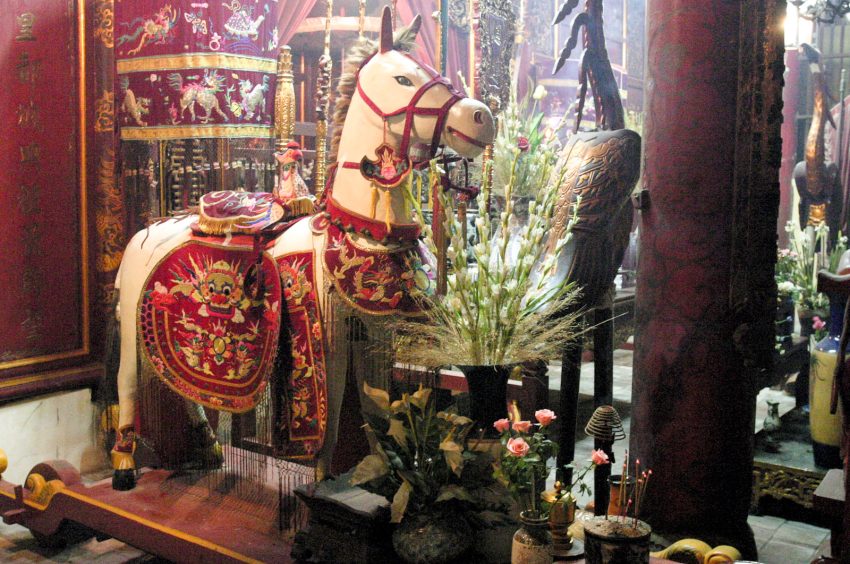
When King Ly Thai To moved the imperial capital from Hoa Lu to Thang Long in 1010, he struggled repeatedly to construct the city walls. According to legend, a white horse emerged from the Lon Do Temple and left tracks guiding workers to the correct foundation. To honour this divine intervention, the temple was renamed Bach Ma, meaning White Horse. It became one of the Four Guarding Temples protecting the ancient citadel from each cardinal direction.
Its resilience through dynasties and upheavals has preserved not only its legendary story but also many elements of Nguyen-era architecture and sacred heirlooms, allowing visitors to glimpse centuries of spiritual tradition.
Things to See and Do in Bach Ma Temple
Bach Ma Temple is admired for its harmonious layout, which resembles the Chinese character for “Three,” and its eight-roofed exterior reminiscent of communal village houses. Step inside and you'll find elaborately carved pillars, wooden beams, and antique artwork that reflect the craftsmanship of multiple dynasties. Many of these details echo the artistic traditions seen in regions such as Hoi An.
The interior hall is supported by an intricate tie-beam structure made from ironwood, both decorative and functional. Sophisticated altars honour deities and legendary figures, while valuable relics-including imperial titles, ancient weapons, stone stelae, bells, palanquins, and old paintings-offer insight into the temple’s long history. Because of its sacred status, French colonial forces avoided relocating or desecrating its treasures, leaving many originals intact.
Visitors particularly enjoy exploring during the annual festival held on the 12th and 13th days of the Lunar Calendar. The celebration features colourful processions, unicorn dances, drum performances, and traditional games such as human chess, tug of war, cock-fighting, and folk singing contests. It is one of the most vibrant cultural events in the Old Quarter.
How to Get to Bach Ma Temple
Bach Ma Temple is located at 76 Hang Buom Street in the Old Quarter, an area with narrow lanes that can be tricky to navigate. Travellers flying into Hanoi will arrive at Noi Bai International Airport, around 30 kilometres away. For the best deals and a seamless booking experience, check out these flights to Hanoi on Booking.com.
Those arriving by rail can access the Old Quarter easily from Hanoi Railway Station, which is the city’s main train hub. Train schedules and bookings can be found on Omio.
If travelling by car or motorbike, expect about 30 minutes of travel time depending on traffic. The streets near the temple can be congested, but drop-off points are available.
Visitors may also reach the temple by bus, with routes 18 and 32 stopping at Tran Nhat Duat Station around 500 metres away. Pedicabs are another scenic option, offering a leisurely ride through the Old Quarter with drivers who know its maze-like streets well.
Practical Tips on Visiting Bach Ma Temple
- Suggested tips: Wear modest clothing as this remains an active place of worship.
- Best time to visit: Morning or late afternoon for quieter, more atmospheric moments.
- Entrance fee: Free
- Opening hours: 8:00 AM - 11:00 AM and 2:00 PM - 8:00 PM every day
- How long to spend: Around 20-40 minutes, longer during festival days.
- Accessibility: Narrow streets and uneven pavements may challenge some visitors.
- Facilities: Limited inside; cafés and shops nearby offer rest areas and refreshments.
- Photography tip: Focus on the ornate wooden beams and altars to capture the temple’s ancient character.
- Guided tours: Included in many Old Quarter cultural and heritage tours.
- Nearby food options: Numerous eateries and tea shops along Hang Buom and nearby streets.
Where to Stay close to Bach Ma Temple
Staying near Bach Ma Temple places you deep within the historic Old Quarter. Boutique travellers may enjoy La Siesta Classic Hang Thung. For lakeside elegance within walking distance, consider Hanoi Pearl Hotel. Another convenient option is Silk Path Hotel Hanoi, close to both the temple and many Old Quarter attractions.
Is Bach Ma Temple Worth Visiting?
Yes, Bach Ma Temple is absolutely worth visiting. As the oldest temple in Hanoi and one of the Four Guarding Temples of Thang Long, it offers an authentic glimpse into the city's spiritual origins, legends, and architectural beauty. Its peaceful atmosphere and deep cultural roots make it a meaningful stop for any traveller exploring the Old Quarter.
What Other Travellers Say...

Bach Ma Temple, located at 76 P. Hoàng Bưởm in the heart of the Old Quarter, is an elaborate Ly-dynasty shrine reconstructed in later centuries that offers a calm, spiritual escape from the busy city; visitors praise its peaceful atmosphere and scenic approach through nature, note its long presence at the site despite renovations and wartime damage, recommend guided tours for fuller historical context, and point out distinctive decorative touches such as expressive horse eyes.


FAQs for Visiting Bach Ma Temple
Nearby Attractions to Bach Ma Temple
- O Quan Chuong Gate: The only surviving gate of ancient Thang Long.
- Dong Xuan Market: A bustling, historic market at the north of the Old Quarter.
- Long Bien Bridge: A French colonial engineering landmark spanning the Red River.
- Ancient House (87 Ma May): A well-preserved traditional merchant home.
- Hoan Kiem Lake: Hanoi's iconic scenic and cultural centre.
The Bach Ma Temple appears in our Complete Guide to Visiting Hanoi!

Moira & Andy
Hey! We're Moira & Andy. From hiking the Camino to trips around Europe in Bert our campervan — we've been traveling together since retirement in 2020!
This website uses affiliate links which may earn a commission at no additional cost to you!
Planning Your Visit
8:00 AM – 11:00 AM and 2:00 PM – 8:00 PM every day
Free
Nearby Attractions
- Old East Gate (0.2) km
City Gate - Hanoi Ancient House (0.3) km
Historic Building - Dong Xuan Market (0.3) km
Market - Hang Gai Street (0.4) km
Street - Thang Long Water Puppet Theater (0.5) km
Theatre - Ba Kieu Temple (0.6) km
Chinese Shrine - Ngoc Son Temple (0.6) km
Buddhist Temple - Hang Bong Street (0.7) km
Street - Hoan Kiem Lake (0.8) km
Lake - St. Joseph’s Cathedral (0.8) km
Cathedral