Arco de la Victoria, Madrid
Historic Site, Memorial and Monument in Madrid
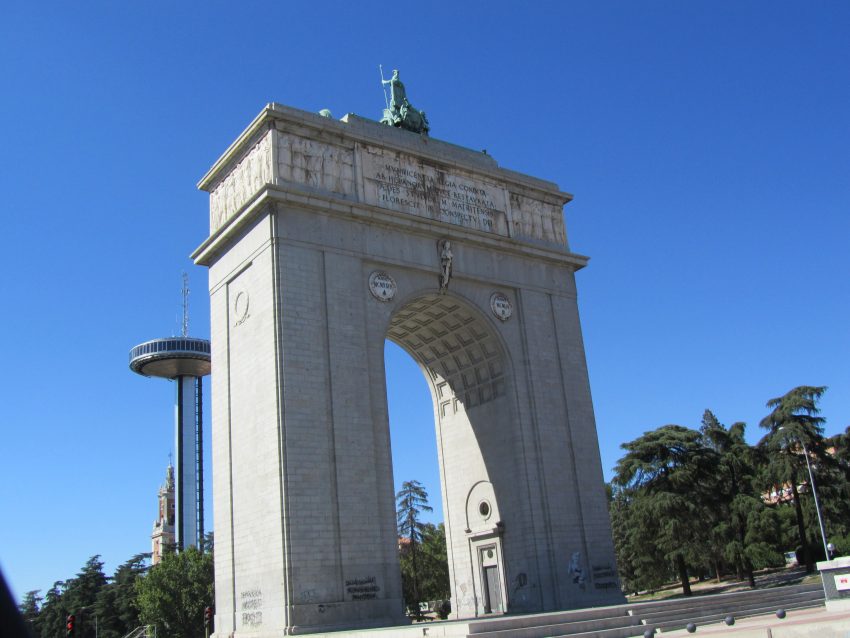
Arco de la Victoria is a monumental triumphal arch in the Moncloa district of Madrid, set beside the Ciudad Universitaria area and one of the city's main western approaches. It's a dramatic, neoclassical landmark that's easy to spot from a distance, especially if you're arriving via the Moncloa interchange or walking along the broad avenues around the university campus.
Because it sits a little outside the classic “first-time Madrid” loop, it works best as a purposeful stop on a walking tour of Moncloa and Ciudad Universitaria, or as a quick detour when you're already nearby for parks, viewpoints, or transport connections. The best places to see it are from the open spaces around the roundabout and from the approaches that frame the arch head-on for photos.
Table of Contents
- History and Significance of the Arco de la Victoria
- Things to See and Do in the Arco de la Victoria
- How to Get to the Arco de la Victoria
- Practical Tips on Visiting the Arco de la Victoria
- Where to Stay Close to the Arco de la Victoria
- Is the Arco de la Victoria Worth Visiting?
- For Different Travelers
- FAQs for Visiting Arco de la Victoria
- Nearby Attractions to the Arco de la Victoria
History and Significance of the Arco de la Victoria
Arco de la Victoria was built in the 1950s as a commemorative monument tied to the Spanish Civil War and the Franco era. Its scale and classical language are intentional: it's meant to read as a grand “gateway” statement, echoing older European triumphal arches while asserting a specific political narrative.
That origin is also why the monument remains contentious today. For many visitors, it's an imposing piece of architecture and urban scenery; for others, it's inseparable from what it commemorates and the suffering associated with the conflict in this part of Madrid.
In practical terms, the arch is also part of a wider conversation about how cities handle difficult heritage. Seeing it with context (even a short explanation from a guide) can make the visit more meaningful than a simple photo stop.
Things to See and Do in the Arco de la Victoria
Start by appreciating the structure as an object in the city: the single grand arch, the symmetrical side blocks, and the sculptural program that leans heavily into classical symbolism. Walk around it to notice how the details change depending on the angle and how the monument was designed to be read from major approaches.
Next, use the surrounding area to your advantage. Moncloa is well-connected and surprisingly green-adjacent, so it's easy to pair the arch with a stroll toward nearby parks and viewpoints, or with a walk through the edges of Ciudad Universitaria to get a feel for this less-touristed side of Madrid.
Finally, treat it as a photography stop. The best shots usually come from a little distance, where you can include the full height and the urban scale around it; late afternoon light often gives the stonework more depth and contrast.
How to Get to the Arco de la Victoria
Madrid's nearest major airport is Adolfo Suárez Madrid–Barajas Airport (MAD), with frequent metro, bus, and taxi connections into the city. For the best deals and a seamless booking experience, check out these flights to Madrid on Booking.com.
If you’re arriving by rail, Madrid’s main stations (Atocha and Chamartín) connect you to the metro network, making it straightforward to reach Moncloa and the university area. Train schedules and bookings can be found on Omio.
Driving is possible, but the monument sits by a busy traffic hub, so expect complex lanes and limited “stop-and-go” parking right next to the arch. If you are looking to rent a car in Spain I recommend having a look at Discover Cars, first, as they compare prices and review multiple car rental agencies for you.
Practical Tips on Visiting the Arco de la Victoria
- Entrance fee: Free.
- Opening hours: 24 Hours.
- Best time to visit: Go early morning for calmer streets and cleaner sightlines, or near sunset for warmer light and better photos.
- How long to spend: 15–30 minutes is enough for a loop and photos; add an hour if you’re pairing it with a walk around Moncloa and nearby green spaces.
- Accessibility: The surrounding sidewalks and viewing angles are generally accessible, but crossings can be long and traffic-heavy, so plan your route carefully.
- Facilities: You’ll find plenty of cafés, fast food, and services around Moncloa; treat the arch itself as an outdoor sight rather than a staffed attraction.
Where to Stay Close to the Arco de la Victoria
For most travelers, the best base is central Madrid with easy metro access to Moncloa.
If you want to be near the arch without sacrificing the convenience of the city, look for hotels around Argüelles, Moncloa, and the western edge of Chamberí—areas that balance transport links, dining, and quick access to parks and viewpoints.
Hotel Exe Moncloa A strong pick for being close to Moncloa’s transport hub, making it easy to pop over to the arch and still reach the historic center quickly.
Hotel Princesa Plaza Madrid A convenient option between central sights and Moncloa, with good access for travelers who want space and a practical location.
Melia Madrid Princesa A more upscale stay near Plaza de España/Argüelles, ideal if you want comfort while keeping Moncloa within easy reach.
The Social Hub Madrid A modern, social stay that suits travelers who like lively common areas and a flexible, work-friendly setup.
Hotel Riu Plaza España Great for a classic Madrid base with big-city energy; from here, Moncloa is a straightforward metro ride for a quick arch visit.
Is the Arco de la Victoria Worth Visiting?
Yes—if you like monumental architecture, urban photography, or want to understand Madrid beyond the postcard center, it's a worthwhile stop, especially when combined with Moncloa and the Ciudad Universitaria area. It's visually impressive, quick to see, and easy to fit into a half-day route.
Honest Pivot: If you’re short on time and prefer attractions with a clearer celebratory meaning (or you don’t want to engage with politically charged monuments), you can skip it and focus on Madrid’s museums, royal sites, and historic plazas instead.
What Other Travellers Say...

Overall reviews are positive, with travelers rating it well for its imposing architecture, photo opportunities, and the surrounding Moncloa area’s parks and amenities. Many mention it as an interesting, less-touristed landmark with a notable neoclassical design and occasional references to views from higher up. The main downside is that some visitors find the monument politically charged due to its Franco-era origins, and the immediate setting can feel dominated by traffic rather than a pedestrian-friendly plaza.


For Different Travelers
Arco de la Victoria is less about “activities” and more about context, cityscape, and scale. It can be a quick win for photos and orientation, or a deeper stop if you're exploring 20th-century history and memory in Madrid.
Families with Kids
Kids may enjoy the sheer size of the arch and the feeling of standing next to a giant city monument. Keep expectations simple: it’s mainly an outdoor look-and-leave stop rather than an interactive attraction.
Pair it with a nearby park walk or a snack break around Moncloa to keep the visit smooth. The area’s wide streets can be busy, so plan crossings and keep little ones close.
Couples & Romantic Getaways
For couples, the arch works best as a short, offbeat detour for photos and a stroll in a less touristy neighborhood. The monument can feel especially cinematic in late-day light when the stone tones warm up.
Follow it with a café stop or a walk toward nearby viewpoints and green spaces for a more relaxed, date-like rhythm. It’s a good “something different” moment between major museums and central landmarks.
Budget Travelers
This is an easy budget-friendly stop because it’s outdoors and fits naturally into a day of walking and metro-hopping. If you’re building a low-cost itinerary, combine it with free city views and neighborhood exploration rather than paid attractions.
Budget travelers also tend to appreciate that Moncloa has plenty of quick, affordable food options. Just be mindful that the best photo angles may require a bit of walking around the traffic circle.
History Buffs
History-focused travelers will get the most out of this visit by approaching it as a case study in how regimes use architecture and symbolism. The location near Ciudad Universitaria also ties into the broader story of the Spanish Civil War in Madrid.
Consider pairing the stop with a guided walk or a self-guided reading plan so you’re not just looking at stonework. The monument’s meaning is debated, and understanding that debate is part of the experience.
FAQs for Visiting Arco de la Victoria
Getting There
Tickets & Entry
Visiting Experience
Tours, Context & Itineraries
Photography
Accessibility & Facilities
Food & Breaks Nearby
Safety & Timing
Nearby Attractions to the Arco de la Victoria
- Faro de Moncloa: A nearby tower viewpoint that's popular for panoramic city views.
- Ciudad Universitaria (UCM area): A broad campus zone with modern history layers and a different feel from central Madrid.
- Parque del Oeste: A large park ideal for a calmer walk after the traffic-heavy monument area.
- Templo de Debod: An iconic sunset spot with an ancient temple and excellent photo opportunities.
- Plaza de España: A major central square that's easy to reach by metro from Moncloa and anchors a classic sightseeing route.
The Arco de la Victoria appears in our Complete Guide to Visiting Madrid!

Moira & Andy
Hey! We're Moira & Andy. From hiking the Camino to trips around Europe in Bert our campervan — we've been traveling together since retirement in 2020!
This website uses affiliate links which may earn a commission at no additional cost to you!
Planning Your Visit
24 Hours.
Free.
Nearby Attractions
- Faro de Moncloa (0.2) km
Attraction, Tower and Viewing Point - Real Ermita de San Antonio de la Florida (1.3) km
Church, Historic Building and Historic Site - Templo de Debod (1.3) km
Attraction, Historic Site and Monument - Plaza de Espana (1.5) km
Attraction, Monument and Square - Jardines de Sabatini (1.8) km
Attraction, Gardens and Park - Palacio Real (2.0) km
Historic Building, Historic Site and Palace - Plaza de Oriente (2.0) km
Gardens, Monument and Square - Teatro Real (2.1) km
Arts Venue, Opera House and Theatre - Gran Via (2.1) km
Area, Street and Walk - Catedral de la Almudena (2.2) km
Cathedral, Historic Building and Religious Building