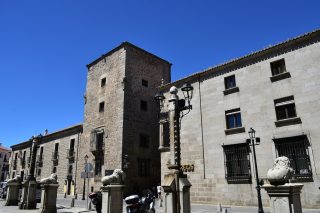
Archivo General de la Guerra Civil Española, Salamanca
Archive, Historic Site and Museum in Salamanca
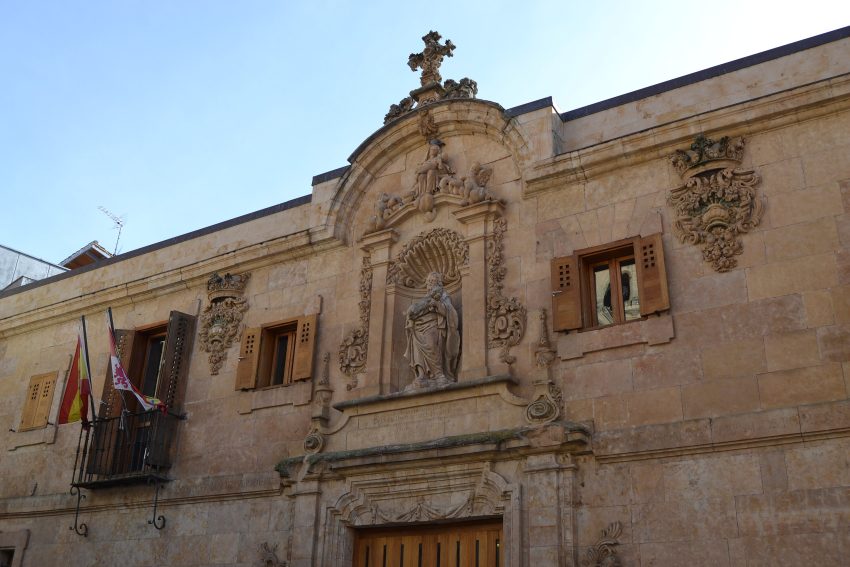
The Archivo General de la Guerra Civil Española is one of Salamanca's most quietly powerful cultural stops, preserving documentation tied to the Spanish Civil War and its aftermath. It's not a big, blockbuster museum experience; instead, it's a focused visit that rewards travelers who want context for Spain's 20th-century history.
Because it sits within easy reach of Salamanca's historic center, it fits naturally into a walking tour day alongside the city's headline sights like the Plaza Mayor and the twin cathedrals. If you're planning your route, this is best visited as a short, reflective break between Salamanca's grand architectural highlights.
Table of Contents
- History and Significance of the Archivo General de la Guerra Civil Española
- Things to See and Do in the Archivo General de la Guerra Civil Española
- How to Get to the Archivo General de la Guerra Civil Española
- Practical Tips on Visiting the Archivo General de la Guerra Civil Española
- Where to Stay Close to the Archivo General de la Guerra Civil Española
- Is the Archivo General de la Guerra Civil Española Worth Visiting?
- For Different Travelers
- FAQs for Visiting Archivo General de la Guerra Civil Española
- Nearby Attractions to the Archivo General de la Guerra Civil Española
History and Significance of the Archivo General de la Guerra Civil Española
The Archivo General de la Guerra Civil Española forms part of the Centro Documental de la Memoria Histórica in Salamanca, a state-run institution that safeguards documentation spanning the Second Republic, the Civil War, the Franco dictatorship, exile, and the transition to democracy. In other words, it's a key place where Spain's modern history is preserved in primary sources, not just summarized on museum panels.
Its significance goes beyond Salamanca: the collections are deeply tied to how documents were gathered, classified, and later used across decades—first as instruments of control and repression, and later as essential evidence for researchers, families, and historians trying to understand what happened and to whom.
For visitors, that background matters because it explains why the experience can feel more archival than “museum-like.” You’re stepping into a place where the paper trail of history is the point, and where memory, politics, and documentation intersect in a very direct way.
Things to See and Do in the Archivo General de la Guerra Civil Española
Start with the permanent exhibition material that introduces the conflict through posters, documents, and objects—an efficient overview that helps you anchor what you’ve seen elsewhere in Spain. Even if you’re not a specialist, the visual material (especially propaganda and everyday-life traces) makes the period feel immediate.
One of the most talked-about elements is the Masonic-themed room recreation, which many visitors find unexpectedly striking and a little surreal. It’s a memorable contrast: after viewing wartime material, you suddenly encounter a space that reflects how organizations and identities were cataloged, targeted, and interpreted.
If you want more depth, consider timing your visit around a guided tour (when available). These tours can add behind-the-scenes context—helpful here because the building’s purpose is preservation and research, so a bit of explanation can significantly enrich what you’re seeing.
How to Get to the Archivo General de la Guerra Civil Española
The nearest major airports are Madrid-Barajas (MAD) and Valladolid (VLL), with Porto (OPO) sometimes a practical option if you're combining Spain and northern Portugal. For the best deals and a seamless booking experience, check out these flights to Salamanca on Booking.com.
Salamanca is well connected by rail, and arriving by train is often the simplest way to reach the city center without worrying about parking. Train schedules and bookings can be found on Omio.
If you're driving, Salamanca is straightforward to reach via Spain's main highways, and you can usually park outside the tightest historic-core streets and walk the rest of the way. If you are looking to rent a car in Spain I recommend having a look at Discover Cars, first, as they compare prices and review multiple car rental agencies for you.
Practical Tips on Visiting the Archivo General de la Guerra Civil Española
- Official website: https://www.cultura.gob.es/cultura/areas/archivos/mc/archivos/cdmh/portada.html
- Entrance fee: Free.
- Opening hours: Tuesday – Friday: 11:00–18:00. Saturday: 11:00–19:00. Sunday: 11:00–14:00. Closed on Monday.
- Best time to visit: Aim for a weekday late morning for a calmer, more contemplative visit. If you prefer a quieter feel, avoid peak weekend hours when other central Salamanca sights are busiest.
- How long to spend: Plan 30–45 minutes for a quick but meaningful look. Add time if you like to read every panel or if you’re pairing it with a guided visit.
- Accessibility: Expect an institutional building setup rather than a historic ruin, which usually helps with step-free access, but layouts can vary by room. If mobility is a concern, confirm access details before you go.
- Facilities: Keep expectations modest—this is a documentation-focused site, not a large museum complex. Plan café stops before or after in central Salamanca rather than relying on extensive on-site amenities.
Where to Stay Close to the Archivo General de la Guerra Civil Española
Base yourself in central Salamanca near the historic core so you can walk to major sights and easily fit this visit into your day.
NH Collection Salamanca Palacio de Castellanos A polished, comfortable choice close to the old town—great if you want a quiet, upscale base within walking distance of Salamanca’s main monuments.
Hotel Rector A boutique-style stay known for attentive service and a calm atmosphere, ideal after a day of sightseeing and museum-hopping.
Sercotel Puerta de la Catedral Perfect for travelers who want to wake up steps from the cathedral area and build a walking itinerary around the historic center.
Eurostars Las Claras A reliable, modern hotel option with easy access to both the old town and shopping streets—handy if you’re balancing culture with convenience.
Ibis Salamanca A budget-friendly, no-fuss base that works well if you plan to spend most of your time out exploring and want predictable comfort.
Is the Archivo General de la Guerra Civil Española Worth Visiting?
Yes—if you want a compact, thought-provoking stop that adds real historical texture to a Salamanca trip. It's especially worthwhile if you already have some interest in the Spanish Civil War or you're trying to connect the city's beauty with the more complicated layers of Spain's modern past.
Honest Pivot: if you’re looking for a large, object-heavy museum or you prefer attractions with lots of interactive displays, this may feel brief and text-forward. In that case, you’ll likely be happier prioritizing Salamanca’s architectural highlights and choosing a bigger museum experience elsewhere.
What Other Travellers Say...

Google reviewers rate it positively overall and often describe it as interesting and worthwhile if you already have some interest in the Spanish Civil War. Common highlights include the posters and wartime material, plus the unexpected Masonic-room recreation, which many find memorable. The most frequent downside is that the visit is small and can feel limited in scope, with several visitors noting you can see everything quickly and that expectations should be kept modest.


For Different Travelers
This is a niche-leaning attraction, but it can still work for many itineraries because it's short, central, and easy to combine with other Salamanca essentials. Think of it as a focused cultural add-on rather than the main event of your day.
Families with Kids
For younger kids, the experience may feel too abstract because the impact is in documents and context rather than hands-on exhibits. If you do go as a family, keep it short and pair it with a more visual stop afterward (like viewpoints or the cathedral area).
For teens studying European history, it can be genuinely valuable—especially if you frame it as “how history is proven and preserved.” A quick debrief after the visit helps turn it from a walk-through into a learning moment.
Couples & Romantic Getaways
As a couple, this works best as a quieter cultural interlude between Salamanca’s more romantic classics—golden-hour walks, cathedral views, and long meals. It’s a good choice if you both enjoy meaningful travel that goes beyond pretty photos.
Because the visit is short, it won't derail a relaxed itinerary. Follow it with a stroll back toward the Plaza Mayor for a lighter contrast.
Budget Travelers
This is a strong budget-friendly option because it's typically easy to fit into a walking day and doesn't require extra transport. If you're trying to maximize value in Salamanca, it's a smart “small stop” that adds depth without adding cost.
To keep your day efficient, cluster it with nearby free-to-enjoy highlights—historic streets, plazas, and viewpoints—so you’re not bouncing across town.
History Buffs
If you're already reading about the Civil War or Franco-era Spain, this is one of the most relevant places you can visit in Salamanca. The value is in proximity to primary-source preservation and the way the exhibitions point you toward the broader documentary story.
You’ll get the most out of it if you arrive with a bit of context (even a short podcast episode beforehand helps). If guided visits are offered during your travel dates, prioritize them for added insight.
FAQs for Visiting Archivo General de la Guerra Civil Española
Getting There
Tickets & Entry
Visiting Experience
Tours, Context & Itineraries
Photography
Accessibility & Facilities
Food & Breaks Nearby
Safety & Timing
Nearby Attractions to the Archivo General de la Guerra Civil Española
- Plaza Mayor: Salamanca's iconic main square, perfect for people-watching and evening atmosphere.
- Casa de las Conchas: A landmark façade covered in stone shells, with a pleasant interior courtyard.
- Universidad de Salamanca (historic buildings): One of Europe's oldest universities, packed with architectural details and academic history.
- Catedral Nueva y Catedral Vieja: The twin cathedrals offer a dramatic mix of styles and some of the city's best interiors.
- Huerto de Calixto y Melibea: A small, scenic garden viewpoint with literary connections and a peaceful feel.
The Archivo General de la Guerra Civil Española appears in our Complete Guide to Visiting Salamanca!

Moira & Andy
Hey! We're Moira & Andy. From hiking the Camino to trips around Europe in Bert our campervan — we've been traveling together since retirement in 2020!
This website uses affiliate links which may earn a commission at no additional cost to you!
Planning Your Visit
Tuesday - Friday: 11:00-18:00.
Saturday: 11:00-19:00.
Sunday: 11:00-14:00.
Closed on Monday.
Free.
Nearby Attractions
- Museo Art Nouveau y Art Déco - Casa Lis (0.1) km
Attraction, Historic Building and Museum - Museum of Automotive History (0.1) km
- Huerto de Calixto y Melibea (0.2) km
Gardens, Park and Viewing Point - Escuelas Menores de la Universidad de Salamanca (0.2) km
Courtyard, Historic Building and Historic Site - Catedral Viejo y Nueva (0.2) km
Cathedral - Unamuno House Museum (0.2) km
- Salamanca University (0.2) km
Historic Building - Plaza de Anaya (0.2) km
- Museo de Salamanca (0.2) km
Historic Building, Historic Site and Museum - Salamanca University Hospital (0.2) km
Attraction, Historic Building and Notable Building