Arbeia Roman Fort and Museum, South Shields
Museum and Roman Site in South Shields
Arbeia Roman Fort and Museum sits in South Shields, just back from the River Tyne, on ground that once mattered hugely to Rome. This was a working frontier port-fort, built to guard the river mouth and manage traffic and supplies moving between the North Sea and the northern frontier, and today you can still read the fort's footprint in its walls, streets, and excavated remains.
What makes Arbeia special is that it's not only ruins: key buildings have been reconstructed on their original foundations, giving you a rare, walk-through sense of scale and daily life. Even for travellers who think they've “done” Roman Britain, it's one of the best places to visit in South Shields for that blend of archaeology and atmosphere, and it fits naturally into a walking tour of South Shields with the seafront and riverside close by.
Table of Contents
- History and Significance of the Arbeia Roman Fort and Museum
- Things to See and Do in the Arbeia Roman Fort and Museum
- How to Get to the Arbeia Roman Fort and Museum
- Practical Tips on Visiting the Arbeia Roman Fort and Museum
- Where to Stay Close to the Arbeia Roman Fort and Museum
- Is the Arbeia Roman Fort and Museum Worth Visiting?
- For Different Travelers
- FAQs for Visiting Arbeia Roman Fort and Museum
- Nearby Attractions to the Arbeia Roman Fort and Museum
History and Significance of the Arbeia Roman Fort and Museum
Arbeia formed part of the wider frontier system connected to Hadrian’s Wall, even though it wasn’t on the Wall line itself. Its job was strategic and practical: controlling a riverside port where supplies and people could move efficiently to the garrisons along the frontier, making it as much a logistics hub as a military outpost.
The site's story stretches far beyond the Romans, with evidence of much earlier settlement, but the fort we recognise today took shape in the second century when a stone fort was established at South Shields. Over time, shifting imperial priorities changed what Arbeia was for, and the most dramatic transformation came when it evolved into a supply base with extensive granaries, reflecting the Roman army's constant need to feed and equip troops across the north.
In its later phase, Arbeia became associated with a garrison linked to the eastern Mediterranean, and the fort’s name is commonly explained as meaning “place of the Arabs,” a reminder that Roman Britain was more cosmopolitan than many visitors expect. After the end of Roman rule, the site continued to be used in different ways, and the modern story begins with Victorian excavations and later clearances that opened the area up for archaeology and public access, leading to the reconstructions you see now.
Things to See and Do in the Arbeia Roman Fort and Museum
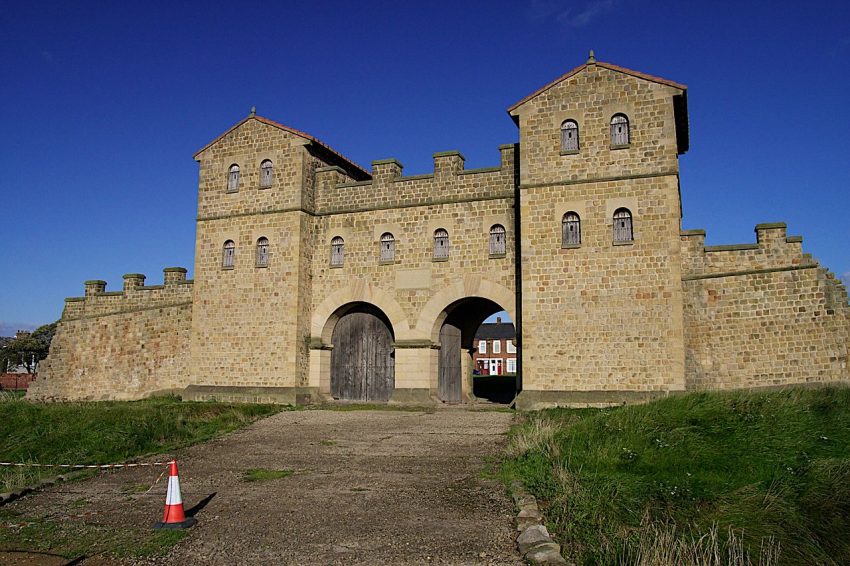
The reconstructed West Gate is the headline feature: it’s one of those reconstructions that instantly helps you understand how imposing a frontier fort could be, and why controlling an entrance mattered. Nearby, the reconstructed barrack block brings the human scale back into the picture, turning “a garrison” into something you can picture as cramped rooms, routines, and kit stored within arm’s reach.
Do not skip the Commanding Officer’s House reconstruction, which shows how rank shaped living conditions inside a military complex. It’s a useful counterpoint to the barracks, and it makes the fort feel less like a diagram and more like a place where different lives unfolded under the same walls.
Beyond the reconstructions, the wider site rewards slow exploration. Look for the outlines of streets and building platforms, and imagine the fort when it was reorganised around storage and supply rather than purely defence; it’s a different angle on Roman military power, built on provisioning as much as combat.
How to Get to the Arbeia Roman Fort and Museum
The nearest major airport is Newcastle International Airport (NCL). For the best deals and a seamless booking experience, check out these flights to South Shields on Booking.com. You can also consider Durham Tees Valley Airport (MME) if it suits your route, though it usually involves a longer onward journey. For the best deals and a seamless booking experience, check out these flights to South Shields on Booking.com.
From Newcastle, the simplest public-transport approach is to travel into the Tyne and Wear Metro network and continue to South Shields, then walk onward to the fort area. Train schedules and bookings can be found on Omio. If you're coming by mainline rail, aim for Newcastle Central Station or Sunderland and connect onward toward South Shields using local rail/Metro links. Train schedules and bookings can be found on Omio.
South Shields also has a central bus interchange with frequent local services, and from there it's an easy walk through town toward the fort site. By car, approach via the A19 and local routes into central South Shields, then use on-street parking near Baring Street where available.
Practical Tips on Visiting the Arbeia Roman Fort and Museum
- Entrance fee: Free
- Opening hours: Closed to the public until March 2026
- Official website: https://www.northeastmuseums.org.uk/arbeia/
- Best time to visit: Pair it with a clear-weather walk along the riverside or seafront so the day feels like Roman history plus coastal South Shields in one loop.
- How long to spend: Allow 60-90 minutes for the fort footprint and reconstructions, and longer if you like reading exhibits carefully.
- Accessibility: The site is broadly manageable, but expect uneven surfaces and historic thresholds; the West Gate involves stairs if you want upper levels.
- Facilities: Plan like an outdoor heritage site: wear comfortable shoes, bring a layer for North Sea wind, and treat cafés in town as your main refreshment option.
Where to Stay Close to the Arbeia Roman Fort and Museum
For a culture-heavy itinerary, stay around central South Shields near Ocean Road and the transport links so you can walk between the fort, the museum core of town, and the seafront without relying on taxis.
A straightforward, well-located base is The Sea Hotel, which puts you close to the seafront and within an easy walk of the fort area. For a stay with a more distinctive coastal setting at the river mouth, Little Haven Hotel is ideal if views and fresh-air walks are part of the plan. If you prefer a smaller, classic guesthouse feel near the heart of the seaside strip, The Clifton keeps you close to restaurants and an easy walk back after a full day out.
Is the Arbeia Roman Fort and Museum Worth Visiting?
Yes, especially if you want Roman history that feels tangible rather than purely interpretive. The reconstructions do the heavy lifting: they make the fort's scale real, and they help you understand why South Shields mattered as a controlled gateway between sea routes and the northern frontier.
It’s also a strong “context stop” for the region. Even if you’ve visited Hadrian’s Wall elsewhere, Arbeia adds the port-and-supply dimension that explains how frontier life was sustained, not just defended.
What Other Travellers Say...

Arbeia, South Shields Roman Fort on Baring St offers accessible remains of a large Roman fort with a reconstructed gatehouse and barracks, plus a small museum and informative on-site signage and maps for self-guided tours; entry is free (donations welcome), staff are friendly and helpful, there are picnic spots and secure bike storage, and visitors praise the realistic reconstructions and interpretive displays that bring Roman life to light.


For Different Travelers
Families with Kids
Arbeia works well for families because the reconstructions give children something physical to explore rather than just stones in the ground. Keep the visit moving by turning it into a simple mission-gate, barracks, “where would you sleep,” “where would you stand guard”-and it becomes memorable fast.
Bring snacks and plan a second stop nearby so it feels like a half-day adventure rather than one long museum visit. The seafront parks and short coastal walks are a natural follow-on when attention spans start to fade.
Couples & Romantic Getaways
For couples, this is a calm, slightly off-the-main-route heritage visit that feels more local than the biggest headline attractions. The best moments come when you slow down and imagine the river traffic and the fort’s role in controlling a working port on the edge of an empire.
Pair it with sunset along the coast or a long lunch on Ocean Road to make the day feel balanced: history first, then a relaxed seaside rhythm afterwards.
Budget Travelers
It’s an excellent budget stop because it delivers a lot of substance without the pressure of an expensive ticket. You can build a full, low-cost day by combining the fort with walking routes along the riverside and seafront and using local public transport.
If you're travelling around the North East, it's also a smart way to add depth to South Shields beyond beaches and promenades, without adding much to your spending.
History Buffs
This is a rewarding site for anyone interested in how Roman Britain actually functioned day to day. Look past the dramatic “frontier” idea and focus on logistics: supply, storage, movement of goods, and the multinational character of the garrison.
The reconstructions are especially valuable if you like mentally reconstructing sites from foundations. They give you a rare chance to compare archaeology with built form on the same footprint, which helps you “read” other Roman sites more confidently.
FAQs for Visiting Arbeia Roman Fort and Museum
Getting There
Tickets & Entry
Visiting Experience
Tours, Context & Itineraries
Photography
Accessibility & Facilities
Nearby Attractions to the Arbeia Roman Fort and Museum
- South Shields Sea Front: A classic promenade and beach area for an easy post-history walk with sea air and wide views.
- South Marine Park: A relaxed green space with paths and family-friendly corners, ideal for a breather after exploring the fort.
- The Customs House: A local arts venue with exhibitions and performances that adds a cultural layer to a South Shields day out.
- Tynemouth Priory and Castle: Dramatic cliff-top ruins across the river, perfect if you want another heritage stop with big coastal scenery.
- North Marine Park: A quieter park and walking area that links well with seafront routes and makes the day feel unhurried.
The Arbeia Roman Fort and Museum appears in our Complete Guide to Visiting South Shields!

Moira & Andy
Hey! We're Moira & Andy. From hiking the Camino to trips around Europe in Bert our campervan — we've been traveling together since retirement in 2020!
This website uses affiliate links which may earn a commission at no additional cost to you!
Planning Your Visit
Closed to the public until March 2026
Free
Nearby Attractions
- North East Maritime Trust (0.5) km
- South Shields Museum and Art Gallery (0.6) km
Gallery - South and North Marine Parks (0.9) km
Park - Shields Ferry (0.9) km
Ferry - The Word, National Centre for the Written Word (0.9) km
Library - Customs House (1.2) km
Arts Venue and Historic Building - Sandhaven Beach (1.3) km
Beach - Tynemouth Castle and Priory (1.8) km
Castle and Church - Frenchman’s Bay (3.0) km
Walk - Jarrow Hall Anglo-Saxon Farm Village and Bede (3.6) km
Museum