Roman Amphitheatre, Assisi
Amphitheatre in Assisi
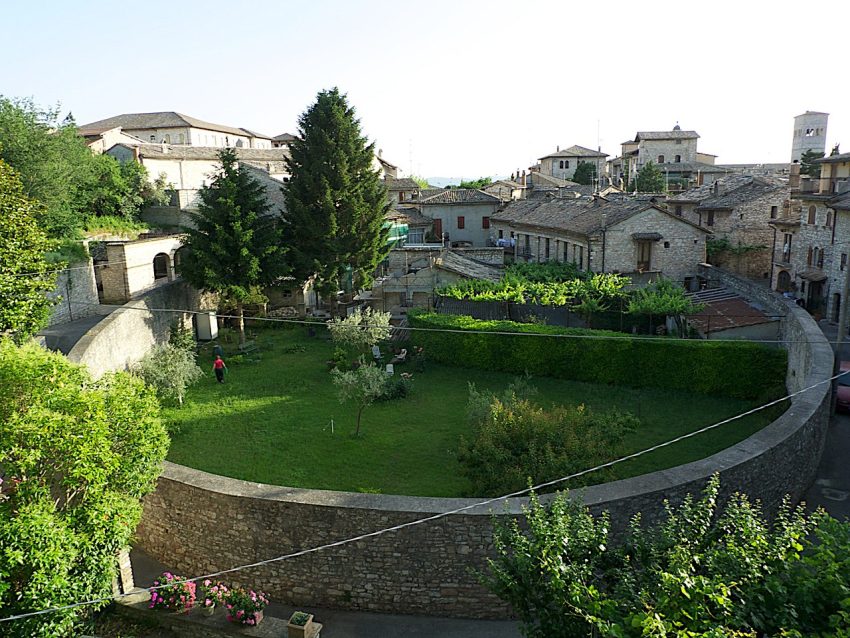
Tucked away in the quiet Porta Perlici district, the Roman Amphitheatre of Assisi is one of those hidden corners that rewards the curious traveler. Dating back to the first century A.D., this ancient structure once hosted grand spectacles but now stands as a silent witness to time's transformation. Although much of the original amphitheatre has disappeared, its form and fragments remain woven into the medieval houses that grew around it. This spot is one of the best places to see in Assisi for those who appreciate the layered continuity of history.
Wandering through the site, you can still discern the amphitheatre's elliptical outline, framed by gardens and old stone walls. The sense of discovery here is tangible - a peaceful moment where ancient Rome's legacy mingles with the rhythms of daily life in Assisi. It's often visited on walking tours of Assisi, and while modest in scale compared to its famous counterparts, it's a rewarding stop for travelers intrigued by archaeology and the city's Roman roots.
History and Significance of the Roman Amphitheatre
Built in the first half of the first century A.D., the Roman Amphitheatre of Assisi reflects the era's engineering mastery. Constructed primarily of travertine and concrete, it featured two tiers of seating and was likely used for local games, performances, and civic gatherings. Today, a surviving wedge of the travertine arch offers a tangible glimpse of its former grandeur.
After the fall of the Roman Empire, the amphitheatre fell into ruin, but its stones and vaults found new life during the Middle Ages. The surrounding buildings were erected directly atop the ancient structure, preserving its footprint while adapting it for domestic use. This transformation makes it a fascinating example of architectural recycling - where ancient foundations literally underpin medieval Assisi.
The amphitheatre also reveals how the city evolved: as religious and civic life shifted inward, spaces once used for entertainment became integrated into the fabric of community life. What remains today is less about spectacle and more about continuity, a physical reminder of how Assisi has grown by layering new chapters over old.
Things to See and Do in the Roman Amphitheatre
While the amphitheatre is not a vast ruin like those in Rome or Verona, it offers a compelling sense of discovery. Visitors can stroll through the narrow streets of Porta Perlici to see the elliptical curve of buildings that mirror the original arena. The garden walls mark the ancient perimeter, allowing you to visualize where spectators once sat to watch performances nearly two millennia ago.
The most prominent surviving element - a section of the travertine arch - stands quietly amid modern dwellings, a beautiful contrast to the medieval stonework around it. From certain vantage points, you can trace the amphitheatre's form and appreciate how seamlessly Assisi's architecture bridges its Roman and medieval past. For anyone interested in archaeology or urban history, this is one of the top sights in Assisi that truly rewards a closer look.
How to Get There
The nearest major airport is Perugia San Francesco d'Assisi Airport, located about 20 minutes from Assisi. From the airport, travellers can reach the town by taxi, rental car, or pre-booked shuttle transfer. For the best deals and a seamless booking experience, check out these flights to Assisi on Booking.com.
The Roman Amphitheatre is located in the Porta Perlici district, near the northeastern edge of Assisi's historic center. From Assisi railway station, take a local bus or taxi to the upper town. For those driving, parking is available at Piazza Giovanni Paolo II or Porta Nuova Car Park, both about a 15-minute walk away. The approach through Assisi’s medieval streets is part of the experience - quiet, atmospheric, and filled with hints of the town’s ancient past.
Practical Tips on Visiting the Roman Amphitheatre
- Best time to visit Roman Amphitheatre: Early morning or late afternoon for the best light and a peaceful atmosphere.
- Entrance fee in Euros: Free; the site is accessible to the public.
- Opening hours: Open at all times; exterior views only.
- Official website: www.comune.assisi.pg.it
- How long to spend: Around 20-30 minutes.
- Accessibility: Moderate; some uneven terrain and narrow cobblestone lanes.
- Facilities: None on-site, but amenities available in the nearby historic center.
- Photography tip: Capture the contrast between the ancient travertine blocks and the later medieval walls.
- Guided tours: Often included in local walking or archaeological tours of Assisi.
- Nearby food options: Cafés and small trattorias near Via Santa Maria delle Rose and Piazza del Comune.
Is the Roman Amphitheatre Worth Visiting?
Yes - though small, the Roman Amphitheatre is one of the things to do in Assisi that adds depth to your understanding of the city. It's a quiet yet evocative site that connects the grandeur of ancient Rome with the living town that surrounds it today. Ideal for history enthusiasts and those seeking a more offbeat experience, it provides a fascinating glimpse of how Assisi's layered past endures in stone.
What Other Travellers Say...

Roman Amphitheater, on Via Centrale Umbra in Spello, is an archaeological site dating to the Roman era that visitors find evocative and well worth seeing; some praise its atmospheric remains and occasional events held there, while others note it is currently in poor condition, overgrown and not always accessible, and call for restoration and better upkeep so the site can be fully enjoyed.


Nearby Attractions to the Roman Amphitheatre
- Cattedrale di San Rufino - The city's Romanesque cathedral, where Saint Francis and Saint Clare were baptized.
- Piazza del Comune - The lively heart of Assisi, surrounded by medieval palaces and the Temple of Minerva.
- Temple of Minerva - A remarkably preserved Roman temple now transformed into a Baroque church.
- Rocca Maggiore - A hilltop fortress offering panoramic views of the Umbrian countryside.
- Basilica di Santa Chiara - The graceful church dedicated to Saint Clare, overlooking the valley below.
The Roman Amphitheatre appears in our Complete Guide to Visiting Assisi!

Moira & Andy
Hey! We're Moira & Andy. From hiking the Camino to trips around Europe in Bert our campervan — we've been traveling together since retirement in 2020!
This website uses affiliate links which may earn a commission at no additional cost to you!
Planning Your Visit
Nearby Attractions
- Cattedrale di San Rufino di Assisi (0.2) km
Cathedral - Rocca Minore (0.2) km
Castle - Diocesan Museum and San Rufino Crypt (0.2) km
Museum - Capuchins Gate (0.2) km
Attraction, City Gate and Historic Site - Casa natale di San Francesco (0.3) km
Historic Site - Basilica di Santa Chiara (0.4) km
Basilica - Oratorio di San Francesco Piccolino (0.4) km
Religious Building - Chiesa Nuova (0.4) km
Church - Rocca Maggiore (0.4) km
Castle - Porta Nuova (0.4) km
City Gate