Amphitheater of the Three Gauls, Lyon
Roman Site in Lyon
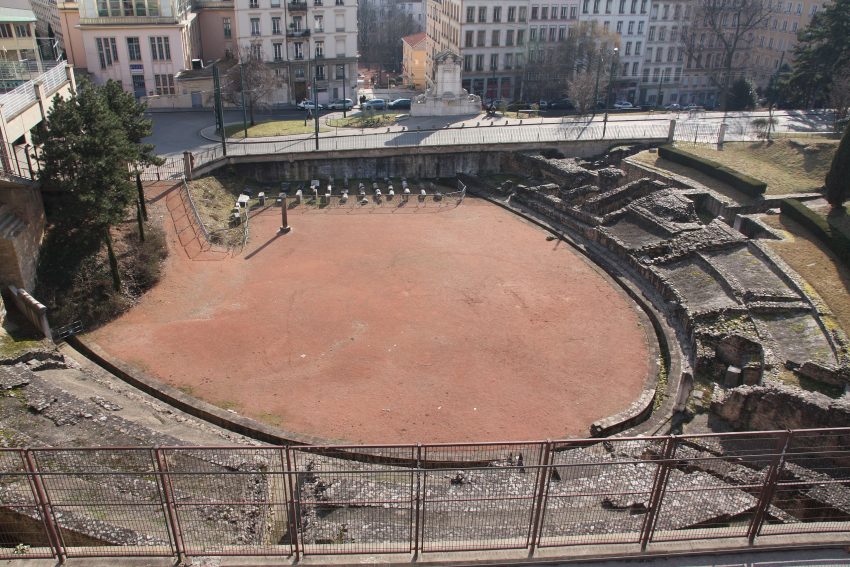
The Amphithéâtre des Trois Gaules is one of those places that doesn't shout for attention but leaves a deep impression once you find it. Built in the 1st century AD as part of a sanctuary dedicated to the “Three Gauls” provinces, it once hosted political assemblies, religious ceremonies, and gladiatorial games for ancient Lugdunum. Today, the remains are modest compared with the grand Ancient Theatre of Fourvière, but the curved tiers, fragments of seating, and grassy arena still hint at the amphitheatre's original capacity and importance. It's not the city's headline monument, yet it's one of the things to do in Lyon if you're drawn to quieter, more reflective historic sites.
What makes the amphitheatre particularly moving is its link to early Christian history. Tradition holds that this was the place where Saint Blandine and other martyrs were executed during the persecutions of the 2nd century AD, and a small monument on-site commemorates them. Tucked into the Croix-Rousse district and surrounded by apartment buildings and everyday neighbourhood life, the site has a hidden-garden feel: you can sit on the ancient stones, listen to the murmur of the city above, and think about the many lives and stories layered into this hillside. It's often visited on walking-tours of Lyon that seek out the city's Roman traces beyond the main tourist circuit.
Table of Contents
- History and Significance of the Amphithéâtre des Trois Gaules
- Things to See and Do in the Amphithéâtre des Trois Gaules
- How to Get to the Amphithéâtre des Trois Gaules
- Practical Tips on Visiting the Amphithéâtre des Trois Gaules
- Where to Stay close to the Amphithéâtre des Trois Gaules
- Is the Amphithéâtre des Trois Gaules Worth Visiting?
- FAQs for Visiting Amphithéâtre des Trois Gaules
- Nearby Attractions to the Amphithéâtre des Trois Gaules
History and Significance of the Amphithéâtre des Trois Gaules
The Amphithéâtre des Trois Gaules was constructed in the early 1st century AD, when Lugdunum served as the capital of Roman Gaul and a key political centre. It formed part of a larger federal sanctuary dedicated to the unity of the Three Gauls: Gallia Lugdunensis, Aquitania, and Belgica. Each year, representatives from these provinces gathered here to honour Rome and the emperor, reinforcing political ties and regional identity. The amphitheatre itself provided a grand setting for assemblies, public ceremonies, and spectacles that celebrated imperial power.
Unlike a purely entertainment-focused arena, this amphitheatre sat at the heart of a complex that blended religion, politics, and culture. The sanctuary included an altar to Rome and Augustus, where delegations offered sacrifices and renewed their loyalty to the empire. Within the amphitheatre, spectators watched theatrical performances, athletic contests, and gladiatorial games, but they also witnessed speeches and imperial messages that carried real political weight. This dual role makes the site especially interesting for understanding how Rome governed its provinces-not just by force, but through ritualised community.
The amphitheatre is equally significant for its association with early Christian martyrdom. In 177 AD, during a wave of persecution documented in ancient sources, a group of Christians from Lugdunum were executed here, among them the young slave Blandine, who became one of France’s most venerated saints. Today’s modest memorial to the martyrs adds a poignant layer to the site’s meaning, turning it into a place of remembrance as well as archaeology, and connecting Lyon’s Roman heritage to its later Christian identity.
Things to See and Do in the Amphithéâtre des Trois Gaules
When you arrive, the first surprise is how the amphitheatre is nestled into a residential pocket of Croix-Rousse, almost hidden between streets and buildings. From the upper entrance, you can look down over the remains of the oval arena and the stepped seating carved into the slope. Take a moment here to imagine the full structure in Roman times, when the tiers would have extended further and the sanctuary complex around it buzzed with provincial delegations and ceremonies.
Walk down into the site and explore at your own pace. You can sit on the surviving stone steps, trace the curve of the arena wall, and pick out details of the masonry that hint at how the structure was built and later altered. The modest scale compared to Fourvière makes it easier to grasp the whole shape at once, and the greenery softens the stones, giving the amphitheatre a calm, almost park-like atmosphere. It’s a good spot to pause with a snack or a book, especially if you enjoy ruins best when they’re folded into everyday life.
Be sure to find the small monument dedicated to Saint Blandine and the other martyrs traditionally associated with this site. Even if you're not religious, reading the inscription and thinking about the events of 177 AD adds emotional depth to the visit. Afterwards, you can wander out into the surrounding Croix-Rousse streets, where cafés, local shops, and murals reflect a very different, modern side of Lyon. Linking the amphitheatre with a visit to the Roman sites on Fourvière hill makes for a satisfying contrast between grand and intimate layers of the city's ancient past.
How to Get to the Amphithéâtre des Trois Gaules
Most visitors coming from further afield will arrive via Lyon-Saint Exupéry Airport (LYS), which offers frequent connections across Europe and some long-haul routes; from there, the Rhônexpress tram takes you into the city, where you can connect to metro and bus lines for Croix-Rousse. For the best deals and a seamless booking experience, check out these flights to Lyon on Booking.com.
From central Lyon, the amphitheatre is reasonably easy to reach by public transport. You can take metro Line A to Hôtel de Ville - Louis Pradel, then either walk uphill into the lower Croix-Rousse area or transfer to local buses that stop near the site.You can use SNCF Connect to check schedules, compare routes, and purchase tickets for National (SNCF ) and regional trains (TER). For a more streamlined experience, we recommend using Omio, which allows you to easily compare prices, schedules, and book tickets for both National and Regional travel across all of Europe, all in one place. Another option is to use the Croix-Rousse metro station (Line C) and enjoy a downhill stroll through the neighbourhood towards the ruins, taking in viewpoints and local squares along the way.
If you’re driving, you can follow signs towards Croix-Rousse and look for on-street parking or small car parks in the surrounding streets, but spaces can be limited and the area’s one-way system can be a bit confusing for first-time visitors.If you are looking to rent a car in France I recommend having a look at Discover Cars, first, as they compare prices and review multiple car rental agencies for you. For many travellers, it’s simpler to leave the car near the Presqu’île or at a park-and-ride and use public transport or walk up, especially since the amphitheatre itself is best appreciated on foot and fits neatly into a wider walking circuit of the district.
Practical Tips on Visiting the Amphithéâtre des Trois Gaules
- Suggested tips: Combine a visit to the amphitheatre with a wander through Croix-Rousse's staircases, murals and cafés to see how ancient and modern Lyon share the same hill.
- Best time to visit: Late morning or late afternoon offers pleasant light and temperatures; the site is usually quiet, so even a brief stop can feel peaceful.
- Entrance fee: Free — the amphitheatre is an open archaeological site with no admission charge.
- Opening hours: Generally accessible during daylight hours; access may occasionally be restricted for maintenance or local events.
- Official website: https://en.lyon-france.com
- How long to spend: Around 20-40 minutes is enough to explore the remains and soak up the atmosphere, longer if you sit and linger or explore the neighbourhood in detail.
- Accessibility: The site is on a slope with steps and uneven ground; some viewpoints from street level are easier for visitors with reduced mobility than walking down into the arena itself.
- Facilities: There are no dedicated facilities on-site; cafés, bakeries and public toilets can be found in the surrounding Croix-Rousse streets within a short walk.
- Photography tip: Shoot from the upper edge to capture the curve of the seating and the surrounding buildings, then from arena level looking back up to emphasise the amphitheatre’s shape against the hillside.
- Guided tours: Some specialised Roman-heritage or Croix-Rousse walking-tours include the amphitheatre, which can help bring its political and religious roles to life.
- Nearby food options: The neighbourhood is full of local eateries and bars, making it easy to follow your visit with a coffee, glass of wine or casual lunch on a nearby square.
Where to Stay close to the Amphithéâtre des Trois Gaules
If you’d like to stay near both Croix-Rousse and the city centre, Hôtel de la Croix-Rousse offers a local, village-like atmosphere on top of the hill, with easy access down towards the amphitheatre and the Presqu’île by metro or on foot. It’s a good option if you want to feel part of everyday neighbourhood life rather than being right in the main tourist zone.
For a base closer to the river but still within reach of the amphitheatre, Collège Hôtel sits near the Saône in the Saint-Paul area. From here, you can walk or take short public transport hops up into Croix-Rousse to visit the amphitheatre, then return in the evening to enjoy the bars and restaurants around the Old Town and riverfront.
Another central choice is Hôtel Silky by HappyCulture, located on the Presqu'île between the Rhône and Saône. Its location makes it easy to reach both Croix-Rousse and Vieux Lyon by metro, bus or on foot, and you'll be well-placed for exploring the rest of the city's major sights, squares and shopping streets.
Is the Amphithéâtre des Trois Gaules Worth Visiting?
The Amphithéâtre des Trois Gaules is definitely worth visiting if you have an interest in Roman history, early Christianity or simply enjoy uncovering lesser-known corners of a city. It won’t overwhelm you with size or crowds-that’s part of its charm-but it will give you a concrete sense of how Lugdunum functioned as a political and religious centre, and how memory is layered into Lyon’s hills. Paired with the grand Roman remains on Fourvière and the busy streets of the Presqu’île below, this quiet amphitheatre rounds out the story of the city in a subtle but powerful way.
What Other Travellers Say...

Amphitheater of the Three Gauls in Lyon's Croix-Rousse is a Roman-era arena where shows, circuses and executions once took place; today only parts of the stone structure remain but visitors can walk around and above the ruins through the park to get good views, though access into the site is sometimes closed or fenced off and preservation is uneven.


FAQs for Visiting Amphithéâtre des Trois Gaules
Nearby Attractions to the Amphithéâtre des Trois Gaules
- Ancient Theatre of Fourvière - The larger Roman theatre on Fourvière hill, offering a grander counterpart to the more intimate Amphithéâtre des Trois Gaules.
- Croix-Rousse Slopes - Historic hillside district with traboules, murals and village-like streets, stretching above the amphitheatre.
- Jardin des Plantes - A peaceful garden near the site, ideal for a short stroll or picnic with views towards the city.
- Place des Terreaux - A major square on the Presqu'île with the Hôtel de Ville and Musée des Beaux-Arts, a short walk downhill.
- Vieux Lyon - The Renaissance old town across the Saône, full of traboules, courtyards and traditional bouchons.
The Amphitheater of the Three Gauls appears in our Complete Guide to Visiting Lyon!

Moira & Andy
Hey! We're Moira & Andy. From hiking the Camino to trips around Europe in Bert our campervan — we've been traveling together since retirement in 2020!
This website uses affiliate links which may earn a commission at no additional cost to you!
Planning Your Visit
Generally accessible during daylight hours; access may occasionally be restricted for maintenance or local events.
Free - the amphitheatre is an open archaeological site with no admission charge.
Nearby Attractions
- Place des Terreaux (0.4) km
Square - Musée des Beaux-Arts de Lyon (0.4) km
Museum - Hôtel de Ville de Lyon (0.4) km
Historic Building - Opéra National de Lyon (0.5) km
Opera House - Place du Change (0.7) km
Square - Musée Gadagne (0.8) km
Museum - Mur des Canuts (0.9) km
Historic Site - Vieux Lyon (0.9) km
Area - La Tour Rose (The Pink Tower) (0.9) km
Historic Building and Tower - Basilique Saint-Bonaventure (0.9) km
Basilica