Self-Guided Walking Tour of Villefranche-sur-Mer (+Maps!)
This website uses affiliate links which earn a small commission at no additional cost to you.
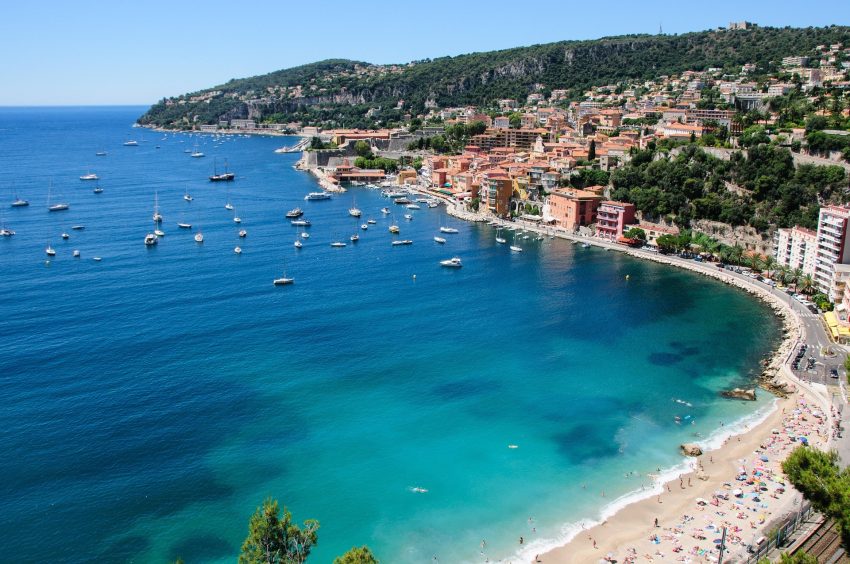
Villefranche-sur-Mer is one of those Riviera places that rewards slowing down. The Old Town clings to the hillside above a near-perfect natural harbour, so you're constantly moving between sea-level scenes on the quays and little lanes that open onto postcard viewpoints.
This self-guided route is designed to feel effortless: short distances, clear “next stop” logic, and plenty of natural breaks where you’ll want to pause anyway-at the waterfront, in a shady square, or whenever the light hits the bay in that unmistakable Côte d’Azur way.
If you're looking for the best things to see in Villefranche-sur-Mer, this walk strings them together in a way that makes sense on foot, without rushing. You can treat it like a highlights loop, or stretch it into a half-day with coffee stops and time by the water.
How to get to Villefranche-sur-Mer
By Air: Fly into Nice Côte d'Azur Airport (NCE), the closest major airport, then continue by train, taxi, or rideshare. The simplest public-transport approach is to reach Nice-Saint-Augustin station (near the airport) and take a TER regional train eastbound for a short hop to Villefranche-sur-Mer. If you're arriving with luggage and staying in the Old Town, factor in steps and slopes-being dropped nearer your accommodation can be worth it. For the best deals and a seamless booking experience, check out these flights to Villefranche-sur-Mer on Booking.com.
By Train: Villefranche-sur-Mer has its own station on the coastal TER line that links Nice with Monaco and the Italian border area, which makes day trips easy in both directions. Trains are frequent, journeys are short (Nice is only a few minutes away), and it's often the fastest way to avoid traffic and parking stress along the corniches. You can use SNCF Connect to check schedules, compare routes, and purchase tickets for National (SNCF ) and regional trains (TER). For a more streamlined experience, we recommend using Omio, which allows you to easily compare prices, schedules, and book tickets for both National and Regional travel across all of Europe, all in one place.
By Car: Driving in gives you flexibility for scenic routes and nearby viewpoints, but Villefranche-sur-Mer is compact and street parking can be tight, especially near the waterfront and Old Town. If your accommodation offers parking, that can simplify everything; otherwise, plan to park once and walk, because the most enjoyable parts of town are best explored on foot. If you are looking to rent a car in France I recommend having a look at Discover Cars, first, as they compare prices and review multiple car rental agencies for you.
How to get around the city: The centre is made for walking, with most sights clustered between the port, Old Town, and beachfront. Expect steep lanes and staircases as you climb away from the water, so comfortable shoes matter. For anything uphill-heavy (or if you’re staying above the centre), local buses and short taxi rides can save time and energy, but for the walking tour itself you’ll do almost everything comfortably on foot.
A Short History of Villefranche-sur-Mer
Villefranche-sur-Mer in Antiquity and the Early Middle Ages
The bay’s natural shelter is Villefranche-sur-Mer’s original superpower: long before tourism, a protected anchorage meant ships could ride out bad weather and move goods along the coast. Over time, control of a safe harbour brought both opportunity and risk-trade, but also raids-so the story of the town is tightly linked to protecting the shoreline and monitoring approaches by sea.
Villefranche-sur-Mer and the Age of Fortifications
As coastal threats and rival powers shaped the region, defensive architecture became a defining feature. The Citadelle Saint-Elme is the most visible reminder of this era: not just a dramatic landmark, but a statement of control over the bay. Today, walking near the citadel and its surroundings helps you read the town’s geography like a map-high ground for defence, the port below for commerce and naval presence.
Villefranche-sur-Mer in the 19th Century and the Riviera Boom
When the French Riviera became a winter playground for European elites, Villefranche-sur-Mer's gentle light, protected bay, and “between Nice and Monaco” convenience put it in an ideal position. The built environment shifted from purely practical maritime needs to a mix of local life and seasonal visitors, with the waterfront becoming as much about strolling and people-watching as working boats.
Villefranche-sur-Mer in the 20th Century to Today
Modern Villefranche-sur-Mer still wears its history in walkable, human-scale form: the port and quays for everyday movement, the Old Town lanes for shade and shortcuts, and small landmark sites that became cultural magnets. A standout is the Chapelle Saint-Pierre, associated with Jean Cocteau's decorative work, which adds a distinctly artistic layer to a town already defined by sea, stone, and light. On your walk, places like the chapel, the citadel area, and the older waterfront zones feel less like isolated “attractions” and more like chapters of the same coastal story.
Where to Stay in Villefranche-sur-Mer
To make the most of visiting Villefranche-sur-Mer and this walking tour then you consider staying overnight at the centre, so you can start early on the quays, wander the Old Town when it's quiet, and finish with an easy sunset stroll by the bay. The most convenient base is around the Old Town and waterfront, where you can step straight into the lanes, cafés, and harbour atmosphere from your door; good options right in the thick of it include Welcome Hotel and Hôtel Provençal.
If you’d rather trade a little extra walking for bigger views and a calmer feel at night, the slopes above the centre (and the lower corniche side) are a strong choice-still close enough to drop into town easily, but often with balconies and wide bay panoramas. In this zone, Hôtel La Flore and Hôtel Le Versailles work well for walking-tour logistics while keeping you near bus stops for quick returns uphill.
For a quieter, upscale base that’s still extremely practical for the route, consider staying just next door in Beaulieu-sur-Mer or Saint-Jean-Cap-Ferrat, then commuting in by a short coastal train or bus ride (and walking the tour once you arrive). This approach is ideal if you want a more residential evening atmosphere while keeping Villefranche-sur-Mer’s sights within easy reach; options to consider nearby include Hôtel Carlton and Hotel Royal Riviera.
Your Self-Guided Walking Tour of Villefranche-sur-Mer
Discover Villefranche-sur-Mer on foot with our walking tour map guiding you between each stop as you explore its waterfront quays, colourful Old Town lanes, sea-view lookouts, and historic landmarks around the bay. As this is a self guided walking tour, you are free to skip places, linger wherever the view pulls you in, and take coffee stops whenever you want-this route is built to be flexible, not forced.
1. Église Saint-Michel
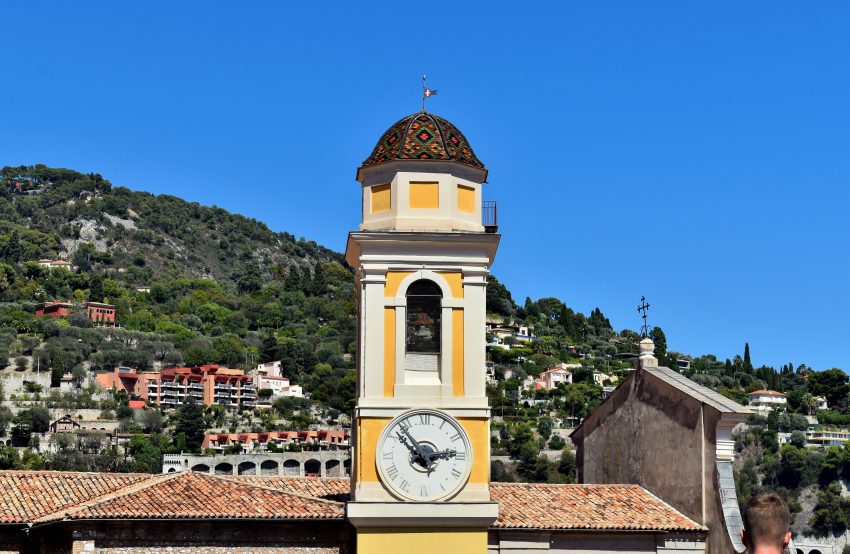
Église Saint-Michel is a Baroque, Italianate parish church built in the 1750s (often dated to 1757), on a site that previously held an earlier church dating back to the 14th century (and earlier religious presence associated with a priory). That layering—medieval foundations with an 18th-century rebuild—matches Villefranche’s broader pattern of coastal defence and renewal over time.
Inside, it’s known for notable artworks and liturgical objects, including a large Saint Michael painting above the main altar and an 18th-century recumbent Christ sculpture often referred to as the “Christ of the Galleys.” There’s also a historic organ by the Grinda brothers (dated to 1790 in sources), which adds to the sense that this is a serious local church rather than a decorative stop.
When you go, focus on the interior details: the altar area, the key artworks, and the overall Baroque spatial effect (light, ornament, and proportion). Because it sits in the heart of the old town, it also works well as a cultural anchor between harbour-side sights and the medieval lanes nearby.
Location: 11 Pl. de l'Église, 06230 Villefranche-sur-Mer, France | Hours: Daily: 09:00–18:00. | Price: Free; donations appreciated. | Website

2. Rue du Poilu
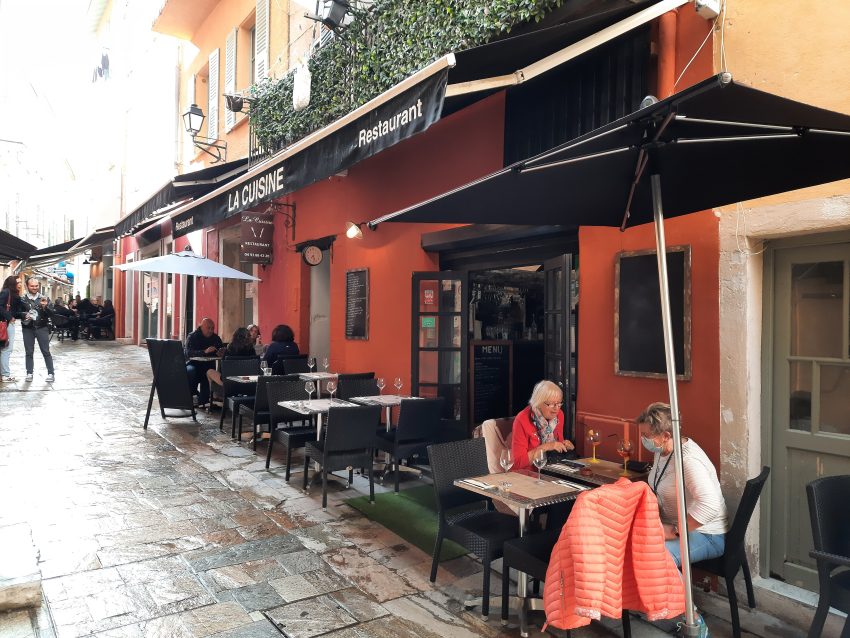
Rue du Poilu is the old town’s principal historic thoroughfare, and its deeper history shows up in an earlier name recorded for the street: Carriera Drecha (“straight street”), typical of the main cross-town axis you find in many medieval settlements. In practical terms, it’s the spine that connects the harbour area to the upper parts of the old town.
What you see along it today is the lived-in medieval core: closely set historic houses, stepped lanes feeding off to either side, and that unmistakable Riviera palette of warm façades climbing away from the water. It’s also a useful reference line for understanding Villefranche’s compact layout—once you’ve walked Rue du Poilu, the old town feels legible.
To visit well, look for the smaller details rather than treating it as just a route: doorways and stair breaks that hint at older property lines, the way views open suddenly toward the bay, and the little shopfronts and studios that keep the street feeling active rather than purely touristic.
Location: Rue du Poilu, 06230 Villefranche-sur-Mer, France | Hours: 24 Hours. | Price: Free.
3. Rue Obscure
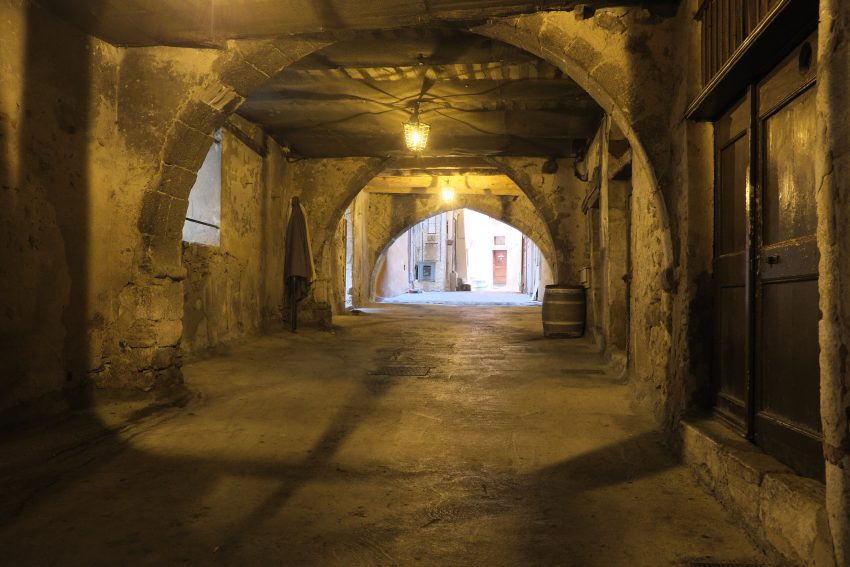
Rue Obscure is one of Villefranche’s most distinctive survivals from its defensive past: a covered medieval passage aligned with the town’s early rampart system. Sources commonly date it to the 13th–14th century, and its original function was military—allowing soldiers to circulate along the fortifications and manoeuvre under cover as the town evolved.
Its structure explains its name: a long, dim, tunnel-like corridor (around 130 metres) running beneath buildings that were constructed over it as the town densified. In other words, what began as open-air defensive circulation gradually became enclosed by later urban growth, leaving behind a shadowy “hidden street” that you can still walk today.
When you visit, the main thing to “see” is the atmosphere and the fabric: stone vaulting, narrow apertures of light, and the sense of being inside the medieval town rather than merely passing through it. It’s short, but it’s worth doing slowly—listen for the shift in sound and temperature as much as you look at the masonry.
Location: Rue Obscure, 06230 Villefranche-sur-Mer, France | Hours: 24 Hours. | Price: Free.
4. Quai de l’Amiral Courbet
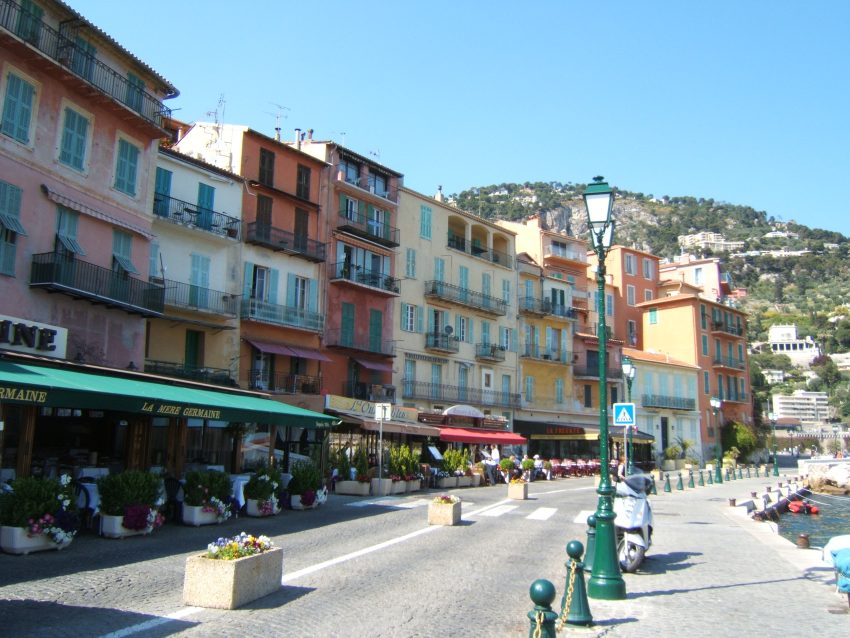
Quai de l’Amiral Courbet is Villefranche’s classic waterfront promenade: a working edge to the bay that has evolved into the town’s most scenic public “front room.” Its modern identity is built around the harbour’s long history as a place of safe anchorage and maritime traffic, which is why the quay feels naturally theatrical—boats, waterline views, and the constant movement of people along the edge.
What you see today is a lively strip of restaurants and cafés facing the water, with a direct line of sight across the bay that makes the geography feel immediate. It’s also where several of the town’s signature visuals come together: pastel waterfront buildings, moored yachts and small craft, and the curve of the deep bay that defines Villefranche.
For visiting, think of the quay as both viewpoint and connector. It’s where you come for waterside photos and an unhurried harbour walk, and it also links you quickly to nearby essentials: the fishermen’s chapel, the port area, and the steps and lanes that lead into the old town.
Location: Quai de l'Amiral Courbet, 06230 Villefranche-sur-Mer, France | Hours: 24 Hours. | Price: Free.
5. Chapelle Saint-Pierre
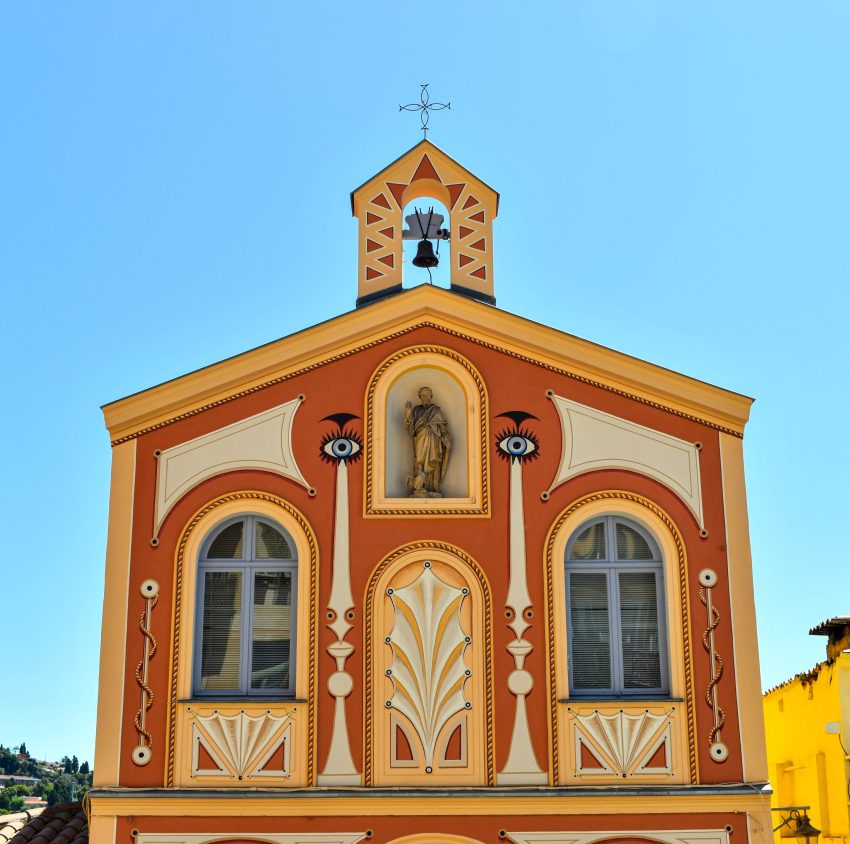
Chapelle Saint-Pierre began as a fishermen’s chapel and, in practical terms, spent a long period as a storage place for nets and equipment before its mid-20th-century revival. In 1957, Jean Cocteau restored and decorated it, covering interior (and parts of the exterior) with murals that blend sacred narrative with local, seafaring life—one of the reasons it stands out on a waterfront already packed with Riviera scenery.
Historically, its power comes from that layering: a humble maritime religious building tied to the fishing community, reimagined by a major artist without losing its local anchor. Cocteau’s painted cycle includes scenes from the life of Saint Peter (the fishermen’s patron) alongside Mediterranean imagery that feels specific to Villefranche’s harbour culture.
When you visit, the main “must-see” is the painted interior—give it time so you can read the imagery rather than just glance at it. Afterward, step back outside to view the façade in context, because the chapel’s setting on the quay is part of the experience: it’s art embedded in the everyday waterfront.
Location: 4 Quai de l'Amiral Courbet, 06230 Villefranche-sur-Mer, France | Hours: Monday: Closed. Tuesday: Closed. Wednesday – Sunday: 09:30–12:30 & 14:00–18:00. | Price: Adults: €4; Under 15: free. | Website
6. Place Amélie Pollonnais
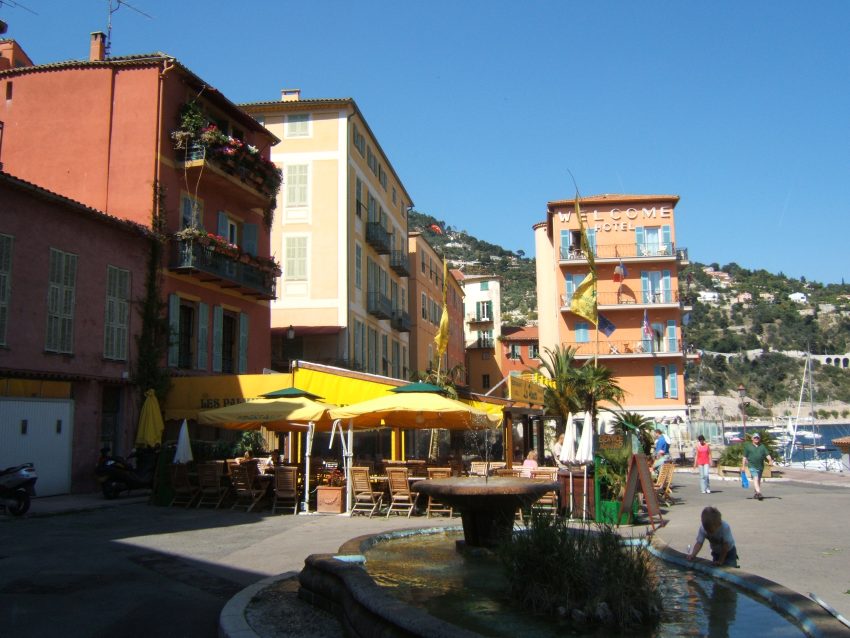
Place Amélie Pollonnais is the old town’s main gathering square, positioned exactly where Villefranche’s medieval lanes meet the harbour edge, which is why it has long functioned as a social and commercial hinge between “town” and “sea.” While many of the surrounding streets preserve a medieval footprint, the square’s role is timeless: an open breathing space in an otherwise tightly packed historic quarter.
It’s the kind of square that tells you how the place works. The café terraces and restaurant fronts make it feel lived-in rather than museum-like, and because it’s immediately adjacent to the port and quays, you’ll often find it acting as a natural pause point between waterfront views and uphill exploration.
What to see here is partly the square itself—its scale, bustle, and the way it frames the harbour—and partly what it points you toward. From the square you can quickly reach the quay, the painted fishermen’s chapel nearby, and the key old-town streets that climb away from the water.
Location: Pl. Amélie Pollonais, 06230 Villefranche-sur-Mer, France | Hours: 24 Hours. | Price: Free.
7. Port de la Santé
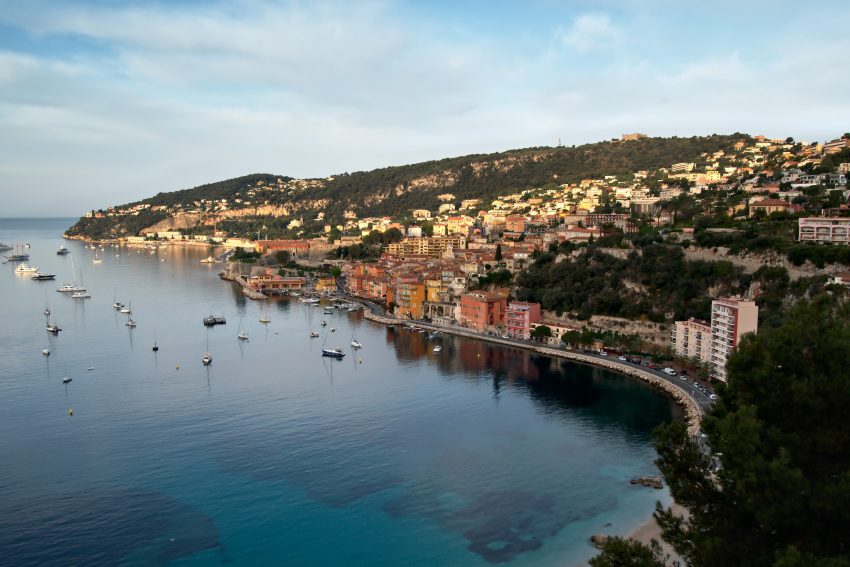
Port de la Santé is the small, sheltered harbour at the heart of Villefranche-sur-Mer’s waterfront, and it sits in a town whose identity was shaped by maritime privileges: Villefranche was established as a “free port” in 1295, with tax and port-fee advantages that lasted well into later centuries.
Today the harbour is closely associated with the town’s postcard look: colourful façades facing the water, small boats in the basin, and a busy quayside atmosphere. It’s also a working port for visitors—able to host a limited number of ships seasonally and welcoming large numbers of cruise passengers each year.
What to see and do is simple and very “Villefranche”: stroll the waterfront edge for bay views, linger around the harbour-side buildings, and use it as a jumping-off point to nearby highlights like the chapel on the quay and the old-town lanes rising just behind the port.
Location: Port de la Santé, 6 Quai de l'Amiral Courbet, 06230 Villefranche-sur-Mer, France | Hours: 24 Hours. | Price: Free. | Website
8. Port de la Darse
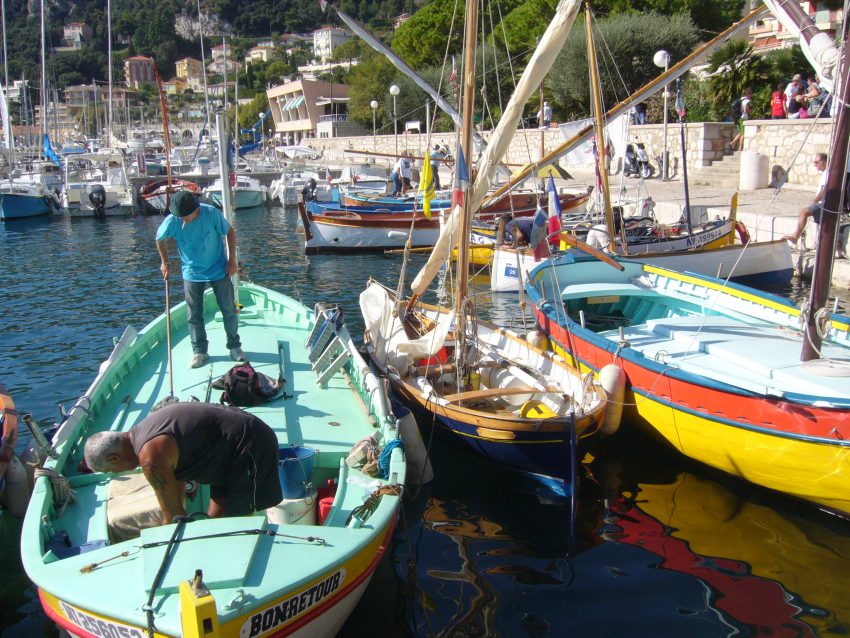
Port de la Darse has a different character from the “postcard harbour” at Port de la Santé: it’s historically an arsenal and working harbour zone tied to naval infrastructure. Under the Savoy (later Kings of Sardinia), it became a “Royal Port,” with major works from the 18th century—records cite projects from around 1730 including a lighthouse, dry-dock basin, arsenal and forge, and later additions such as a rope factory and barracks.
That industrial-military legacy is still readable in the site’s fabric, even though it functions today as a marina. The port is recognised for preserving historical elements, and it has formal heritage listing status (noted as listed in France’s historic monuments inventory from 1990 in local tourism sources).
When you visit, look beyond the boats and focus on what remains of the old port complex: the dry-dock context, the sense of a planned naval basin, and the surviving utilitarian buildings that distinguish it from the more scenic central harbour. It’s also a calmer waterfront area, which makes it a useful contrast point if you want to understand Villefranche as more than just Riviera colour.
Location: 1 Chem. du Lazaret, 06230 Villefranche-sur-Mer, France | Hours: Daily: 08:00–18:00. | Price: Free.
9. Musées de la Citadelle
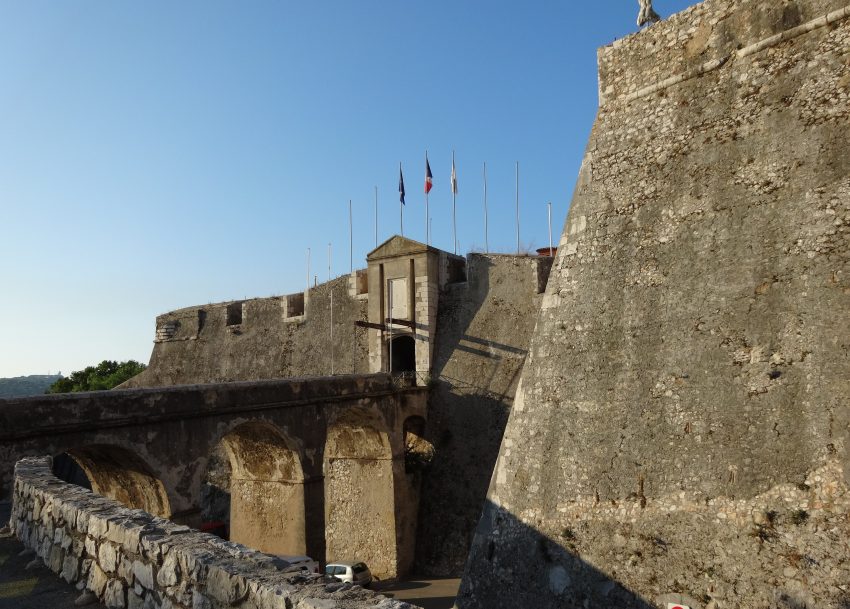
The Citadel of Villefranche-sur-Mer (Saint-Elme) was built in the mid-16th century—sources commonly place construction from 1554 onward (or cite 1557 for completion/establishment)—as part of a defensive response to threats along this stretch of coast. It was commissioned under the Savoy rulers (notably Emmanuel-Philibert) with plans attributed to the Italian engineer Gian Maria Olgiatti, and it remains an early example of bastioned fortification designed to resist seaborne attack.
Over time, the citadel shifted from fortress to civic and cultural complex: it houses the town hall and has been used for museums and exhibitions within its thick walls. Among the collections associated with the citadel museums are the Volti museum (devoted to the sculptor Volti) and art holdings linked to the Goetz–Boumeester collection, alongside other museum strands referenced by the town.
A practical note for planning: the citadel remains worth seeing for its architecture, courtyards, and views, but the museum circuit has been reported as temporarily closed for renovation since January 2022 on the official site. If you find the museum rooms closed, treat the visit as a fortress-and-viewpoint stop and spend time reading the structure: ramparts, gateways, and the geometry of the bastions.
Location: La Citadelle, 06230 Villefranche-sur-Mer, France | Hours: Daily: 10:00–17:00 (Exhibitions); 10:00–19:00 (Gardens). | Price: Free. | Website

Moira & Andy
Hey! We're Moira & Andy. From hiking the Camino to trips around Europe in Bert our campervan — we've been traveling together since retirement in 2020!
This website uses affiliate links which earn a small commission at no additional cost to you.
Walking Tour Summary
Distance: 2 km
Sites: 9