Self-Guided Walking Tour of Toulon (with Maps!)
This website uses affiliate links which earn a small commission at no additional cost to you.
Toulon is best experienced at street level, where the city's maritime character shows up in small details: fishermen's boats in the harbour, naval heritage woven into everyday life, and shaded squares that feel built for long café stops. A self-guided walking tour lets you connect the waterfront with the older lanes behind it, without committing to a rigid schedule.
The route suits Toulon's pace. You can start in the morning with markets and old-town streets, shift to harbour views and museums at midday, then finish with golden-hour promenades along the port. If you're trying to cover the best things to see in Toulon in one day, walking is the simplest way to keep the sights close and the experience relaxed.
Because this is self-guided, it’s easy to shape the day around what you like most: architecture and churches, naval history, viewpoints, shopping streets, or just food and people-watching. Toulon’s centre is compact enough that detours rarely feel like mistakes, and the best moments often come from short, unplanned turns down side streets.
How to Get to Toulon
By Air: The most convenient airport is Toulon-Hyères Airport (TLN), which handles domestic and some seasonal routes, keeping transfer time fairly short compared with the bigger Riviera airports. If flights don't suit, Marseille Provence Airport (MRS) and Nice Côte d'Azur Airport (NCE) can work as alternatives, with onward rail connections that bring you into the city without needing a car. For the best deals and a seamless booking experience, check out these flights to Toulon on Booking.com.
By Train: Toulon is well connected by rail, and arriving at the main station puts you close enough to reach central neighbourhoods quickly on foot or by local transport. For a walking-tour day, the train is often the least stressful option: you step off, drop your bags, and start exploring without parking or city driving. You can use SNCF Connect to check schedules, compare routes, and purchase tickets for National (SNCF ) and regional trains (TER). For a more streamlined experience, we recommend using Omio, which allows you to easily compare prices, schedules, and book tickets for both National and Regional travel across all of Europe, all in one place.
By Car: Driving makes sense if you're combining Toulon with the Var coast, hilltop villages, or a wider Provence itinerary, but the centre is better approached with a “park once” mindset. Choose accommodation with parking or use a public car park, then do the walking tour on foot so you're not breaking the flow with traffic, one-way streets, or limited-access areas. If you are looking to rent a car in France I recommend having a look at Discover Cars, first, as they compare prices and review multiple car rental agencies for you.
By Bus: Long-distance coaches can be a low-cost option from nearby cities, and the arrival points are usually connected onward by short walks or local buses. Once you’re staying centrally, you won’t need buses much for the core walking route, but they’re useful for reaching beaches or outer neighbourhoods if you extend the day.
Getting around the city: The central area is walkable, and a self-guided tour works best if you keep your base in or near the historic core and the port. Local buses are helpful for bridging gaps, and the cable car up Mont Faron is a standout “add-on” if you want panoramic views without a long climb. Taxis and rideshares are easy backups if you’re short on time or returning to your hotel after dinner.
A Short History of Toulon
Toulon in Antiquity and the Early Port
Toulon’s story begins with the logic that still defines it: a sheltered coastline and a natural focus on the sea. Early settlement and maritime activity laid the groundwork for a port identity that never disappeared, shaping the city’s economy and the way its neighbourhoods formed around access to the waterfront.
Toulon in the Medieval Period and a Growing Harbour Town
Through the medieval era, Toulon developed as a working harbour with defensive priorities, as coastal towns faced frequent threats and shifting power dynamics. The urban fabric tightened around practical needs-protection, trade, and access-creating the pattern of older streets and compact blocks that still makes the historic centre feel distinct.
Toulon in the Early Modern Era and the Rise of Naval Power
Over the early modern centuries, Toulon’s significance grew with the expansion of state naval ambitions. Military infrastructure and maritime industries became central, and the city’s identity increasingly blended civilian port life with the rhythms and scale of naval activity, a mix you still sense around the harbour today.
Toulon in the 19th Century and Industrial Expansion
The 19th century brought modernisation: transport links improved, industry expanded, and the city grew beyond its older footprint. Toulon became more connected to regional and national networks, while the waterfront remained the focal point, anchoring both employment and the city's public life.
Toulon in the 20th Century and the Modern City
The 20th century tested Toulon, with conflict and rebuilding leaving their mark on the cityscape. In the decades that followed, regeneration and civic investment helped rebalance working port functions with culture, public spaces, and tourism-making Toulon feel both lived-in and increasingly visitor-friendly.
Where to Stay in Toulon
To make the most of visiting Toulon and this walking tour then you consider stay overnight at the centre, so you can begin early near the markets and old streets, take breaks without watching the clock, and finish with an easy stroll back after sunset on the port. The best all-round base is the Old Town/central Toulon area, where you can walk straight into the liveliest lanes, squares, and harbour viewpoints. Good central options include Grand Hôtel Dauphiné and Hôtel Bonaparte for a practical location that keeps the start of the route effortless.
Staying around the Old Port (Port de Toulon) is ideal if you want waterfront atmosphere, harbour walks in the evening, and quick access to ferries and boat trips. It's also a strong choice if your walking tour includes museums and seafront viewpoints, because you can dip back to your hotel between stops. Consider Best Western Plus La Corniche or L'Eautel Toulon Centre Port if you want to lean into that maritime feel.
If you want something calmer, Mourillon is a good base with a more residential vibe, cafés, and easy access to beaches, while still being close enough to reach the centre quickly. This works well if you’re planning a longer stay and want your walking-tour day to be one of several, with downtime by the sea built in. Options to look at include Holiday Inn Toulon City Centre and ibis Styles Toulon Centre Port depending on whether you prioritise quiet nights, parking, or a straightforward walk back from the port area.
Your Self-Guided Walking Tour of Toulon
Discover Toulon on foot with our walking tour map guiding you between each stop as you explore its harbourfront character, historic lanes, and local squares. As this is a self guided walking tour, you are free to skip places, and take coffee stops when ever you want!
1. Port de Toulon
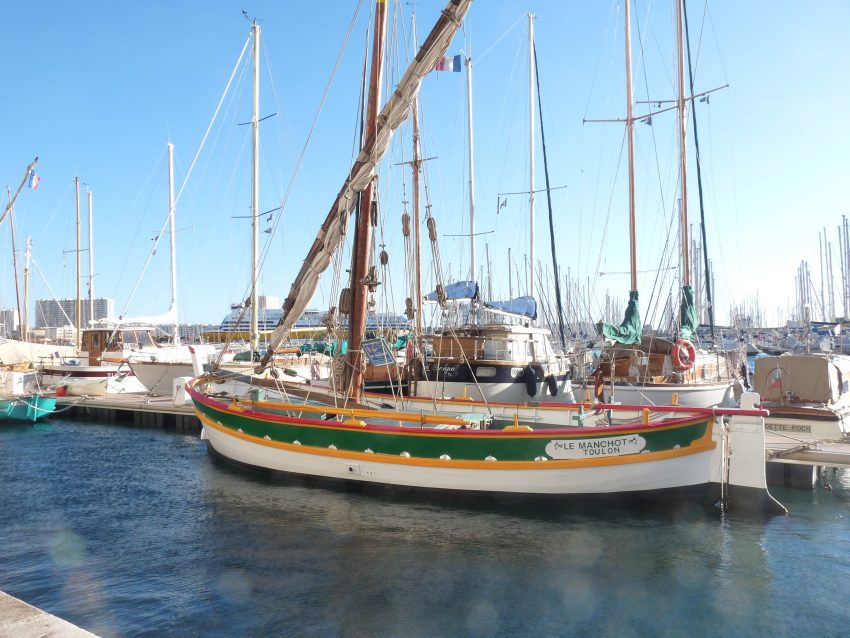
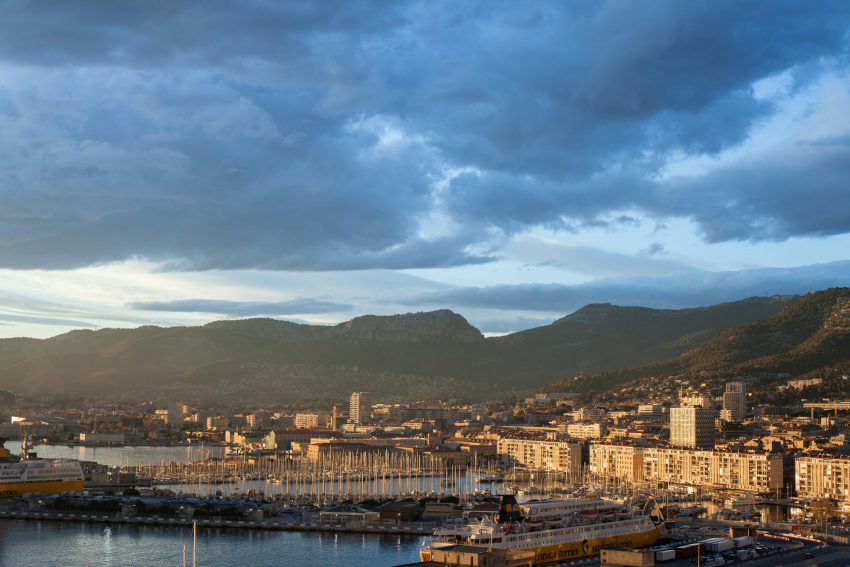
Toulon’s port owes its importance to geography as much as politics: the roadstead is naturally sheltered, and from the early modern period it was deliberately developed into a major French naval hub. The military arsenal expanded from the late 1500s onward and, over time, Toulon became closely identified with the French Navy and Mediterranean operations.
Today, what you “see” of the port depends on where you stand. Along the waterfront you get the working-city feel: ferries and small craft, long views across the harbour, and constant maritime movement that hints at Toulon’s continuing naval role even when warships themselves are mostly behind restricted areas.
For visitors, the best approach is to treat it as a series of viewpoints rather than a single monument. Spend time on the quays watching the traffic, look across to the enclosing hills and headlands that explain the port’s strategic value, and pay attention to the harbour architecture that grew up around a city shaped by shipbuilding, logistics, and the sea.
Location: Quai Cronstadt, 83000 Toulon, France | Hours: 24 Hours. | Price: Free. | Website

2. Eglise Saint-Francois de Paule
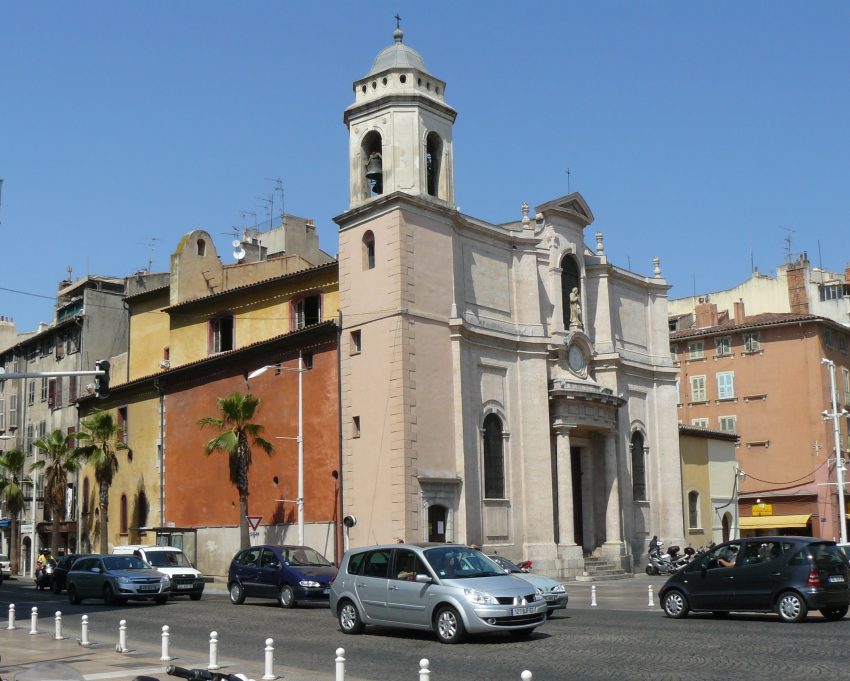
This church is a strong example of 18th-century religious architecture in Toulon, built in the mid-1700s and later recognised as a protected monument. It sits within the city’s historic fabric as a reminder of how new churches were still being built and embellished well after the medieval era.
The standout feature to look for is the façade, with its characteristic baroque curves and sense of movement. Churches like this often reveal their craftsmanship best from a slight distance, where you can read the full composition rather than getting lost in details.
Inside, the value is in the quieter experience: a cool, dim pause from the street, with side chapels and devotional elements that reflect local religious life. Even if you’re not specialising in architecture, it’s worth visiting for the contrast it offers—ornate baroque confidence outside, calmer reflection within.
Location: 83100 Pl. Louis Blanc, 83000 Toulon, France | Hours: Monday – Saturday: 10:00–12:00 & 14:00–19:30. Sunday: 08:00–13:00. | Price: Free; donations appreciated. | Website
3. Porte d'Italie
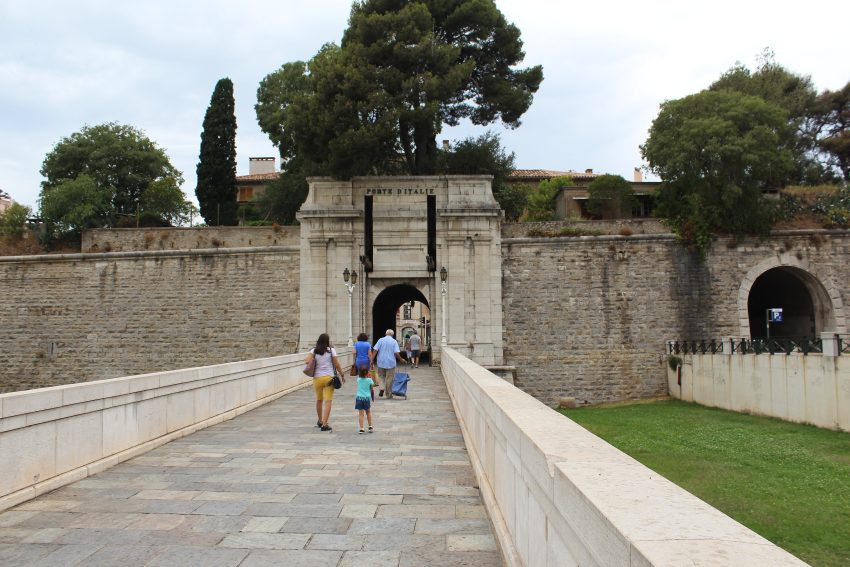
Porte d’Italie is one of Toulon’s most important survivals from the era when the city was a fortified military port. The gate’s origins lie in the major defensive works that reshaped Toulon from the 17th century onward, when the French state invested heavily in protecting the naval arsenal and controlling access to the town. Over time, as artillery and urban growth changed the logic of fortifications, many walls and gates disappeared, leaving Porte d’Italie as a rare, tangible marker of the old defensive perimeter.
Historically, a city gate like this was more than an architectural flourish. It regulated movement, symbolised authority, and formed part of the everyday choreography of a fortified town—soldiers, sailors, goods, and travellers passing under a structure designed to impress and to control. The name points to the orientation of routes beyond the old town, when gates were often identified by the direction of the roads they served.
When you visit, what to see is the architecture and its setting. Look closely at the masonry and proportions: it was built to be durable and legible at a distance, with a sense of weight that fits a military city. Step back far enough to appreciate how it would have read as a threshold between “inside” and “outside,” then walk around the surrounding streetscape to imagine the line of the vanished walls and how Toulon expanded beyond them.
Location: Av. de Besagne, 83000 Toulon, France | Hours: 24 Hours. | Price: Free. | Website
4. Le Marche du Cours Lafayette
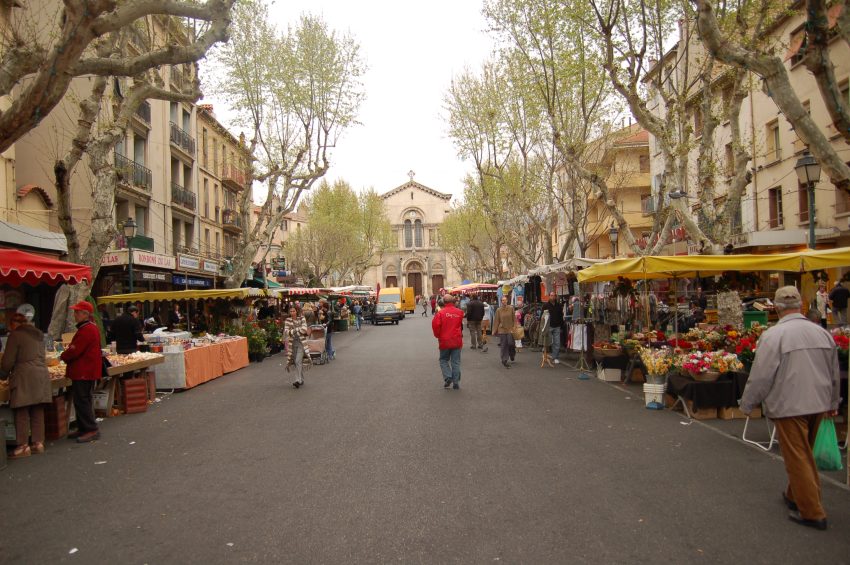
The Cours Lafayette market is part of the long Provençal tradition of open-air trading that turns an ordinary street into a daily civic event. Its significance isn’t a single founding moment so much as continuity: a market that has remained central to local life because it serves the city’s everyday needs.
What to see is the full sweep of it—rows of stalls stretching along the cours, the seasonal logic of what’s piled high, and the mix of food and non-food goods that makes it feel like a complete snapshot of the region. The market is also a cultural performance: sellers calling out, regulars greeting each other, and tourists trying to keep up.
To get the most from it, arrive earlier rather than later and take one slow pass before buying anything. Then loop back for specifics—fruit, olives, herbs, cheese, flowers—so you can compare quality and prices, and so you notice the small specialities that signal you’re in Toulon, not a generic market.
Location: 47 Cr Lafayette, 83000 Toulon, France | Hours: Tuesday – Sunday: 07:30–12:30. Monday: Closed. | Price: Free. | Website
5. Cathedrale Sainte-Marie-de-la-Seds
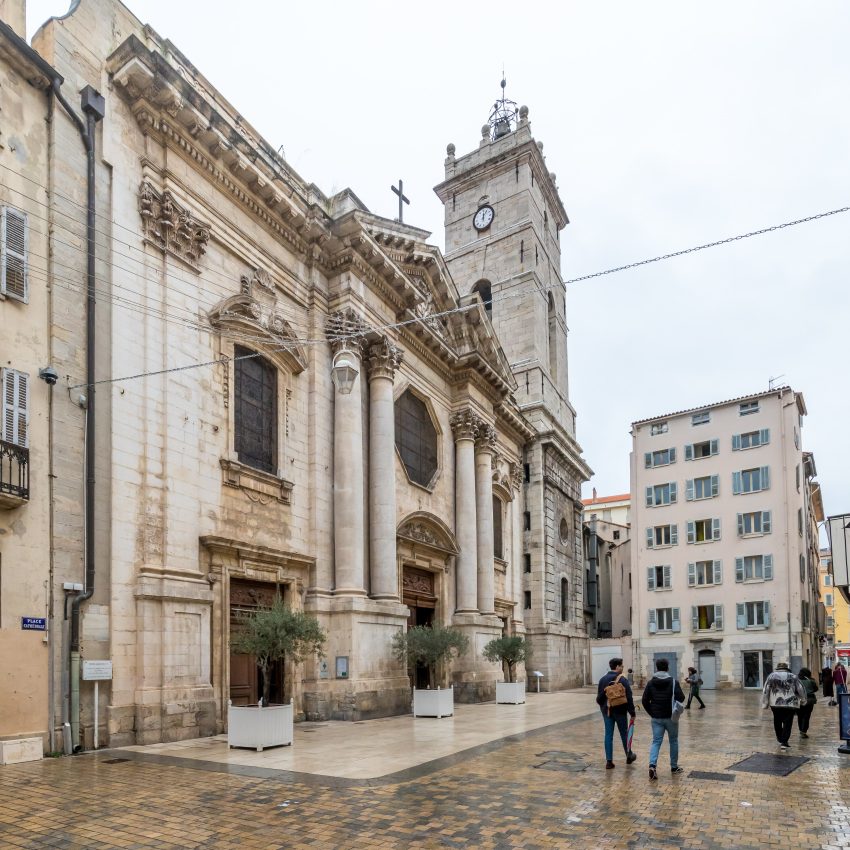
Toulon Cathedral is one of the city’s deepest historical layers, with construction and expansion stretching from the medieval period into the early modern era. Its long building timeline is visible in the way styles and components accumulate rather than matching perfectly, which is typical of major churches that grew with the city.
When you visit, look for that architectural “patchwork”: older structural elements alongside later additions, and the façade work associated with the period when Toulon’s importance as a naval port was rising. Cathedrals like this are often best read by spotting what changed, not only what stayed the same.
Inside, focus on atmosphere and survivals—chapels, devotional spaces, and the sense of continuity that comes from a site used for centuries. Even a brief visit can anchor your understanding of Toulon beyond the waterfront by showing the city’s religious and civic centre of gravity.
Location: 55 Pl. de la Cathédrale, 83000 Toulon, France | Hours: Monday – Saturday: 08:00–19:00. Sunday: 07:30–12:00 & 16:00–19:30. | Price: Free; donations appreciated. | Website
6. Halles Raspail
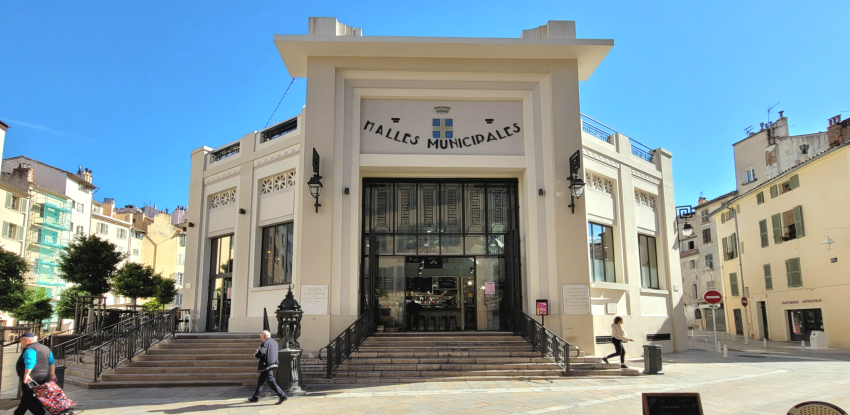
Halles Raspail is tied to the early 20th-century push for covered markets that combined hygiene, civic pride, and modern construction. Built in the late 1920s, it reflects the era’s confidence in reinforced concrete and the visual language of Art Deco applied to everyday public life.
The building itself is a major part of the appeal: pay attention to the geometry, structure, and decorative touches that elevate a utilitarian market hall into a piece of architecture. Even before you buy anything, it’s worth taking a moment at the entrance to read the design cues.
Inside, the “sight” is the abundance and rhythm of local shopping—stalls, conversations, and the sensory hit of produce and prepared foods. It’s a good place to connect Toulon’s maritime and Provençal identities through what people actually eat and sell, not just what the city commemorates.
Location: Halles de Toulon, Pl. Vincent Raspail, 83000 Toulon, France | Hours: Monday: Closed. Tuesday – Saturday: 08:00–22:00. Sunday: 08:00–15:30. | Price: Free. | Website
7. Rue d'Alger
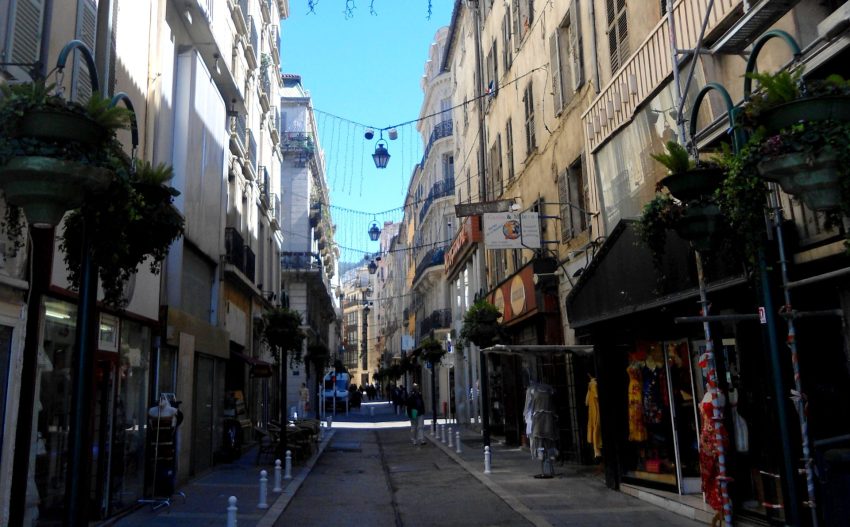
Rue d’Alger is best understood as part of Toulon’s old-town street network: a pedestrian-friendly commercial artery where the city’s daily life plays out at street level. Its “history” is the slow layering common to long-used urban streets—shops, façades, and routines evolving as Toulon modernised around them.
What to see here is the texture rather than a single monument. Look for the way retail spills into the street, the contrast between older building lines and newer storefronts, and the small details that mark it as a lived-in centre rather than a museum-piece.
It’s also a practical corridor for experiencing Toulon at human pace. Use it to browse, stop for something small, and notice how the street connects you to the wider old town—these links are often the most revealing part of historic urban form.
Location: Rue d'Alger, 83000 Toulon, France | Hours: 24 Hours. | Price: Free.
8. Toulon Opera
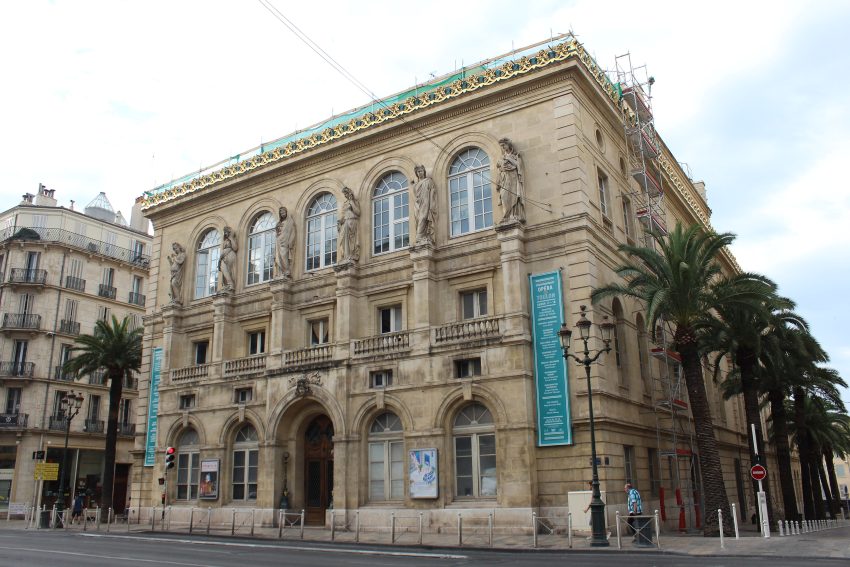
Toulon’s opera house belongs to the wave of 19th-century civic theatres built to signal cultural ambition, and it opened in the early 1860s. It reflects the period’s confidence in grand public architecture and the idea that a city’s status could be read in the splendour of its performance spaces.
Architecturally, the building is the main “sight”: a monumental façade and an interior designed for spectacle, with the classic emphasis on rich decoration and a strong sense of occasion. Even if you don’t attend a performance, the exterior still communicates the civic pride that produced it.
If you can go inside, focus on the auditorium and detailing—how space, sightlines, and ornament are engineered to heighten anticipation. If you only see it from outside, pause long enough to take in the building’s scale and placement, then imagine the 19th-century Toulon that wanted an opera house worthy of a major city.
Location: Boulevard de Strasbourg, 22 Rue Pierre Semard, 83000 Toulon, France | Hours: Tuesday – Saturday: 10:00–12:30 & 14:00–17:30. Closed on Sunday, Monday. | Price: Prices vary by show. | Website
9. Place de la Liberte
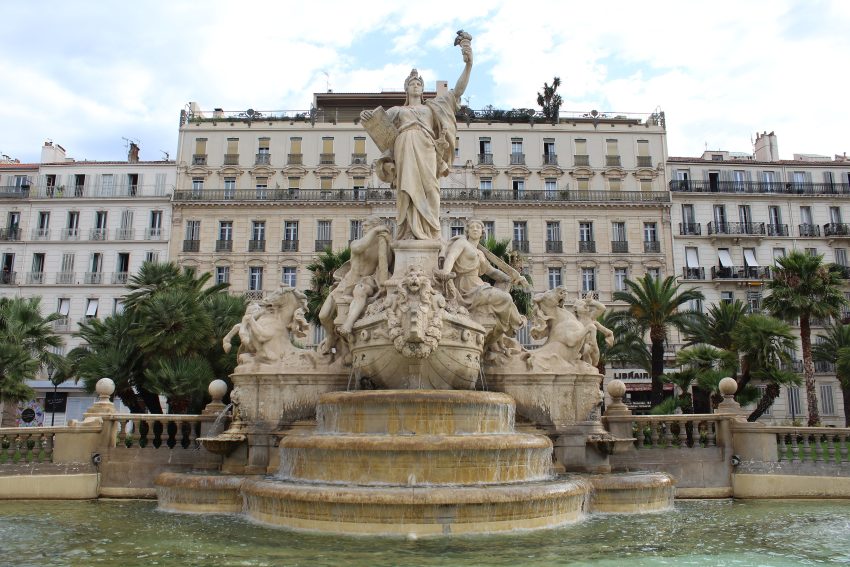
Place de la Liberté is a product of Toulon’s 19th-century modernization, when French cities reshaped central spaces into grand civic squares. Its name and symbolism connect it to the political culture of the era, when public places were often repurposed to project republican identity and civic pride.
The focal point is the Fountain of the Federation, a dramatic late-19th-century composition designed to dominate the square. It’s the kind of monument that rewards a slow walk around: different angles reveal how sculpture, water, and urban space were meant to stage a sense of importance and ceremony.
Beyond the fountain, the square functions as a social crossroads. Come at different times of day to see how it changes—coffee-and-commute energy in the morning, a more leisurely rhythm later—and use it as a practical base for taking in nearby streets and cultural venues.
Location: Pl. de la Liberté, 83000 Toulon, France | Hours: 24 Hours. | Price: Free. | Website
10. Gare de Toulon
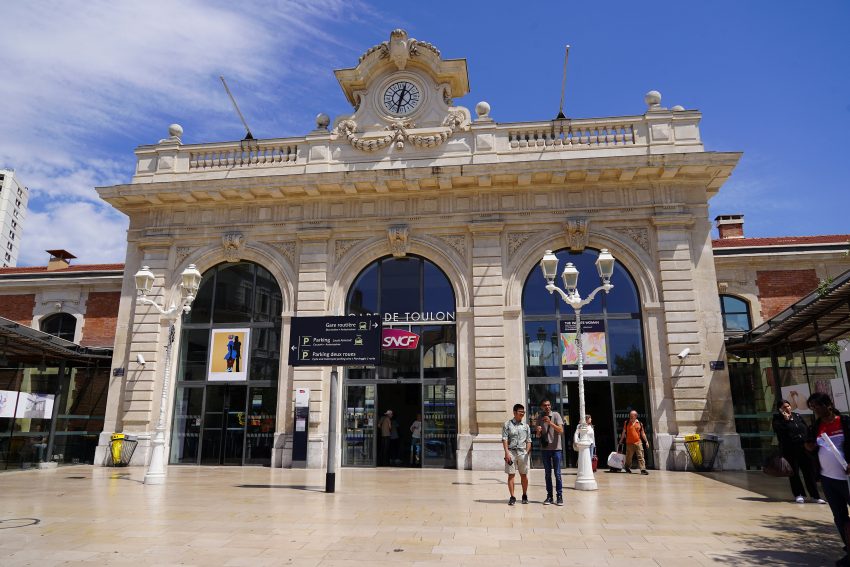
Toulon’s railway station is inseparable from the arrival of rail on the Var coast in the Second Empire era: trains reached Toulon in May 1859, giving the naval city a fast, modern link to the wider French network. The first station building was designed by the architect Laroze, then a fire in 1868 forced a rebuild.
That rebuilding produced the monumental passenger building associated with Louis-Jules Bouchot, completed in 1887, which gave the station its historic “grand gateway” character. In the 1960s, a major part of the industrial-era station environment changed again with the removal of the vast hall that once covered tracks and platforms, a typical mid-20th-century move toward more functional layouts.
For visitors today, what to see is the surviving 19th-century architectural presence and how it has been adapted for modern travel. The station was redeveloped as a multimodal interchange, including a much larger passenger hall and additional covered areas, with works running from early 2011 and an inauguration in late November 2013. Arrive with a few minutes spare and look at the façade proportions and main entrance composition first, then step inside to notice the contrast between historic shell and contemporary circulation spaces.
Location: Pl. de l'Europe, 83000 Toulon, France | Hours: Monday – Friday: 04:45–00:00. Saturday: 04:45–00:50. Sunday: 04:45–00:00. | Price: Free. | Website
11. Jardin Alexandre I
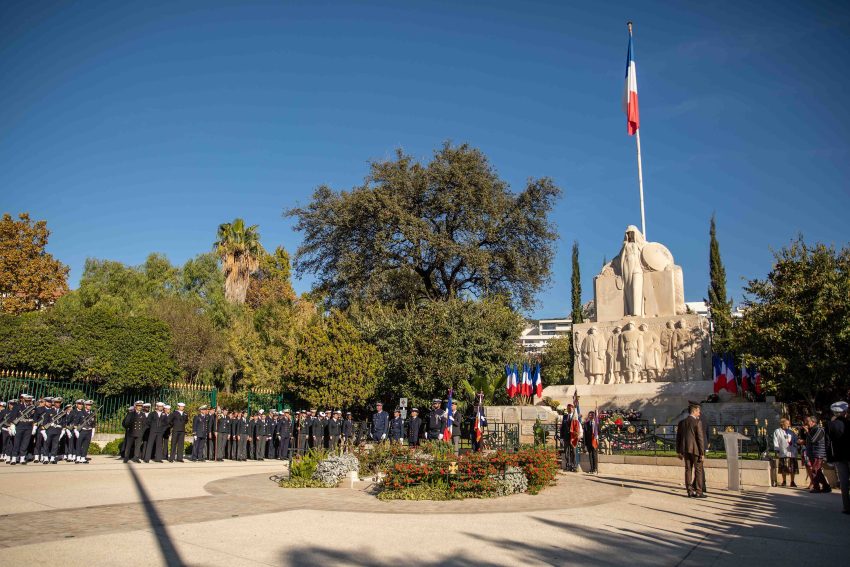
Jardin Alexandre I is Toulon’s central public garden with a long backstory that reflects the city’s naval identity. Before it became a municipal park, the site was associated with the Navy and earlier went by names such as the “Jardin du Roy,” with a reputation for cultivated plantings rather than ornamental strolling. In 1852, the City of Toulon acquired the land from the Navy and laid it out as a proper public garden, creating the kind of promenade space that expanding 19th-century cities increasingly demanded.
The garden’s more modern history is about adaptation rather than reinvention. It has been rehabilitated and enlarged, positioned today as a green link between newer urban projects and the Haussmann-era districts, in a spot that is highly practical for visitors—between the railway station and the port. That “in-between” location helps explain its character: it’s a pause-point in the middle of the city rather than a destination that needs a long detour.
What to see once you’re there is a mix of classic park features and small monuments that reward a slow circuit. Look for the bandstand (kiosque à musique), the old-style basin and central water features, and the family-friendly areas that keep the garden lively. Then pay attention to the sculptures and memorial elements noted on-site—these details give the garden much of its personality and turn it from “nice greenery” into a place with Toulon-specific memory and civic meaning.
Location: Pl. Gabriel Péri, 83000 Toulon, France | Hours: (Summer) July 1 – August 30: Daily: 09:00–21:00. (Winter) September 1 – June 30: Daily: 09:00–19:00. | Price: Free. | Website
12. Musée d'Art de Toulon
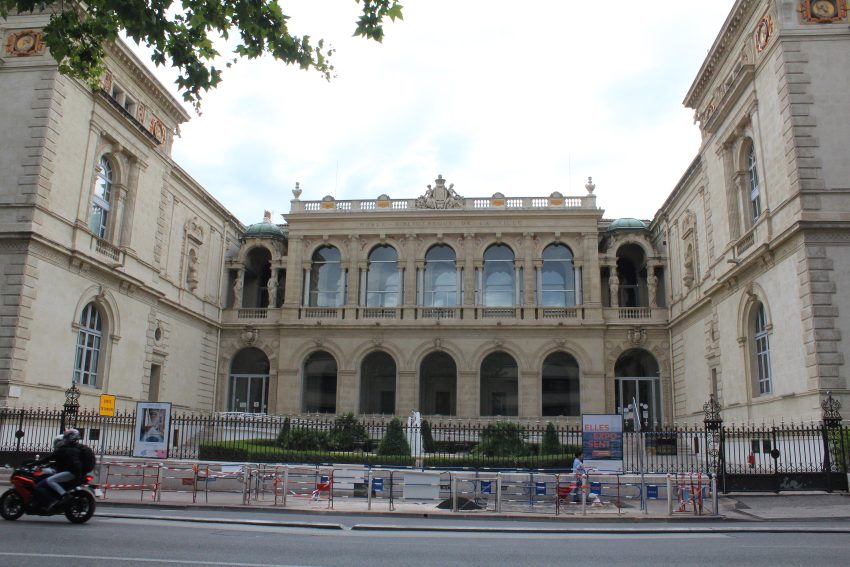
The Musée d’Art de Toulon is the city’s long-running fine-arts museum, created in the late 19th century as Toulon was modernising and formalising its public cultural institutions. Its identity has been shaped by that civic mission ever since: collecting, conserving, and exhibiting art that connects Provence and the Mediterranean world to wider movements in French and international art.
What makes the museum particularly rewarding is the way it bridges local and broader stories. You’ll typically find painting that speaks directly to the region—especially landscapes and marine subjects that suit a port city—alongside works that track shifts in taste from the classical and modern periods into the 20th century. In practice, that means you can move from Provençal light and colour to more experimental approaches that reflect how art changed as the modern era accelerated.
When you visit, focus on three things: the Provençal and coastal scenes (they give you visual context for the city and its setting), the modern/contemporary sections (useful for seeing how Toulon’s collections extend beyond “regional” art), and the photography holdings when they’re on display. Check the temporary exhibitions as well, because they’re often where the museum shows its range and makes the strongest case for a return visit.
Location: 113 Bd Maréchal Leclerc, 83000 Toulon, France | Hours: Tuesday – Sunday: 12:00–18:00. Closed on Monday. | Price: Free. | Website
13. Ancienne Corderie
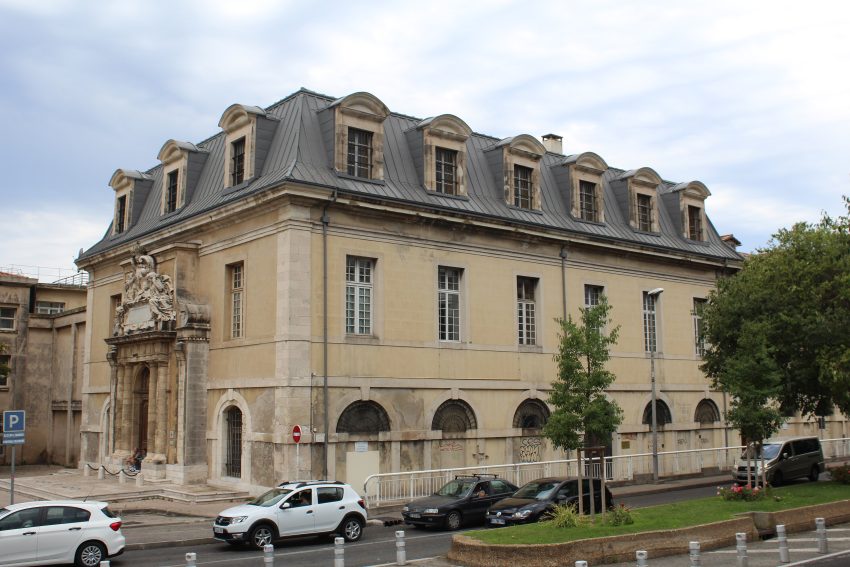
The old rope factory is a reminder that navies weren’t only about ships and admirals—they depended on industrial production. Rope-making was essential in the age of sail, and Toulon’s ropeworks were part of the wider dockyard ecosystem that kept fleets rigged, supplied, and seaworthy.
As technology shifted in the 19th century and iron cables replaced traditional hemp rope for many uses, the building’s original purpose faded. Like many naval-industrial sites, it adapted over time, taking on new functions connected to maritime training and administration rather than manufacturing.
What to look for today is the sense of scale and the “workshop logic” of the place: long, functional volumes designed for a specific process. Even without machinery running, it’s an evocative stop for understanding how a port city’s history is built as much by labour and materials as by battles.
Location: 83000 Toulon, France | Hours: Monday – Wednesday: 09:00–12:00 & 13:00–17:00. Thursday: 09:00–17:00. Closed on Friday, Saturday, Sunday. | Price: Free. | Website
14. Musee national de la Marine
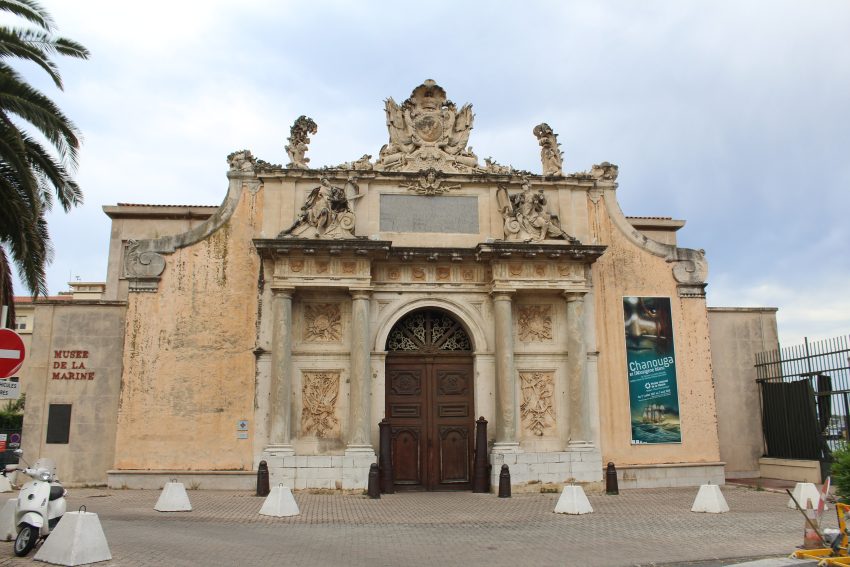
The National Navy Museum in Toulon is tightly bound to the city’s identity as a naval port. Its purpose is to trace the maritime story that made Toulon a key Mediterranean base, using objects that connect local dockyard life with wider French naval history over several centuries.
Inside, the most rewarding exhibits are the ones that make naval power tangible: ship models that show design evolution, paintings and plans that capture the harbour at different moments, and artefacts that ground big historical events in the practical realities of sailing, gunnery, and life at sea.
Plan to move slowly through the chronological storyline, then circle back to what grabbed you most. The museum works best when you use it to “read” the port outside afterwards—suddenly the coastline, the protected roadstead, and the city’s waterfront start to make historical sense.
Location: Place Monsenergue, Quai de Norfolk, 83000 Toulon, France | Hours: (September – June) Monday: 10:00–18:00; Wednesday – Sunday: 10:00–18:00; Closed on Tuesday. (July – August) Daily: 10:00–18:00. (Annual closure) January 5 – February 6, 2026; Closed on January 1, May 1, December 25. | Price: Adults: €8; Reduced: €6; Under 18: free; Ages 18–25 (EU residents): free; Audio guide: +€2. | Website

Moira & Andy
Hey! We're Moira & Andy. From hiking the Camino to trips around Europe in Bert our campervan — we've been traveling together since retirement in 2020!
This website uses affiliate links which earn a small commission at no additional cost to you.
Walking Tour Summary
Distance: 4 km
Sites: 14