Self-Guided Walking Tour of Salzburg (+Maps!)
This website uses affiliate links which earn a small commission at no additional cost to you.
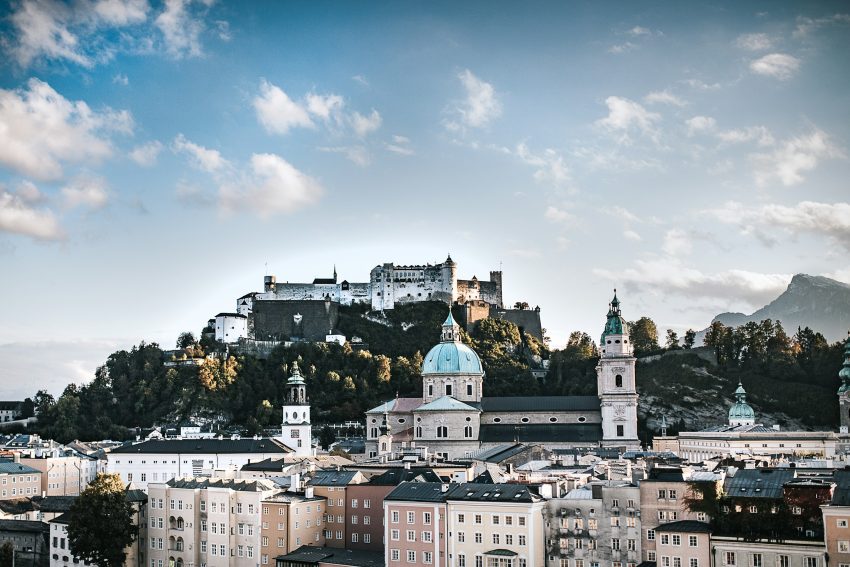
Salzburg is compact, elegant, and made for slow wandering: baroque squares, river views, hidden courtyards, and those sudden fortress-and-mountain panoramas that stop you in your tracks. A self-guided route lets you explore at your own pace, without the pressure of keeping up with a group, while combining the highlights of the Old Town with places tied to Mozart and the city's enduring Sound of Music appeal.
This walk focuses on the best things to see in Salzburg, weaving together the Old Town's landmark churches, palaces, and historic streets with the Mozart sights that shaped the city's cultural identity and the locations that evoke its cinematic fame. Along the way, you also experience the everyday texture that makes Salzburg feel lived-in: market lanes, café terraces, quiet courtyards, and viewpoints where the skyline of domes and spires becomes a postcard. You will cover a lot, but in short, satisfying segments, with frequent opportunities to pause.
Because you are doing it yourself, you can time the “big” sights for when they will suit you best: early morning for quieter streets, late afternoon for warm light on the façades, or evening when the city feels almost theatrical. The maps help you navigate cleanly between stops, but some of the most memorable moments come from the way this route naturally blends Salzburg’s Old Town atmosphere, Mozart heritage, and Sound of Music connections.
Table of Contents
- How to get to Salzburg
- A Short History of Salzburg
- Salzburg in the Early Middle Ages: Foundations and Faith
- Salzburg in the Prince-Archbishop Era: Baroque Power and a Stage-Set City
- Salzburg and Hohensalzburg Fortress: Security, Status, and the City Above
- Salzburg in the 18th Century: Mozart’s Salzburg and Cultural Gravity
- Salzburg in the 19th and 20th Centuries: Modern Change and the Salzburg Festival
- Where to Stay in Salzburg
- Your Self-Guided Walking Tour of Salzburg
- Residenz
- Alter Markt
- Mozarts Geburtshaus
- Mozart Residence
- Mirabell Palace and Gardens
- Winkler Terrace
- Getreidegasse
- Horse Bath
- Salzburg Festival Halls Complex
- Franziskanerkirche
- Domplatz
- Salzburger Dom
- St. Peter's Abbey and Cemetery
- Hohensalzburg
- Nonnberg Convent
- Kapitelplatz
- Residenzplatz
- Salzburg Museum
- Mozartsteg
- Mozartplatz
How to get to Salzburg
By Air: Salzburg Airport (W. A. Mozart Airport) is close to the city, which makes arrivals straightforward even for a short break. Once you land, you can reach central areas quickly by public transport, taxi, or rideshare, and then rely on walking for most of your stay because the core sights sit relatively close together. If you are arriving late, choose accommodation near the river or around the Old Town edges to keep the transfer simple. For the best deals and a seamless booking experience, check out these flights to Salzburg on Booking.com.
By Train: Salzburg Hauptbahnhof is well-connected for regional and international rail, and it is a practical choice if you want a low-stress arrival straight into the city. From the station you can walk, take a short bus ride, or grab a quick taxi to the Old Town side, depending on luggage and weather. Train travel also makes day trips easy if you want to extend your Salzburg base beyond the walking tour. You can easily check timetables and book train tickets through the ÖBB (Austrian Federal Railways) website. However, for a smoother experience, we recommend using Omio, which simplifies the booking process and lets you compare routes, prices, and departure times all in one place.
By Car: Driving works well if Salzburg is part of a wider Austria or Alpine road trip, but plan around parking and traffic restrictions near the historic core. The smartest approach is to park once (hotel garage or a public car park) and then treat the rest of your visit as a walking-and-public-transport trip. The Old Town is not designed for cars, and you will enjoy it more when you are not thinking about access routes. If you are looking to rent a car in Austria I recommend having a look at Discover Cars, first, as they compare prices and review multiple car rental agencies for you.
By Bus: Long-distance buses can be good value, and they often arrive at or near the main station area, which keeps onward travel simple. If you are travelling with a tight budget, this can pair well with staying just outside the Old Town while still keeping the walking tour easily reachable.
How to get around the city: Salzburg’s historic centre is best on foot, and this route is designed for walking with natural “reset points” (squares, cafés, river promenades) that make the day feel easy. Buses are useful for quick hops if you want to save energy for viewpoints or an extra museum, and they are also handy if the weather turns. If you prefer, you can split the tour into two shorter walks and keep the middle of the day flexible.
A Short History of Salzburg
Salzburg in the Early Middle Ages: Foundations and Faith
Salzburg’s story is anchored in the power of the church, and the city’s skyline still tells you who shaped it. Early religious foundations set the tone for Salzburg’s long relationship with ecclesiastical authority, which later funded ambitious building programmes and a strong musical culture. Even today, the presence of major churches and monastic complexes is not just scenic; it is the architectural footprint of centuries of spiritual and political influence.
Salzburg in the Prince-Archbishop Era: Baroque Power and a Stage-Set City
For a long stretch, Salzburg was governed by prince-archbishops who used architecture as public messaging: order, prestige, and permanence. This is why the historic centre feels so visually coherent-grand squares, ceremonial spaces, and landmark churches arranged to impress. The Salzburg Cathedral (Salzburger Dom) and the Residenz complex embody this era's confidence, while the design of key plazas makes them feel like outdoor rooms built for spectacle, processions, and public life.
Salzburg and Hohensalzburg Fortress: Security, Status, and the City Above
Hohensalzburg Fortress is more than a dramatic viewpoint; it is the clearest reminder that Salzburg’s leaders expected unrest and took control seriously. The fortress helped project authority over trade routes and the surrounding region, and it reinforced the idea that power sat physically above the city. For visitors, that elevation still matters: you read Salzburg’s urban layout from the top, seeing how domes, towers, and river corridors fit together like a planned composition.
Salzburg in the 18th Century: Mozart’s Salzburg and Cultural Gravity
Salzburg’s musical identity is inseparable from its history, and Mozart’s life reflects a city that was culturally rich yet socially constrained. The churches, court life, and patronage networks helped music flourish, but they also shaped what was possible for artists working inside hierarchical systems. This tension is part of Salzburg’s appeal today: the Mozart sites are not isolated attractions, but doorways into how culture was produced, funded, and performed in a small but influential city.
Salzburg in the 19th and 20th Centuries: Modern Change and the Salzburg Festival
As Salzburg modernised, it had to balance growth with protecting the historic character that made it distinctive. The Salzburg Festival became a defining institution, turning the city into an international cultural destination and reinforcing the idea of Salzburg as a place where architecture and performance belong together. Festival venues and public spaces are still shaped by this legacy: the city functions like a live stage, especially in peak cultural seasons.
Where to Stay in Salzburg
To make the most of visiting Salzburg and this walking tour then you consider stay overnight at the centre. The Old Town (Altstadt) is the most convenient base if you want early starts and quiet evenings in the historic lanes, with landmark squares and churches right on your doorstep. For classic, high-comfort stays that keep you within a short stroll of key sights, consider Small Luxury Hotel Goldgasse for boutique Old Town atmosphere, or Hotel Sacher Salzburg if you want a riverfront address with a sense of occasion.
If you prefer slightly more space and a calmer feel while still staying walkable to the tour route, look around Neustadt / Andräviertel on the right bank of the river. This area keeps you close to Linzergasse and the bridges into the Old Town, and it is practical for cafés, local dining, and an easy rhythm between sightseeing and downtime. Good options here include NH Collection Salzburg City for a reliable, central base, and Hotel & Villa Auersperg for a more characterful stay with a neighbourhood feel.
For a highly practical base (especially if you are arriving by rail, travelling with luggage, or doing Salzburg as part of a multi-city trip), the station and Mirabell area works very well. You can start your days near Mirabell, cross into the Old Town quickly, and return easily in the evening without long walks back. Consider IMLAUER HOTEL PITTER Salzburg for a classic, comfortable option near the centre, Hotel am Mirabellplatz for a location that keeps you close to gardens and bridges, or Motel One Salzburg-Mirabell for a streamlined stay with a strong riverside position.
If you want a quieter, more scenic reset after busy sightseeing hours, Leopoldskron and the areas toward the water and green space can feel almost retreat-like while still staying within reach of the Old Town. This is a strong choice if you like morning walks, calmer evenings, and a slightly slower pace between tour segments. A standout option here is Hotel Schloss Leopoldskron, which gives you a distinctive setting and an atmosphere that feels very “Salzburg.”
Your Self-Guided Walking Tour of Salzburg
Explore Salzburg on foot with our walking tour map guiding you from stop to stop as you move through grand squares, riverside viewpoints, and the city's most iconic landmarks. Because this is a self-guided walking tour, you can set your own pace, skip anywhere that does not interest you, linger in places you love, and add coffee (or cake) breaks whenever you feel like it.
1. Residenz
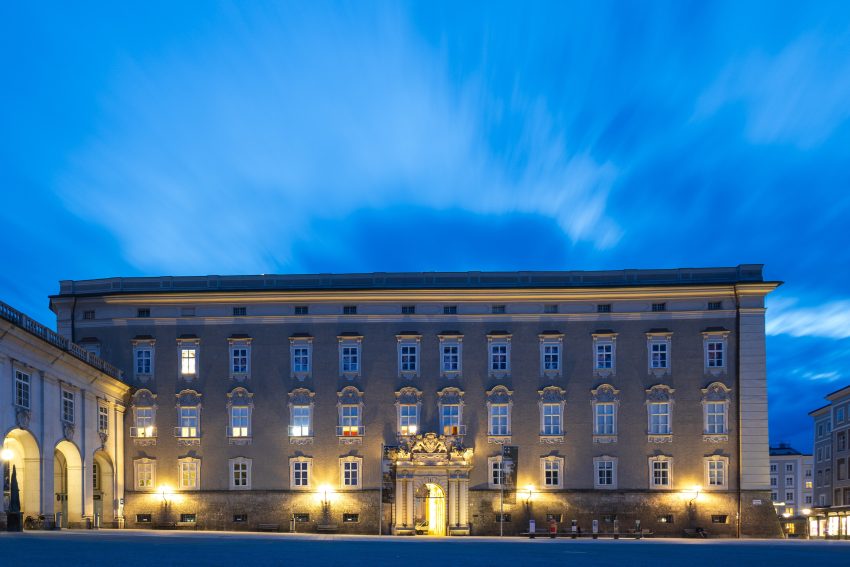
The Salzburg Residenz (Old Residence) was the residence and representation space of the prince-archbishops for centuries, and Salzburg stresses its cultural importance in that role. A headline historical detail Salzburg highlights is that in 1614 the Carabinierisaal hosted the first opera performance north of the Alps—an example of how political power and high culture were performed in the same rooms.
The building’s cultural history also overlaps with Mozart: Salzburg notes that Mozart, aged seven, gave a first court recital in the conference room, and that early works were premiered in spaces like the Rittersaal. That makes the Residenz not just a palace visit, but a place where Salzburg’s court culture and musical reputation were actively produced.
What to see: the state rooms are the core experience, and Salzburg points to their art-and-style breadth across periods (Renaissance through Baroque to Classicism). If you want a structured way to understand how the palace, cathedral, and monastic complex interlock historically, Salzburg positions the Residenz as part of the DomQuartier ensemble.
Location: Residenzpl. 1, 5020 Salzburg, Austria | Hours: Monday: 10:00–17:00. Tuesday: Closed. Wednesday: 10:00–17:00. Thursday: 10:00–17:00. Friday: 10:00–17:00. Saturday: 10:00–17:00. Sunday: 10:00–17:00. (July – August) Daily: 10:00–18:00. (December – January 6) Daily: 10:00–17:00. Closed on December 24. | Price: Adults: €15; Reduced: €12; Youth (7–25): €5; Children (0–6): free; Family ticket: €32. | Website

2. Alter Markt
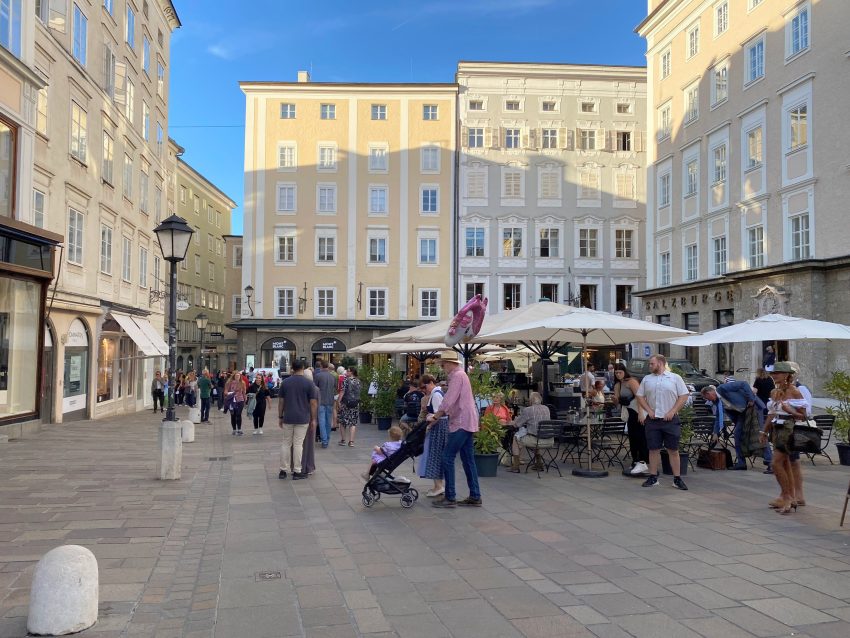
Alter Markt is presented by Salzburg as a historic marketplace whose townhouses often have medieval cores, even when later architecture overlays them. That makes the square a compact lesson in Salzburg’s urban layering: medieval structure beneath early modern and later refinements.
The square’s history shows up in small oddities as well as big façades. Salzburg notes the “smallest house” in Salzburg’s historic centre here—only about 1.42 metres wide—built in the 19th century to close a narrow gap beside Café Tomaselli.
What to see: look up at the townhouses and treat the square as a “details” stop—signage, portals, window rhythms, and the sense of a former market core. Because Tomaselli sits here and because the square is tightly connected to the old town’s shopping lanes, it’s also a good place to pause and read the city’s everyday history, not only its monumental one.
Location: Alter Markt, 5020 Salzburg, Austria | Hours: 24 Hours. | Price: Free.
3. Mozarts Geburtshaus
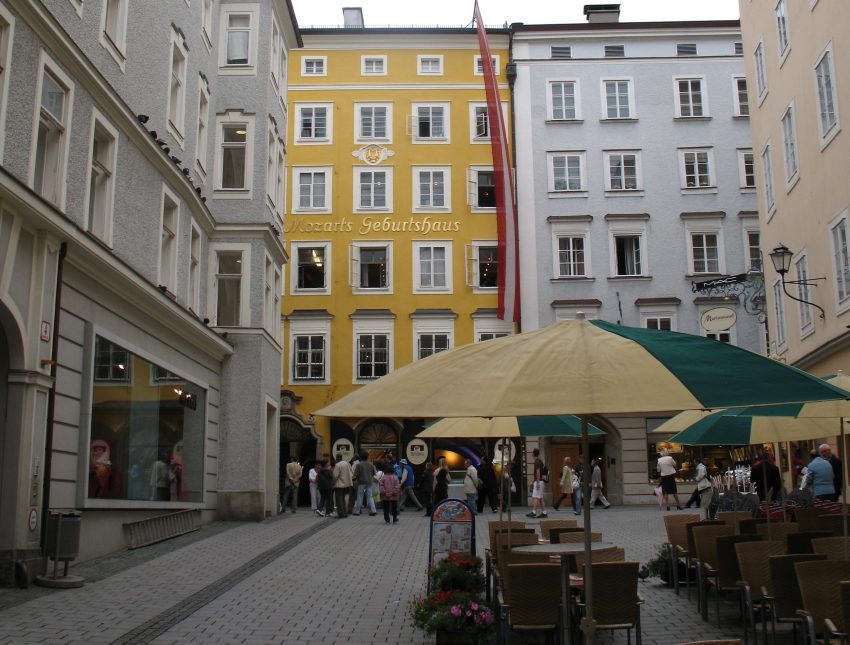
Mozart’s Birthplace in Getreidegasse is one of Salzburg’s most visited historic houses, anchored in the fact that Mozart was born here on 27 January 1756. Salzburg notes that the family lived in the house for 26 years (from 1747), which gives the site weight beyond a single “birth room” narrative.
As a museum, it has its own history: Salzburg states that the International Mozarteum Foundation opened a museum in the house in 1880, and the foundation’s own description emphasises how the exhibition is designed to make Mozart’s life and domestic circumstances tangible.
What to see: focus on objects and rooms that explain the family context—how a musical household functioned and how early talent was nurtured and presented. The point is less “celebrity shrine” and more “evidence of a working musical environment,” framed by the building’s position in one of Salzburg’s most historic streets.
Location: Getreidegasse 9, 5020 Salzburg, Austria | Hours: Daily: 09:00–17:30. | Price: Adults: €15.00; Students/Seniors/Groups (10+): €12.00; Youths (15–18): €5.00; Children (6–14): €4.50; Under 6: free. | Website
4. Mozart Residence
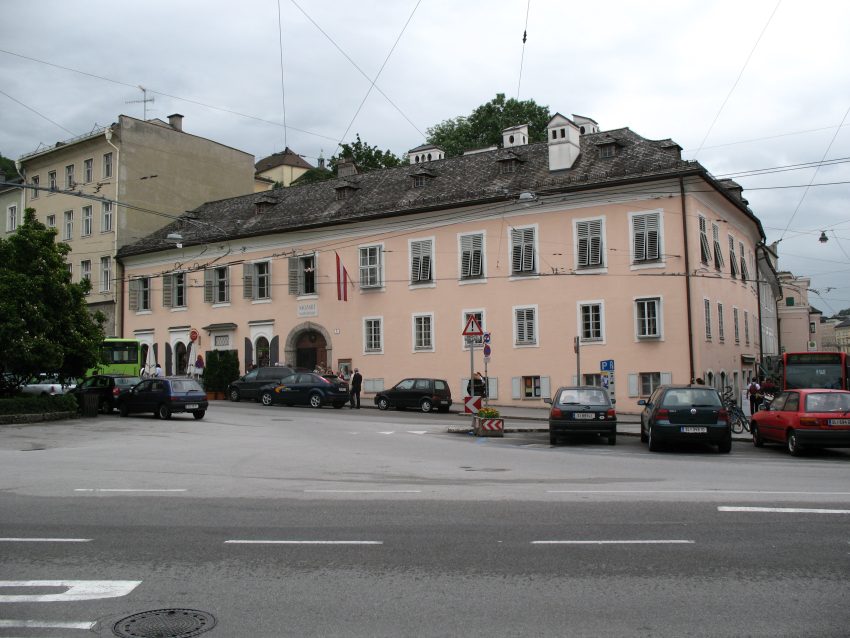
Mozart’s Residence (Mozart Wohnhaus) is the other major “Mozart home” in Salzburg’s historic centre, and Salzburg traces the building’s history back to at least the early 17th century. Salzburg also notes an earlier identity as the “Dance Master’s House,” which is a useful clue to how this part of the city served elite social life even before the Mozart connection.
The museum narrative is designed to show Mozart as a working artist inside a household, not only as an icon. Salzburg describes the former apartment as the museum core, and the Mozarteum Foundation highlights features like the “Magic Flute House” story and how it came to be associated with the museum over time.
What to see: the period rooms and exhibits that connect private life to public reputation—documents, portraits, and the spaces where domestic and artistic routines overlapped. If you’re interested in how Salzburg curates Mozart beyond the Birthplace, this museum is where that broader “life in the city” framing becomes clearer.
Location: Makartplatz 8, 5020 Salzburg, Austria | Hours: Daily: 09:00–17:30. | Price: Adults: €15; Reduced (groups of 10+, students & seniors): €12; Ages 15–18: €5; Ages 6–14: €4.50; Under 6: free; Family (2 adults with children): €30; Salzburg Card: free entry. | Website
5. Mirabell Palace and Gardens
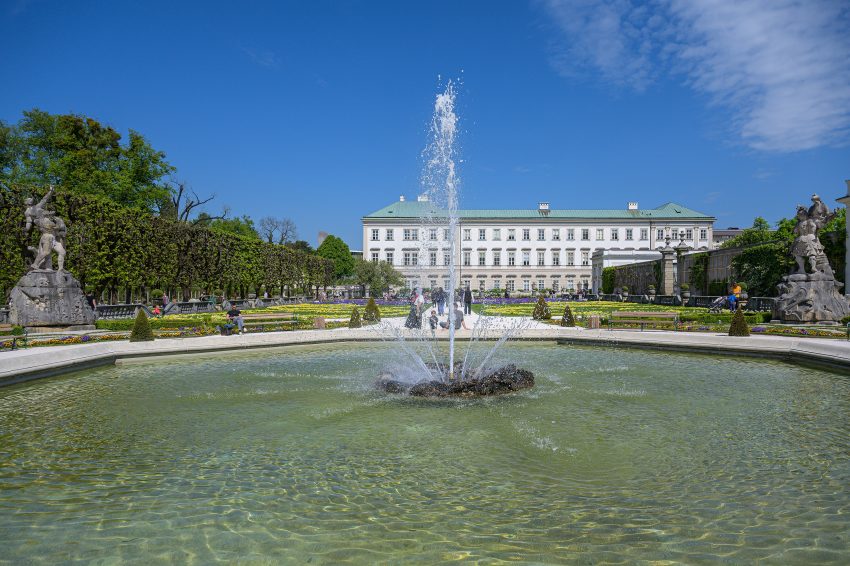
Mirabell Palace and Gardens were created as a courtly pleasure complex and later became one of Salzburg’s most recognisable baroque settings. Salzburg emphasises that the entire complex is a protected monument and part of Salzburg’s UNESCO World Heritage context, which helps explain both the careful maintenance and the “public icon” status.
The palace’s later civic life is also part of its history: Salzburg notes that it now houses the mayor’s offices and municipal administration, while the Marmorsaal is famous for ceremonies and concerts—and Salzburg explicitly mentions that Leopold Mozart and his children performed there. That continuity (courtly setting → civic setting) is a big part of why Mirabell feels both grand and “used.”
What to see: the baroque garden geometry, the Pegasus Fountain, and the broader “view corridor” through the gardens toward the old town and fortress. The palace interiors you can access (where applicable) matter less than the integrated experience of architecture, garden design, and the city panorama framed together.
Location: Mirabellplatz 3, 5020 Salzburg, Austria | Hours: Monday – Saturday: 08:00–18:00. Sunday: Closed. Monday: 08:00–16:00. Tuesday: 13:00–16:00. Wednesday: 08:00–16:00. Thursday: 08:00–16:00. Friday: 13:00–16:00. Saturday: Closed. Sunday: Closed. Daily: 06:00–Dusk. Daily: 09:00–16:00. | Price: Free. | Website
6. Winkler Terrace
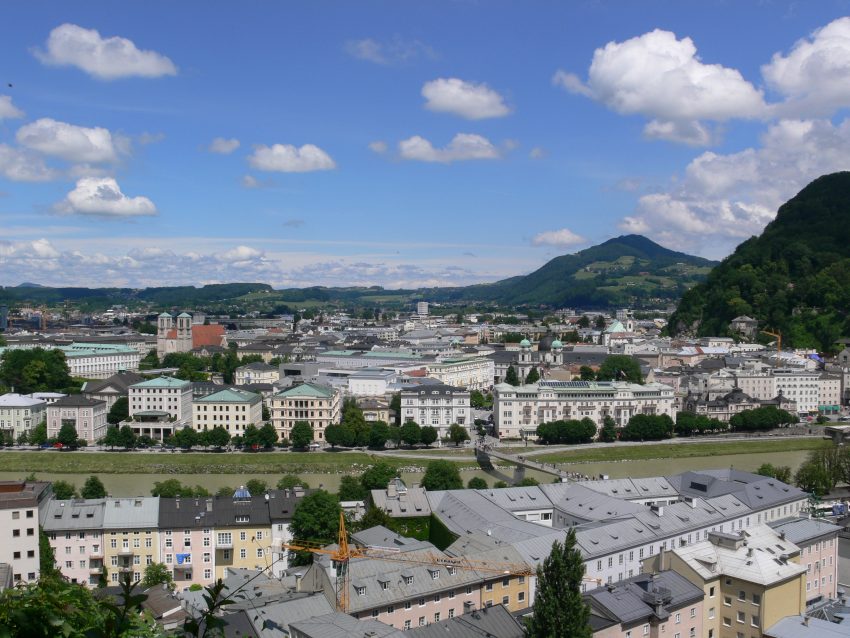
Winkler Terrace is generally referenced as a viewpoint on the Mönchsberg area, overlooking Salzburg’s historic centre from above the cliff-edge near the Museum der Moderne. Salzburg’s own materials for the Mönchsberg lift emphasise the “scenic terrace” at the top with “magical views” of the old town, which aligns with how this viewpoint is commonly described.
I can’t find an official Salzburg tourism page that specifically documents the “Winkler Terrace” name or a clear “founded/built in year X” history for it, and I’m not going to invent one. Third-party travel sources do use the name for the lookout area above the Museum der Moderne, but they don’t establish a reliably sourced origin story.
What to see: treat it as a panorama stop—fortress, river, and the old town’s church towers in one sweep. The “sight” is the composition of Salzburg itself, best appreciated slowly with a 360° scan rather than hunting for a single plaque or monument.
Location: Am Mönchsberg 32, 5020 Salzburg, Austria | Hours: 24 Hours. | Price: Free.
7. Getreidegasse
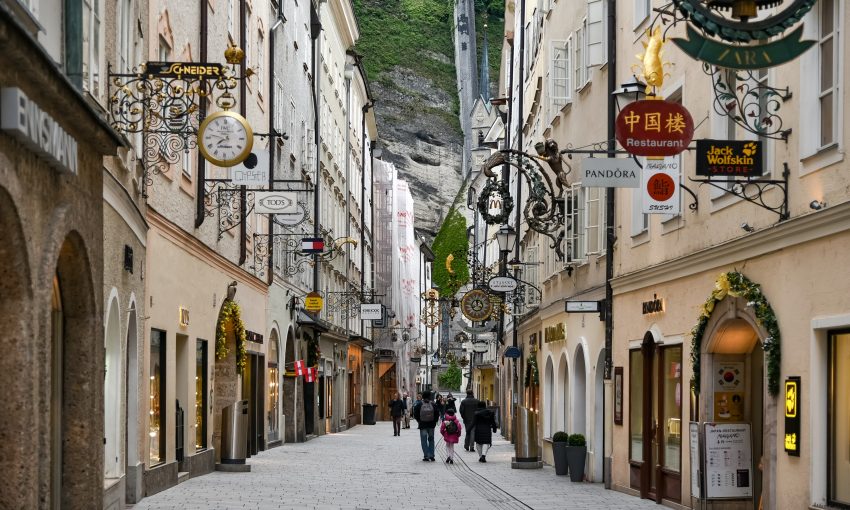
Getreidegasse is described by Salzburg as the bustling heart of the old town, and part of its distinctive identity lies in its historic architecture and long commercial continuity. It is also inseparable from the Mozart narrative because Mozart’s Birthplace is located here, which pulls cultural history directly into a shopping street.
The street’s visual language comes from a pre-modern city: Salzburg highlights the forged guild signs above shops, dating from a time before house numbers when not everyone could read. That’s a key historical “tell” you can still see today—commerce expressed through iconography in iron rather than text.
What to see: don’t just walk through—scan the hanging signs, the old portals, and the through-passages that link courtyards and side lanes. The street is a working historic environment, so the best “sights” are often those small survivals of medieval and early-modern street life.
Location: Getreidegasse, 5020 Salzburg, Austria | Hours: 24 Hours. | Price: Free.
8. Horse Bath
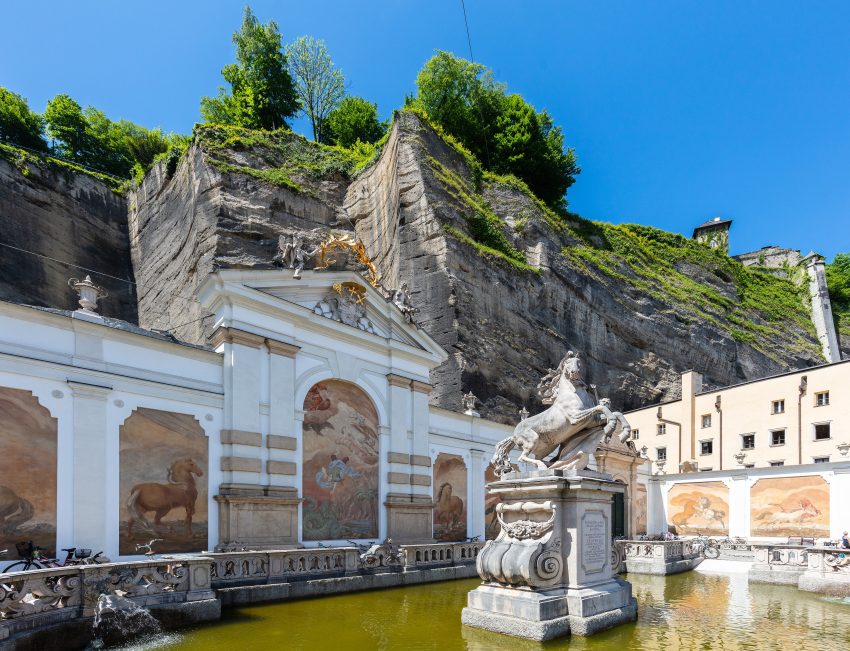
The “Horse Bath” (Pferdeschwemme) is a surviving piece of Salzburg’s courtly infrastructure: Salzburg describes it as a place where parade horses from the prince-archbishops’ stables were washed off and groomed. It sits in today’s festival district, which is appropriate historically—this was the zone of court functions and display.
Salzburg also places its origins in the 17th century and frames it as a distinctive historic feature within Karajanplatz. The key historical point is that it wasn’t built as decoration first; it was a working, ceremonial utility space tied to elite stables and public spectacle.
What to see: the basin itself and how it “stages” the rock face and surrounding architecture—an unusually theatrical urban detail for something rooted in practical animal care. It’s also one of those places where you can still read court life in the city’s public spaces, not only in museums.
Location: Herbert-von-Karajan-Platz 11, 5020 Salzburg, Austria | Hours: 24 Hours. | Price: Free.
9. Salzburg Festival Halls Complex
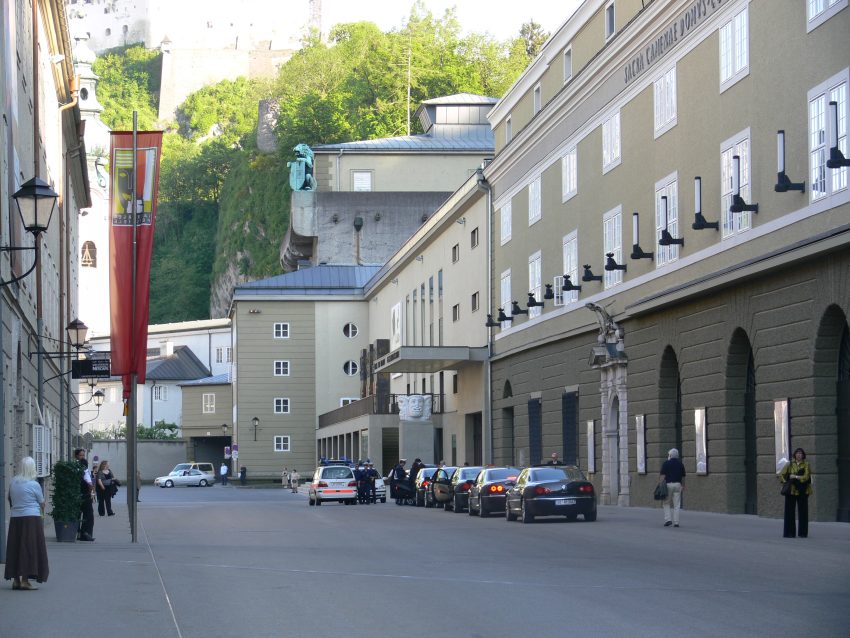
The Festival Halls complex is the performance core of Salzburg’s internationally known festival culture, and Salzburg explicitly groups key venues as the Great Festival Hall, the House for Mozart, and the Felsenreitschule. Even if you’re not seeing a performance, that cluster signals how Salzburg’s identity is bound to music and staged art in major architectural settings.
Historically, what matters is not a single “built in” date (which Salzburg doesn’t summarise on that page) but the way these venues institutionalise Salzburg’s festival tradition into permanent spaces. Salzburg presents them as places where the public can sometimes access foyers and auditoriums (subject to schedules), which underscores that these are active working venues, not static monuments.
What to see: if access is possible, the foyers and auditorium spaces give the clearest sense of scale and acoustical intent; if not, the exterior setting in the festival district still communicates the “Salzburg as stage” idea. The nearby Horse Bath helps as context: courtly display and modern performance culture coexist in the same urban zone.
Location: Hofstallgasse 1, 5020 Salzburg, Austria | Hours: Monday – Friday: 09:00–13:00. Monday – Friday: 10:00–17:00 (from March 27). Saturday: Closed. Sunday: Closed. | Price: Prices vary by show. | Website
10. Franziskanerkirche
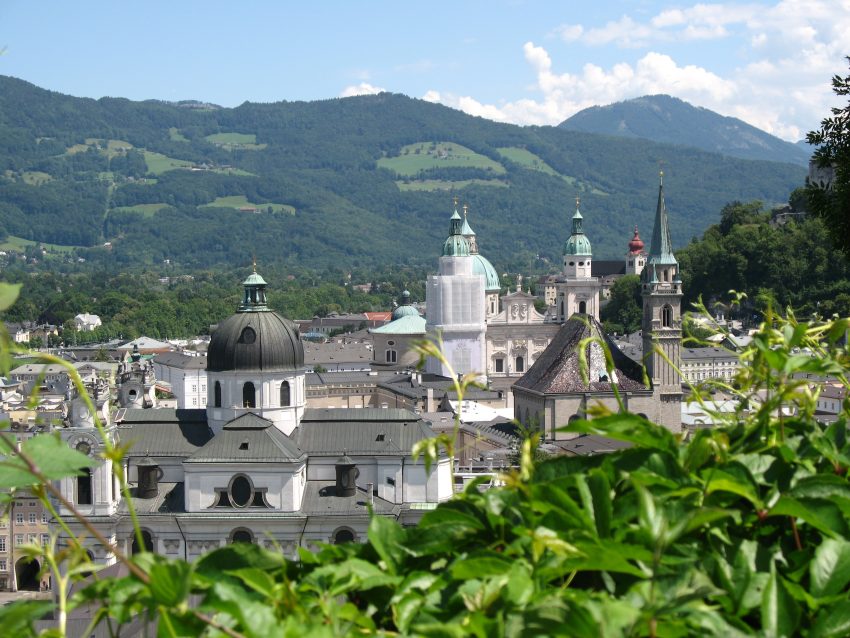
Salzburg frames the Franciscan Church as a building whose history reaches back to the earliest Christian period in Salzburg, and it stands out architecturally as a slender Gothic structure within the old city’s dense fabric. In other words, it’s one of the places where Salzburg’s oldest ecclesiastical roots and later medieval rebuilding meet in a single interior.
Its cultural life didn’t freeze after the Middle Ages: Salzburg highlights an ongoing sacred-music tradition, noting that for over 40 years internationally renowned organists have performed here as part of the International Salzburg Organ Concerts, and that the church’s acoustics and organ culture are a current draw.
What to see: beyond the church’s overall Gothic character, the organ tradition is a practical “what to look/listen for” hook (especially if you time a concert). Even without an event, the interior is a strong counterpoint to the cathedral’s baroque theatre—more vertical, more restrained, and historically layered in a different way.
Location: Sigmund-Haffner-Gasse 13, 5020 Salzburg, Austria | Hours: Monday – Friday: 08:00–11:30. | Price: Free; donations appreciated. | Website
11. Domplatz
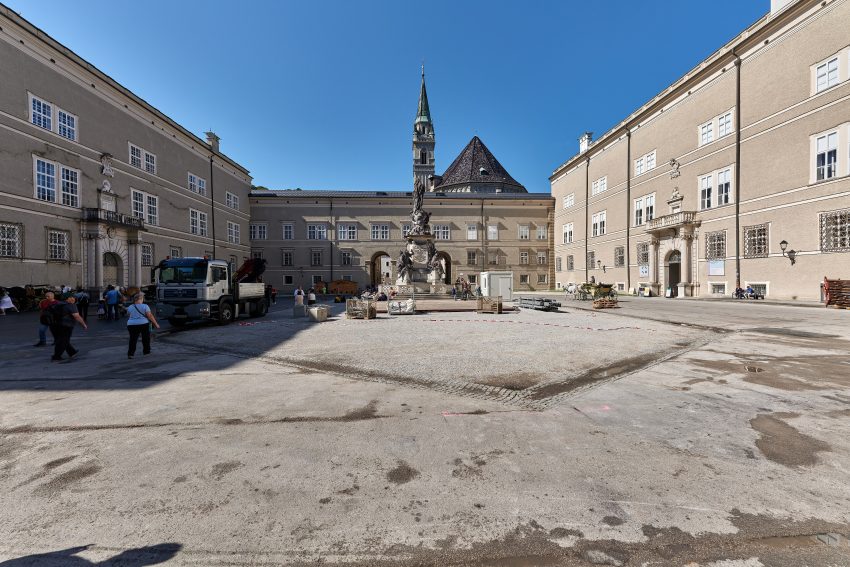
Domplatz (Cathedral Square) is the grand baroque forecourt to Salzburg Cathedral and one of the clearest “power spaces” in the historic centre. Salzburg highlights the Marian statue on the square, built of lead and marble in the 18th century, which reinforces the square’s devotional and representative role.
The square’s history is inseparable from the cathedral and the former prince-archiepiscopal quarter: it is, effectively, the public-facing stage of Salzburg’s church-state identity. That helps explain why it feels ceremonial even on an ordinary day—its layout is designed for processions, gatherings, and architectural display.
What to see: the cathedral façade composition from the square is the main visual payoff, and the Marian statue is the key fixed element in the open space. If you want to tie “square” to “interior history,” Salzburg’s cathedral notes (font, crypt, reliquary) give you a clear next step once you’ve read the exterior.
Location: Domplatz, 5020 Salzburg, Austria | Hours: 24 Hours. | Price: Free.
12. Salzburger Dom
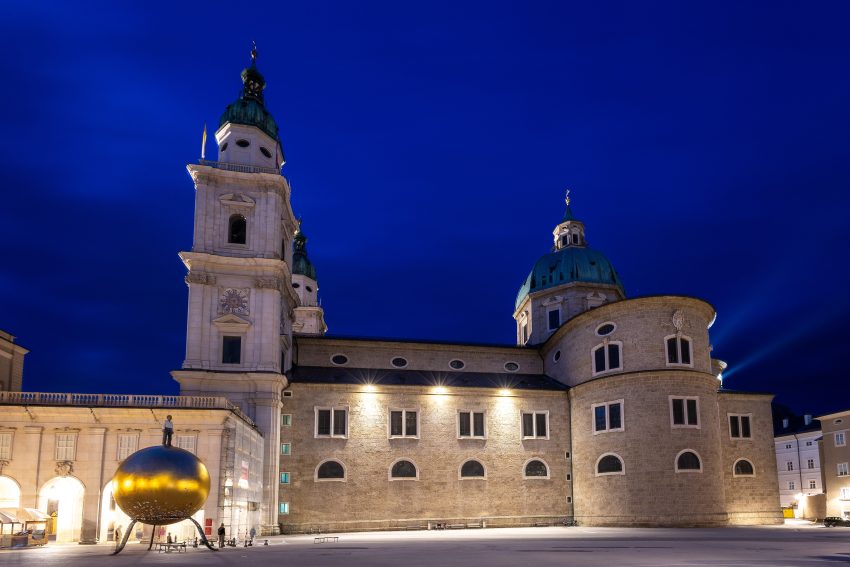
Salzburg Cathedral is presented by Salzburg as the city’s ecclesiastical heart, and its current baroque form anchors the cathedral square and the surrounding “power quarter.” Even without diving into every rebuild phase, it’s a place where Salzburg’s long church-state history is legible in stone, ritual, and layout.
One of the cathedral’s most direct links to Mozart is sacramental rather than musical: Salzburg notes that Mozart was baptised here (specifically in the cathedral’s baptismal font). That detail matters because it locates Mozart’s story inside the broader religious and civic framework that shaped Salzburg for centuries.
What to see: Salzburg highlights features such as the baptismal font, the crypt, the art installation “Vanitas,” and the reliquary shrine associated with Saints Rupert and Virgil, as well as details like bells and doors that carry their own stories. In practice, it rewards slow looking: sculpture, stuccowork, and the interplay of baroque theatre with devotional purpose.
Location: Domplatz 1a, 5020 Salzburg, Austria | Hours: (Winter) January 1 – February 28: Monday – Saturday: 08:00–17:00; Sunday: 13:00–17:00. (Spring/Summer) March 1 – July 31: Monday – Saturday: 08:00–18:00; Sunday: 13:00–18:00. (Summer) August 1 – August 31: Monday – Saturday: 08:00–19:00; Sunday: 13:00–19:00. (Autumn) September 1 – October 31: Monday – Saturday: 08:00–18:00; Sunday: 13:00–18:00. (Winter) November 1 – November 30: Monday – Saturday: 08:00–17:00; Sunday: 13:00–17:00. (Winter) December 1 – December 31: Monday – Saturday: 08:00–18:00; Sunday: 13:00–18:00. | Price: Adults: €5; Under 18: free. | Website
13. St. Peter's Abbey and Cemetery
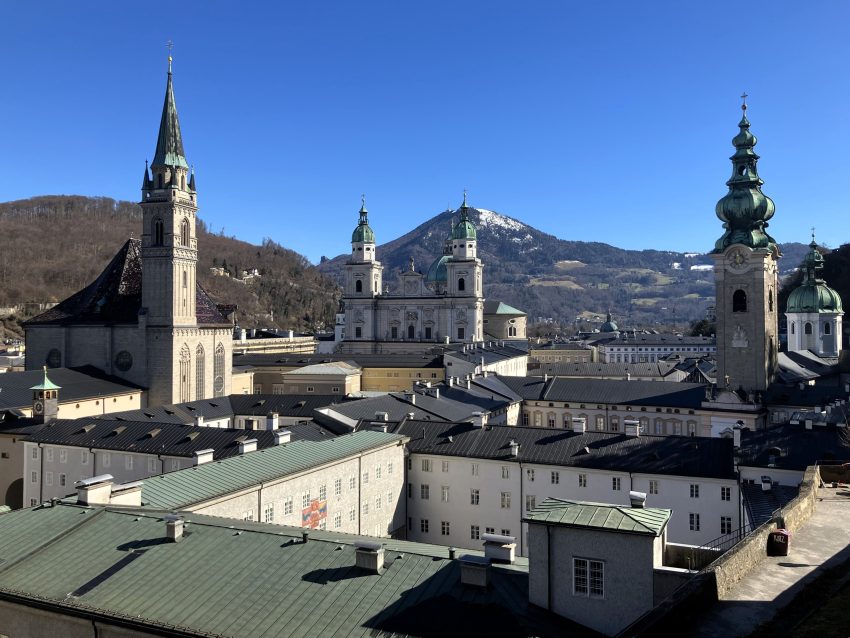
St. Peter’s Abbey is described by Salzburg as founded in the 7th century and as the oldest monastery still in existence in the German-speaking world. Salzburg also notes that the first abbey church was built in 696 by Rupert, and that the present church fabric reflects many rebuilds and styles layered over time.
The cemetery and catacombs expand the site from “church visit” into a history-of-the-city visit: Salzburg states that the cemetery is older than the archabbey itself and dates to late antiquity, and that the catacombs are caves carved into the Mönchsberg. That combination—monastic continuity above ground, burial landscape and rock-cut spaces below—creates a powerful sense of deep time.
What to see: the cemetery’s monuments and crypts (clustered around the late-Gothic Margarethenkapelle) are a focal point, and the catacombs are the distinctive “only-here” element. Salzburg also notes strong musical associations, including Mozart composing the “Dominicus Mass” for the abbot in 1769 and Michael Haydn’s “Rupertus Mass” commissioned by the abbey.
Location: Sankt-Peter-Bezirk 1, 5020 Salzburg, Austria | Hours: (Summer) April 1 – September 30; St. Peter Cemetery: 06:30–20:00; Abbey Church: 08:00–20:00; Catacombs: 10:00–12:30 & 13:00–18:00. (Winter) October 1 – March 31; St. Peter Cemetery: 06:30–18:00; Abbey Church: 08:00–20:00; Catacombs: 10:00–12:30 & 13:00–17:00. | Price: Cemetery: Free. Catacombs: Adults €2.00; Children/youths (6–18) €1.50. | Website
14. Hohensalzburg
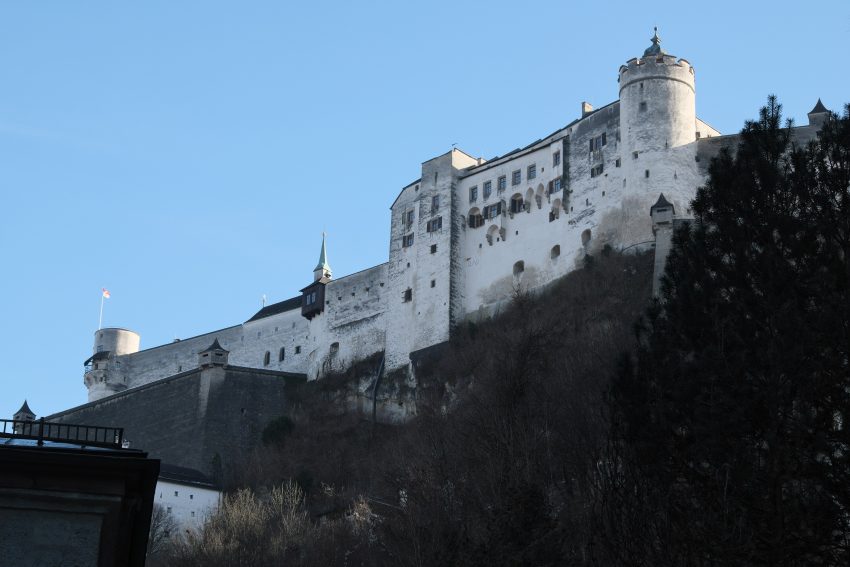
Hohensalzburg Fortress dominates Salzburg’s skyline and is widely described as one of the largest fully preserved castles in Central Europe. It was created as a defensive stronghold for the prince-archbishops and expanded over centuries, which is why you’ll see different building phases as you move through the complex.
Inside, the focus is on how Salzburg was ruled and defended: museum displays cover the fortress’s architectural development and everyday life behind the walls, from weapons and armour to period interiors. The Prince’s Rooms are a highlight for late-medieval court culture, with famed decorative details and representative halls.
What to see: the ramparts and viewpoints are the obvious draw, with panoramic city-and-mountain views, and the fortress museums help anchor what you’re looking at historically. If you want one small-but-specific curiosity tied to the site’s long history, Salzburg also highlights the “Salzburger Stier,” a late-Gothic mechanical hornwork instrument associated with the fortress.
Location: Mönchsberg 34, 5020 Salzburg, Austria | Hours: (January – April) Daily: 09:30–17:00. (May – September) Daily: 08:30–20:00. (October – December) Daily: 09:30–17:00. December 24: 09:30–14:00. Easter & Advent weekends: 09:30–18:00. | Price: Basic Ticket with funicular: Adults: €15.50; Children (6–14): €6.30. All-inclusive ticket with funicular: Adults: €19.20; Children (6–14): €7.30. | Website
15. Nonnberg Convent
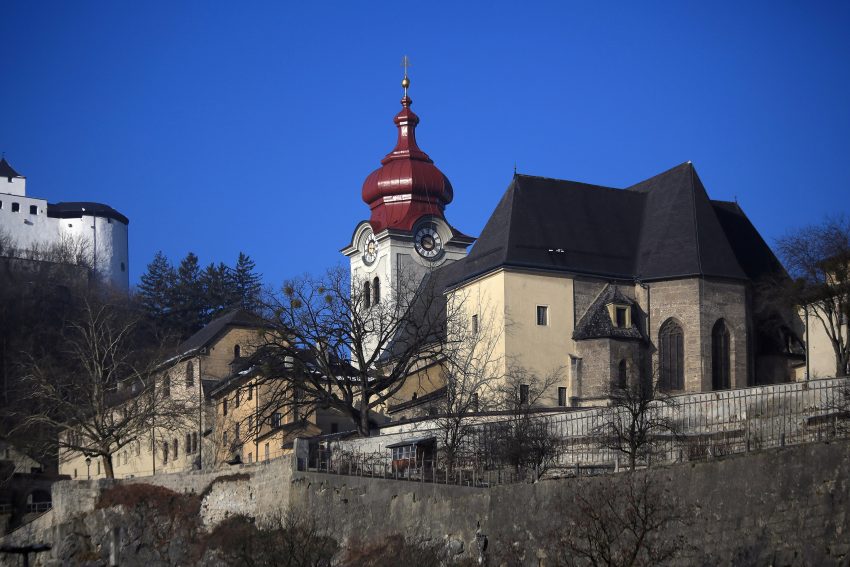
Nonnberg Abbey is presented by Salzburg as founded around 711–715, making it one of the earliest monastic foundations tied to Salzburg’s Christian beginnings. Salzburg also notes that Emperor Henry II built a Romanesque basilica around the turn of the millennium, consecrated in 1009, which is a key anchor point for what you’re seeing architecturally today.
The site is historically significant as a long-running Benedictine women’s community, and Salzburg frames it as part of the city’s deep ecclesiastical structure rather than a “tourist add-on.” Even Salzburg’s UNESCO-oriented writing describes it as a major stop within the historic centre’s church landscape, reinforcing its place in the city’s long religious chronology.
What to see: the abbey church is the focal point (including historic fabric associated with the Romanesque phase Salzburg highlights). The setting below the fortress also matters—monastic life, defensive architecture, and the old city cluster in close proximity, which helps you understand Salzburg’s historic layering.
Location: Nonnberggasse 2, 5020 Salzburg, Austria | Hours: Daily: 06:30–18:00. | Price: Free. | Website
16. Kapitelplatz
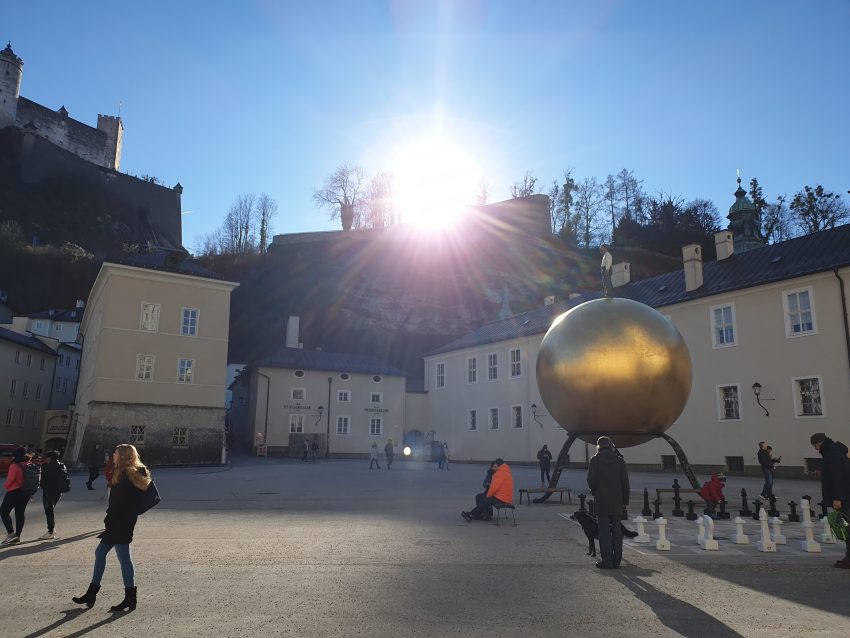
Kapitelplatz sits in the cathedral district and historically belonged to the sphere of the high clergy: Salzburg notes that senior church figures lived around the square and in adjacent palaces until the prince-archbishopric was dissolved in 1803. That background still reads in the “austere, sovereign residences” that line nearby lanes.
The square is also a good place to understand how old power-centres were stitched together: it links the Cathedral area with the fortress hillside, and its scale makes the surrounding ecclesiastical architecture feel even more imposing. Salzburg’s own descriptions frame it as part of the cathedral precinct rather than a standalone monument.
What to see: the most conspicuous modern element is Stephan Balkenhol’s Sphaera sculpture (a figure standing atop a gold sphere), which Salzburg presents as a deliberate contrast between everyday modern life and monumental staging in a historic setting. It’s one of the clearest examples of contemporary art placed right inside the baroque core.
Location: Kapitelpl., 5020 Salzburg, Austria | Hours: 24 Hours. | Price: Free.
17. Residenzplatz
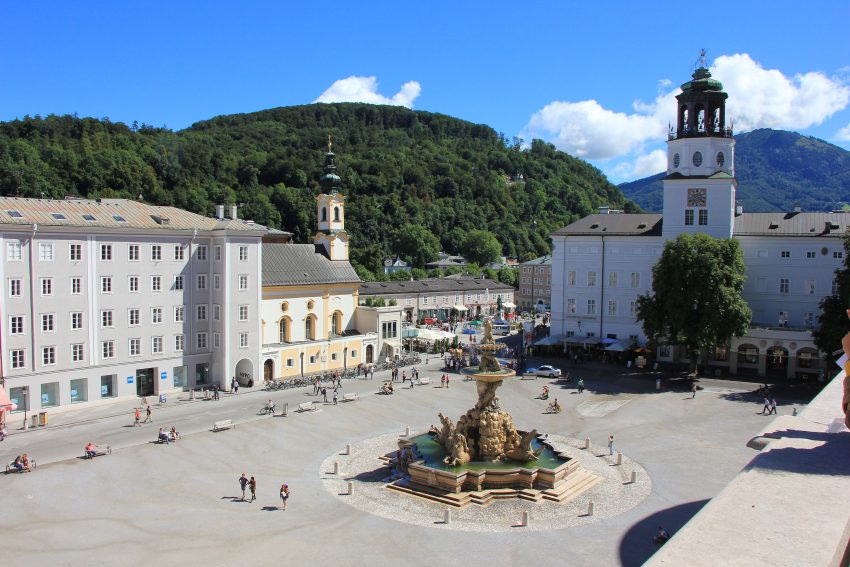
Residenzplatz is the grand forecourt between Salzburg’s former archiepiscopal residences, framed by major symbols of secular-and-church authority: the New Residence, Cathedral, and Old Residence, plus a continuous row of historic townhouses. Its role as a ceremonial space is built into the setting and scale.
Historically, the square expresses the prince-archbishops’ taste for baroque display: the ensemble was meant to impress, and the square’s fountain-and-facade geometry reinforces that representative function. Salzburg also emphasises how the square continues to be used as a stage for public life, which is very much in keeping with its origins as a place of display.
What to see: the Residence Fountain is the visual anchor, and the surrounding architecture gives you an almost “set-like” baroque framing in every direction. In seasonal periods the square hosts major markets and events, which is useful context for why it remains one of Salzburg’s most recognisable civic spaces.
Location: Residenzpl., 5020 Salzburg, Austria | Hours: 24 Hours. | Price: Free.
18. Salzburg Museum
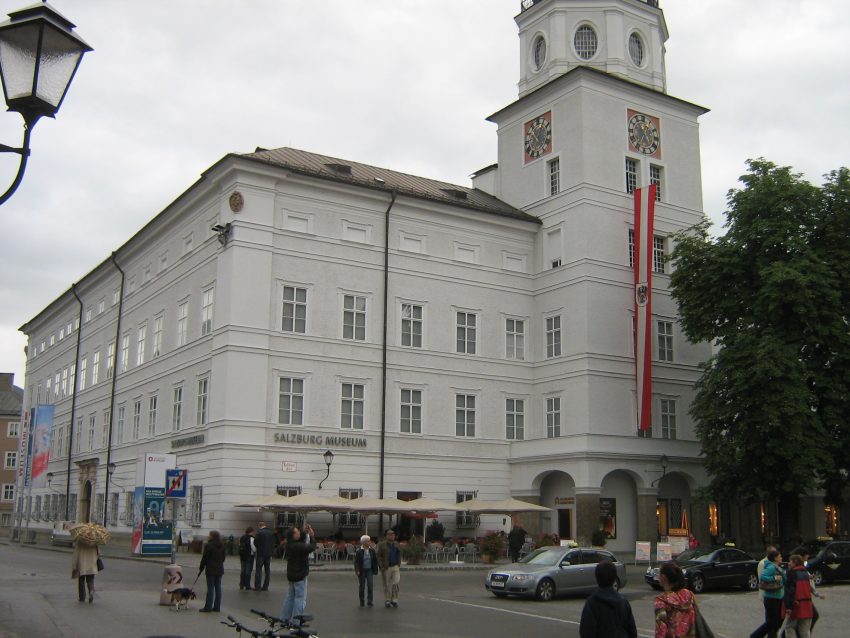
Salzburg Museum is closely tied to the Neue Residenz (New Residence), a complex associated with the prince-archbishops; Salzburg highlights that the New Residence was initiated under Prince-Archbishop Wolf Dietrich von Raitenau and that its construction stretched over a long period. The building’s political-and-representational intent matters, because the museum’s story is rooted in that civic and courtly setting.
The museum itself is positioned as a city-and-province history museum: Salzburg describes substantial exhibition space and a focus on Salzburg’s art and cultural history, with permanent displays plus changing exhibitions. One Salzburg feature explicitly frames it as an accessible way to trace the city’s story from the prince-archbishops to the present.
What to see: expect a broad, contextual approach rather than one “single masterpiece” visit—objects and narratives that explain how Salzburg became the baroque, ecclesiastical centre it is. If you want to connect the museum to the streets outside, it’s helpful that Salzburg itself places the museum in the historic power-centre around Residenzplatz and the cathedral precinct.
Location: Mozartpl. 1, 5020 Salzburg, Austria | Hours: Check official website. | Price: Check official website. | Website
19. Mozartsteg
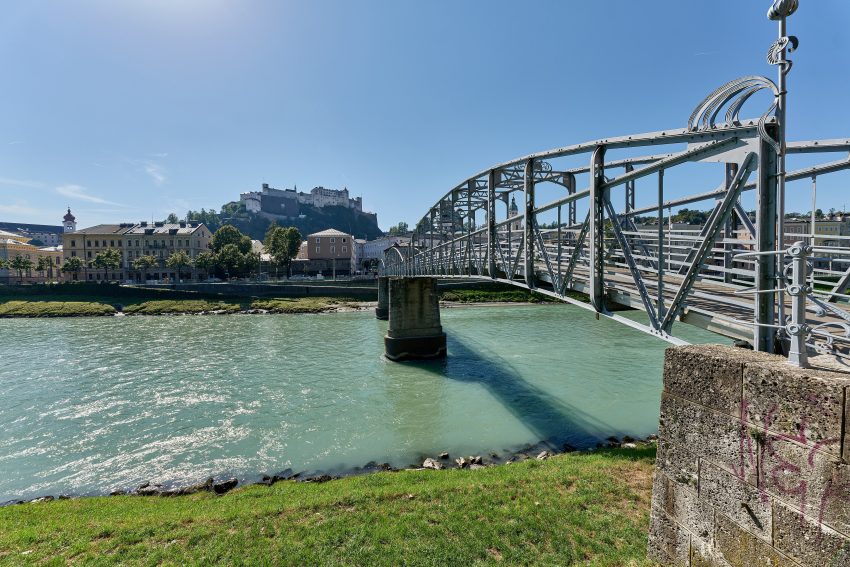
Mozartsteg is a pedestrian bridge across the Salzach that is commonly described as an Art Nouveau-era footbridge. Multiple sources note it was built in 1903 and originally operated as a toll bridge, with tolls ending later (commonly cited as 1921), which fits the broader pattern of privately initiated urban infrastructure becoming public over time.
That toll history matters because it changes how you read the bridge: it wasn’t just a decorative crossing, it was a revenue-bearing piece of city movement. Salzburg’s own magazine content also recalls the idea of paying to cross until 1921, which is a useful “human scale” historical detail.
What to see: the bridge’s structure and end details (and, if you notice it, the surviving tollhouse reference in bridge histories) plus the river views back toward the old town and fortress. In practice, it’s a “framing device” for Salzburg—architecture and skyline assembled in one glance from midstream.
Location: Mozartsteg, 5020 Salzburg, Austria | Hours: 24 Hours. | Price: Free.
20. Mozartplatz
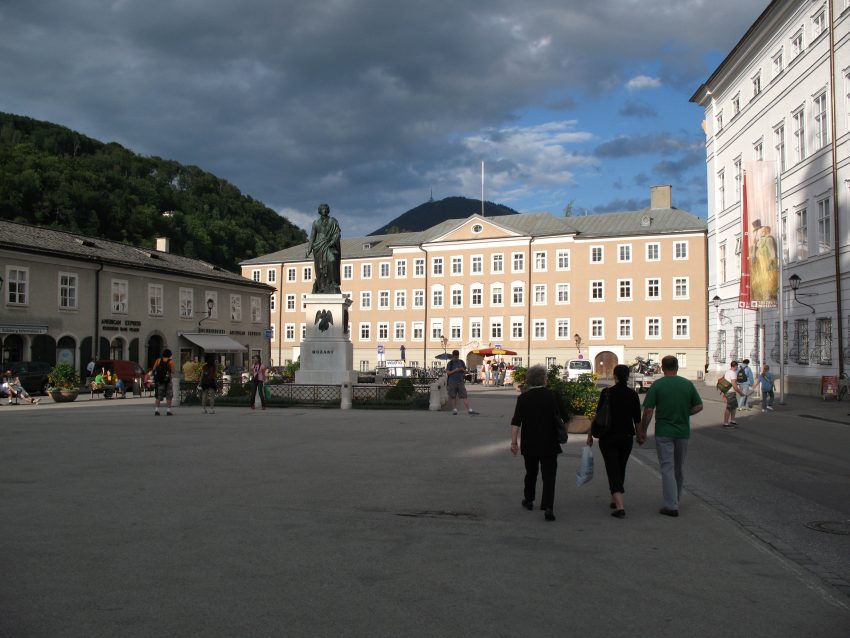
Mozartplatz is centred on Salzburg’s most symbolic civic memorial to Mozart: the Mozart statue by Ludwig Schwanthaler. Salzburg notes the monument’s planning history, including the intention to erect it in 1841 (50 years after Mozart’s death), the delay due to a Roman mosaic discovery, and the eventual unveiling in September 1842 in the presence of Mozart’s sons.
That anecdote is more than trivia: it shows how deeply Salzburg’s identity-making around Mozart was tied to 19th-century civic culture, while the Roman mosaic discovery underlines how layered the ground is in this part of the old city. The square’s “Mozart memory” is therefore both commemorative and archaeological in spirit.
What to see: the statue is the obvious focus, but the square also works as a “pivot point” between the cathedral area and nearby museums. Salzburg itself regularly frames Mozartplatz as a key node in the historic centre, which is why it feels busy and central rather than secluded or contemplative.
Location: Mozartpl., 5020 Salzburg, Austria | Hours: 24 Hours. | Price: Free.

Moira & Andy
Hey! We're Moira & Andy. From hiking the Camino to trips around Europe in Bert our campervan — we've been traveling together since retirement in 2020!
This website uses affiliate links which earn a small commission at no additional cost to you.
Walking Tour Summary
Distance: 5 km
Sites: 20