Self-Guided Walking Tour of Antibes, France (2026)

This website uses affiliate links which earn a small commission at no additional cost to you.
Antibes is one of the Côte d'Azur's most rewarding towns to explore on foot: compact, characterful, and stitched together by lanes that open suddenly onto sea views. A self-guided walking tour lets you move at your own pace, pausing for a market snack, a quick photo from the ramparts, or a detour into a gallery without feeling rushed. It is an easy place to build a satisfying half-day walk because the historic core, harbourfront, and coastal edges are all within a short distance of each other.
This route focuses on the best things to see in Antibes, starting in the Old Town where pastel facades, shuttered windows, and small squares create that classic Riviera atmosphere. As you weave through the medieval street plan, you will naturally pass key landmarks and local favourites, from the market area and centuries-old churches to viewpoints over the marina. The walk is designed to feel varied, mixing history and architecture with the everyday life that gives Antibes its appeal.
What elevates Antibes is how quickly the scenery changes: one moment you are in cool, narrow streets, and the next you are beside the water with open horizons and salty air. The ramparts and seafront paths deliver the town's signature views, while the port adds a modern contrast that still feels distinctly Mediterranean. By the end, you will have covered the essentials without backtracking, with plenty of natural stopping points if you want to extend the day for a swim, a museum visit, or a long lunch.
How to Get to Antibes
By Air: The closest major gateway is Nice Côte d'Azur Airport, which has extensive domestic and international connections and is the most straightforward option for reaching Antibes. From the airport you can typically transfer via public transport or a pre-booked shuttle/taxi to Antibes, with journey times varying by traffic and the exact connection you choose. If you are arriving with luggage or landing late, planning the onward transfer in advance can save time and reduce hassle. For the best deals and a seamless booking experience, check out these flights to Antibes on Booking.com.
By Train: Antibes is well connected on the French Riviera rail corridor, making the train one of the easiest and most reliable ways to arrive, particularly in peak season when road traffic can be slow. Services commonly link Antibes with Nice, Cannes, Monaco, and other coastal towns, and longer-distance trains can connect via Nice or Cannes depending on your origin. The station is a convenient walk or short taxi ride from the Old Town, which means you can arrive and start exploring with minimal logistics. You can use SNCF Connect to check schedules, compare routes, and purchase tickets for National (SNCF ) and regional trains (TER). For a more streamlined experience, we recommend using Omio, which allows you to easily compare prices, schedules, and book tickets for both National and Regional travel across all of Europe, all in one place.
By Car: Driving gives you flexibility for exploring nearby towns, beaches, and hilltop villages, but it is not always the fastest option in summer due to congestion around Nice, Cannes, and the A8. Parking in and around the Old Town can be limited and more expensive close to the centre, so it is usually worth identifying a car park before you arrive and considering leaving the car parked while you explore on foot. If you are staying outside the centre, a car can be useful for day trips, but for the walking-tour core of Antibes it is often simplest to park once and rely on walking. If you are looking to rent a car in France I recommend having a look at Discover Cars, first, as they compare prices and review multiple car rental agencies for you.
By Bus: Regional buses can be a cost-effective option, especially for shorter hops between Riviera towns, and they sometimes serve areas that are less convenient by rail. Travel times are generally longer than the train and can be affected by traffic, but buses can be useful if you are staying in a neighbourhood not close to a station or if you are aiming for a very budget-friendly itinerary. If you choose the bus, check timetables in advance and allow extra buffer time in summer. [bus]
A Short History of Antibes
Antibes began life as Antipolis, a Greek trading outpost established on this stretch of the Mediterranean coast for its natural harbour and easy maritime access. The Romans later developed the settlement, and traces of that long continuity still shape the town's compact footprint: the historic core sits close to the waterfront, with routes that still funnel you from inland approaches toward the sea. Today's walking routes through Rue de la République and around Place Nationale follow the logic of an old port town that grew in layers rather than by grand, straight boulevards.
From the Middle Ages onward, Antibes became increasingly defined by fortification and seigneurial power. The town's best-known historic complex is the Château Grimaldi, shaped over centuries by the Grimaldi family and later adapted to civic uses; it now houses the Musée Picasso, after Pablo Picasso worked here in 1946 and left a group of works that anchored the museum's identity. On the religious side, Antibes Cathedral (the Cathedral of Notre-Dame-de-l'Immaculée-Conception) has medieval origins and later additions, and it remains one of the key markers of how the town evolved from a fortified settlement into a lived-in civic centre.
The early modern period hardened Antibes into a strategic frontier town, particularly as competing powers contested the coast. Fortifications were strengthened in the 16th and 17th centuries, including the nearby Fort Carré, built under King Henri II as part of a broader program to secure key coastal positions, and later defensive works associated with the era of Vauban-style military engineering. These layers of defence are not just “background history” here; they directly frame some of the town's most atmospheric walks, especially where the old stone edges meet open sea.
In the 19th and 20th centuries, Antibes developed the civic spaces and everyday landmarks visitors now associate with the town centre. Place Général de Gaulle functions as a modern hub on the edge of the older street plan, while the market culture that defines daily life is concentrated around the Marché Provençal, a practical, working market embedded into the rhythm of the Old Town. Down by the water, the Pré-aux-Pêcheurs and the small crescent of Plage de la Gravette show how closely Antibes still lives with its shoreline, while the contemporary sculpture Le Nomade adds a modern landmark to the historic seafront-an intentional reminder that Antibes is not only preserved history, but a town that continues to reinvent its waterfront identity.
Your Self-Guided Walking Tour of Antibes
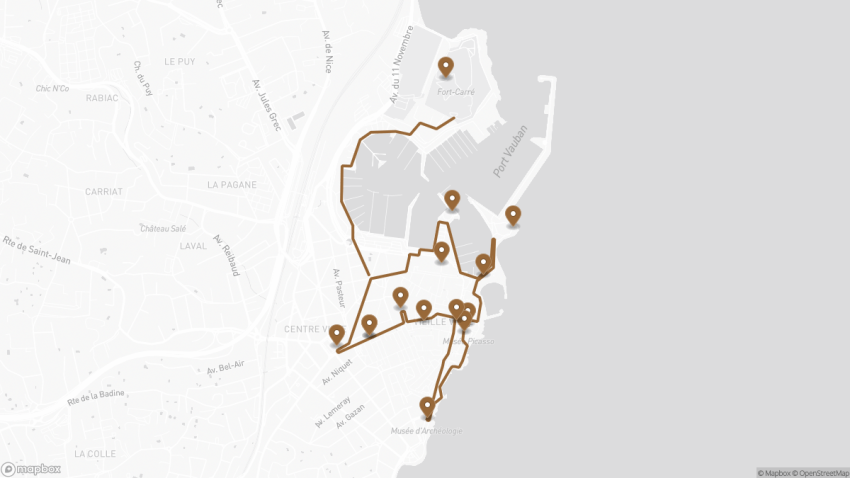
Discover Antibes on foot with our walking tour map guiding you between each stop as you explore its Old Town lanes, seaside ramparts, Provençal market culture, and harbourfront views. This walking tour follows the town's layered history and Riviera character, from the historic streets around Place Nationale and Rue de la République to the shoreline at Plage de la Gravette and the cultural highlights of the Musée Picasso, bringing together medieval heritage, coastal scenery, and everyday local life in a compact route shaped by the Mediterranean.
1. Place Général de Gaulle
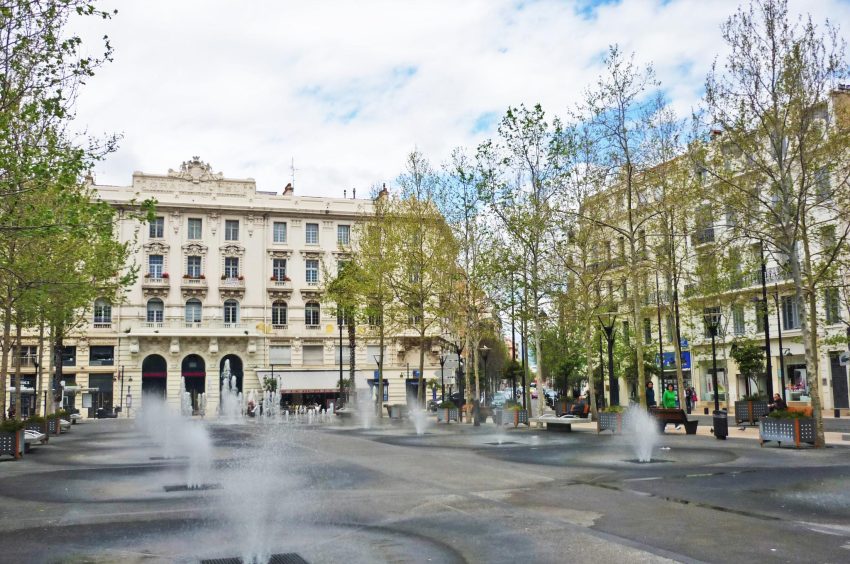
Place Général de Gaulle is a practical starting point for a self-guided walk because it sits at the threshold between modern Antibes and the tighter street network of the Old Town. The square functions as a local meeting point, with everyday Antibes life on display—commuters, café terraces, and shoppers moving between the centre and the surrounding neighbourhoods.
As you arrive, take a moment to orient yourself before diving into the lanes. From here, you can set your walking rhythm: it is close enough to the historic core that you will be in medieval-era streets within minutes, yet open enough to give you a clear sense of direction and bearings.
For the tour, use the square as your “reset” point if you are looping back later in the day. It is also a convenient place to grab water or a quick coffee before continuing toward Rue de la République and Place Nationale, where the atmosphere becomes distinctly older and more intimate.
Location: Pl. Général de Gaulle, 06600 Antibes, France | Hours: 24 Hours. | Price: Free.
2. Pré-aux-Pêcheurs

Pré-aux-Pêcheurs is a waterfront zone that connects the town’s historic relationship with the sea to its contemporary harbour life. It is less a single “monument stop” and more a place where you feel the working edges of Antibes—boats, harbour movement, and open sightlines that pull your attention outward.
On a walking tour, it works as a breathing space between dense Old Town streets and the more open seafront paths. The shift in scale is part of the experience: after narrow lanes and shaded squares, you are suddenly in brighter light with wider views.
Use this stop for photographs and orientation before you move on. From here you can link easily toward the ramparts, the beach at Plage de la Gravette, or the contemporary landmark of Le Nomade, depending on how you want to sequence the waterfront portion.
Location: 22 Av. de Verdun, 06600 Antibes, France | Price: Free

3. Port Vauban

Port Vauban is a logical addition to an Antibes walking tour because it sits between the historic core and the town’s working relationship with the sea. As one of the Mediterranean’s major marinas, it is where you see Antibes at its most contemporary—rows of masts, quay-side movement, and a constantly shifting scene of arrivals and departures—while still being only minutes from Old Town lanes.
Historically, the harbour has long been central to Antibes’ identity, even though what you see today reflects modern marina infrastructure rather than a purely traditional fishing port. Walking the edges of the port helps you understand the town’s geography: the Old Town is compact and defensive in feel, while the port opens outward, emphasising access, trade, and the Riviera’s nautical culture.
On a self-guided route, treat Port Vauban as a waterfront connector segment. It pairs naturally with stops like Pré-aux-Pêcheurs and Le Nomade, and it is also a practical waypoint if you are extending your tour to Fort Carré, which sits nearby. Aim to walk a full stretch of the quays rather than stopping in one spot—the changing perspectives are the point, and you will get the best photos by moving along the waterline.
Location: Av. de Verdun, 06600 Antibes, France | Hours: 24 Hours. | Price: Free. | Website
4. Le Nomade
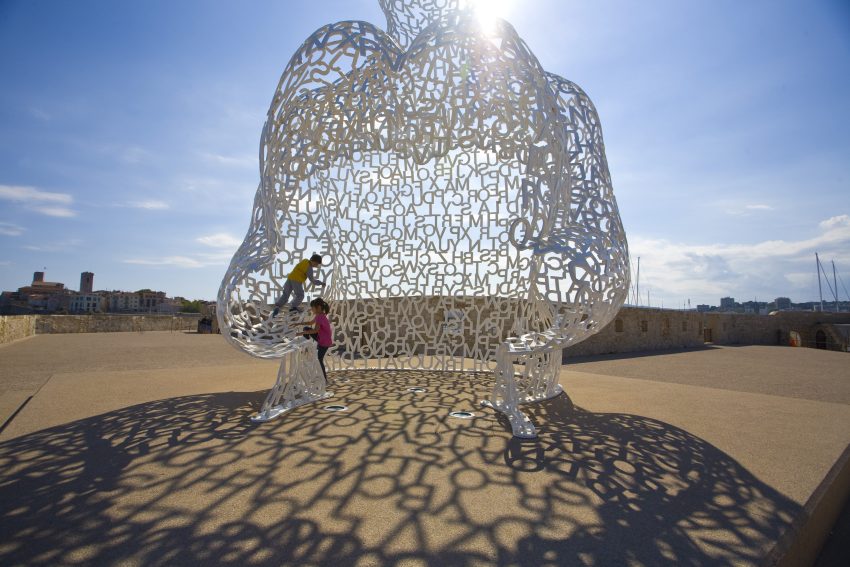
Le Nomade is a contemporary sculpture that has become a modern landmark on the Antibes waterfront, offering a striking contrast to the town’s older stone architecture. Its open-lattice figure is designed to be visually bold against the sea and sky, which makes it a reliable “wayfinding” point on a self-guided walk.
What makes it effective in a walking-tour context is how it reframes the setting. After ramparts, cathedrals, and medieval street plans, this is a reminder that Antibes is not only preserved heritage; it also curates a present-day identity on its waterfront.
Plan to see it when the light is softer if you can, as the sculpture’s form reads differently depending on shadows and sun angle. It pairs well with a waterfront stroll from Pré-aux-Pêcheurs and works as a memorable “finish point” before you head back into the Old Town for dinner.
Location: 32 Quai Henri Rambaud, 06600 Antibes, France | Hours: Tuesday – Friday: 10:00–18:00. Saturday – Sunday: 10:00–18:00. Closed on Monday. (Summer) June 1 – August 31; Tuesday – Sunday: 10:00–23:00. (Winter) September 1 – May 30; Tuesday – Sunday: 10:00–18:00. | Price: Free. | Website
5. Plage de la Gravette
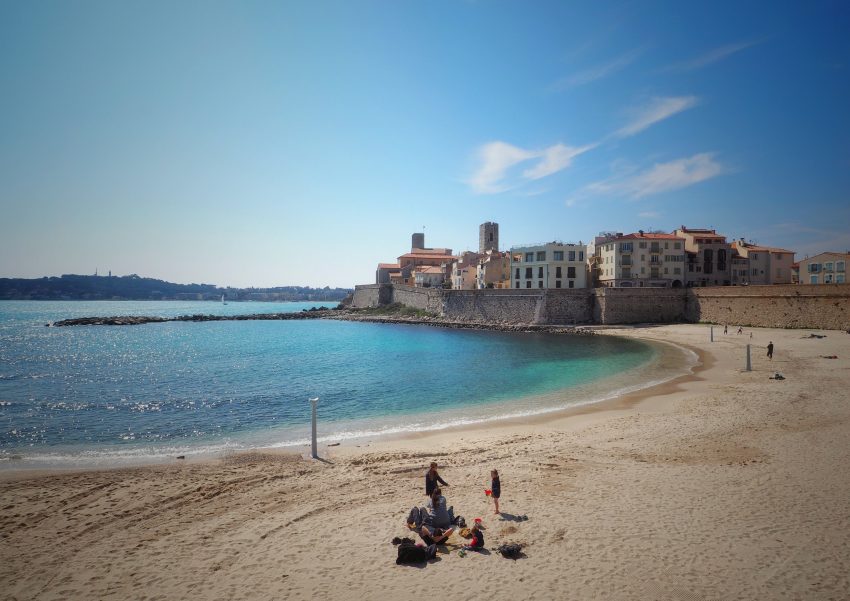
Plage de la Gravette is Antibes’ classic small-town beach moment: a sheltered curve of sand close to the Old Town, framed by the town’s built edges and calm water conditions. On a walking tour, it is a natural pause that changes the mood from sightseeing to seaside living within minutes.
Even if you are not swimming, it is worth stopping for the view and the atmosphere. This is where you see how closely Antibes is stitched to the water—families, locals taking a break, and the gentle rhythm of the shoreline right beside historic streets.
For route planning, it is a useful hinge point. You can stop here briefly, then continue to Le Nomade and the harbour perspectives, or loop back toward the cathedral and market area if you are structuring your tour as a compact Old Town circuit.
Location: Plage de la Gravette, France | Hours: 24 Hours. | Price: Free. | Website
6. Antibes Cathedral
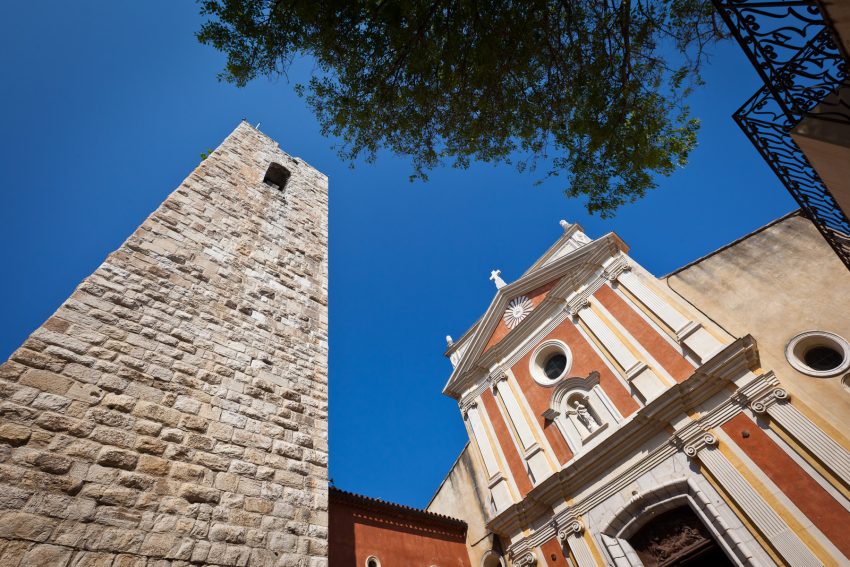
Antibes Cathedral (Cathédrale Notre-Dame-de-l’Immaculée-Conception) is an essential stop for understanding the town beyond its postcard seafront. The cathedral reflects the continuity of Antibes as a lived-in community across centuries, with layers of construction and renovation that mirror changing tastes and needs.
What makes it work well on a walking tour is its sense of calm. Step inside and you will often find a quieter, cooler space that provides a natural break from sun and street noise, especially in warmer months. It is also a good point to notice how religious buildings traditionally anchor neighbourhood life in older towns.
From here, it is easy to stitch the next legs of your route together. You can head toward the Marché Provençal for a lively contrast, or continue toward the ramparts and coastal edge for the town’s most dramatic views.
Location: 1 Rue du Saint-Esprit, 06600 Antibes, France | Hours: Monday – Saturday: 08:00–12:00 & 15:00–19:00. Sunday: 08:00–12:00 & 15:00–19:30. | Price: Free; donations appreciated. | Website
7. Musée Picasso
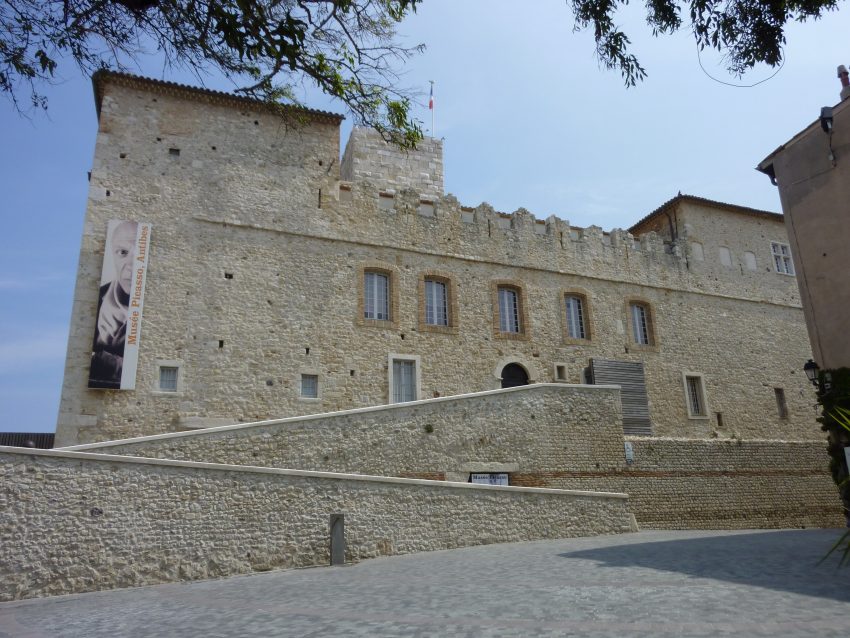
The Musée Picasso, housed in the Château Grimaldi, is one of Antibes’ signature cultural landmarks and a strong highlight for a walking tour. The setting matters: a historic structure with sea-facing views that immediately ties the town’s older layers to its modern artistic identity.
The museum’s story is closely linked to Picasso’s time working in Antibes in 1946, when he produced and left works that helped establish the collection’s character. Even if you are not planning a deep museum visit, the building and its position near the waterfront make it a meaningful stop in the narrative of the town.
On a self-guided route, consider timing your visit for when the light is good on the seafront side. You can combine the museum with a walk along the ramparts, turning this part of the tour into a sequence of culture, architecture, and coastal views without needing to detour far.
Location: place mariejol, 06600 Antibes, France | Hours: (September 16 – June 14) Tuesday – Sunday: 10:00–13:00 & 14:00–18:00. (June 15 – September 15) Tuesday – Sunday: 10:00–18:00. Closed on Monday. Closed on January 1, May 1, November 1, December 25. | Price: Adults: €12. | Website
8. Musée d’Archéologie d’Antibes

The Musée d’Archéologie d’Antibes is an excellent add-on for a walking tour if you want to connect Antibes’ pretty streets and seafront views to the deeper story of Antipolis, its ancient predecessor. The museum is housed inside the Bastion Saint-André, a coastal fortification built to the plans of Vauban in 1698, so the building itself is part of the experience: you are effectively stepping into a surviving piece of the town’s defensive seafront.
The collection focuses on archaeology recovered both on land and underwater, which suits Antibes’ identity as a port town shaped by maritime movement. Expect material linked to the Ligurian, Greek, and Roman presence in the area, with displays that help you picture how trade, settlement, and coastal life worked here in antiquity. Because it is arranged in compact galleries, it fits neatly into a self-guided route without dominating your day.
For walking-tour flow, this is best placed on your waterfront segment, either before or after stops like the ramparts, Plage de la Gravette, and Le Nomade. It gives you a “history anchor” that complements the scenery outside, and it is especially worthwhile if you want a brief, focused museum visit rather than a long indoor stop.
Location: Bastion Saint-André, 06600 Antibes, France | Hours: Monday: Closed. Tuesday – Sunday: 10:00–13:00 & 14:00–17:30. | Price: Adults: €5; Reduced: €3; Under 18: free. | Website
9. Marché Provençal

The Marché Provençal is where Antibes feels most immediate and local: a working market culture that is as much about daily routine as it is about sightseeing. For a walking tour, it delivers colour, scent, and sound—produce, cheeses, herbs, and the quick exchanges that bring a place to life.
Even a short pass through is worthwhile, but it is best experienced slowly. Use it as a tasting stop: pick up fruit, a small pastry, or something simple that travels well, then continue your route with a snack in hand for the seafront section.
As a practical matter, it is also a good place to plan your timing. Markets have rhythms—busier in the morning, calmer later—so if you want the most energy, aim earlier; if you prefer browsing with fewer crowds, try closer to the end of the day’s peak.
Location: Cr Masséna, 06600 Antibes, France | Hours: Tuesday – Sunday: 07:30–13:00. Monday: Closed. (June – August) Daily: 07:30–13:45. | Price: Free. | Website
10. Rue de la République
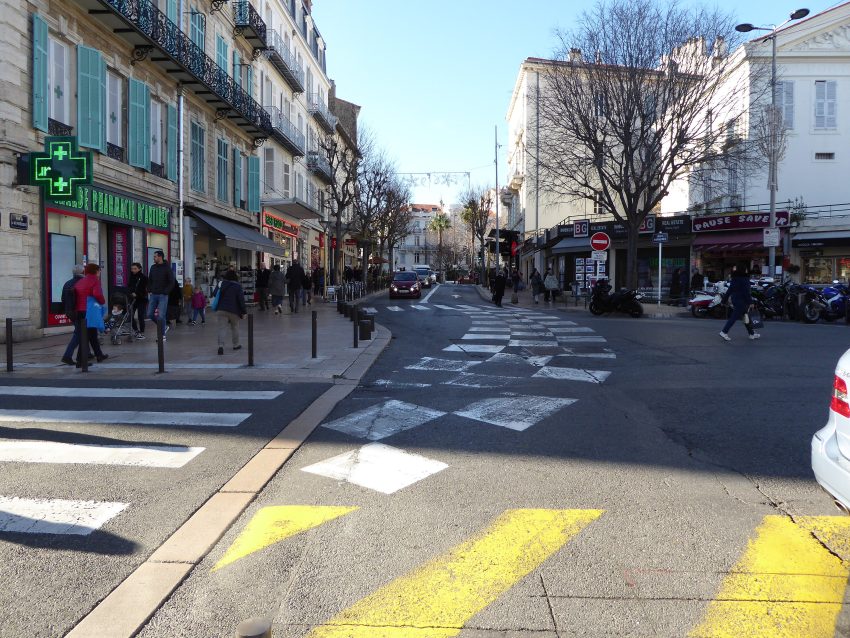
Rue de la République is one of the most straightforward pedestrian spines into the heart of Antibes, linking central movement with the Old Town’s smaller streets. Walking here gives you a good feel for how Antibes balances the practical needs of a living town with its historic fabric—everyday shops, façades with shutters, and the steady flow of locals.
Architecturally, it is less about a single monument and more about texture: doorways, balconies, and subtle shifts in street width that hint at centuries of adaptation. It is also a good place to notice how the town’s street plan naturally funnels you toward key gathering points, especially Place Nationale and the market area.
On a walking tour, this street works best as a connector segment rather than a long stop. Keep your pace easy, glance into side lanes for small squares and quieter corners, and treat it as the “transition walk” that brings you from the modern edges into the historic core.
Location: Rue de la République, 06600 Antibes, France | Hours: 24 Hours. | Price: Free.
11. Place Nationale
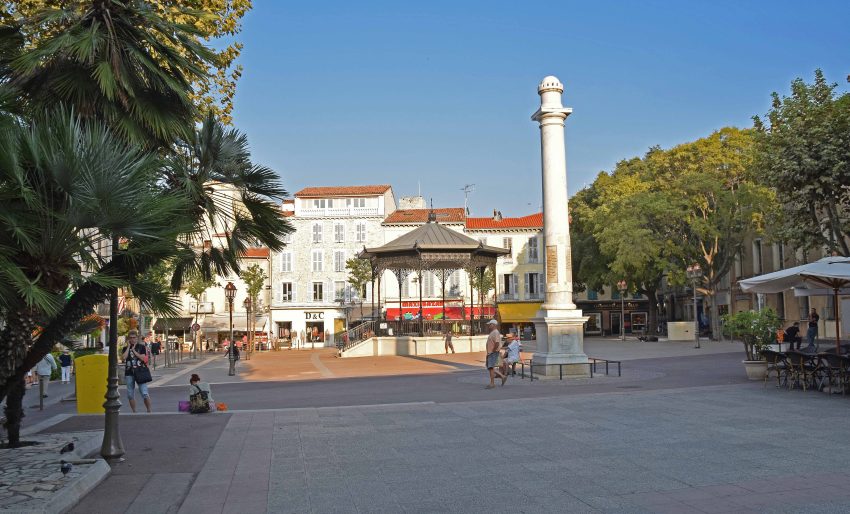
Place Nationale is the Old Town’s social living room: a compact, shaded square where the pace slows and Antibes feels unmistakably Provençal. It is an ideal mid-walk pause because it sits near multiple lanes that branch out toward the cathedral, the market, and the ramparts, making it a natural junction point.
The square’s appeal is the atmosphere more than spectacle—plane trees, café seating, and that steady hum of conversation that makes it easy to linger. If you want a simple “sense of place” moment on your tour, this is one of the best spots to absorb it.
From a route-planning standpoint, it is also a useful pivot. You can pause here, decide whether to head first toward the cultural sights (Musée Picasso and the waterfront) or the food-and-daily-life sights (Marché Provençal), and then continue without backtracking.
Location: Pl. nationale, 06600 Antibes, France | Hours: 24 Hours. | Price: Free.
12. Chapelle Saint-Bernardin
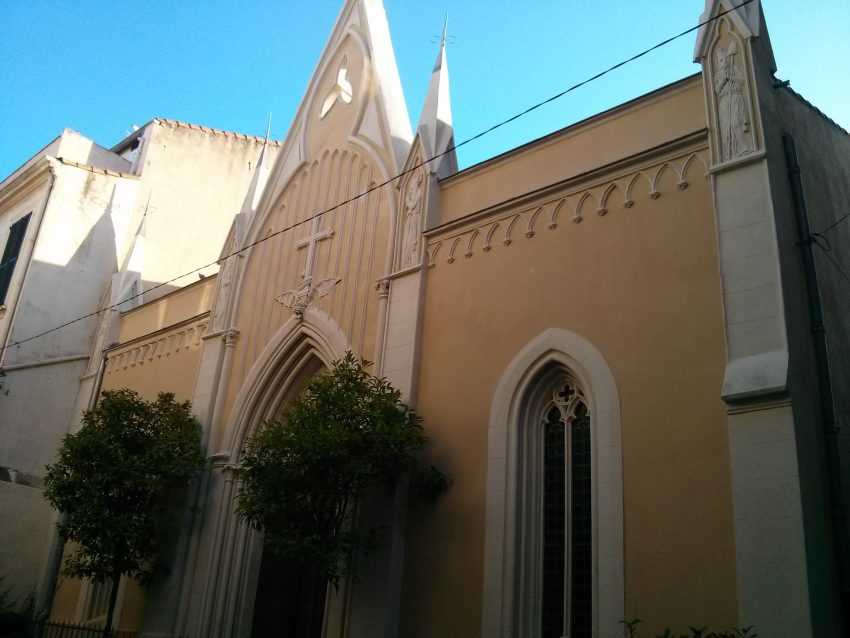
Chapelle Saint-Bernardin is one of Antibes’ most rewarding “quiet stops” on a self-guided walking tour, tucked into the Old Town streets a short walk from the livelier squares and market lanes. From the outside it can feel understated, which is part of why it works so well on foot: you can fold it into your route naturally, without a major detour, and it gives you a distinct change of pace from the bustle of nearby shopping streets.
Historically, the chapel is linked to the medieval religious life of Antibes and is most often associated with the Penitents (lay religious brotherhoods) who used such spaces for worship and community functions. The building you see today reflects later periods of rebuilding and restoration rather than a single “one-date” construction story, but the value for visitors is clear: it preserves a sense of the town’s devotional and civic traditions that sits alongside the better-known headline sights like the cathedral and ramparts.
For your walking tour, treat Chapelle Saint-Bernardin as a short, reflective visit rather than a long museum-style stop. It is ideal to slot in between Place Nationale and the cathedral/market area, or as a brief pause before heading out toward the seafront. If you are touring in summer, it can also be a practical stop for a cooler interior moment before returning to the sunlit lanes.
Location: 14 Rue du Dr Rostan, 06600 Antibes, France | Hours: Tuesday – Thursday: 09:30–13:00 & 14:00–17:30. Friday: 10:00–13:00 & 14:00–17:30. Saturday: 09:30–13:00 & 14:00–17:30. Closed on Monday, Sunday. | Price: Free; donations appreciated. | Website
13. Rue de la République
Rue de la République is one of the clearest “spine streets” for a self-guided walk in Antibes, running as a practical link between the modern centre and the tighter lanes of the Old Town. It is the kind of street that quickly gives you your bearings: straight enough to feel navigable, but still lined with the everyday texture of Antibes—shopfronts, shuttered windows, and a steady flow of locals moving through the centre.
On a walking tour, the appeal is less about a single landmark and more about the gradual change in atmosphere as you move along it. Watch for the way side streets peel off into quieter pockets, often leading to small squares or older-looking corners where the street plan starts to feel more medieval. It is also a good place to notice how Antibes “works” as a living town rather than a museum set: deliveries, errands, and cafés that are used year-round.
Use Rue de la République as a connector segment that keeps your route efficient. It naturally funnels you toward key Old Town nodes such as Place Nationale and the market area, and it is convenient for linking onward to the cathedral and the seafront without unnecessary backtracking. If you are pacing the tour, it is also a sensible stretch to keep moving, saving your longer pauses for the squares, viewpoints, and waterfront stops that follow.
Location: Rue de la République, 06600 Antibes, France | Hours: 24 Hours. | Price: Free.
14. Fort Carré
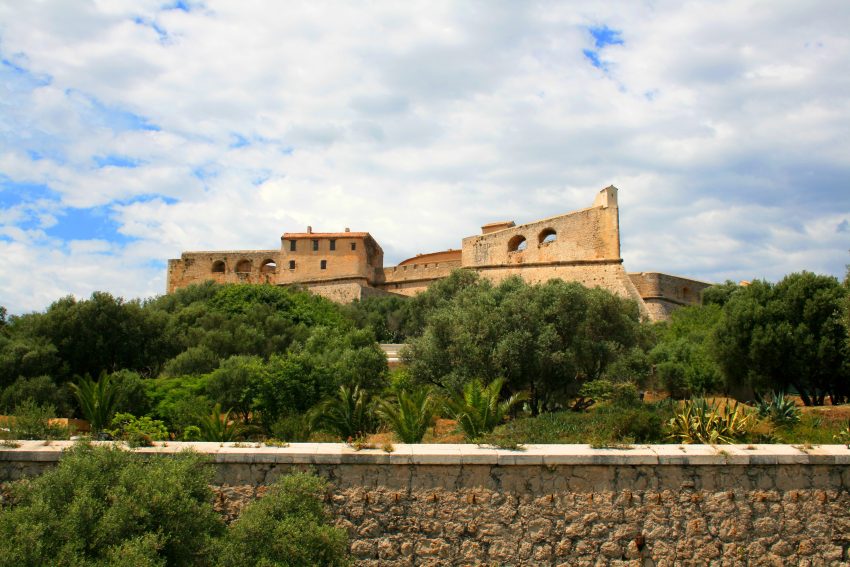
Fort Carré is one of the most distinctive historic sights to add to an Antibes walking tour, set on a rocky promontory with wide views over the coast and the approaches to the town. Commissioned in the 16th century under King Henri II, it was designed to strengthen Antibes as a strategic frontier and port-defence point on this stretch of the Mediterranean.
The fort’s angular geometry and elevated position make it easy to appreciate why it mattered militarily: from here you can read the landscape in defensive terms, with sightlines across the bay and back toward the old town and harbour. Over time, the fortifications were reinforced and adapted in line with evolving military engineering, and the site remains a strong “big-picture” complement to the tighter, street-level history you experience in the Old Town.
For a self-guided route, Fort Carré works best as an optional extension rather than a core Old Town stop, since it sits a little outside the historic centre. If you have the time and energy, it is a rewarding add-on for panoramic viewpoints and a deeper sense of Antibes’ strategic past; if not, you can keep your main loop focused on the Old Town, ramparts, and waterfront, and treat Fort Carré as a separate, later walk.
Location: Av. du 11 Novembre, 06600 Antibes, France | Hours: (Summer) July 1 – August 31; Tuesday – Sunday: 10:00–18:00. Closed on Monday. (Winter) September 1 – June 30; Tuesday – Sunday: 10:00–17:00. Closed on Monday. | Price: Adults: €5; Reduced: €3; Multi-site pass: €15. | Website

Moira & Andy
Hey! We're Moira & Andy. From hiking the Camino to trips around Europe in Bert our campervan — we've been traveling together since retirement in 2020!
This website uses affiliate links which earn a small commission at no additional cost to you.
Walking Tour Summary
Distance: 3.5 km
Sites: 14
Walking Tour Map