Complete Guide to Salzburg Land (2026)
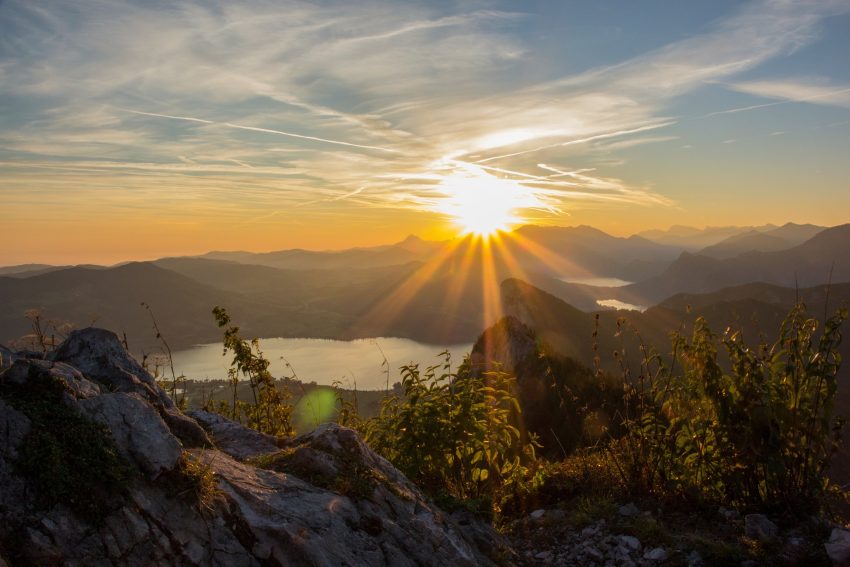
Salzburg Land is one of Austria's most varied regions, combining elegant historic towns, wide lake landscapes, high Alpine terrain and some of the country's best-known outdoor resorts. For many travelers it offers an unusually broad mix in a relatively compact area: Baroque city streets in Salzburg, big mountain views in Pinzgau and Pongau, lake holidays in the Salzkammergut fringe, and winter sports across well-developed valleys and upland villages.
What makes the region especially appealing is the way culture and landscape overlap. A trip here can move easily between fortress towns, monastery sites, cable-car viewpoints, hiking trails, spa villages and lakeside promenades. Even if you base yourself in one place, day trips are straightforward, and the region suits both short breaks and longer slow-travel itineraries.
Salzburg Land also works well for different kinds of trips. In winter it is a major ski and snow season destination, while summer brings hiking, cycling, lake swimming and scenic drives. Spring and autumn tend to be quieter and are often excellent for combining sightseeing with mountain excursions, especially when you want good transport links, manageable distances and a strong calendar of cultural events.

Cities of Salzburg Land
Salzburg
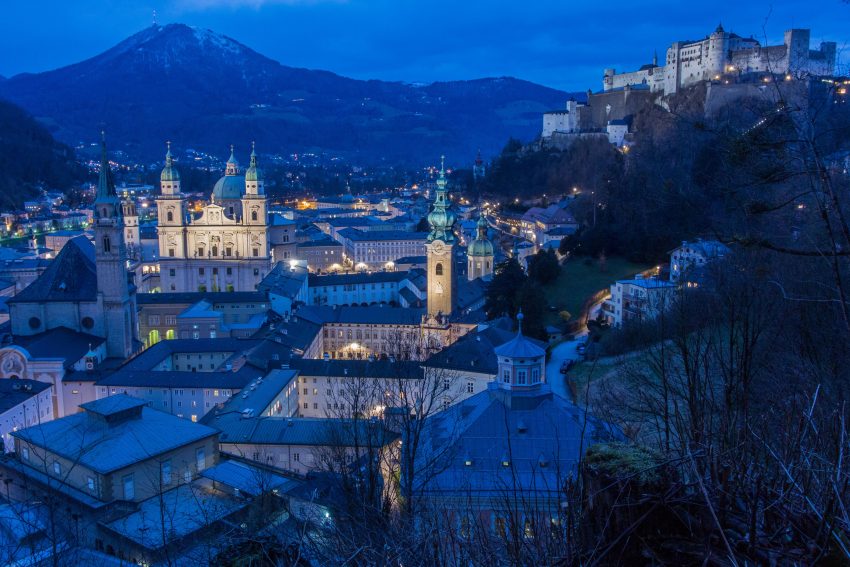
Salzburg is a compact, walkable city that feels tailor-made for a long weekend: a riverfront Old Town of baroque streets and church domes, a fortress perched above the rooftops, and café culture that rewards slow afternoons. Set in Salzburg Land, it’s easy to pair city sightseeing with quick escapes to lakes, alpine viewpoints, and storybook villages-often within the same day.
Start with the UNESCO-listed Altstadt, where ornate facades, hidden courtyards, and lively squares make wandering the main event. Classical music is part of daily life here, from concert halls to churches, and the city’s food scene balances traditional Austrian comfort dishes with modern bistros and excellent pastries.
Salzburg also works beautifully as a base: you can do the headline sights on foot, then hop on a short bus or train ride for panoramic mountain scenery. Whether you’re here for culture, shopping, Christmas markets, or a summer festival atmosphere, Salzburg delivers a polished, scenic city break without the big-city sprawl.
View our Salzburg Guide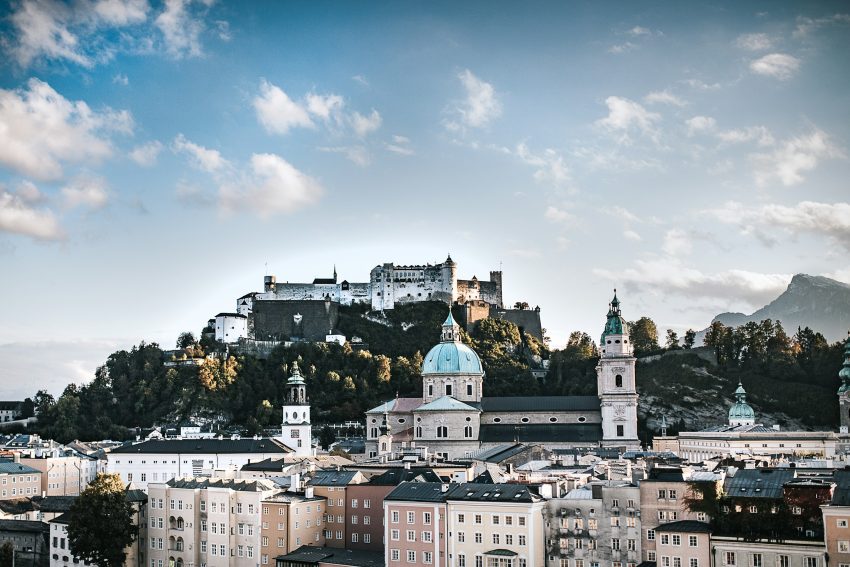
Zell am See
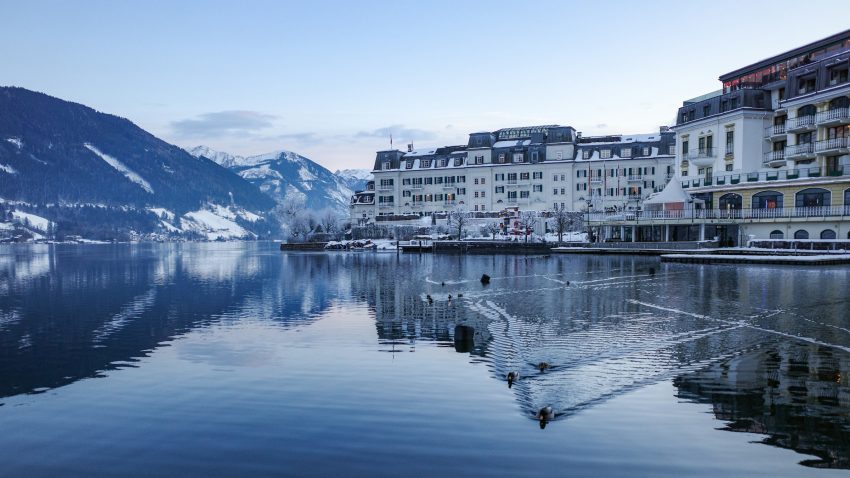
Zell am See is a classic Alpine lakeside town in the Pinzgau area of Salzburg Land, where a walkable old centre meets a broad waterfront promenade and mountain views in every direction. It’s the kind of place that works equally well for a relaxed weekend-coffee by the lake, a gentle cruise, a sunset stroll-or as a base for bigger mountain days with cable cars and high viewpoints close at hand.
What makes visiting Zell am See especially easy is how compact it feels: you can go from the train station to the lake, shops, restaurants, and boat piers in minutes, then be up on the slopes or hiking trails shortly after. The lake (Zeller See) sets the pace in summer with swimming spots and paddleboarding, while the surrounding peaks bring cooler air, panoramic routes, and a steady menu of scenic lifts.
If you’re planning a multi-day stay, Zell am See also pairs naturally with nearby Kaprun for glacier access and spa time, and it’s a convenient hub for day trips across the wider Salzburg Land valleys. Whether you come for snow sports, warm-weather lake days, or shoulder-season quiet, the town’s mix of water, mountains, and easy logistics makes it a reliable all-rounder.
View our Zell am See GuideHistory of Salzburg Land
Early Salzburg Land
The story of Salzburg Land begins long before the modern Austrian state. The wider Salzburg area was inhabited in prehistoric times and later connected to Celtic and Roman worlds. After the Roman period, Christian foundations became especially important here, and Salzburg emerged as a religious centre tied closely to the mission of Saint Rupert. This early ecclesiastical importance laid the foundations for the region's later political power and cultural influence.
Medieval Salzburg Land
During the Middle Ages, Salzburg grew into a powerful church territory ruled by prince-archbishops. From 1278, the political forerunner of the modern state was governed as an ecclesiastical principality, and its rulers shaped both the city of Salzburg and the surrounding lands. This long period left a visible legacy in fortress architecture, monasteries, pilgrimage traditions and the strong religious identity that still marks many towns and villages in the region.
Early Modern Salzburg Land
In the early modern period, the prince-archbishops continued to develop Salzburg as a wealthy and influential territory. Trade routes across the Alps, mining wealth in the wider region, and close ties with Catholic Europe helped sustain its position. Many of the grand churches, ceremonial spaces and cultural traditions travelers associate with Salzburg today have roots in this era, when ecclesiastical rule gave the region a distinctive political and artistic character.
Salzburg Land in the Napoleonic Era and the 19th Century
The old archiepiscopal state was secularized in 1803 during the Napoleonic upheavals. After a period of territorial change and political uncertainty, Salzburg passed permanently to Austria in 1816, though with reduced territory compared with the older principality. From then on, the region became more firmly integrated into the Austrian state, while still retaining a strong local identity rooted in its earlier independence and church heritage.
Modern Salzburg Land
In the modern era, Salzburg Land developed into one of Austria's best-known cultural and tourism regions. Rail links strengthened its role as a gateway between Vienna, western Austria and routes crossing the Alps, while the 20th century saw Salzburg become internationally famous for music and festivals. The Salzburg Festival, first opened on 22 August 1920, helped establish the region as a global cultural destination, reinforcing the older image of Salzburg as a place where landscape, religion and the arts come together.
Salzburg Land Today
Today, Salzburg Land balances heritage with tourism infrastructure remarkably well. Historic towns, mountain resorts, national park landscapes and transport networks all contribute to its appeal, and the region's cultural prestige remains one of its defining strengths. For visitors, that means the history of Salzburg Land is not confined to museums or old stones; it is still present in festival traditions, pilgrimage sites, architecture, local customs and the rhythm of life across the province.
Best Time to Visit Salzburg Land
Salzburg Land has a festival calendar that reflects both its international cultural reputation and its deep local traditions. The best known is the Salzburg Festival, founded in 1920, which grew into one of Europe's major events for opera, drama and concerts. Although centered in Salzburg city, it has an importance that shapes the identity of the whole region and is one of the main reasons many travelers plan a summer trip here.
Another major event is Mozart Week, organized annually since 1956 around 27 January, Mozart's birthday. This gives the region a strong winter cultural season and attracts classical music audiences at a time when many visitors are also in Salzburg Land for snow holidays. Later in the year, Jazz&TheCity brings a more contemporary atmosphere to Salzburg's old town, with free-admission performances and a looser festival style that contrasts nicely with the formality of the big classical events.
For travelers interested in tradition, Rupertikirtag is one of the most distinctive festivals in Salzburg Land. Held around 24 September in honour of Saint Rupert, it combines church-fair customs, historic rides, market stalls and regional food, giving visitors a more local and seasonal experience than the headline music festivals. In the Advent season, Salzburg Advent and related Advent singing events add another layer of regional character, showing how strongly music, religion and seasonal custom remain woven into the culture of Salzburg Land.
Annual Weather Overview
- January 4°C 42°F
- February 8°C 51°F
- March 11°C 55°F
- April 16°C 65°F
- May 19°C 69°F
- June 24°C 79°F
- July 24°C 79°F
- August 24°C 79°F
- September 20°C 72°F
- October 16°C 65°F
- November 9°C 52°F
- December 6°C 46°F
How to get to Salzburg Land
Getting to Salzburg Land by air
Nearest airports: The main gateway is Salzburg Airport, which sits just outside Salzburg city and handles direct and connecting flights to a range of European destinations. For many visitors, especially those heading to the city, nearby lake districts or ski areas in the north and centre of the province, it is the simplest arrival point. If you cannot find a suitable fare, Munich is also commonly used as an alternative gateway for western Austria because of its broader long-haul and European connections, though Salzburg Airport remains the most region-specific choice. For the best deals and a seamless booking experience, check out these flights to on Booking.com.
Getting to Salzburg Land by train
Salzburg Land is very well connected by rail and sits on one of Austria's most important rail corridors. Salzburg Hauptbahnhof lies on the Western Line between Vienna and Salzburg, with frequent direct services from Vienna; ÖBB states that trains on the Vienna–Salzburg route run twice an hour, including fast Railjet Express services. For reaching the south of the province, the Tauern Line is the key transalpine route, linking Salzburg with Villach and serving the corridor through places such as Schwarzach-St. Veit. Important stations for travelers in the region include Salzburg Hauptbahnhof, Bischofshofen, St. Johann im Pongau, Zell am See, Bad Gastein and Schwarzach-St. Veit, depending on which valley, resort or national park area you are targeting. Train schedules and bookings can be found on Omio.
Getting to Salzburg Land by Car
Driving is a practical way to reach Salzburg Land if you want flexibility, especially for lake districts, mountain villages, scenic roads and rural accommodation outside rail corridors. The region is well linked to Austria's motorway network and also works well as part of a wider Central European road trip from Munich, Vienna or Tyrol. A car is particularly useful if you plan to combine several valleys, lakes and smaller resorts in one trip, though in peak ski season and high summer you should expect heavier traffic on major approach roads and around popular resort areas.
Travelling around Salzburg Land
Public transport in Salzburg Land is stronger than many visitors expect. The Salzburg S-Bahn connects the central Salzburg area with surrounding districts, and regional trains and buses extend coverage further into the province. A particularly useful recent development is the Guest Mobility Ticket, which is issued to overnight guests and allows unlimited use of public transport throughout the Province of Salzburg, including city transport, regional buses, S-Bahn services, regional trains, long-distance trains and Salzburg Verkehr shuttles during the stay. That makes it entirely realistic to explore a large part of Salzburg Land without a car, especially if you are staying in well-connected towns.
Festivals in Salzburg Land
Visiting Salzburg Land in Spring
Spring is a good time for travelers who want a quieter, more relaxed version of Salzburg Land. Lower elevations begin to green up, towns and lakeside areas feel calmer, and sightseeing in Salzburg city is often more comfortable than in midsummer. Higher mountain trails may still have snow early in the season, so spring works best for city breaks, valley walks, spa towns and the first scenic drives rather than full high-Alpine hiking.
Visiting Salzburg Land in Summer (Best)
Summer is the strongest all-round season for most visitors. This is when Salzburg Land offers its broadest range of experiences at once: hiking, lake swimming, panoramic lifts, cycling, mountain villages, outdoor dining and a major cultural season in Salzburg city. It is also when the Salzburg Festival takes place, giving the region an additional pull for music and performing arts travelers. If you want the fullest choice of activities and the best conditions for combining landscapes with festivals and sightseeing, summer is usually the best time to go.
Visiting Salzburg Land in Autumn
Autumn is one of the most rewarding times to visit if you prefer fewer crowds and clearer seasonal character. Forested slopes and valley landscapes take on rich colour, walking conditions can remain very good in early autumn, and traditional events become more prominent. Rupertikirtag around late September is a standout seasonal highlight, bringing market stalls, historic rides and regional food traditions to the area around Salzburg Cathedral.
Visiting Salzburg Land in Winter
Winter is ideal if your trip is built around skiing, snow scenery, Christmas atmosphere or seasonal music traditions. Salzburg Land is one of Austria’s classic winter regions, and the colder months also bring some of its best-known cultural events. Mozart Week takes place around Mozart’s birthday in late January, while Salzburg Advent traditions and Advent singing add strong festive appeal in the run-up to Christmas. For winter sports combined with culture, this is an excellent season.