Complete Guide to Lower Austria, Burgenland & Vienna (2026)
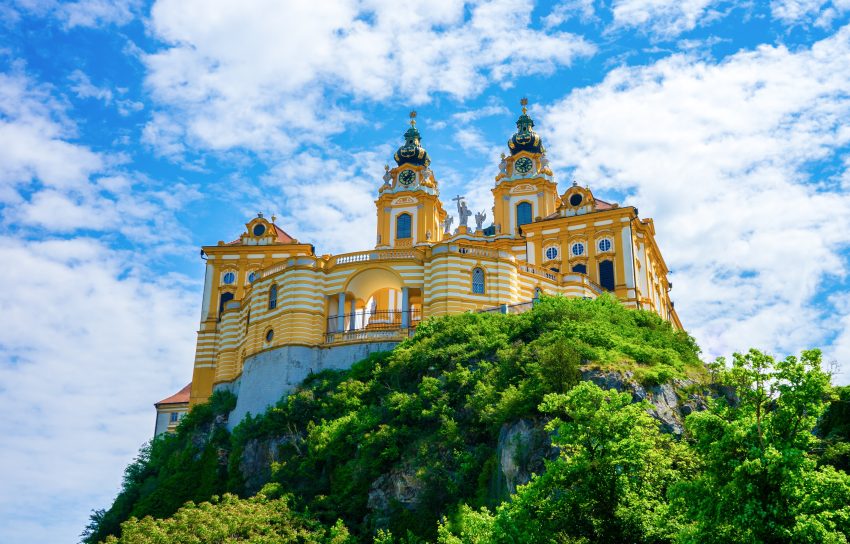
Lower Austria & Burgenland sits around and to the east and south-east of Vienna, but it feels far broader than a simple day-trip belt around the capital. This is a region of river landscapes, vineyard hills, market towns, lakeside villages, pilgrimage routes, castles, and open countryside. One trip might combine the Wachau's famous Danube scenery with the broad plains around Lake Neusiedl, while another could focus on spa towns, wine roads, and smaller historic centres that many international visitors overlook.
What makes this part of Austria especially rewarding is its range. In Lower Austria, you can move from elegant abbeys and baroque townscapes to forested uplands, river gorges, and neatly ordered wine villages in a short space of time. Burgenland, by contrast, has a more open and sunlit character, with reed-fringed wetlands, long cycling routes, and a cultural mix shaped by its borderland setting. Together, the two areas offer a quieter, slower, and often more affordable side of Austria than the country’s best-known alpine regions.
It is also one of the easiest parts of Austria to explore without rushing. Vienna Airport and the capital's major rail hubs make arrival straightforward, while regional trains, buses, and road networks open up everything from St. Pölten and Krems to Eisenstadt and the shores of Lake Neusiedl. For travelers interested in wine, heritage, gentle outdoor activities, music festivals, and scenic drives rather than high-mountain adventure, Lower Austria & Burgenland is one of the country's most varied and accessible regions. Burgenland became part of Austria in 1921 after the collapse of Austria-Hungary, while Lower Austria preserves layers of history tied to the Danube frontier, medieval trade, and Habsburg rule.

Cities of Lower Austria, Burgenland & Vienna
Melk
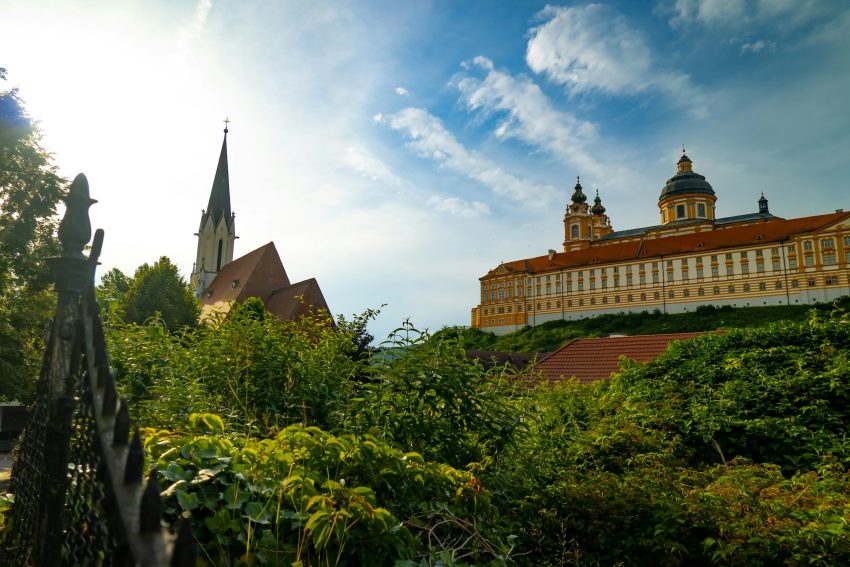
Melk is one of the most rewarding small-town stops on the Danube, set at the gateway to the Wachau Valley in Lower Austria. It’s compact and easy to explore on foot, yet it punches above its size with big views, riverside walks, and a lively café-and-restaurant scene that makes it feel like more than a quick photo stop.
Most visitors come for the headline sights, but Melk also works beautifully as a base for day trips along the Danube-whether you’re hopping between vineyards and villages, cycling the river path, or taking a boat ride when the season is right. The town’s layout is visitor-friendly: you can arrive by train, walk to the center, and be sightseeing within minutes.
Plan to stay at least a night if you can. Early mornings and evenings are when Melk feels most atmospheric, with fewer day-trippers and softer light over the river and hills. It’s also a practical place to slow down, sample Wachau wines nearby, and mix cultural visits with outdoor time without needing a car.
View our Melk Guide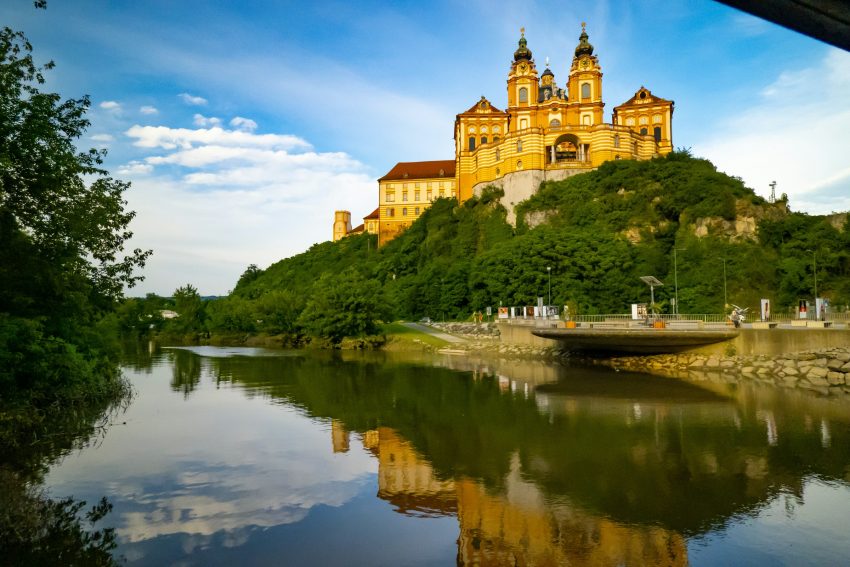
Vienna
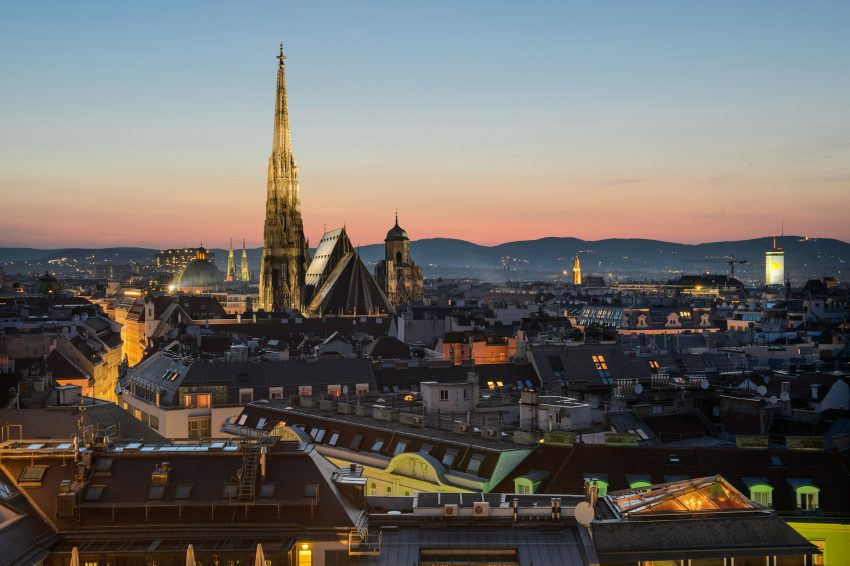
Vienna is a grand, walkable capital where imperial architecture, coffeehouse culture, and contemporary creativity sit side by side. Set in northeastern Austria along the Danube, the city is easy to navigate by tram and U-Bahn, with distinct neighborhoods that shift quickly from palace-lined boulevards to lively local markets and vineyard-dotted hills on the edge of town.
A visit to Vienna can be as classic or as modern as you want: spend a morning in world-class museums, linger over cake and espresso in a traditional café, then finish the day with a concert, a wine tavern evening, or a riverside stroll. The city’s rhythm is relaxed but polished, and it rewards travelers who mix “must-sees” with unplanned time to wander courtyards, arcades, and side streets.
Vienna also works brilliantly for short breaks because many highlights cluster close to the center, while day-to-day logistics are simple. Tickets, timetables, and signage are generally straightforward, English is widely understood in visitor areas, and the public transport network makes it easy to base yourself in one district and explore widely without a car.
View our Vienna Guide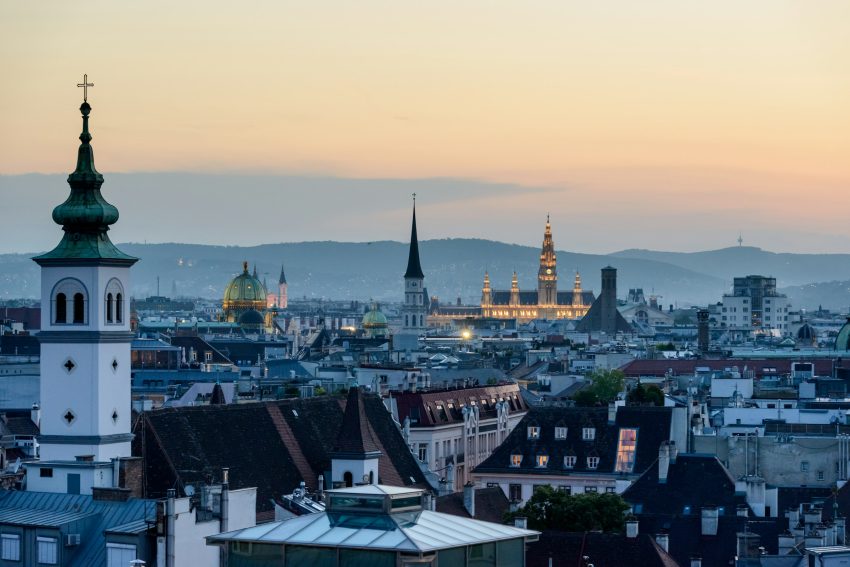
History of Lower Austria, Burgenland & Vienna
The history of Lower Austria & Burgenland is not a single continuous story, because these two areas developed under different political and cultural influences for centuries. Lower Austria grew around the Danube corridor, one of Central Europe’s great historic routes, and became deeply tied to the rise of the Babenbergs and later the Habsburgs. Burgenland, meanwhile, spent much of its earlier history on the Hungarian side of the Habsburg world and only joined modern Austria in the early 20th century. That contrast is still visible today in architecture, local traditions, wine culture, and even the rhythm of the landscape.
Roman and early medieval Lower Austria & Burgenland
In antiquity, the Danube through what is now Lower Austria formed part of the Roman frontier, with forts, roads, and settlements linking the region to the wider empire. Carnuntum, east of Vienna, remains one of the clearest reminders of this era, while the river itself acted as both a defensive line and a trade artery. After Rome, the area saw migrations, shifting borders, and the gradual spread of early medieval Christian rule, with towns and fortified sites emerging along routes that would remain important for centuries. The Danube limes in this part of Austria is now recognised as part of a UNESCO World Heritage context, reflecting the region's long strategic significance.
Medieval Lower Austria and the rise of dynastic power
During the Middle Ages, Lower Austria became one of the political cores of what would develop into the Austrian lands. The Babenbergs strengthened settlement, trade, and ecclesiastical foundations, and after them the Habsburgs expanded their influence over centuries. Monasteries such as Melk and Klosterneuburg, market towns along the Danube, and fortified hilltop sites all grew in importance in this period. Wine production also took deeper root, and the region's river valleys and fertile lowlands became central to both local prosperity and long-distance commerce.
Habsburg Lower Austria
Under the Habsburgs, Lower Austria benefited from its closeness to Vienna and from its place in the political heartland of the monarchy. Noble estates, abbeys, pilgrimage churches, and planned baroque centres gave many towns their present appearance. Roads improved, agricultural production expanded, and the region became associated with courtly culture, church patronage, and carefully managed rural wealth. Even today, many of the places travelers visit in Lower Austria, whether abbeys, castles, wine towns, or formal gardens, owe much of their present character to this long Habsburg era. The Habsburg dynasty shaped Austria for over 600 years, and their influence is especially visible in the historic fabric of regions surrounding Vienna.
Burgenland under Hungary and Austria-Hungary
Burgenland followed a different path. Until 1918, the territory that now forms Burgenland belonged to the Hungarian half of Austria-Hungary rather than the Austrian lands proper. This borderland history helps explain the region’s distinct identity, where Austrian, Hungarian, Croatian, and other Central European influences overlap. Local architecture, village patterns, and cultural traditions still reflect that mixed heritage. It also explains why Burgenland feels somewhat different from other Austrian regions: flatter, more easterly in outlook, and historically tied to frontier exchange rather than to the inner alpine world. Official Austrian tourism material notes that what is now Burgenland was part of the Hungarian half of the empire until the settlement after World War I.
Burgenland joins Austria in the 20th century
The end of World War I and the collapse of Austria-Hungary transformed the map of Central Europe. The Treaty of Saint-Germain in 1919 laid the groundwork for the transfer of the area then known as German West Hungary to Austria, and Burgenland officially became part of Austria in 1921. The region’s modern name also dates from that moment. In the decades that followed, Burgenland developed as Austria’s eastern frontier province, and during the Cold War it lay close to the Iron Curtain. Since then, it has evolved into a region known for wine, nature tourism, lakeside leisure, and major summer festivals, while still retaining a strong awareness of its border history.
Lower Austria & Burgenland today
Today, Lower Austria & Burgenland combines deep imperial and frontier histories with a strong modern tourism identity built around wine, culture, cycling, lake holidays, abbeys, and historic towns. Lower Austria often appeals to visitors interested in the Danube, monastery culture, and vineyard landscapes, while Burgenland is known for Lake Neusiedl, wetlands, sunshine, and outdoor festivals. Taken together, they show how varied eastern Austria can be, and why this part of the country rewards travelers who look beyond the classic alpine image.
Best Time to Visit Lower Austria, Burgenland & Vienna
Visiting Lower Austria & Burgenland in Spring
Spring is an excellent time for travelers who want mild weather, blossoms in the vineyards and orchards, and fewer crowds than in high summer. Lower Austria is especially attractive at this time, with the Wachau, the Vienna Woods edge, and the rolling wine districts coming into bloom. It is a very good season for scenic drives, abbey visits, and riverside walking, and it often feels fresh and lively without being busy.
Burgenland also starts to come alive in spring, especially around Lake Neusiedl, where birdlife and wetland landscapes are a major draw. Temperatures can still vary, and lake breezes may make some days feel cooler than they look on paper, but this is a rewarding time for cycling and nature-focused travel. Spring suits visitors who want a quieter, greener, more relaxed version of the region before the summer festival season fully begins.
Visiting Lower Austria & Burgenland in Summer (Best)
Summer is the broadest and most energetic season for Lower Austria & Burgenland. This is when vineyard landscapes are lush, lake areas are busiest, open-air dining is at its best, and the main festival calendar is in full swing. Burgenland comes into its own in warm weather, with Lake Neusiedl, lakeside towns, bird reserves, and outdoor cultural events all making a strong case for a longer stay. Lower Austria is equally appealing in summer for Danube cruises, abbey terraces, wine villages, and scenic drives through the Wachau and surrounding districts.
This is also the easiest time to combine landscapes and events. Music and opera festivals, wine celebrations, open-air stages, and local summer fêtes create an atmosphere that feels very different from winter Austria. The trade-off is that the most popular spots can be busier, especially on weekends and around the lake, so accommodation should be booked early. For most travelers, though, summer offers the fullest version of the region. Austria’s official tourism material highlights Burgenland’s summer appeal and Austria’s broad festival culture, while major events such as the Grafenegg Festival, Seefestspiele Mörbisch, and Nova Rock reinforce summer as the standout season.
Visiting Lower Austria & Burgenland in Autumn
Autumn is one of the most satisfying times to visit if you are interested in wine, food, and a more atmospheric pace. Vineyards turn gold, harvest season shapes the local calendar, and towns in both regions take on a rich, settled feel after the peak of summer. Lower Austria is particularly strong in autumn, especially in the Wachau, Weinviertel, and Thermenregion, where wine taverns, market produce, and crisp weather make touring especially pleasant.
Burgenland also shines in autumn, with warm light across the plains and around the lake, plus a strong focus on food and wine. It is often an excellent shoulder season for people who prefer cultural landscapes, local produce, and slower travel to swimming and summer festivals. Daylight is shorter, but the mood of the season is one of the real pleasures of this part of Austria.
Visiting Lower Austria & Burgenland in Winter
Winter is quieter and more selective, but it can still be rewarding, especially for travelers focused on Christmas markets, spa breaks, music, and historic towns rather than lake activities or vineyard touring. Lower Austria’s abbey towns, baroque centres, and river settlements can be very atmospheric in the colder months, and Vienna’s proximity makes easy winter escapes possible. Some destinations feel calm almost to the point of stillness, which is part of their appeal if you want a seasonal break away from the crowds.
Burgenland is less about classic Austrian winter scenery than the alpine provinces, but that is also what makes it distinctive. Rather than ski resorts, the cold season here suits visitors interested in quiet countryside, wellness, local food, and cultural events. Official Austrian tourism material presents Burgenland as a year-round destination, though in practical travel terms winter is best for short, focused stays rather than a first-time grand tour.
Annual Weather Overview
- January 4°C 43°F
- February 8°C 51°F
- March 11°C 56°F
- April 18°C 68°F
- May 20°C 71°F
- June 25°C 81°F
- July 26°C 82°F
- August 27°C 84°F
- September 23°C 77°F
- October 17°C 66°F
- November 9°C 52°F
- December 6°C 47°F
How to get to Lower Austria, Burgenland & Vienna
Getting to Lower Austria & Burgenland by air
Nearest airports: The main international gateway for both Lower Austria and Burgenland is Vienna Airport, which is by far the most practical arrival point for most travelers. From there, you can reach Lower Austrian cities such as St. Pölten quickly by rail, and Burgenland is also straightforward to access by a combination of train, coach, or rental car. For visitors focusing on the eastern Danube, Wachau, Eisenstadt, or Lake Neusiedl, flying into Vienna is usually the simplest option. ÖBB states that Vienna Airport is served directly by railjet and intercity services, with major onward links across Austria, including St. Pölten and other regional connections via Wien Hauptbahnhof. For the best deals and a seamless booking experience, check out these flights to on Booking.com.
Getting to Lower Austria & Burgenland by train
Lower Austria is well connected to Austria's main rail network and is easy to reach from Vienna, Linz, Salzburg, and beyond. St. Pölten Hauptbahnhof is one of the key stations in the province and sits on the country's major west-east rail axis, while Wiener Neustadt, Amstetten, Krems an der Donau, Tulln, Baden, and Melk are also important bases depending on where you want to go. This means Lower Austria works well for travelers planning an itinerary based around major lines and then branching out by local rail or bus.
Burgenland is less dominated by long-distance rail but is still practical by train, especially from Vienna. Eisenstadt is one of the main gateways, and other useful stations include Neusiedl am See, Deutschkreutz, Jennersdorf, and towns linked through the regional VOR network. Rail travel in Burgenland is usually most convenient for the northern and central parts of the province, while some rural wine villages and lake-edge spots are easier to reach with a car or bike once you have arrived. ÖBB's regional ticketing and network information specifically groups Burgenland, Lower Austria, and Vienna within the VOR transport association and lists city-ticket coverage for places including Krems, Vienna Neustadt, and St. Pölten. Train schedules and bookings can be found on Omio.
Getting to Lower Austria & Burgenland by Car
Driving is one of the best ways to explore Lower Austria & Burgenland, especially if you want to combine river valleys, wine country, abbeys, smaller towns, and nature areas in one trip. Roads are generally good, and the region lends itself to scenic point-to-point travel rather than just a single-base stay. A car is especially useful for the Wachau, the Waldviertel, the smaller wine villages of the Weinviertel, the hill country of the Mostviertel, and parts of Burgenland away from the main rail corridor.
In Burgenland, a car is particularly helpful if you want to move between Eisenstadt, Rust, Mörbisch, the Seewinkel, and the smaller villages around Lake Neusiedl without being tied to bus timetables. It also opens up the southern part of the province, where distances are not huge but public transport can be slower. Drivers should remember that Austria uses motorway vignettes on many major roads and that parking conditions vary between compact historic centres and lake-resort areas in summer.
Travelling around Lower Austria & Burgenland
Lower Austria & Burgenland is quite easy to move around once you choose the right style of trip. If you want city-to-city travel and a few larger sights, trains and regional buses are usually enough, especially around St. Pölten, Krems, Melk, Baden, Wiener Neustadt, Eisenstadt, and the northern side of Lake Neusiedl. Vienna can also serve as a base for a number of day trips into both regions.
For broader exploration, a mixed approach works best. Many travelers arrive by train, rent a car for part of the trip, and then return it before continuing elsewhere in Austria. Cycling is also a major part of travel in this area, particularly around the Danube and Lake Neusiedl, where flatter terrain and established routes make two-wheel travel especially appealing. In practical terms, Lower Austria is better for a rail-and-road combination, while Burgenland is often best enjoyed by car, bike, or slow regional hops between towns and lakeside villages.
Festivals in Lower Austria, Burgenland & Vienna
Popular festivals in Lower Austria & Burgenland are one of the strongest reasons to visit, especially from late spring through early autumn. In Lower Austria, the Grafenegg Festival is among the most prestigious, combining classical music with a striking open-air setting near Grafenegg Castle. The Wachau is also known for wine and harvest celebrations, and the region’s fruit-growing traditions are reflected in events such as the famous apricot festivities linked to the Wachau. These are the kinds of events that combine local produce, regional identity, and a setting that feels inseparable from the landscape itself. Austria’s official festival overview specifically highlights Grafenegg among the country’s signature festival experiences.
Burgenland has a particularly strong festival profile for a relatively small province. Seefestspiele Mörbisch, staged on Lake Neusiedl, is one of the best-known open-air music events in Austria and gives the region a distinctive summer cultural identity. Opera and concert culture also runs through nearby centres such as St. Margarethen, while the province’s broader events calendar includes wine festivals, village fêtes, and food celebrations that reflect its agricultural and borderland traditions. Burgenland’s tourism profile places special emphasis on culture, lake life, and festival experiences as part of the province’s appeal.
For travelers who like contemporary music as well as classical and traditional events, Nova Rock is another major name associated with Burgenland, drawing large crowds and giving the region an entirely different kind of summer energy. What makes Lower Austria & Burgenland so appealing overall is that the festival offer is not limited to one style: you can move from opera on the lake to classical concerts in a castle park, from wine harvest celebrations to local market festivals, often within the same trip. That mixture of landscape, food, music, and local tradition is one of the defining pleasures of the region.