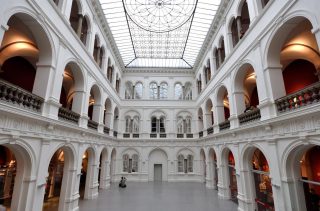
Centennial Hall, Wrocław
Historic Building in Wrocław
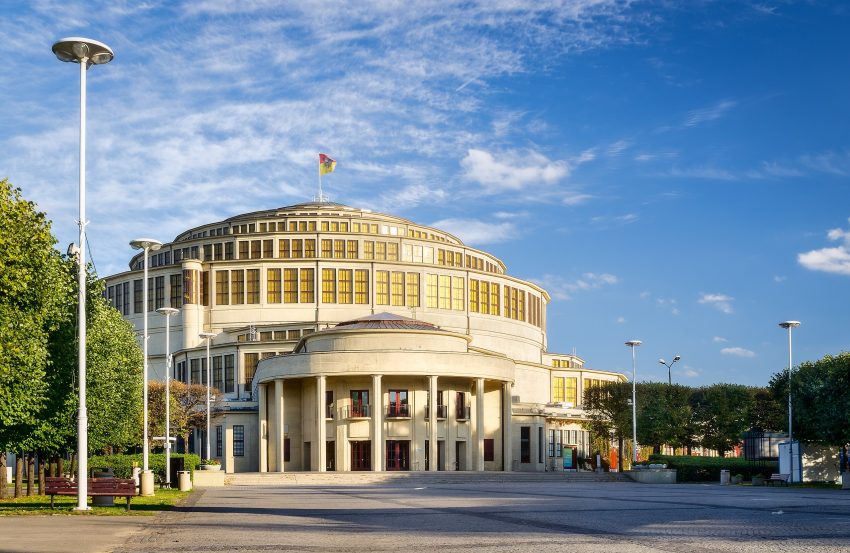
Centennial Hall (Hala Stulecia) sits on Wrocław's green “Great Island” beside Szczytnicki Park, and it's one of those places that feels bigger in real life than in photos. The dome's scale is the headline, but what makes the visit satisfying is the whole setting: broad open squares, water features, and a cluster of cultural stops that give you an easy half-day outside the Old Town.
Even if you've already done Rynek, this is one of the top sights in Wrocław because it shows a completely different side of the city-early modernism, engineering ambition, and space to breathe. It also slots neatly into a walking tour of Wrocław if you treat it as the “park district chapter” of your itinerary, especially when you pair the hall with the Pergola and the Multimedia Fountain nearby.
Table of Contents
- History and Significance of the Centennial Hall
- Things to See and Do in the Centennial Hall
- How to Get to the Centennial Hall
- Practical Tips on Visiting the Centennial Hall
- Where to Stay Close to the Centennial Hall
- Is the Centennial Hall Worth Visiting?
- For Different Travelers
- FAQs for Visiting Centennial Hall
History and Significance of the Centennial Hall
Built in 1911-1913 to designs by architect Max Berg, Centennial Hall is internationally significant as a milestone in reinforced-concrete architecture. UNESCO lists it as an outstanding example of early Modernism, and its influence is tied to both its daring structure and the way it shaped later thinking about large public interiors.
The building’s famous form is a symmetrical quatrefoil plan wrapped around a vast central space, capped by a ribbed dome topped with a lantern. At the time of construction, the dome was celebrated as a record-setting reinforced-concrete achievement, and the hall’s ambition still reads clearly when you stand back and take in the mass and geometry from the plaza.
Just as important is the broader exhibition-grounds concept: Centennial Hall was designed as a multi-purpose civic venue within a planned cultural landscape, which is why the area still works so well for visitors today. You're not just seeing a building; you're stepping into a coherent architectural district with parks, pavilions, and open-air public space that invites lingering.
Things to See and Do in the Centennial Hall
Start outside by walking a slow loop around the hall to appreciate the dome’s proportions and the clean, almost graphic lines of the structure. The best first impression usually comes from a slight distance-far enough back that the full silhouette reads-then you can move closer to notice the concrete rhythms and the way the building’s symmetry pulls your eye inward.
If you want interior context, the Visitor Centre exhibition is the most straightforward way to turn “impressive” into “meaningful.” It's designed as a multimedia gateway to the hall's story, and it's also the practical starting point if you plan to add the “sightseeing of the Centennial Hall” option (availability depends on what's happening in the venue).
After the hall itself, make the most of the surroundings rather than rushing back to the centre. The Pergola and Wrocław Multimedia Fountain area gives you a completely different mood-open air, water, and evening light-while Szczytnicki Park is ideal if you want a calmer walk that feels local rather than checklist tourism.
How to Get to the Centennial Hall
The nearest airport is Wrocław Copernicus Airport (WRO), which is the simplest option for reaching the city directly. For the best deals and a seamless booking experience, check out these flights to Wrocław on Booking.com.
If you're arriving by rail, Wrocław Główny is the main station, and the easiest approach is to continue by tram toward the Hala Stulecia stop area, then walk the final minutes through the park district streets. You can easily check schedules and book tickets through the PKP Intercity website. However, for a smoother experience, we recommend using Omio, which simplifies the booking process and lets you compare prices and schedules all in one place.
Buses and trams run frequently to the Exhibition Grounds area, and this is one of the easiest “outside-the-centre” sights in Wrocław to reach without a taxi, especially in daylight when you can enjoy the walk-in.
If you’re driving, aim for the signed car parks around the Exhibition Grounds and treat the visit as a park-and-walk experience rather than trying to get door-to-door access in the busiest pedestrian zones. If you are looking to rent a car in Poland I recommend having a look at Discover Cars, first, as they compare prices and review multiple car rental agencies for you.
Practical Tips on Visiting the Centennial Hall
- Entrance fee: Visitor Centre exhibition 25 zł (regular), 20 zł (reduced), 45 zł (family); Exhibition + Centennial Hall sightseeing 30 zł (regular), 25 zł (reduced), 55 zł (family).
- Opening hours: (Summer) April – October; Tuesday – Sunday: 10:00–18:00 (Winter) November – March; Tuesday – Sunday: 10:00–17:00. Closed on Monday.
- Official website: https://halastulecia.pl/en/sightseeing/visitor-centre/
- Best time to visit: Come in late afternoon so you can see the hall in daylight, then stay nearby for the fountain and park atmosphere as the city shifts toward evening.
- How long to spend: Plan 1-2 hours for the hall and exhibition, or 3-4 hours if you’re combining it with the Pergola, fountain area, and a relaxed park walk.
- Accessibility: The surrounding area is spacious and mostly easy-going, but interior access can vary by event setup, so check the day’s availability if step-free routes are important.
- Facilities: You’ll find visitor services in the wider complex area, and it’s easy to build in breaks thanks to nearby cafés and open spaces that work well for a pause between stops.
Where to Stay Close to the Centennial Hall
For a culture-heavy itinerary, base yourself in Old Town near Rynek; for quick access to Centennial Hall, the Zoo, and park scenery, stay around Plac Grunwaldzki or the riverside edge between the centre and the Exhibition Grounds.
If you want a convenient middle-ground location with an easy run to the hall as well as quick access back into the Old Town, HP Park Plaza is a practical riverside choice. For a stay that puts you close to the Centennial Hall cluster itself (great for early starts or evening fountain time), Hotel Zoo by Afrykarium Wroclaw is hard to beat for proximity. If you prefer to stay central for restaurants and sightseeing variety while keeping transport links easy, Hotel Mercure Wroclaw Centrum works well as an Old Town-adjacent base.
Is the Centennial Hall Worth Visiting?
Yes, especially if you like architecture that feels genuinely world-class rather than “nice to have.” The hall’s scale and structural boldness are the kind of thing you can’t fully appreciate until you’re standing in front of it, and the UNESCO context adds weight without making the visit feel academic.
It's also worth it because the surrounding area is a destination in its own right. Even if you only spend a short time inside, you still get a high-quality sightseeing district with parks and open space that balances out a city break packed with Old Town streets.
What Other Travellers Say...
Centennial Hall, at Wystawowa 1 in Wrocław, is a grand circular venue set in formal gardens that hosts major exhibitions, cultural events and sports; visitors praise its huge, striking architecture and surrounding open spaces ideal for photos or a stroll, note an informative visitor centre with a VR experience, and say it works well for concerts when organisation and security are good, though some events have suffered from poor ventilation, sound issues and limited concessions.





For Different Travelers
Families with Kids
This is a strong family stop because it mixes “big wow building” with room to run around outside, which keeps the day feeling easy. The simplest plan is to do a short interior visit, then reward everyone with park time and the nearby water-and-light spectacle later on.
If you’re traveling with strollers, build in extra time for transitions and avoid turning it into a tight schedule. The district works best when you keep it flexible and let the outdoor spaces do some of the entertainment.
Couples & Romantic Getaways
Centennial Hall is ideal for couples who like to balance culture with atmosphere. The architecture gives you a genuinely memorable shared “moment,” then the surrounding park-and-pergola setting is perfect for an unhurried walk and a slower, more romantic pace.
For the best vibe, aim for late afternoon into evening so the area feels more cinematic. It’s a great date-style outing that doesn’t require lots of planning beyond timing.
Budget Travelers
You can get a lot of value here without overspending by focusing on the exterior, the surrounding grounds, and one paid element (either the exhibition or the combined ticket if the hall interior is available). This is one of those places where the free “walking and looking” component is already excellent.
It also helps you stretch your itinerary by giving you a half-day that feels very different from the Old Town, without needing extra paid attractions to make it worthwhile.
FAQs for Visiting Centennial Hall
Getting There
Tickets & Entry
Visiting Experience
Tours, Context & Itineraries
Photography
Accessibility & Facilities
Food & Breaks Nearby
Safety & Timing
The Centennial Hall appears in our Complete Guide to Visiting Wrocław!

Moira & Andy
Hey! We're Moira & Andy. From hiking the Camino to trips around Europe in Bert our campervan — we've been traveling together since retirement in 2020!
This website uses affiliate links which may earn a commission at no additional cost to you!
Planning Your Visit
(Summer) April - October; Tuesday - Sunday: 10:00-18:00
(Winter) November - March; Tuesday - Sunday: 10:00-17:00.
Closed on Monday.
Visitor Centre exhibition 25 zł (regular), 20 zł (reduced), 45 zł (family); Exhibition + Centennial Hall sightseeing 30 zł (regular), 25 zł (reduced), 55 zł (family).
Nearby Attractions
- Wrocław Zoo and Afrykarium (0.2) km
Zoo - Four Domes Pavilion (0.2) km
Museum - Wroclaw Fountain (0.2) km
Fountain - Japanese Garden (0.3) km
- Szczytnicki Park (0.9) km
Park - Ethnographic Museum in Wrocław (1.9) km
Museum - National Museum of Wrocław (2.1) km
Museum - Raclawice Panorama (2.3) km
Gallery - Cathedral Island (2.3) km
Area and Island - Wroclaw Cathedral (2.3) km
Cathedral