Villa dei Misteri, Pompeii
Roman Site in Pompeii
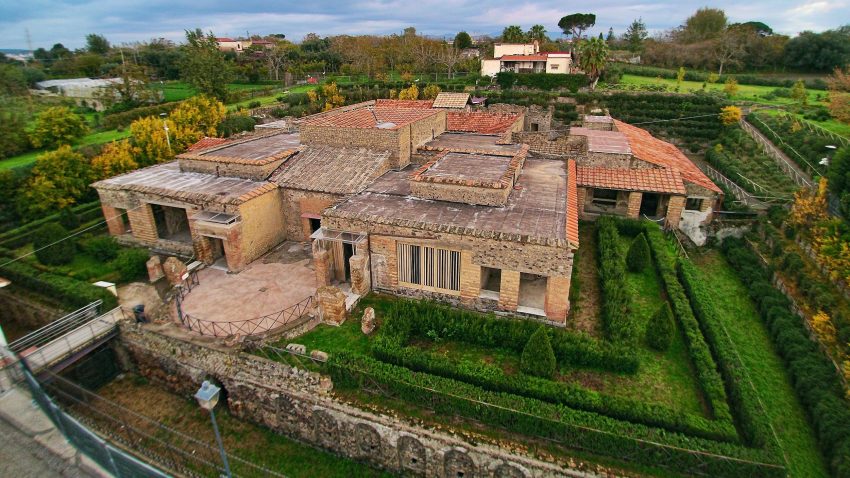
Villa dei Misteri, or the Villa of the Mysteries, sits just outside the ancient city walls of Pompeii and is one of the top attractions in Pompeii for visitors who want to see Roman painting at its very best. Buried under ash and volcanic material during the eruption of Vesuvius in AD 79, the villa survived with surprisingly little damage, and its walls still glow with some of the finest frescoes from the ancient world. Walking through its rooms, from working farm areas to richly decorated reception spaces, you get a powerful sense of a countryside estate where agriculture, leisure, and religion all intertwined.
The villa takes its name from the extraordinary cycle of frescoes dating from the 1st century AD that lines one of its principal rooms. These paintings appear to show the initiation of a young woman into a Bacchic mystery cult dedicated to Bacchus, god of wine, fertility, and religious ecstasy. Because the rituals of such cults were secret, the exact meaning of each scene is still debated, but the intensity of colour and emotion in the figures is unmistakable. Between this ritual space, the remains of a wine press, and evidence of agricultural production, the Villa dei Misteri is often visited on walking tours of Pompeii as a place where religion, art, and estate life come together in one atmospheric setting.
Table of Contents
- History and Significance of the Villa dei Misteri
- Things to See and Do in the Villa dei Misteri
- How to Get to the Villa dei Misteri
- Practical Tips on Visiting the Villa dei Misteri
- Where to Stay close to the Villa dei Misteri
- Is the Villa dei Misteri Worth Visiting
- FAQs for Visiting Villa dei Misteri
- Nearby Attractions to the Villa dei Misteri
History and Significance of the Villa dei Misteri
Like many Roman villas, Villa dei Misteri was both a luxurious residence and a working estate. Built on the edge of Pompeii, it enjoyed proximity to the city while opening onto the surrounding countryside, where vineyards, olive groves, and fields could be cultivated. A wine press discovered on site indicates that the owners produced their own wine, and likely olive oil and other agricultural products as well, as was common for wealthy families whose fortunes depended on both urban connections and rural landholdings.
When Vesuvius erupted in AD 79, the villa was buried under metres of ash and volcanic debris, along with the rest of Pompeii, Herculaneum, and neighbouring settlements. Unlike many buildings, however, it suffered relatively minor structural damage, which helped preserve its internal decoration. Among the most exceptional survivals are the large fresco panels depicting a mysterious initiation ritual involving a young woman and figures connected to the cult of Bacchus. These frescoes are among the finest remaining examples of ancient Roman painting, remarkable for their rich colours, three-dimensional modelling, and psychological intensity.
The villa was first excavated in the early 20th century and has remained a focus of archaeological research ever since. Excavations not only uncovered the frescoes, but also petrified bodies within the complex, storage areas, working spaces, and traces of everyday domestic life. Together, these findings make Villa dei Misteri a crucial source of information about elite country living, religious practice, and artistic taste in the final decades before the eruption, giving it a special place among Pompeii's many villas and houses.
Things to See and Do in the Villa dei Misteri
The fresco room that gives the villa its name is the star attraction. Step into this space and let your eyes follow the continuous painted frieze that runs around the walls, roughly life-size, showing a sequence of figures engaged in what appears to be an initiation into a Bacchic mystery cult. You will see women in flowing drapery, attendants, musical instruments, ritual implements, and the powerful presence of Bacchus and his retinue. While scholars debate the exact narrative, even a casual visitor can feel the drama and emotional charge of the scenes.
Beyond the mystery room, take time to explore the broader layout of the villa. Numerous rooms radiate from courtyards and corridors, some clearly designed for reception and leisure, others more functional. Look out for traces of painted decoration in dining rooms and bedrooms, the arrangement of windows and doorways that frame views over the countryside, and the way service spaces are tucked away from the more public areas. These features help you imagine how the resident family moved through the villa over the course of a day.
Do not miss the remains of the wine press and other agricultural structures, which underline the villa's economic role. Here, you can picture grapes being processed and stored, estate workers busy during harvest, and amphorae being filled for sale or household use. The discovery of petrified bodies within the villa also brings home the human cost of the eruption, reminding you that this beautiful estate was still full of life and activity when disaster struck. With its blend of art, landscape, and tangible traces of everyday work, Villa dei Misteri offers one of the most complete and moving experiences in the Pompeii area.
How to Get to the Villa dei Misteri
To reach Villa dei Misteri, you first need to travel to the archaeological area of Pompeii near the modern town of Pompei, close to Naples. The nearest major gateway is Naples International Airport, which is well connected to cities across Italy and Europe and serves as the main arrival point for most visitors heading to Pompeii and its villas. For the best deals and a seamless booking experience, check out these flights to Pompeii on Booking.com. From the airport, you can continue your journey by train, bus, taxi, or rental car.
By train, a popular option is to take the Circumvesuviana line from Napoli Centrale or Piazza Garibaldi towards Sorrento and get off at Pompei Scavi Villa dei Misteri station, which is conveniently located near one of the main entrances to the archaeological site and close to the road that leads to the villa.Use Omnio to easily compare schedules, book train tickets, and find the best prices all in one place for a hassle-free journey across Italy. Alternatively, regional trains run to Pompei station in the modern town, from where you can take local transport or walk further to reach the site and then the villa.
If you are driving, the A3 motorway and local roads link Naples to Pompei and the surrounding area, with signposted exits and parking areas near the archaeological park and along the road leading towards the villa.If you are looking to rent a car in Italy I recommend having a look at Discover Cars, first, as they compare prices and review multiple car rental agencies for you. From the main Pompeii site, you can either walk out towards Villa dei Misteri or follow signposted routes that connect the central ruins with this suburban estate, depending on current access arrangements and ticketing.
Practical Tips on Visiting the Villa dei Misteri
- Suggested tips: Pair your visit to Villa dei Misteri with time in the main Pompeii ruins, but keep enough energy to fully appreciate the frescoes and layout once you reach the villa.
- Best time to visit: Early morning or late afternoon are ideal, as temperatures are cooler and light in the fresco rooms is softer, making colours easier to appreciate.
- Entrance fee: Adults: €22.00 (General Pompei Tickets)
- Opening hours: Daily: 9:00 - 15:30
- Official website: https://pompeiisites.org
- How long to spend: Plan at least 45 to 60 minutes at the villa itself to see the mystery fresco room, explore the residential areas, and examine the agricultural installations.
- Accessibility: Paths to the villa and within the complex may involve uneven surfaces, slopes, and steps; visitors with reduced mobility should check current accessibility information and use any designated accessible routes.
- Facilities: There are no major facilities inside the villa itself; rely on toilets, water fountains, and cafés within the main archaeological park or near its entrances.
- Photography tip: In the fresco room, avoid flash and use higher ISO or steady hands to capture the rich reds and deep shadows; try to photograph complete sequences as well as close-up details of faces and ritual objects.
- Guided tours: Consider joining a guided tour that includes Villa dei Misteri to gain deeper insight into the interpretations of the Bacchic rites and the villa's place in Pompeii's social landscape.
- Nearby food options: Plan to eat at cafés and restaurants in modern Pompei near the site entrances, or make use of designated refreshment points in the archaeological park if you are spending the whole day among the ruins.
Where to Stay close to the Villa dei Misteri
Staying in or near modern Pompei allows you to combine a visit to Villa dei Misteri with extensive time in the main Pompeii ruins. A convenient option within walking distance of key entrances is Hotel Forum, which makes it easy to reach both the town and the archaeological area on foot. For rooms with views towards Vesuvius and the site, Hotel del Sole Pompei is a strong choice, placing you close to the park and the road out towards the villa. If you prefer a central base in modern Pompei with easy access to shops, restaurants, and public transport, Hotel Diana Pompei keeps you well connected while still within comfortable walking or short driving distance of Villa dei Misteri.
Is the Villa dei Misteri Worth Visiting
Villa dei Misteri is absolutely worth visiting and should be high on your list when planning time around Pompeii. Few places in the ancient world offer such a powerful combination of well-preserved painting, clear villa layout, and tangible evidence of both religious ritual and agricultural life. Standing in the Bacchic fresco room, then walking out to the remains of the wine press and estate buildings, makes it easier to picture not only the final hours before the eruption but also the rhythms of ordinary days that came before. For many visitors, the villa provides some of the most vivid and emotionally resonant memories of any trip to Pompeii.
What Other Travellers Say...

Villa of the Mysteries, at Via Villa dei Misteri 2 in Pompei, is a well-preserved Roman villa noted for its richly decorated frescoes—especially a famous wall painting linked to the Dionysus cult—and visitors praise the vivid colours, scale and range of rooms; many recommend buying tickets in advance and paying extra for the villas or an archaeologist guide, while some note limited access near key paintings for preservation and that the villas sit a short walk from the station.


FAQs for Visiting Villa dei Misteri
Nearby Attractions to the Villa dei Misteri
- Pompeii Forum: The central civic square of the ancient city, lined with temples and public buildings and offering classic views of Mount Vesuvius.
- House of the Faun: One of Pompeii's largest and most luxurious residences, famous for its mosaics and the iconic dancing faun statue.
- House of the Vettii: A richly decorated domus owned by freedmen brothers, with vivid wall paintings and a garden centred layout.
- House of the Tragic Poet: A traditional atrium house renowned for its Cave Canem mosaic and mythological frescoes.
- Forum Baths: A compact but elegant public bath complex near the Forum, illustrating everyday comfort and social life in ancient Pompeii.
The Villa dei Misteri appears in our Complete Guide to Visiting Pompeii!

Moira & Andy
Hey! We're Moira & Andy. From hiking the Camino to trips around Europe in Bert our campervan — we've been traveling together since retirement in 2020!
This website uses affiliate links which may earn a commission at no additional cost to you!
Planning Your Visit
Daily: 9:00 – 15:30
Adults: €22.00 (General Pompei Tickets)
Nearby Attractions
- Villa of Diomedes (0.2) km
Roman Site - House of the Tragic Poet (0.6) km
Roman Site - House of the Vettii (0.6) km
Roman Site - House of the Faun (0.6) km
Roman Site - Forum Baths (0.7) km
Roman Site - Pompeii’s Forum (0.8) km
Roman Site - Lupanar (0.9) km
Roman Site - House of Menander (1.1) km
Roman Site - Mount Vesuvius (8.7) km
Hike - Positano (13.8) km
Town