Tomb of the Unknown Soldier, Warsaw
Historic Site in Warsaw
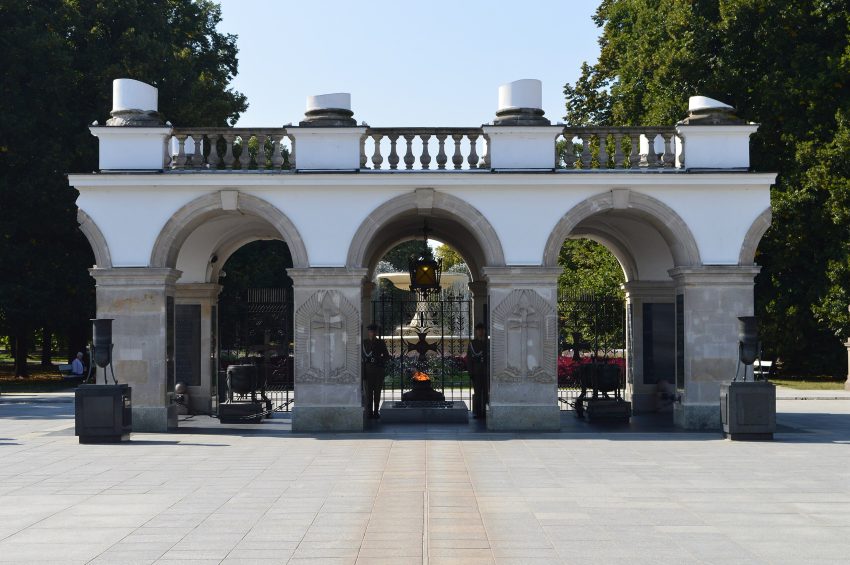
The Tomb of the Unknown Soldier sits on Piłsudski Square in central Warsaw, framed by the surviving three-arched fragment of the former Saxon Palace colonnade. It's a place you can stumble upon while sightseeing, but it rarely feels like “just another stop” once you notice the eternal flame, the honour guard, and the hush that tends to fall over visitors standing nearby.
Even if your itinerary is packed with museums and Old Town views, this is one of the must-see places in Warsaw because it distils national memory into a single, powerful space. It also fits effortlessly into a walking tour of Warsaw, since you can combine it with the Saxon Garden, Krakowskie Przedmieście, and the Royal Route without adding extra travel time.
Table of Contents
- History and Significance of the Tomb of the Unknown Soldier
- Things to See and Do in the Tomb of the Unknown Soldier
- How to Get to the Tomb of the Unknown Soldier
- Practical Tips on Visiting the Tomb of the Unknown Soldier
- Where to Stay Close to the Tomb of the Unknown Soldier
- Is the Tomb of the Unknown Soldier Worth Visiting?
- For Different Travelers
- FAQs for Visiting Tomb of the Unknown Soldier
- Nearby Attractions to the Tomb of the Unknown Soldier
History and Significance of the Tomb of the Unknown Soldier
The tomb was established in 1925 as a national tribute to unnamed soldiers who died for Poland, with the interred remains chosen to represent the countless lives lost in war without a known grave. The site quickly became a focal point for remembrance, state ceremonies, and visiting dignitaries, giving Warsaw a permanent civic space for collective mourning and respect.
Its setting is inseparable from Warsaw’s wartime history. The tomb was originally part of the Saxon Palace complex, and although the palace was destroyed during World War II, this section of the arcade survived and continued to shelter the memorial, turning the architecture itself into a visible scar of the city’s destruction.
Over time, the tomb’s symbolic reach broadened through additional plaques and commemorations, creating a layered memory site rather than a single moment frozen in stone. Standing here, you are looking at a living national memorial-quiet on ordinary days, yet central to how Poland marks its most important anniversaries.
Things to See and Do in the Tomb of the Unknown Soldier
Begin with the core elements: the eternal flame, the guarded tomb, and the rhythm of the space beneath the arches. The setting is intentionally spare, which makes small details feel more significant-how people lower their voices, how long they linger, and how the open square contrasts with the intimacy of the memorial itself.
Try to time your visit for the change of the guard on the hour. Even when it’s not a full ceremonial parade, the precision and repetition create a striking sense of continuity, and it’s one of those simple moments that makes a memorial feel actively protected rather than purely historical.
Afterward, take a slow loop that keeps the tone consistent: walk into the Saxon Garden for a calmer transition, or head toward Krakowskie Przedmieście if you want to continue along the city’s most ceremonial avenue. It’s an easy way to connect remembrance with the broader story of Warsaw’s centre without rushing straight back into crowds.
How to Get to the Tomb of the Unknown Soldier
The nearest airports are Warsaw Chopin Airport (WAW) and Warsaw Modlin Airport (WMI). For the best deals and a seamless booking experience, check out these flights to Warsaw on Booking.com. From either airport, aim for central Warsaw and Piłsudski Square (Plac Piłsudskiego), which is a straightforward destination by taxi or public transport plus a short walk.
If you arrive by train, start from Warszawa Centralna and use a short public-transport hop or a walk through central streets toward Piłsudski Square.You can easily check schedules and book tickets through the PKP Intercity website. However, for a smoother experience, we recommend using Omio, which simplifies the booking process and lets you compare prices and schedules all in one place. The approach is part of the experience, especially if you come via Krakowskie Przedmieście and let the city’s ceremonial axis lead you in.
If you’re travelling by car, consider parking outside the immediate centre and walking the last stretch, as traffic and parking can be more effort than the distance is worth.If you are looking to rent a car in Poland I recommend having a look at Discover Cars, first, as they compare prices and review multiple car rental agencies for you.
Practical Tips on Visiting the Tomb of the Unknown Soldier
- Entrance fee: Free
- Opening hours: 24 Hours
- Best time to visit: Early morning is best for a quieter, more reflective atmosphere, while midday gives you a livelier sense of the square and a better chance of seeing the guard activity with other visitors around.
- How long to spend: 15-30 minutes works well for a focused visit, or up to an hour if you combine it with the Saxon Garden and a slow walk onward.
- Accessibility: The square is generally flat and easy to navigate, with step-free access around the memorial area.
- Facilities: There are no dedicated on-site visitor facilities, so plan restrooms and breaks around nearby cafés and public venues in central Warsaw.
Where to Stay Close to the Tomb of the Unknown Soldier
For a culture-heavy itinerary, the best base is central Śródmieście near the Royal Route so you can walk to major sights and memorials with minimal transit; if your focus is dining and evening atmosphere, stay closer to Nowy Świat for a livelier feel while remaining walkable to Piłsudski Square. For an elegant, landmark-level stay steps from the square, Sofitel Warsaw Victoria places you right by the memorial and the Saxon Garden. If you want classic luxury directly on the Royal Route with a superb walkable location, Hotel Bristol, a Luxury Collection Hotel, Warsaw is an excellent base for combining history, museums, and evening strolls. For a refined, high-end option in the same historic corridor, Raffles Europejski Warsaw gives you immediate access to the city’s most ceremonial streets.
Is the Tomb of the Unknown Soldier Worth Visiting?
Yes, because it’s one of Warsaw’s most concentrated places of meaning: simple, dignified, and deeply tied to the country’s modern history. You don’t need specialist knowledge to feel its weight-just a few quiet minutes to watch the space, the flame, and the guard.
It's also a rare sight that works equally well as a brief stop or a reflective pause within a larger day. If you want to understand Warsaw beyond its architecture and cafés, this is a place that stays with you.
What Other Travellers Say...

Tomb of the Unknown Soldier, set in the remains of the Saxon Palace at Plac Marszałka Józefa Piłsudskiego 1–3 in Warszawa, is a solemn monument honoring unidentified Polish soldiers killed in World War I; visitors note an atmosphere of respect centered on an eternal flame and an honor guard whose precise changing ceremony—reported to occur hourly—makes the short visit particularly moving and worth timing to witness.


For Different Travelers
Families with Kids
This can be a valuable stop for families because it’s visually clear and easy to explain in simple terms: a place where a country honours people whose names were never known. Keep the visit short, focus on respectful behaviour, and let kids ask questions rather than offering a long speech on the spot.
Pair it with something gentler immediately afterward, like a walk through the Saxon Garden, so the mood transitions naturally. That balance helps children process the visit without feeling overwhelmed by the subject matter.
Couples & Romantic Getaways
For couples, it's less about romance and more about sharing a meaningful moment that gives Warsaw emotional depth. Visiting together often prompts richer conversations later, especially if you follow it with a slow walk along Krakowskie Przedmieście rather than bouncing straight to the next attraction.
It also works well as a quiet “reset” during a busy sightseeing day. A calm stop here can reframe the city, reminding you that Warsaw’s beauty is inseparable from its resilience.
Budget Travelers
This is an ideal budget-friendly stop because it costs nothing, takes little time, and sits right in the centre of many sightseeing routes. You can build a high-impact day around free sights by combining this with the Saxon Garden, central avenues, and Old Town walks.
To make it feel intentional, plan to arrive just before the hour and treat the guard change as the anchor moment. That small piece of timing adds structure and meaning without adding cost.
History Buffs
For history-focused travelers, the tomb is best approached as a gateway rather than an endpoint. Use it to frame Poland’s 20th-century experience-war, loss, reconstruction, and state memory-then connect the themes through nearby museums and memorial sites.
It's also worth paying attention to the setting: the surviving arcade isn't just backdrop, it's part of the narrative. The architecture turns the memorial into a physical reminder of what Warsaw lost and rebuilt.
FAQs for Visiting Tomb of the Unknown Soldier
Getting There
Tickets & Entry
Visiting Experience
Tours, Context & Itineraries
Photography
Accessibility & Facilities
Food & Breaks Nearby
Safety & Timing
Nearby Attractions to the Tomb of the Unknown Soldier
- Saxon Garden (Ogród Saski), a historic central park that offers a calm, leafy walk immediately beside the square.
- Krakowskie Przedmieście, Warsaw’s grand ceremonial avenue for palaces, churches, and classic city strolling.
- Grand Theatre and Polish National Opera, a major cultural landmark that’s an easy add-on for architecture lovers.
- Zachęta National Gallery of Art, a central contemporary art venue that balances the day with a different kind of reflection.
- Royal Castle and Castle Square, the dramatic gateway to the Old Town and a natural continuation of a central walking route.
The Tomb of the Unknown Soldier appears in our Complete Guide to Visiting Warsaw!

Moira & Andy
Hey! We're Moira & Andy. From hiking the Camino to trips around Europe in Bert our campervan — we've been traveling together since retirement in 2020!
This website uses affiliate links which may earn a commission at no additional cost to you!
Planning Your Visit
24 Hours
Free
Nearby Attractions
- Presidential Palace (Pałac Prezydencki) (0.4) km
Palace - Church of the Holy Cross (0.5) km
Church - Royal Route (0.5) km
Historic Site - Nicolaus Copernicus Monument (0.6) km
Monument - St. Anne’s Church (0.6) km
Church - Sigismund’s Column (0.7) km
Statue - Castle Square (0.8) km
Square - Royal Castle (0.8) km
Castle - Jan Kiliński Monument (0.8) km
Monument - St John's Archcathedral (0.9) km
Church