Throwley Old Hall, Calton
Historic Building near Bakewell
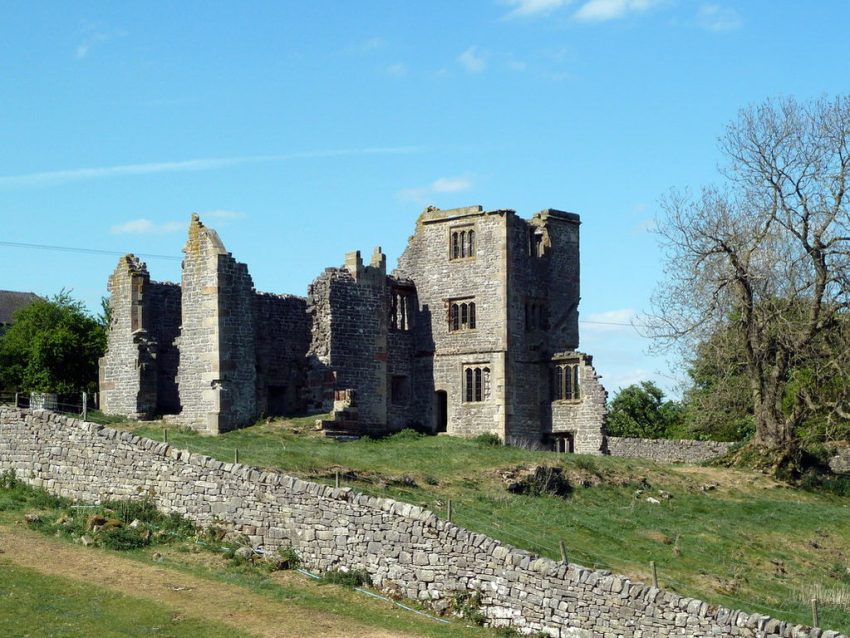
Throwley Old Hall is one of the most atmospheric historic sites near Calton, set above the River Manifold in a secluded corner of north-east Staffordshire. Though now a ruin, this Grade II* listed building and scheduled monument remains an impressive example of early 16th-century architecture, with gables, mullioned windows, and a three-storey tower that hint at its former grandeur. Its weathered limestone walls and remote setting give it a haunting beauty that draws walkers, photographers, and history enthusiasts.
The hall’s story is deeply tied to the noble Meverell family, who lived here for centuries and were regarded as among the finest gentry in the county. Later, the estate passed through the Cromwell family-relatives of Thomas Cromwell, Henry VIII’s powerful minister-and then to a series of later owners. Today, the ruins stand privately owned but remain visible from surrounding footpaths, offering a glimpse into Staffordshire’s aristocratic past.
History and Significance of Throwley Old Hall
The origins of Throwley Old Hall stretch back to the medieval era. Oliver de Meverell settled on the estate by 1203, and the surviving structure dates to the early 16th century, when the Meverells were at the height of their influence. Sampson Erdeswicke, writing in the late 1500s, described Throwley as an attractive and ancient house with a magnificent estate, home to one of Staffordshire's most esteemed families.
The house likely reached its architectural peak during this Tudor period. It was built using local limestone with gritstone dressings, featuring mullioned windows, gables, and a three-storey square tower on its north-east corner. S. C. Hall, writing in the mid-19th century, praised its robust construction and distinct 16th-century character.
The last Meverell to live at Throwley was Robert Meverell, who died in 1626. He and his wife Elizabeth are commemorated by an elaborate alabaster tomb in Ilam’s Church of the Holy Cross. Their only daughter married Thomas Lord Cromwell, Viscount Lecale, linking the estate to one of Tudor England’s most famous political families.
After the Cromwells, Throwley Old Hall passed through several hands, including Edward Southwell, 21st Baron de Clifford, who sold it in 1790 to Samuel Crompton. Later owners included Sir Samuel Crompton, 1st Baronet, and Earl Cathcart. From the 1830s, members of the Parramore family occupied the hall until the 1870s. By the early 20th century, the house had fallen into ruin-a condition it largely retains today.
Things to See and Do at Throwley Old Hall
Although the hall is privately owned and not open for interior visits, its exterior can be viewed from nearby public footpaths. The ruins make a striking sight: tall gables rising from the hillside, weathered stone walls, and the distinctive tower standing sentinel above the landscape. Even in decay, the building conveys a strong sense of its former status.
Walkers often combine a visit with riverside routes along the Manifold Valley, where the hall appears unexpectedly among the trees and fields. The views of the ruins from different angles offer excellent photographic opportunities, especially in early morning or late afternoon light when the limestone takes on warm tones.
History lovers may also connect their visit to the Meverells' story by visiting Ilam, where the family tombs stand inside the Church of the Holy Cross. The church provides an evocative link to the people who once lived at Throwley Old Hall.
How to Get There
Throwley Old Hall is situated near the village of Calton, accessible via local footpaths that run alongside the River Manifold. The hall itself stands on private land, but it can be viewed from public rights of way surrounding the property.
Visitors arriving by car can park in Calton or at designated points near nearby trails before walking to the footpaths that overlook the hall.
Public transport is limited in this rural area, so most visitors reach the site on foot after driving to a nearby village.
Practical Tips on Visiting Throwley Old Hall
- Best time to visit Throwley Old Hall: Spring and autumn for clear views and good walking conditions.
- Entrance fee in Euros: Free; seen from public footpaths only.
- Opening hours: Accessible at any time when using rights of way.
- Official website: Information available through Staffordshire and Peak District heritage resources.
- How long to spend: 30-60 minutes, longer if combined with Manifold Valley walks.
- Accessibility: Footpaths can be uneven, muddy, or steep in places.
- Facilities: None at the hall; amenities found in nearby villages such as Ilam or Alstonefield.
- Photography tip: Capture the tower and gables from the southern footpath for the most dramatic angle.
- Guided tours: None, as the site is privately owned.
- Nearby food options: Traditional pubs in Calton, Ilam, and nearby villages.
Where to Stay close to Throwley Old Hall
For a comfortable base near Calton and the Manifold Valley, consider The Izaak Walton Hotel, which offers classic countryside accommodation. Another great choice is The George Inn, known for its hearty meals and village charm. Visitors exploring the wider area may enjoy The Charles Cotton Hotel, a welcoming base in a scenic Peak District village.
Is Throwley Old Hall Worth Visiting?
Yes-if you enjoy atmospheric ruins, historic landscapes, and quiet countryside walks, Throwley Old Hall is a memorable stop. While you can't enter the building, its dramatic shell, rich history, and secluded setting make it a rewarding place to view and photograph.
What Other Travellers Say...

Throwley Old Hall, Farwall Ln, Ashbourne DE6 2BB, is a set of atmospheric ruins perched in an attractive rural setting; visitors say the views are rewarding and information boards explain what the house used to be like. Expect narrow, sometimes challenging country lanes with cattle grids to reach the site, very limited parking, uneven and potentially slippery ground around the ruins, and free-roaming farm animals nearby—bring caution when exploring and you'll find plenty of photo opportunities and a peaceful, off-the-beaten-track experience.


FAQs for Visiting
Nearby Attractions to Throwley Old Hall
- Ilam Park: A National Trust estate with landscaped gardens, riverside walks, and hill views.
- Thor's Cave: A striking limestone cavern with prehistoric remains above the Manifold Valley.
- Dovedale: Famous for its stepping stones and limestone cliffs.
- Wetton Village: A peaceful Peak District village and walking hub.
- Manifold Valley Trail: A scenic multi-use path ideal for walking and cycling.
The Throwley Old Hall, Calton appears in our Complete Guide to Visiting Bakewell!

Moira & Andy
Hey! We're Moira & Andy. From hiking the Camino to trips around Europe in Bert our campervan — we've been traveling together since retirement in 2020!
This website uses affiliate links which may earn a commission at no additional cost to you!
Planning Your Visit
Nearby Attractions
- Thor’s Cave (2.7) km
Cave - Manifold Way (3.1) km
Walk - Ilam Park (3.6) km
Historic Building and Park - Arbor Low (12.1) km
Historic Site - Magpie Mine, Sheldon (16.8) km
Historic Site - Haddon Hall (18.6) km
Historic Building - All Saints' Church (19.0) km
Church - Old House Museum (19.1) km
Historic Building and Museum - Bakewell Bridge (19.4) km
Bridge - Thornbridge Hall Gardens (20.0) km
Historic Building