Thingvellir National Park, Reykjavik
National Park near Reykjavik
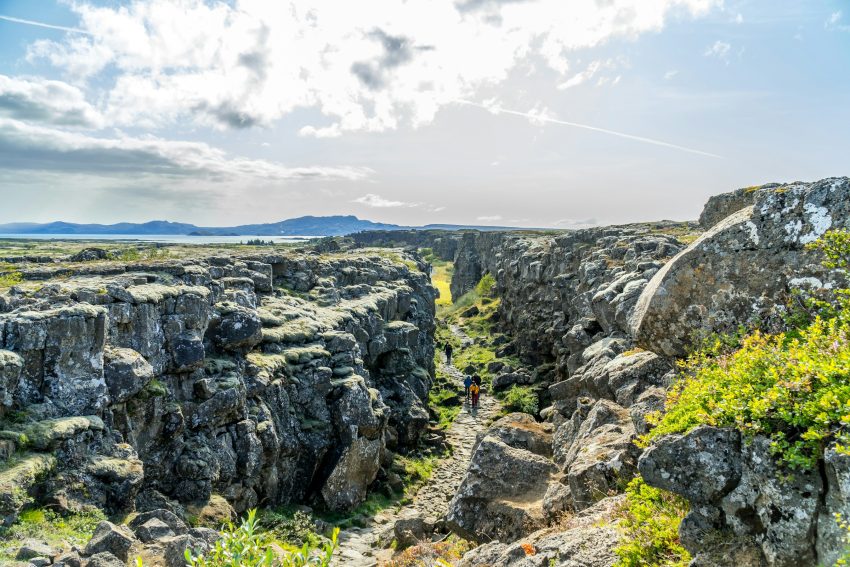
Þingvellir (Thingvellir) National Park is one of Iceland’s most meaningful places: a broad rift valley of lava, cliffs, and clear water where you can physically see the boundary between the North American and Eurasian tectonic plates. It is also a UNESCO World Heritage Site, so the scenery comes with genuine historical weight, not just postcard drama.
Most visitors experience Þingvellir as the opening anchor of the Golden Circle, and it's an ideal place to build a short self-guided walking route: start at the main viewpoints, drop into the rift, then follow easy paths to the park's landmark church and the Öxarárfoss waterfall. If you time it well, Þingvellir can feel both iconic and surprisingly peaceful.
Table of Contents
History and Significance of the Þingvellir (Thingvellir) National Park
Þingvellir is where the Alþingi (Althing), Iceland’s national assembly, was established around the year 930 and met here for centuries. In practical terms, it was a place to set laws, settle disputes, and keep a scattered population connected; in symbolic terms, it is often described as the birthplace of the Icelandic nation. Standing in the valley gives you a rare sense of how “open-air governance” once worked in a landscape with no cities in the modern sense.
Its geological significance is equally profound. Þingvellir sits on the Mid-Atlantic Ridge, where the two tectonic plates are slowly pulling apart, creating visible fissures, cliffs, and subsidence. Unlike many places where plate boundaries are underwater or abstract, here they are walkable, readable, and central to the visitor experience.
That combination of national story and living geology is why Þingvellir is so frequently recommended early in an Iceland itinerary. It sets context for everything you see afterward-waterfalls, geothermal activity, volcanoes-because it shows the underlying forces shaping the island in real time.
Things to See and Do in the Þingvellir (Thingvellir) National Park
Begin at the main viewpoints around Hakið (the visitor area) for a broad view over the rift valley and Þingvallavatn, Iceland’s largest natural lake. These first minutes matter: you get the scale of the park, the line of the cliffs, and a clear sense of how the land has opened up along the plate boundary.
From there, walk down into the rift itself. The paths through Almannagjá are the signature “between continents” experience, with high rock walls and a quiet, canyon-like feel that contrasts with the open valley above. Keep an eye out for interpretive markers as you go; they help translate the landscape from “impressive rocks” into a legible tectonic story.
Finish with a short detour to Öxarárfoss, a compact but photogenic waterfall framed by dark rock, and then visit Þingvallakirkja (Thingvellir Church) and the surrounding historical sites. Even if you do not linger long, these final stops round out the experience: you leave with both nature and narrative, not one or the other.
How to Get to the Þingvellir (Thingvellir) National Park
The nearest international gateway is Keflavík International Airport (KEF), and most travelers visit Þingvellir as a day trip from Reykjavík or as the first stop on a Golden Circle loop. For the best deals and a seamless booking experience, check out these flights to Reykjavik on Booking.com. If you prefer not to self-drive-especially in winter-Golden Circle tours from Reykjavík are a straightforward alternative that still gives you the core viewpoints and main walks.
Iceland has no passenger rail network, so you cannot reach Þingvellir by train. Train schedules and bookings can be found on Omio. Public transport to rural attractions can be limited and seasonal, which is why tours or a rental car are the most common approaches for independent schedules.
Driving is simple on the main Golden Circle route, and it gives you the biggest advantage at Þingvellir: timing. Arriving early or later in the day can dramatically change crowd levels on the main paths.
Practical Tips on Visiting the Þingvellir (Thingvellir) National Park
- Entrance fee: Free (parking service fee applies at designated lots; passenger car 1000 ISK/day).
- Opening hours: Visitor Centre: April – October: 09:00–18:00. Visitor Centre: November – March: 09:00–17:00.
- Official website: https://www.thingvellir.is/en/
- Best time to visit: Early morning is ideal for quieter paths through the rift and cleaner viewpoints before the main tour wave arrives; late afternoon can also feel calmer, especially outside peak summer.
- How long to spend: Plan 2-3 hours for the key walks (viewpoints, Almannagjá rift, Öxarárfoss, and the church area); add extra time if you want a slower pace or multiple short photo stops.
- Accessibility: The main viewpoints are close to parking, but some of the most rewarding walks involve uneven surfaces, steps, and occasional icy patches in colder months, so choose routes based on conditions and mobility needs.
- Facilities: Expect restrooms and visitor services near the main visitor area, plus maintained paths and clear signage; bring layers because the valley can feel windy and noticeably colder than Reykjavík.
Where to Stay Close to the Þingvellir (Thingvellir) National Park
For a culture-heavy itinerary with restaurants and nightlife, base yourself in central Reykjavík and visit Þingvellir as a day trip; for a sightseeing-first plan with earlier starts and fewer crowds, stay in the Golden Circle corridor so you can reach the park before day tours peak.
A strong close-by option with a distinctive landscape setting is ION Adventure Hotel, which places you near Þingvellir and other Golden Circle stops with a more secluded, nature-forward feel. For an easy, practical base right on the Golden Circle route, Hotel Laugarvatn keeps driving times short in every direction. If you want a more upmarket stay with a resort-like finish after sightseeing, Hotel Grímsborgir is well positioned for combining Þingvellir with geothermal stops and a relaxed evening.
Is the Þingvellir (Thingvellir) National Park Worth Visiting?
Yes-Þingvellir is one of Iceland’s most essential stops because it delivers both “big landscape” and deep national context in the same place, with walks that are easy to tailor to your time and energy. It is also the Golden Circle stop that tends to feel the most meaningful once you understand what you are looking at.
The honest pivot: if your trip is very short and you prefer high-intensity sights with minimal walking, you might find Þingvellir’s impact more subtle than a waterfall or geyser; in that case, keep it focused to the main rift walk and one viewpoint, then move on rather than trying to “see everything.”
What Other Travellers Say...

Reviewers consistently describe Þingvellir National Park as a must-see UNESCO World Heritage Site, praised for its striking geology—especially walking between the Eurasian and North American tectonic plates—and its major historical significance. Visitors also note it’s a convenient Golden Circle stop with useful facilities like a café and restrooms. Common drawbacks are paid parking and that it can get busy with tour buses, so arriving early is recommended; some mention it can feel fairly isolated if driving independently.


For Different Travelers
Families with Kids
Þingvellir works well for families because you can break the visit into short, rewarding segments: viewpoint, rift walk, waterfall, then a reset. The main watch-outs are wind and slippery patches in colder months, so keep layers handy and choose the easiest routes if conditions are icy.
Couples & Romantic Getaways
For couples, Þingvellir is most memorable when you lean into quieter timing and a slower walk through the rift, treating it as an atmospheric place rather than a quick photo stop. Pair it with a relaxed Golden Circle day and a geothermal soak afterward for a balanced mix of landscape and comfort.
Budget Travelers
This is a high-value stop because the core experience is outdoors and flexible, and you can get a full visit with minimal spend beyond transport and parking. Pack snacks, bring a thermos, and use the park’s easy walk network to build a “big day” without paid add-ons.
History Buffs
Þingvellir rewards a history-first approach: focus on where the Alþingi gathered, how the assembly functioned, and why this landscape became a national symbol. Even a brief read of the on-site context turns the valley from “scenic” into genuinely significant.
FAQs for Visiting Þingvellir (Thingvellir) National Park
Getting There
Tickets & Entry
Visiting Experience
Tours, Context & Itineraries
Photography
Accessibility & Facilities
Nearby Attractions to the Þingvellir (Thingvellir) National Park
- Silfra Fissure: A crystal-clear rift in Þingvallavatn known for snorkeling and diving between tectonic plates.
- Öxarárfoss Waterfall: A short, scenic waterfall walk that adds variety and a strong photo stop to the park visit.
- Geysir Geothermal Area: A classic geothermal field where Strokkur erupts regularly, easy to combine on the Golden Circle.
- Gullfoss Waterfall: A powerful two-tier waterfall that delivers one of the Golden Circle's biggest “wow” moments.
- Laugarvatn: A small Golden Circle stop known for lake scenery and easy breaks, useful for pacing a full loop.
The Thingvellir National Park appears in our Complete Guide to Visiting Reykjavik!

Moira & Andy
Hey! We're Moira & Andy. From hiking the Camino to trips around Europe in Bert our campervan — we've been traveling together since retirement in 2020!
This website uses affiliate links which may earn a commission at no additional cost to you!
Planning Your Visit
Visitor Centre: April - October: 09:00-18:00.
Visitor Centre: November - March: 09:00-17:00.
Free (parking service fee applies at designated lots; passenger car 1000 ISK/day).
Nearby Attractions
- Silfra Fissure (3.6) km
Natural Phenomenon - Geysir Geothermal Area (37.6) km
Natural Phenomenon - Árbær Open Air Museum (40.1) km
Historic Building, Historic Site and Museum - Grasagarður Botanical Garden (41.6) km
Attraction, Gardens and Park - Laugardalslaug (41.7) km
Baths, Pool and Spa - Asmundur Sveinsson Sculpture Museum (42.1) km
Gardens, Museum and Sculpture - Laugarnes Church (42.2) km
Church and Religious Building - Höfði House (42.9) km
Attraction, Historic Building and Historic Site - Háteigskirkja (43.2) km
Church, Historic Building and Religious Building - Sun Voyager (43.6) km
Attraction, Sculpture and Statue