The Royal Library, Hue
Historic Building in Hue
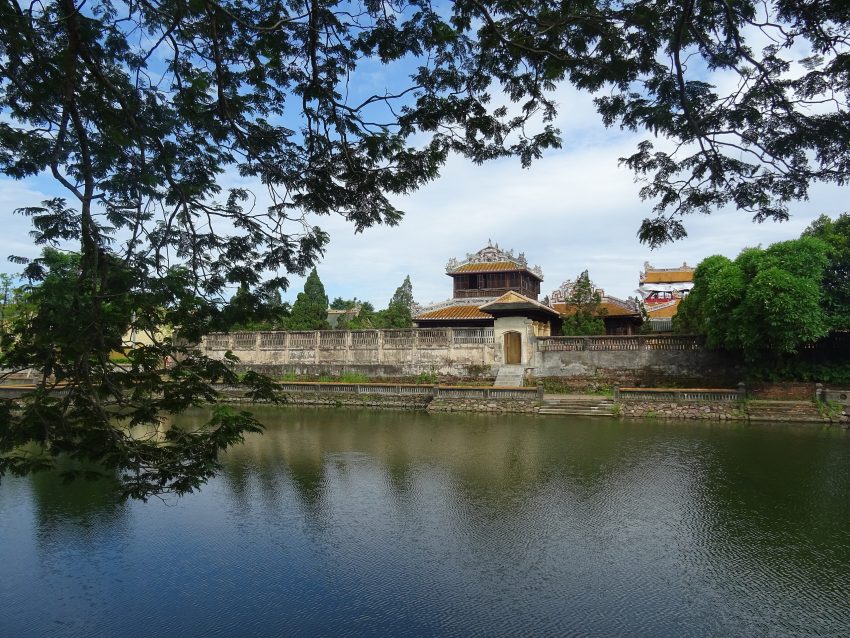
The Royal Library, set within the northeastern quarter of the Forbidden Purple City, is one of the most peaceful and evocative historic structures in the entire Imperial City complex. Built in 1821 by Emperor Minh Mang, it was conceived as a personal haven for reading and reflective study, far from the pressures of court life. Its quiet beauty, set beside still ponds and delicate bridges, makes it one of the must-see places in Hue.
Originally known as the Tri Nhan Mansion, the building evolved over time, becoming Thanh Ha Thu Lau (the Writing Pavilion) under Emperor Thieu Tri before Emperor Dong Khanh designated it the Royal Library. The structure's survival through wartime destruction - it was the only building in the Forbidden Purple City left undamaged in 1947 - adds a profound layer of historical significance. With serene gardens, gentle water features, and occasional cultural performances, the Royal Library blends history with living tradition.
History and Significance of Royal Library
The Royal Library’s origins trace back to Emperor Minh Mang, one of the Nguyen Dynasty’s most scholarly and reform-minded rulers. He built the structure in 1821 as a private retreat, emphasising the importance of study, literature, and introspection in imperial governance. The building’s early name, Tri Nhan Mansion, reflected its philosophical aspirations, representing intellect balanced with compassion.
Later expansions under Emperor Thieu Tri transformed the residence into the Thanh Ha Thu Lau, a Writing Pavilion dedicated to literary refinement. Emperor Dong Khanh later formalised its purpose by designating it as the Royal Library, underscoring its role as a repository of learning and a symbol of imperial wisdom. Through these evolving identities, the library remained a sanctuary where rulers engaged with texts ranging from classical philosophy to historical chronicles.
Remarkably, the Royal Library was the only structure within the Forbidden Purple City to remain intact during the French reoccupation of Hue in early 1947. Its survival lends it a special place in the narrative of Hue's resilience. Beyond its scholarly origins, the library has also become a venue for traditional Hue music performances and theatre, allowing its artistic legacy to continue into the modern era.
Things to See and Do in Royal Library
Visitors stepping into the Royal Library area will immediately sense its tranquil ambience. The main building, framed by a reflective pond, appears almost suspended between architecture and nature. The setting encourages slow movement, observation, and contemplation, offering a gentle contrast to the grandeur of the Imperial City's palaces.
To the west of the library lies a charming rock garden, once curated for meditation and poetic inspiration. Small bridges stretch across ponds and link galleries, creating a fluid and harmonious space. This layout not only reflects classical East Asian design principles but also symbolises the flow of knowledge and the importance of balance in the imperial worldview.
Inside and around the library, visitors may occasionally encounter traditional music performances or theatrical events. These cultural moments connect the modern visitor to the royal court’s artistic heritage, transforming the library into more than a static monument. Even when performances are not scheduled, the quiet environment makes it an ideal stop for relaxation and reflection within the Citadel.
How to Get to Royal Library
Phu Bai International Airport is the nearest airport to Hue and sits around 16 kilometres south of the city centre. For the best deals and a seamless booking experience, check out these flights to Hue on Booking.com. It offers domestic flights that make Hue easily accessible from major Vietnamese cities.
Travellers arriving by train can disembark at Hue Railway Station, which has reliable connections to Da Nang, Hanoi, Ho Chi Minh City, and other destinations. Train schedules and bookings can be found on Omio. The station is only a short ride away from the Imperial City.
If travelling by car, reaching the Citadel is straightforward, with parking available nearby before entering on foot. Once inside the Forbidden Purple City, clear paths lead toward the northeastern corner where the Royal Library stands.
Practical Tips on Visiting Royal Library
- Suggested tips: Take time to explore the ponds and bridges surrounding the library to fully appreciate its tranquil setting.
- Best time to visit: Early morning or late afternoon for cooler temperatures and fewer visitors.
- Entrance fee: Included in the Imperial City ticket.
- Opening hours: Typically 8:00-17:30, but hours may vary seasonally.
- How long to spend: Around 20-40 minutes depending on interest and whether performances are taking place.
- Accessibility: Paths are mostly level, though some stone walkways and bridges require cautious steps.
- Facilities: Restrooms and refreshments are available elsewhere within the Imperial City grounds.
- Photography tip: Capture the library reflected in the pond during soft morning or evening light.
- Guided tours: Many Imperial City tours include the Royal Library as a cultural stop with valuable historical context.
- Nearby food options: Restaurants and cafés are located just outside the Citadel’s main gates.
Where to Stay close to Royal Library
Staying near the Imperial City gives visitors easy access to its many historic sites, including the Royal Library. The refined Azerai La Residence offers elegant riverside views and an atmosphere well suited to the historic setting. For a boutique experience, Le Domaine de Cocodo provides comfortable suites within a short distance of the Citadel. Another appealing choice is Villa Hue, offering a peaceful garden environment and convenient access to Hue’s central attractions.
Is Royal Library Worth Visiting?
The Royal Library is absolutely worth visiting, especially for travellers who appreciate peaceful spaces enriched with cultural meaning. Its architectural beauty, serene setting, and role as a centre of artistic and literary life within the Nguyen court make it one of the most memorable corners of the Forbidden Purple City. Whether you come for the history or simply to enjoy the tranquillity, it offers a deeply rewarding experience.
What Other Travellers Say...

Thai Binh Pavilion, located in the Imperial City, is the emperors’ former reading room and a tranquil pavilion set within an inner court surrounded by gardens and ponds; visitors note its pleasing traditional exterior roofwork and handcrafted details, while the interior houses some artifacts but lacks the original bookshelves and now contains a souvenir shop.


FAQs for Visiting Royal Library
Nearby Attractions to Royal Library
- Purple Forbidden City: The former private residence of the Nguyen emperors.
- Thai Hoa Palace: The centrepiece throne hall of the Imperial City.
- Truong Sanh Residence: A beautifully preserved residential compound in the Citadel.
- Can Chanh Palace area: Historic ruins and reconstructed galleries.
- Noon Gate (Ngo Mon): The iconic southern gateway to the Imperial City.
The The Royal Library appears in our Complete Guide to Visiting Hue!

Moira & Andy
Hey! We're Moira & Andy. From hiking the Camino to trips around Europe in Bert our campervan — we've been traveling together since retirement in 2020!
This website uses affiliate links which may earn a commission at no additional cost to you!
Planning Your Visit
Nearby Attractions
- Nhat Thanh Lau (0.0) km
Historic Building - Forbidden Purple City (0.1) km
Historic Building - The Royal Theatre (0.1) km
Historic Building - Halls of the Mandarins (0.2) km
Historic Building - Tu Phuong Vo Su Tower (0.2) km
Historic Building - Thai Hoa Palace (0.2) km
Palace - Noon Gate (0.3) km
City Gate - Cung Truong Sanh (0.3) km
Historic Building - Dien Tho Residence (0.3) km
Historic Building - Meridian Gate (0.4) km
City Gate