The Ferreres Aqueduct, Tarragona
Aqueduct, Historic Site and Roman Site in Tarragona
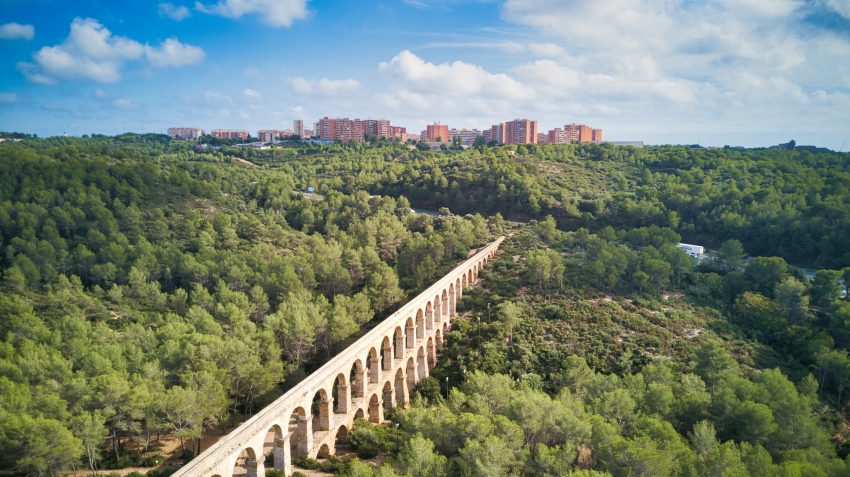
The Ferreres Aqueduct, also known locally as Pont del Diable, is one of Tarragona's most impressive Roman-era monuments: a soaring double-tiered arcade of stone arches set in a green, walkable park just outside the city. It feels both monumental and surprisingly peaceful, with pine trees, footpaths, and viewpoints that let you appreciate the structure from multiple angles.
It's an easy add-on to a Tarragona walking tour focused on ancient Tarraco: pair it with the amphitheatre, circus, and old town, then head out to the aqueduct for a change of scenery and a short nature walk. The best views are from the paths that run along the valley floor (for the full height) and from the approach where the arches line up in a long, photogenic perspective.
Table of Contents
- History and Significance of the The Ferreres Aqueduct
- Things to See and Do in the The Ferreres Aqueduct
- How to Get to the The Ferreres Aqueduct
- Practical Tips on Visiting the The Ferreres Aqueduct
- Where to Stay Close to the The Ferreres Aqueduct
- Is the The Ferreres Aqueduct Worth Visiting?
- For Different Travelers
- FAQs for Visiting The Ferreres Aqueduct
- Nearby Attractions to the The Ferreres Aqueduct
History and Significance of the The Ferreres Aqueduct
Built in the Roman period to supply water to ancient Tarraco, The Ferreres Aqueduct is a vivid reminder that Tarragona was once a major city of the Roman world. Even if you're not a specialist, the scale makes the purpose instantly clear: this was infrastructure designed to last.
What makes the site especially compelling is how readable it still is today. You can see the rhythm of the arches, the careful stonework, and the way the structure bridges a natural dip in the landscape—an elegant solution to a practical problem.
As part of Tarragona’s wider Roman heritage, the aqueduct also helps connect the dots between the city’s monuments and daily life in antiquity. It’s not just a “pretty ruin”; it’s a piece of the system that kept baths, fountains, and households running.
Things to See and Do in the The Ferreres Aqueduct
Start by walking the main path to the base of the aqueduct so you can take in its full height and the symmetry of the two stacked arcades. From below, the engineering feels almost unbelievable, and it’s the best spot for wide-angle photos.
Next, explore the surrounding park trails for different viewpoints. A short loop walk gives you changing perspectives—front-on, side-on, and framed by trees—so the aqueduct never looks quite the same twice.
If you enjoy slow travel, bring water and treat it like a mini-hike rather than a quick stop. The area is ideal for a relaxed stroll, a few quiet minutes in nature, and a reset between Tarragona’s more urban Roman sites.
How to Get to the The Ferreres Aqueduct
The nearest major airports are Barcelona El Prat (BCN) and Reus Airport (REU). For the best deals and a seamless booking experience, check out these flights to Tarragona on Booking.com.
Tarragona is well connected by rail, and arriving by train is one of the easiest ways to start your trip without a car. Train schedules and bookings can be found on Omio.
If you're driving, the aqueduct is straightforward to reach from Tarragona via the N-240, and having a car makes it easy to combine with other nearby Roman and coastal stops. If you are looking to rent a car in Spain I recommend having a look at Discover Cars, first, as they compare prices and review multiple car rental agencies for you.
Practical Tips on Visiting the The Ferreres Aqueduct
- Official website: https://www.tarragona.cat/patrimoni/museu-historia/monuments/laqueducte-del-francoli
- Entrance fee: Free.
- Opening hours: 24 Hours.
- Best time to visit: Go early morning or late afternoon for softer light and fewer people, especially in warmer months.
- How long to spend: Plan 45–90 minutes for viewpoints and a short loop walk; longer if you want a proper hike.
- Accessibility: Paths are natural and can be uneven; expect some inclines and dirt/gravel sections that may be challenging for wheelchairs.
- Facilities: Keep expectations simple—bring water and sun protection, and plan restroom/snack stops back in Tarragona.
Where to Stay Close to the The Ferreres Aqueduct
Base yourself in central Tarragona (Old Town/near the Roman sites) for the easiest sightseeing, dining, and transport connections.
H10 Imperial Tarraco A polished, well-located option near the historic core—great if you want comfort, views, and a walkable base for Roman Tarragona.
AC Hotel Tarragona by Marriott A reliable modern stay with easy access to the station area and main roads—handy if you’re mixing day trips with city time.
Hotel Astari A practical choice near the seafront with a relaxed vibe—nice for travelers who want a quieter feel after busy sightseeing days.
Hotel Lauria Right on Tarragona’s main boulevard, making it convenient for restaurants, shops, and getting around without planning too much.
B&B Hotel Tarragona Valls A budget-friendly, car-friendly pick outside the center—useful if you’re road-tripping and prioritizing easy parking and value.
Is the The Ferreres Aqueduct Worth Visiting?
Yes—The Ferreres Aqueduct is absolutely worth it if you're in Tarragona, especially because it combines a major Roman monument with an easy, scenic walk. It's one of those places where the “wow” factor is immediate, even on a short visit, and it's a refreshing contrast to the city's denser historic streets.
Honest Pivot: if you dislike walking on natural trails, are short on time, or prefer attractions with lots of on-site interpretation and amenities, you might skip it and focus on Tarragona’s in-town Roman sites instead. It’s best enjoyed as a small outdoor excursion rather than a museum-style visit.
What Other Travellers Say...

Google reviewers rate The Ferreres Aqueduct very highly, highlighting how impressive and well-preserved the Roman engineering feels in person. Visitors commonly praise the scenic park setting, easy hiking-style trails, and excellent photo opportunities, with many noting it's a memorable stop even on a short visit. The most frequent drawbacks are that it involves some walking from parking and that the experience is primarily outdoors with limited on-site amenities.


For Different Travelers
The aqueduct works well as a flexible stop: you can keep it quick for photos or stretch it into a longer nature walk. Because it’s outdoors and spacious, it’s also easier to fit into a busy itinerary than timed-entry attractions.
Families with Kids
Kids usually love the scale of the arches and the feeling of being in a “real” ancient structure rather than looking at artifacts behind glass. The surrounding trails also give them room to move, which can be a lifesaver after more formal sightseeing.
Plan it like a short adventure: comfortable shoes, water, and a simple goal (a loop walk plus a few photo stops). If you’re traveling with very young children, a carrier can be easier than a stroller on uneven paths.
Couples & Romantic Getaways
For couples, the aqueduct is a low-effort, high-reward outing—beautiful stonework, quiet trails, and plenty of spots to pause together. It’s especially atmospheric in late afternoon when the light warms the stone.
Pair it with a relaxed Tarragona evening: Roman ruins in town, then a sunset stroll and dinner back in the center. It's a great “breather” day activity that still feels meaningful.
Budget Travelers
This is a strong budget-friendly attraction because the experience is about the place itself: views, history, and a walk in nature. You don’t need a long checklist—just time, comfortable footwear, and a phone or camera.
To keep costs down, combine it with other free or low-cost Tarragona highlights and pack snacks and water. If you're staying central, you can also plan your day around public transport and walking.
History Buffs
History lovers will appreciate how the aqueduct fits into the broader story of Roman Tarraco—less spectacle than an amphitheatre, but arguably more revealing about how the city functioned. The structure’s layout makes it easy to imagine water moving toward the ancient urban core.
Use it as a context-builder: visit the in-town Roman sites first, then come here to see the infrastructure that supported them. If you enjoy deeper interpretation, consider adding a guided walk focused on Roman engineering and landscape.
FAQs for Visiting The Ferreres Aqueduct
Getting There
Tickets & Entry
Visiting Experience
Tours, Context & Itineraries
Photography
Accessibility & Facilities
Food & Breaks Nearby
Safety & Timing
Nearby Attractions to the The Ferreres Aqueduct
- Tarragona Amphitheatre: A dramatic Roman arena by the sea, easy to combine with a city-center walk.
- Roman Circus (Circ Romà): Explore vaulted passages and imagine chariot races in the heart of Tarragona.
- Tarragona Cathedral: A landmark on the old town hill with a mix of architectural styles and a strong sense of place.
- Passeig Arqueològic (Archaeological Walk): A scenic route along the Roman walls with viewpoints and shaded stretches.
- El Mèdol Roman Quarry: A striking ancient quarry landscape that shows where building stone was extracted for Roman Tarraco.
The The Ferreres Aqueduct appears in our Complete Guide to Visiting Tarragona!

Moira & Andy
Hey! We're Moira & Andy. From hiking the Camino to trips around Europe in Bert our campervan — we've been traveling together since retirement in 2020!
This website uses affiliate links which may earn a commission at no additional cost to you!
Planning Your Visit
24 Hours.
Free.
Nearby Attractions
- Castellers Monument (3.2) km
Monument, Sculpture and Statue - Muralla Romana de Tarragona (3.2) km
City Walls, Historic Site and Roman Site - Maqueta de la ciutat romana de Tarraco (3.2) km
Attraction and Roman Site - Catedral de Tarragona (3.3) km
Cathedral, Historic Site and Religious Building - Casa Museu Castellarnau (3.3) km
Historic Building, Historic Room and Museum - Tarragona City Hall (3.3) km
Town Hall - Rambla Nova (3.3) km
Promenade, Street and Walk - National Archaeological Museum of Tarragona (3.3) km
Attraction and Museum - Plaça dels Sedassos (3.3) km
Attraction, Sculpture and Square - Plaça de la Font (3.4) km
Area, Attraction and Square