State Guest House, Hanoi
Historic Building in Hanoi
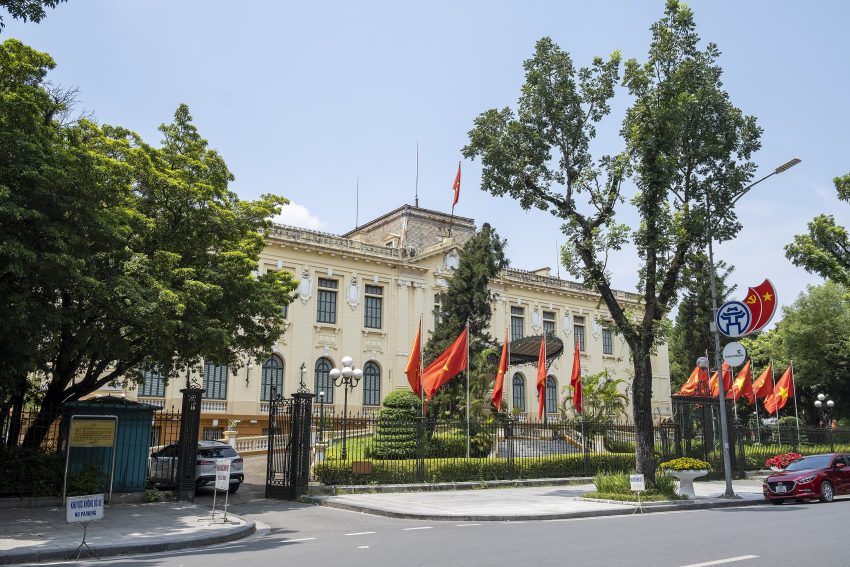
The State Guest House in the Hoan Kiem District is one of Hanoi's most imposing colonial-era buildings, standing as a testament to both French architectural ambition and Vietnam's turbulent path to independence. Originally constructed as the Residential Palace of the Tonkin Governor between 1918 and 1919, this grand structure now serves as the official State Guest House of the Vietnamese Government. With its elegant design and storied past, it remains one of the best places to visit in Hanoi for travellers interested in political history and colonial architecture.
Though access to the interior is restricted, the building's exterior alone offers a fascinating glimpse into Hanoi's past. Its sweeping façade, arched windows, and classical lines are often visited on walking tours of Hanoi, especially for those exploring the city's French Quarter and its enduring architectural legacy.
Table of Contents
- History and Significance of the State Guest House
- Things to See and Do in the State Guest House
- How to Get to the State Guest House
- Practical Tips on Visiting the State Guest House
- Where to Stay close to the State Guest House
- Is the State Guest House Worth Visiting?
- FAQs for Visiting the State Guest House
- Nearby Attractions to the State Guest House
History and Significance of the State Guest House
The State Guest House was designed and built by Auguste Henri Vildieu, one of the most influential architects of French Indochina. Completed in 1919, it served as the Residential Palace of the Tonkin Governor, symbolising the power and presence of the French colonial administration in northern Vietnam. Its stately design reflected European tastes while asserting control over Hanoi's urban landscape.
Following the August Revolution in 1945, the Viet Minh took control of northern Vietnam and renamed the palace Tonkin Palace. The building soon became a focal point of conflict as tensions between the French and Vietnamese resistance escalated. On December 20, 1946, the French Army launched a ferocious battle to reclaim the palace from the Viet Minh. After six assaults, more than 120 casualties, and the loss of four tanks, the French succeeded-marking one of the earliest major clashes of the First Indochina War.
After the partition of Vietnam in 1954, the building became the State Guest House of North Vietnam, hosting official delegations and diplomatic events. South Vietnam operated its own state guest house on Nguyễn Du Street in Saigon. Today, the Hanoi building continues to serve as the State Guest House for high-level government guests and international dignitaries.
Things to See and Do in the State Guest House
While the interior is not open to the public, the State Guest House remains a striking architectural sight. Visitors can admire its grand French colonial design from the street, with its pastel-coloured exterior, sweeping balconies, tall shutters, and meticulously crafted details. The building's architecture echoes that of other grand colonial structures found in the French Quarter.
Photography enthusiasts will find plenty to appreciate in the building’s symmetry, textures, and decorative flourishes. Strolling around the surrounding area also offers a rewarding experience, as it is filled with other notable colonial-era buildings, embassies, and government offices that together capture Hanoi’s layered history.
Its historical significance and central location make it a rewarding stop for those exploring the French Quarter, even without interior access.
How to Get to the State Guest House
The State Guest House is located in Hanoi's Hoan Kiem District, not far from major landmarks such as Hoan Kiem Lake and the Hanoi Opera House. Travellers flying into the city will arrive at Noi Bai International Airport, approximately 30 kilometres from central Hanoi. For the best deals and a seamless booking experience, check out these flights to Hanoi on Booking.com.
Hanoi Railway Station provides the closest major rail access, connecting travellers from across Vietnam to the heart of the city. Train schedules and bookings can be found on Omio.
If travelling by car or taxi, the French Quarter is generally easy to reach, though traffic can be heavy at peak times. Drop-off points are available around the government district.
Practical Tips on Visiting the State Guest House
- Suggested tips: Visit during daylight hours to best appreciate the building’s colours and architectural details.
- Best time to visit: Early morning or late afternoon when lighting enhances the façade.
- Entrance fee:
- Opening hours:
- Official website:
- How long to spend: Around 10-20 minutes, longer if exploring the surrounding French Quarter.
- Accessibility: The area is accessible for walking, though visitors cannot enter the building.
- Facilities: Public facilities are limited nearby due to government buildings; cafés are available a short walk away.
- Photography tip: Stand across the street to capture the full façade without obstruction.
- Guided tours: Included in some French Quarter walking tours focused on architecture and political history.
- Nearby food options: Numerous cafés and restaurants can be found closer to Hoan Kiem Lake and Trang Tien.
Where to Stay close to the State Guest House
For travellers wishing to stay near the French Quarter, several excellent hotels are within walking distance. Consider Sofitel Legend Metropole Hanoi for a luxurious historic stay. Another elegant option is Hotel de l’Opera Hanoi, offering modern comfort near the Opera House. For travellers seeking international amenities, Hilton Hanoi Opera is also conveniently nearby.
Is the State Guest House Worth Visiting?
Yes, the State Guest House is worth visiting for its architectural beauty and historical significance, even if visitors cannot enter the building. Its grand façade and pivotal role in Vietnam's colonial and wartime history make it an intriguing stop while exploring Hanoi's French Quarter.
What Other Travellers Say...

Government Guest House (Tonkin Palace) at 12 P. Ngô Quyền, Tràng Tiền, Hoàn Kiếm, Hà Nội sits in a calm, green spot near the Old Quarter and Hoàn Kiếm, making it easy to explore nearby sights and an impressive local coffee house and restaurant; visitors note the building's French colonial character and historical associations, find the atmosphere cool and breezy, and praise its central, convenient location and suitability for events such as weddings.


FAQs for Visiting the State Guest House
Nearby Attractions to the State Guest House
- Hanoi Opera House: A stunning French colonial landmark hosting cultural performances.
- Hoan Kiem Lake: The city's iconic scenic lake at the heart of Hanoi.
- Trang Tien Plaza: A luxury shopping centre filled with international brands.
- Vietnam National Museum of History: A museum showcasing Vietnamese history from ancient to modern times.
- French Quarter: A district full of grand colonial-era buildings, embassies, and tree-lined boulevards.
The State Guest House appears in our Complete Guide to Visiting Hanoi!

Moira & Andy
Hey! We're Moira & Andy. From hiking the Camino to trips around Europe in Bert our campervan — we've been traveling together since retirement in 2020!
This website uses affiliate links which may earn a commission at no additional cost to you!
Planning Your Visit
Nearby Attractions
- Ly Thai To Statue & Park (0.1) km
Park and Statue - Hanoi Post Office (0.1) km
Historic Building - Hoa Phong Tower (0.2) km
Tower - Trang Tien Plaza (0.3) km
Shopping Centre - Hoan Kiem Lake (0.3) km
Lake - Hanoi Opera House (0.4) km
Opera House - Ngoc Son Temple (0.5) km
Buddhist Temple - Ba Kieu Temple (0.5) km
Chinese Shrine - Museum of Vietnamese Women (0.5) km
Museum - Thang Long Water Puppet Theater (0.6) km
Theatre