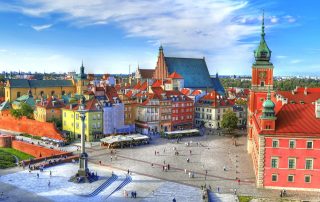
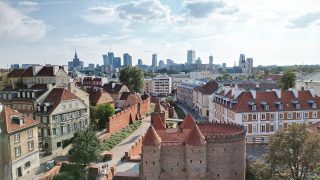
St John's Archcathedral, Warsaw
Church in Warsaw
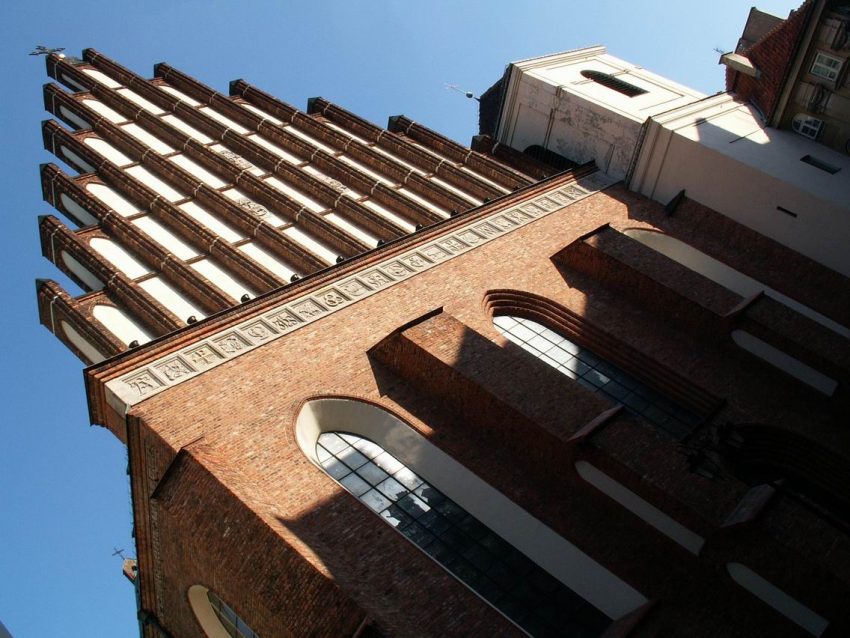
St. John's Archcathedral sits on Świętojańska Street in the very heart of Warsaw's Old Town, a short stroll from Castle Square and the Royal Castle. From the outside, its Brick Gothic façade feels beautifully restrained-almost austere-yet that simplicity is part of the impact, especially when you remember how many times Warsaw has had to rebuild what it refused to forget.
Inside, the cathedral feels like a quiet spine running through Poland's story: monarchy, faith, modern nationhood, and wartime trauma all overlap here. It's one of the must-see places in Warsaw because the visit is both architectural and deeply human, and it slips perfectly into a walking tour of Warsaw when you want a moment of calm between the Old Town's busier lanes.
Table of Contents
- History and Significance of the St. John’s Archcathedral
- Things to See and Do in the St. John’s Archcathedral
- How to Get to the St. John’s Archcathedral
- Practical Tips on Visiting the St. John’s Archcathedral
- Where to Stay Close to the St. John’s Archcathedral
- Is the St. John’s Archcathedral Worth Visiting?
- For Different Travelers
- FAQs for Visiting St. John’s Archcathedral
- Nearby Attractions to the St. John’s Archcathedral
History and Significance of the St. John’s Archcathedral
The cathedral's origins reach back to medieval Warsaw, when Brick Gothic churches helped define the city's skyline and civic identity. Over the centuries, St. John's became far more than a parish church: it was closely tied to the royal and political life of the capital, including ceremonies, oaths, and major moments in Poland's constitutional history.
One of the most intriguing historical details is its relationship with the nearby Royal Castle. An elevated corridor once allowed monarchs to reach the cathedral discreetly, turning the area into a kind of ceremonial axis where the religious and political heart of Warsaw met in plain sight.
The cathedral's most defining chapter is also its most painful. During the Warsaw Uprising, it suffered catastrophic destruction, and the post-war reconstruction deliberately returned it to an earlier Mazovian Gothic character. That choice matters: what you see today is not only a rebuilt cathedral, but also a statement about identity, continuity, and the version of history Warsaw chose to carry forward.
Things to See and Do in the St. John’s Archcathedral
Start with the main nave and let your eyes adjust to the cathedral’s Gothic rhythm-vaults, brickwork, and a sense of vertical calm that contrasts with the Old Town outside. Even if you’re not typically drawn to churches, this interior has a seriousness that makes you slow down, especially once you notice memorial plaques and the quiet weight of national remembrance.
Make time for the Cathedral Crypts, which transform the visit from “beautiful building” into “living history.” The underground route is where you meet Poland's story face to face, with tombs of major figures and a clear sense that this is a national pantheon as much as a place of worship.
If you can, look for concerts or special services that highlight the cathedral's musical tradition-this is one of those spaces where sound changes how the architecture feels. And even when the cathedral is busy, stepping out into the Old Town lanes afterward gives you a natural reset, as if the city's noise returns in layers.
How to Get to the St. John’s Archcathedral
Because it's in the Old Town, the simplest approach is on foot from Castle Square, the Royal Castle, or the Old Town Market Square-navigation is easy once you're in the historic centre. If you're coming from elsewhere in the city, take public transport toward central Warsaw and then walk the final stretch into the Old Town's largely pedestrian streets.
The nearest airports are Warsaw Chopin Airport (WAW) and Warsaw Modlin Airport (WMI). For the best deals and a seamless booking experience, check out these flights to Warsaw on Booking.com.
From the main rail hubs, such as Warszawa Centralna, it’s easiest to continue by Metro/tram/bus toward the city centre and then walk into the Old Town rather than trying to get dropped at the door. You can easily check schedules and book tickets through the PKP Intercity website. However, for a smoother experience, we recommend using Omio, which simplifies the booking process and lets you compare prices and schedules all in one place.
If you’re driving, it’s usually best to park outside the Old Town in a paid garage around central Śródmieście and walk in, since the historic core has restrictions and limited access for cars. If you are looking to rent a car in Poland I recommend having a look at Discover Cars, first, as they compare prices and review multiple car rental agencies for you.
Practical Tips on Visiting the St. John’s Archcathedral
- Entrance fee: Cathedral: free entry. Cathedral Crypts (ticketed visitor route): Normal 5 zł; Reduced 3 zł; Family 11 zł.
- Opening hours: Monday – Saturday: 10:00–17:00. Sunday: 15:00–17:00. Closed during Masses and services.
- Official website: https://katedra.mkw.pl/
- Best time to visit: Aim for a quieter window outside peak Old Town hours, and avoid moments right before or during services if you want to explore slowly.
- How long to spend: 30-45 minutes works for the main cathedral, while adding the crypts can bring the visit closer to 60-90 minutes.
- Accessibility: The cathedral interior is generally straightforward, but the crypt route involves stairs and tighter spaces, so check ahead if step-free access is essential.
- Facilities: Treat this as a reflective stop rather than a full-service museum; cafés and rest breaks are easiest just outside in the Old Town lanes.
Where to Stay Close to the St. John’s Archcathedral
For a culture-heavy itinerary, base yourself in the Old Town or central Śródmieście so you can walk to major museums and landmark streets; if your trip leans toward riverside strolls and modern dining, Powiśle is a more relaxed base with excellent evening options.
If you want to stay right near the Old Town’s historic core, Mamaison Hotel Le Regina Warsaw is a polished, quiet choice that keeps the cathedral within easy walking distance. For a boutique stay with a sense of place near the Royal Castle area, Hotel Bellotto is ideal for turning your mornings and evenings into effortless Old Town wanders. If you prefer a classic, well-connected base just outside the Old Town while still staying walkable, Sofitel Warsaw Victoria makes logistics easy for the rest of the city.
Is the St. John’s Archcathedral Worth Visiting?
Yes, because it's one of the few places in Warsaw where architecture, national memory, and lived faith meet in a single, focused experience. You don't need to be religious to feel the significance-this is a landmark that helps the Old Town make emotional sense.
It's also an efficient visit with a high “meaning per minute” factor: you can step in briefly and still come away with a strong impression. If you add the crypts, the cathedral becomes even more memorable, turning a quick stop into a deeper encounter with Polish history.
What Other Travellers Say...

Archcathedral Basilica of St. John the Baptist on Świętojerska 8 in Warsaw's Old Town is a royal cathedral blending multiple styles, celebrated for its Brick Gothic character and striking medieval interior with pointed ceilings and a memorable choir; visitors praise its peaceful, elegant atmosphere despite the busy location, note free entry to the church, and mention an underground crypt with exhibits and English translations accessible for a small daytime fee where many notable Poles are buried.


For Different Travelers
Families with Kids
This works best for families as a shorter, story-led visit: point out the Gothic scale, explain the idea of rebuilding after wartime destruction, and keep the pace moving. If you’re adding the crypts, decide in advance whether your children are comfortable with stairs and quieter, more solemn spaces.
Pairing the cathedral with a simple Old Town loop helps: a brief interior visit, then fresh air and movement outside. That rhythm keeps the day balanced and avoids “church fatigue,” especially for younger kids.
Couples & Romantic Getaways
For couples, the cathedral is a strong atmospheric stop-quiet, beautiful, and emotionally resonant in a way that feels distinctly Warsaw. It's especially good as a pause within a longer Old Town wander, when you want a moment that feels intimate rather than busy.
Afterward, take the long way back through the Old Town lanes or toward the Royal Castle area. The shift from silence inside to the city's evening glow outside can be unexpectedly memorable on a romantic itinerary.
Budget Travelers
This is an easy win for budget travelers because the cathedral itself is free to enter, and it sits in an area you'll likely explore on foot anyway. Even if you skip the ticketed crypts, you still get a meaningful landmark experience without adding cost to your day.
Use it as a “free anchor” for an Old Town walking day: cathedral, market square, viewpoints, and river walks. It's a smart way to keep the itinerary rich without turning it into a series of paid entries.
FAQs for Visiting St. John’s Archcathedral
Getting There
Tickets & Entry
Visiting Experience
Tours, Context & Itineraries
Photography
Accessibility & Facilities
Food & Breaks Nearby
Safety & Timing
Nearby Attractions to the St. John’s Archcathedral
- Royal Castle in Warsaw: A landmark palace-museum at Castle Square that anchors the Old Town's royal history.
- Castle Square (Plac Zamkowy): The Old Town's main gateway, famous for views, street life, and the Sigismund Column.
- Old Town Market Square: Warsaw's postcard-perfect centre for strolling, architecture, and short café stops.
- Warsaw Barbican: A short, scenic walk that reveals the Old Town's defensive past and classic photo angles.
- Monument to the Warsaw Uprising Fighters: A powerful WWII memorial nearby that adds emotional context to the city's reconstructed heart.
The St John's Archcathedral appears in our Complete Guide to Visiting Warsaw!

Moira & Andy
Hey! We're Moira & Andy. From hiking the Camino to trips around Europe in Bert our campervan — we've been traveling together since retirement in 2020!
This website uses affiliate links which may earn a commission at no additional cost to you!
Planning Your Visit
Monday - Saturday: 10:00-17:00.
Sunday: 15:00-17:00.
Closed during Masses and services.
Cathedral: free entry. Cathedral Crypts (ticketed visitor route): Normal 5 zł; Reduced 3 zł; Family 11 zł.
Nearby Attractions
- Old Town Wishing Bell (0.1) km
Monument and Street - Castle Square (0.1) km
Square - Royal Castle (0.1) km
Castle - Old Town Market Square (0.1) km
Square - Mermaid of Warsaw (0.1) km
Statue - Royal Castle Gardens (0.2) km
Gardens - Sigismund’s Column (0.2) km
Statue - Jan Kiliński Monument (0.2) km
Monument - Mały Powstaniec, Little Insurgent Monument (0.3) km
Monument - St. Anne’s Church (0.3) km
Church