Sant'Ambrogio, Milan
Church in Milan

Sant'Ambrogio is one of the must-see places in Milan if you are interested in early Christian history, Romanesque architecture, or simply churches with real atmosphere rather than glossy perfection. Founded in 386 by St Ambrose, the city's patron saint, the basilica you see today is largely a 12th-century Romanesque rebuild wrapped around an earlier ninth-century core, its brick and stone warmed by centuries of prayer, war, and quiet resilience.
Step through the heavy outer gate and you enter the porticoed atrium, a cloister-like courtyard with carved capitals and arches that frame the church façade-already one of the finest Romanesque ensembles in Europe before you even cross the threshold. Inside, the dim light, massive piers, carved pulpit, and glittering early Christian and Carolingian treasures make Sant'Ambrogio a highlight of any walking tour of Milan, especially if you want to see a more spiritual, less commercial side of the city.
History and Significance of Sant’Ambrogio
The story of Sant'Ambrogio begins in 386, when St Ambrose, then bishop of Milan and now its patron saint, founded a church on this site. In late Roman times, the area lay just outside the city walls and was associated with martyrs' burial grounds, making it a fitting place for a major basilica. Over the following centuries, the church became a focal point of Milan's religious and political life, closely linked to the city's identity and to the cult of its patron.
The current building is a Romanesque masterpiece dating mainly from the 12th century, built around the choir of a ninth-century church. This rebuilding gave Sant'Ambrogio its characteristic appearance: round arches, sturdy pillars, and a harmonious, almost fortress-like façade facing a porticoed atrium. The atrium itself, with its ninth-century origins and richly carved capitals, is considered one of the finest Romanesque spaces in Europe, an open-air prelude to the solemnity of the interior.
Over the centuries, wars, renovations, and restorations have left their traces, but the basilica retains a remarkably cohesive character. It is both a shrine to St Ambrose and a living parish church, where ancient sarcophagi, Carolingian goldwork, and early mosaics sit within a space that still hosts Masses, concerts, and moments of everyday devotion. For visitors, Sant'Ambrogio offers a rare sense of continuity, where 1,600 years of Milanese faith can be felt in the worn stones underfoot.
Things to See and Do in Sant’Ambrogio
Start in the atrium, the enclosed courtyard in front of the church. Walk slowly along the arcades, looking up at the intricately carved stone capitals and the Romanesque arches framing the façade. This space once hosted gatherings and processions, and today it still feels like a quiet transitional zone between busy streets and the sacred interior. The mass of the twin bell towers and the textured brickwork make for excellent photos in soft morning or late-afternoon light.
Inside the basilica, head towards the pulpit, which rests on the 4th-century Stilicone sarcophagus. The pulpit's late Romanesque carvings are rich with symbolic detail, while the sarcophagus beneath it connects you directly to the church's earliest centuries. At the high altar, take time to appreciate the paliotto, the golden altar front crafted in 835 and considered a masterpiece of Carolingian art. Its intricate reliefs and precious materials speak to the wealth and devotion of the early medieval Church, and to the skill of the workshops in Milan or Rheims where it was made.
Before you leave, seek out one of Sant'Ambrogio's most easily missed treasures: the Sacello di San Vittore, accessed through the last chapel on the right. This small 4th-century chapel preserves a mosaic dome whose intense colour and intimate scale contrast with the larger, heavier forms of the main church. Standing beneath it, you get a powerful sense of early Christian Milan and how this site has been layered with art and meaning over many centuries. Taken together, these elements make Sant'Ambrogio one of the top sights in Milan for visitors who enjoy exploring beyond the obvious icons.
How to Get to Sant’Ambrogio
Sant'Ambrogio lies southwest of the Duomo, within easy reach of Milan's historic centre and other major sights. Most international visitors arrive via Milan Malpensa, Milan Linate, or Orio al Serio (Bergamo) airports, which all offer shuttle buses, trains, or taxis into central Milan and its main stations. For the best deals and a seamless booking experience, check out these flights to Milan on Booking.com.
Once in the city, Sant'Ambrogio is simple to reach by public transport: the metro and various tram and bus lines stop nearby, and from the Duomo area it's a pleasant walk through central streets into this quieter, historic quarter.Use Omnio to easily compare schedules, book train tickets, and find the best prices all in one place for a hassle-free journey across Italy.
If you are travelling by car, remember that central Milan has limited traffic zones, congestion charges, and scarce street parking, so it is usually best to leave your vehicle in a garage outside the core and then continue by metro or tram before walking the short distance to the basilica.If you are looking to rent a car in Italy I recommend having a look at Discover Cars, first, as they compare prices and review multiple car rental agencies for you.
Practical Tips on Visiting Sant’Ambrogio
- Suggested tips: Visit with a small list of highlights in mind-the atrium, pulpit and sarcophagus, golden altar, and Sacello di San Vittore-so you don’t miss the most significant details.
- Best time to visit: Weekday mornings or late afternoons are often quieter, making it easier to appreciate the atmosphere and artwork without large crowds.
- Entrance fee: Free for general church entry; small donations may be appreciated, and some specific areas or events may have a modest fee.
- Opening hours: 10.00-12.00 / 14.30-18.00
- Official website: https://www.basilicasantambrogio.it/
- How long to spend: Allow 30-60 minutes for a thoughtful visit, longer if you like to linger over details or sit quietly in the nave.
- Accessibility: The atrium and main interior are relatively level, though some areas may have steps and uneven flooring; visitors with reduced mobility should approach slowly and ask on site about the most accessible route.
- Facilities: Basic facilities such as information boards and nearby cafés are available; toilets may be limited on site, so plan ahead using surrounding bars or restaurants.
- Photography tip: Respect any posted rules; focus on capturing the rhythm of arches in the atrium, close-ups of capitals, and the golden glow of the high altar rather than using flash.
- Guided tours: Consider joining a guided tour or using an audio guide to better understand the symbolism of the carvings, the Carolingian altar, and the role of St Ambrose in Milan’s history.
- Nearby food options: After your visit, explore the surrounding streets for neighbourhood cafés and trattorias, ideal for a relaxed coffee or lunch away from the busier central squares.
Where to Stay close to Sant’Ambrogio
Staying near Sant'Ambrogio puts you within walking distance of both this historic basilica and other key sights such as Santa Maria delle Grazie and the city centre. For a stylish, central base with good access to the historic core and metro links, UNAHOTELS Cusani Milano offers comfortable rooms between Castello Sforzesco and the Duomo. If you prefer a quieter, more local feel closer to the basilica and the canal district, Hotel Sant'Ambroeus provides a convenient base within easy reach of Sant'Ambrogio and public transport. Another appealing option is Art Hotel Navigli, located in the lively Navigli area, which combines characterful nightlife and dining with straightforward access to Sant'Ambrogio and the city centre by tram or metro.
Is Sant’Ambrogio Worth Visiting?
Sant'Ambrogio is absolutely worth visiting, especially if you want to experience Milan's spiritual and architectural heritage beyond the Duomo. Its Romanesque spaces, early Christian sarcophagus, Carolingian golden altar, and hidden mosaic chapel create a powerful sense of historical depth, while the quieter location offers a welcome break from the city's busier squares. Whether you are an architecture enthusiast, a history lover, or simply someone who enjoys contemplative spaces, Sant'Ambrogio adds a rich, reflective layer to any visit to Milan.
What Other Travellers Say...

Basilica of Sant'Ambrogio, on Piazza Sant'Ambrogio 15 in Milan, is a calm, well‑preserved Romanesque church set around an elegant courtyard; visitors highlight its solemn interior, splendid mosaics (notably in the Oratory of San Vittore in Ciel d'Oro and behind the ciborium), a golden altar and intricately carved Romanesque pulpit, plus a crypt displaying the remains of St Ambrose — all reached easily from the nearby metro and often less crowded than Milan's bigger attractions.


FAQs for Visiting Sant’Ambrogio
Nearby Attractions to Sant’Ambrogio
- Santa Maria delle Grazie and Leonardo's Last Supper: The Renaissance church and refectory housing Leonardo's famous mural, a short walk from the basilica.
- Castello Sforzesco and Parco Sempione: A historic fortress turned museum complex with a large park behind it, accessible by a pleasant walk or short tram ride.
- Navigli District: Milan’s canal area, known for its lively evening atmosphere, bars, and restaurants, reachable on foot or by public transport.
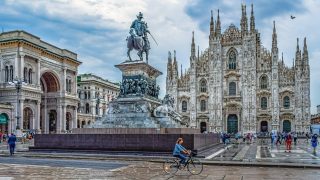
- Milan Cathedral (Duomo di Milano): The city's iconic Gothic cathedral with rooftop terraces and vast interiors, easily visited in the same day as Sant'Ambrogio.
- Galleria Vittorio Emanuele II: The grand 19th-century shopping arcade near the Duomo, perfect for a stylish stroll and people-watching after church visits.
The Sant'Ambrogio appears in our Complete Guide to Visiting Milan!

Moira & Andy
Hey! We're Moira & Andy. From hiking the Camino to trips around Europe in Bert our campervan — we've been traveling together since retirement in 2020!
This website uses affiliate links which may earn a commission at no additional cost to you!
Planning Your Visit
10.00-12.00 / 14.30-18.00
Free for general church entry; small donations may be appreciated, and some specific areas or events may have a modest fee.
Nearby Attractions
- San Lorenzo Basilica (3.2) km
Basilica - Museo della Scienza e della Tecnologia "Leonardo da Vinci" (3.4) km
Museum - Leonardo da Vinci's Last Supper (3.8) km
Church - Pinacoteca Ambrosiana (3.9) km
Gallery - Chiesa di San Maurizio al Monastero Maggiore (3.9) km
Church - Civico Museo Archeologico (3.9) km
Historic Site and Museum - Roman Imperial Palace (3.9) km
Roman Site - Royal Palace of Milan (4.0) km
Arts Venue and Palace - Duomo Museum (4.1) km
Museum - Milan Cathedral (Duomo di Milano) (4.2) km
Cathedral