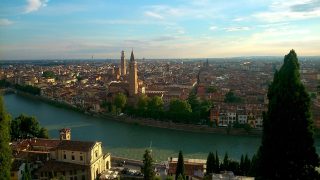
Santa Corona, Vicenza
Church in Vicenza
Chiesa di Santa Corona is a Gothic Roman Catholic church in the heart of Vicenza's historic centre, a short walk from Corso Palladio but pleasantly removed from the city's busiest flow. From the outside it can feel understated, yet once you step in, the space opens into that classic Gothic rhythm of height, shadow, and silence-an ideal setting for some genuinely heavyweight art.
What makes the visit special is how many layers of Vicenza's story meet here: a medieval foundation tied to a famed relic, a strong Dominican legacy, and a Renaissance imprint through the Valmarana Chapel, traditionally linked to Andrea Palladio. Add in paintings by masters like Giovanni Bellini and Veronese, and Santa Corona becomes less “just another church” and more a concentrated hit of Vicenza's cultural DNA.
Table of Contents
- History and Significance of the Chiesa di Santa Corona
- Things to See and Do in the Chiesa di Santa Corona
- How to Get to the Chiesa di Santa Corona
- Practical Tips on Visiting the Chiesa di Santa Corona
- Where to Stay Close to the Chiesa di Santa Corona
- Is the Chiesa di Santa Corona Worth Visiting?
- For Different Travelers
- FAQs for Visiting Chiesa di Santa Corona
- Nearby Attractions to the Chiesa di Santa Corona
History and Significance of the Chiesa di Santa Corona
Construction began in 1261, commissioned by the Blessed Bishop Bartolomeo da Breganze to house a thorn associated with the Crown of Thorns, a relic said to have been gifted to him by Louis IX of France. That origin story still shapes the church's identity today: Santa Corona was built for devotion, but also for prestige, anchoring Vicenza within a wider European network of relics, pilgrimage, and political-religious symbolism.
Over time, the church became closely associated with the Dominican order, and the interior was enriched across centuries with chapels, altars, and artworks that reflect Vicenza’s confidence and patronage. The Napoleonic suppressions ended Dominican control, but the building’s artistic importance only grew clearer with modern conservation and public access, especially as the site became integrated into the city’s cultural circuit.
Things to See and Do in the Chiesa di Santa Corona
Begin by letting your eyes adjust to the Gothic interior, then make a beeline for Giovanni Bellini’s Baptism of Christ, a work that rewards slow looking: the balance, the light, and the sense of stillness feel perfectly matched to the church setting. Nearby, Paolo Veronese’s Adoration of the Magi brings a very different energy-richer colour, more movement, and that unmistakably confident Venetian theatricality.
Next, seek out the Thiene Chapel frescoes by Michelino da Besozzo, which carry a softer, more courtly mood and offer an elegant counterpoint to the heavier Gothic architecture. Art lovers will also want to look for the Madonna delle stelle linked to Lorenzo Veneziano and Marcello Fogolino, the Maddalena e Santi by Bartolomeo Montagna, and the Madonna con Bambino e Santi by Giambattista Pittoni-works that quietly underline how serious Santa Corona is as a painting destination.
Finally, do not skip the lower level: the crypt adds atmosphere and, importantly, connects you to the Valmarana Chapel, traditionally attributed to Palladio. It is a strong “Vicenza moment” to go from medieval foundations to Renaissance design in a matter of steps, and it gives the visit a satisfying arc rather than feeling like a sequence of disconnected artworks.
How to Get to the Chiesa di Santa Corona
The nearest major airports are Venice Marco Polo (VCE), Verona (VRN), and Treviso (TSF), all commonly used gateways for Vicenza depending on flight prices and onward connections. For the best deals and a seamless booking experience, check out these flights to Vicenza on Booking.com.
Vicenza is well connected by rail, and arriving at Vicenza railway station is often the simplest option if you are coming from Venice, Verona, Padua, or other cities along the main corridor. Use Omnio to easily compare schedules, book train tickets, and find the best prices all in one place for a hassle-free journey across Italy. From the station, you can walk into the historic centre if you enjoy an easy city stroll, or take a short local bus or taxi ride to save time and energy.
If you are driving, plan to park outside the tightest historic-centre area and walk in, as central streets can be restricted and less convenient than they look on a map. If you are looking to rent a car in Italy I recommend having a look at Discover Cars, first, as they compare prices and review multiple car rental agencies for you.
Practical Tips on Visiting the Chiesa di Santa Corona
- Entrance fee: €4 (standard); €2 (reduced).
- Opening hours: Daily: 10:00–18:00. Closed on Monday; 25 December; 1 January.
- Official website: https://www.museicivicivicenza.it/it/csc/visita.php
- Best time to visit: Aim for late morning or mid-afternoon when the light is good for paintings and the interior feels especially calm compared with peak street hours.
- How long to spend: Give it 45-75 minutes if you want to see the key artworks properly, or closer to 90 minutes if you enjoy reading context and comparing chapels slowly.
- Accessibility: Expect steps and level changes, particularly if you want to include the crypt and chapel areas, so it is best approached as a “take it at your pace” visit.
- Facilities: Treat it as a focused cultural stop and plan cafés and rest breaks before or after in the historic centre rather than expecting on-site services.
Where to Stay Close to the Chiesa di Santa Corona
For a culture-heavy itinerary, the best base is Vicenza's centro storico around Corso Palladio and Piazza dei Signori, so you can walk to Santa Corona, Teatro Olimpico, and the Palladian landmarks early and late without transport.
For a comfortable, well-located stay near the pedestrian zone and an easy walk into the historic core, consider Hotel Campo Marzio. If you want old-town character in a historic building close to the city’s main sights, Albergo Due Mori is a strong, atmospheric choice. For a boutique feel right on Vicenza’s main historic street, Palazzo Scamozzi puts you in an ideal position for early museum starts and evening walks.
Is the Chiesa di Santa Corona Worth Visiting?
Yes, especially if you want a “high-quality, low-hassle” cultural stop where the art is genuinely significant and the atmosphere is still reflective rather than tour-busy. It delivers the rare combination of Gothic architecture, Palladian association, and major Venetian painting in one compact visit that fits neatly into a Vicenza walking day.
Honest pivot: if churches blur together for you, or you are travelling with a group that is not interested in art, this may feel quieter than the headline Palladian sites. In that case, prioritise Teatro Olimpico and Piazza dei Signori, and keep Santa Corona as an optional add-on when you want a calmer interior break with real substance.
For Different Travelers
Families with Kids
This works best for families when you treat it as a short “treasure hunt” rather than a complete art lesson: pick one or two standout paintings and one chapel detail, then move on before attention fades. The church’s calmer atmosphere can be an advantage with older kids who enjoy slightly mysterious spaces, but younger children may find it too quiet unless you keep the visit brisk.
If you are visiting with kids, pair Santa Corona with something more open and energetic afterwards, like a square stop for gelato or a walk to a big landmark. That way the church becomes a memorable chapter of the day rather than a test of patience.
Couples & Romantic Getaways
Santa Corona is an excellent couples' stop because it feels intimate and contemplative, the kind of place where you naturally slow down and notice details together. It also suits a romantic Vicenza itinerary: art and architecture in the afternoon, then a relaxed aperitivo and dinner in the centre.
To keep it feeling unhurried, arrive with one clear priority-Bellini, Palladio, or simply the atmosphere-then let the rest be a bonus. The best visits here are the ones that feel chosen, not “checked off.”
Budget Travelers
This is a smart budget pick because it delivers top-tier cultural value without forcing you into a full day of paid museums. You can build a very strong Vicenza day by mixing Santa Corona with free street architecture, piazzas, and viewpoints, reserving your spending for one or two paid highlights.
If you are watching costs closely, plan your route so you are walking between sights and using cafés strategically rather than relying on taxis. Vicenza’s historic centre is compact enough that the city rewards good pacing more than paid transport.
History Buffs
History lovers will get a lot out of Santa Corona because the church is not a single-era monument; it is a layered record of faith, patronage, and civic identity. The relic story, Dominican heritage, and Renaissance interventions make it a compact case study in how medieval institutions and later artistic ambition shaped northern Italian cities.
For maximum context, combine it with Teatro Olimpico and a slow walk along Corso Palladio to see how architecture and cultural status reinforce each other in Vicenza. Santa Corona then becomes part of a wider narrative rather than a standalone stop.
FAQs for Visiting Chiesa di Santa Corona
Getting There
Tickets & Entry
Visiting Experience
Tours, Context & Itineraries
Photography
Accessibility & Facilities
Food & Breaks Nearby
Safety & Timing
Nearby Attractions to the Chiesa di Santa Corona
- Teatro Olimpico: Palladio's celebrated theatre is one of Vicenza's essential sights, especially for architecture lovers and first-time visitors.
- Basilica Palladiana: The city's iconic Palladian landmark on Piazza dei Signori, ideal for photos and a classic Vicenza piazza break.
- Palazzo Chiericati: Vicenza's main civic art museum, a strong follow-on if Santa Corona has put you in the mood for more painting.
- Museo Naturalistico Archeologico: A nearby museum that broadens the day beyond art into archaeology and natural history with an easy, central visit.
- Santuario della Madonna di Monte Berico: A hilltop sanctuary with sweeping views over Vicenza, perfect for a late-day panorama if you want fresh air.
The Santa Corona appears in our Complete Guide to Visiting Vicenza!

Moira & Andy
Hey! We're Moira & Andy. From hiking the Camino to trips around Europe in Bert our campervan — we've been traveling together since retirement in 2020!
This website uses affiliate links which may earn a commission at no additional cost to you!
Planning Your Visit
Daily: 10:00-18:00. Closed on Monday; 25 December; 1 January.
€4 (standard); €2 (reduced).
Nearby Attractions
- Museo Naturalistico Archeologico (0.0) km
Museum - Palazzo Chiericati (0.1) km
Museum and Palace - Palazzo Leoni Montanari (0.1) km
Historic Building and Museum - Teatro Olimpico (0.2) km
Historic Building and Theatre - Piazza dei Signori and Loggia del Capitaniato (0.2) km
Historic Building - Basilica Palladiana (0.3) km
Basilica - Villa Valmarana ai Nani (1.7) km
Historic Building - Villa La Rotonda (2.2) km
Historic Building - Ponte Molino (29.7) km
Bridge and Historic Building - Torre dell'Orologio (29.8) km
Tower