Saint Saviour's Church, Dubrovnik
Church, Historic Building and Religious Building in Dubrovnik
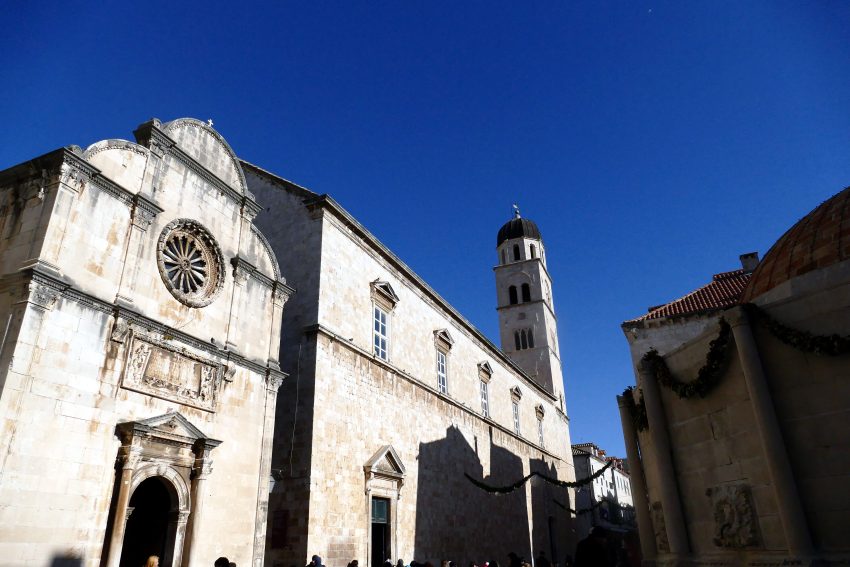
Saint Saviour's Church is a small votive church in Dubrovnik's Old Town, positioned right by the Pile Gate entrance and nestled beside the Franciscan complex and the city walls. Because it sits on one of the busiest pedestrian routes into the historic center, it's an easy, natural stop as you begin exploring Stradun and the surrounding lanes.
Most travelers experience it as part of a self-guided stroll or an Old Town walking tour: you pass it within minutes of entering through Pile Gate, and it pairs perfectly with nearby highlights like the Franciscan Monastery, the Onofrio Fountain, and the start of the City Walls route. Even if you only have a short window in Dubrovnik, it's a worthwhile place to pause, look up at the façade, and get a feel for the city's layered history.
Table of Contents
- History and Significance of the Saint Saviour’s Church
- Things to See and Do in the Saint Saviour’s Church
- How to Get to the Saint Saviour’s Church
- Practical Tips on Visiting the Saint Saviour’s Church
- Where to Stay Close to the Saint Saviour’s Church
- Is the Saint Saviour’s Church Worth Visiting?
- For Different Travelers
- FAQs for Visiting Saint Saviour’s Church
- Nearby Attractions to the Saint Saviour’s Church
History and Significance of the Saint Saviour’s Church
Saint Saviour's Church was built as a vow of gratitude after a damaging earthquake struck Dubrovnik in 1520. The city authorities commissioned the church as a public act of devotion and remembrance, turning a moment of crisis into a lasting landmark at one of the most prominent entry points to the Old Town.
Architecturally, it’s often appreciated as a compact example of Dubrovnik’s Renaissance-era building, with a clean, harmonious exterior that stands out precisely because it is modest in scale. Its location—right at the threshold of the walled city—also gives it symbolic weight: it’s one of the first sacred spaces many visitors encounter as they step into Dubrovnik’s historic core.
Another reason it’s frequently mentioned in local history is that it survived the catastrophic 1667 earthquake far better than many other structures in the city. That survival adds an extra layer of meaning to a church originally created in response to seismic disaster.
Things to See and Do in the Saint Saviour’s Church
Start with the exterior: the façade and portal are the main visual draw, especially when you approach from Pile Gate and the space opens up in front of the Franciscan complex. It's a great spot to slow down, notice stonework details, and frame photos that capture the contrast between the church, the walls, and the flow of people entering the Old Town.
If the church is open, step inside for a brief, quiet reset from the busy gateway area. The interior experience is typically simple and contemplative rather than grand, which can be refreshing after visiting Dubrovnik’s larger, more ornate churches.
Even when it's closed, it still works well as a context stop on a walking tour: guides often use it to explain how Dubrovnik responded to earthquakes, how the Republic organized civic life, and why religious vows and public inscriptions mattered in the city's identity.
How to Get to the Saint Saviour’s Church
The nearest airport is Dubrovnik Airport (DBV), around 20 km from the Old Town; most visitors arrive by shuttle bus, taxi, or private transfer to Pile Gate or the main bus station area, then continue on foot. For the best deals and a seamless booking experience, check out these flights to Dubrovnik on Booking.com.
Dubrovnik does not have a central passenger train station, so travelers coming by rail typically take a train to a larger Croatian hub and then connect onward by intercity bus to Dubrovnik. Train schedules and bookings can be found on Omio.
If you're traveling by car, aim for parking outside the Old Town (such as public garages/parking zones near the western side) and walk to Pile Gate, since vehicles are restricted within the historic center.
Practical Tips on Visiting the Saint Saviour’s Church
- Entrance fee: Free; donations appreciated.
- Opening hours: Check official website.
- Best time to visit: Go early in the morning or later in the afternoon to avoid the biggest cruise-ship and tour-group surges at Pile Gate.
- How long to spend: Plan 5–15 minutes for the exterior and nearby viewpoints; add a few extra minutes if it’s open and you can step inside.
- Accessibility: The area around Pile Gate is busy and can be uneven underfoot; approach slowly and expect steps/thresholds if entering.
- Facilities: There are plenty of cafés, restrooms (often in nearby venues), and services close by, but the church itself is typically a quick, simple stop.
Where to Stay Close to the Saint Saviour’s Church
Base yourself inside Dubrovnik Old Town (or immediately outside the walls near Pile Gate) for the easiest early-morning and late-evening access, when the streets are at their most atmospheric.
Hilton Imperial Dubrovnik A classic choice near Pile Gate with a polished, full-service feel—ideal if you want comfort, on-site amenities, and a very short walk to the Old Town entrance.
Hotel Stari Grad A boutique stay inside the walls that puts you in the middle of the action, great for travelers who want to step out directly into the Old Town lanes.
The Pucic Palace A character-rich option for those who love historic ambience, with an elegant setting that matches the Old Town’s heritage vibe.
Hotel Dubrovnik Palace Best if you prefer a resort-style experience with sea views and facilities, while still being a straightforward ride to the Old Town for sightseeing.
Rixos Premium Dubrovnik A strong pick for travelers who want a modern, upscale base with wellness and dining options, balancing relaxation with easy access to the historic center.
Is the Saint Saviour’s Church Worth Visiting?
Yes—especially because it costs you almost no extra effort. Its location by Pile Gate makes it one of the easiest historic landmarks to include, and it adds meaningful context to Dubrovnik's earthquake history and Renaissance-era city life.
Honest Pivot: if you're short on time and mainly want dramatic interiors, major art, or panoramic viewpoints, you may prefer to prioritize the City Walls, Lovrijenac Fortress, or the cathedral area instead. Saint Saviour's Church shines most as a quick, thoughtful stop rather than a main event.
What Other Travellers Say...

Reviews are very positive overall, with many travelers appreciating the church's location right by Pile Gate and its value as a quick historic stop on an Old Town walk. Common positives include its Renaissance-era story (built after the 1520 earthquake), the fact that it survived later damage, and how easy it is to pair with nearby sights like the Franciscan area. The most frequent downside is that it often appears closed to visitors, so some people only experience it from the outside; a few comments also suggest it's less visually impressive than Dubrovnik's larger churches.


For Different Travelers
Different travel styles get different value here, largely because Saint Saviour's Church is a low-commitment stop that fits neatly into routes you're already walking.
Families with Kids
For families, the biggest advantage is convenience: it’s right at the Old Town entry, so you can keep the visit short and flexible. It also works as a simple “spot the details” moment—stone carvings, inscriptions, and the surrounding walls.
If the church is closed, it’s still a useful landmark for navigation and a quick photo stop before moving on to kid-friendlier highlights like the fountains, gelato stops, or the City Walls (for older kids).
Couples & Romantic Getaways
Couples will like it most early or late in the day, when the gateway area calms down and the Old Town feels more intimate. It's a small pause that can make a walking tour feel more personal and less checklist-driven.
Pair it with a slow wander toward Stradun, then peel off into quieter side streets for a café stop. The charm here is subtle: a calm, historic corner at the start of a classic Dubrovnik stroll.
Budget Travelers
Budget travelers benefit because it’s essentially a free add-on to your Old Town walk, with no need for tickets or special planning. It’s also a good anchor point for self-guided itineraries that focus on atmosphere rather than paid attractions.
If you’re watching costs, combine this stop with other nearby “high impact, low spend” sights like the main streets and squares, viewpoints from outside the walls, and scenic walks along the perimeter.
History Buffs
History lovers will appreciate the church’s origin story as a civic vow after the 1520 earthquake and its survival through later disasters. It’s a compact example of how Dubrovnik’s public life, faith, and governance intertwined.
Use it as a starting point to trace a theme: earthquake memory, Renaissance rebuilding, and the Republic’s approach to public inscriptions and monuments. It’s especially satisfying when visited with a guide who can connect it to nearby institutions like the Franciscan complex.
FAQs for Visiting Saint Saviour’s Church
Getting There
Tickets & Entry
Visiting Experience
Tours, Context & Itineraries
Photography
Accessibility & Facilities
Food & Breaks Nearby
Safety & Timing
Nearby Attractions to the Saint Saviour’s Church
- Pile Gate: The main western entrance to Dubrovnik's Old Town and a natural starting point for most walking routes.
- Franciscan Church and Monastery: A major nearby complex known for its cloister and historic atmosphere.
- Onofrio's Large Fountain: A classic meeting point just inside the walls and a quick, iconic photo stop.
- Stradun (Placa): Dubrovnik's main street, perfect for an easy orientation walk through the Old Town.
- Dubrovnik City Walls: The signature panoramic walk, offering sweeping views over rooftops and the Adriatic.
The Saint Saviour's Church appears in our Complete Guide to Visiting Dubrovnik!

Moira & Andy
Hey! We're Moira & Andy. From hiking the Camino to trips around Europe in Bert our campervan — we've been traveling together since retirement in 2020!
This website uses affiliate links which may earn a commission at no additional cost to you!
Planning Your Visit
Check official website.
Free; donations appreciated.
Nearby Attractions
- Franciscan Monastery & Museum (0) km
Monastery, Museum and Religious Building - Large Onofrio's Fountain (0) km
Fountain, Historic Site and Monument - Stradun Street (0) km
Attraction, Promenade and Street - Pile Gate (0.1) km
Attraction, City Gate and Historic Site - Fort Bokar (0.1) km
Castle, City Walls and Historic Site - Dubrovnik Ethnographic Museum (0.1) km
Museum - Minceta Tower (0.2) km
City Walls, Tower and Viewing Point - Dubrovnik West Harbour and Pier (0.2) km
Docks, Harbour and Pier - Saint Blaise's Church (0.3) km
Church, Historic Building and Religious Building - Luža Square (0.3) km
Attraction, Historic Site and Square