Royal Palace of Milan
Arts Venue and Palace in Milan

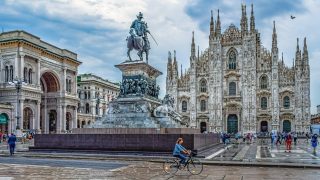
The Royal Palace of Milan, or Palazzo Reale di Milano, is one of the top sights in Milan if you're fascinated by power, politics, and art all woven into a single building. Standing on Piazza del Duomo, it was once the beating heart of government for the region and, at times, for all of Italy, hosting dynasties from the Visconti and Sforza to the Habsburgs, Savoy, and Napoleon himself. Today, its grand halls and refurbished rooms house over 1,500 artworks and rotating blockbuster exhibitions, but the spirit of the courts that once lived here is still very much alive in the architecture.
Walking through the palace, you move from Baroque flourishes to Piermarini's elegant Neoclassical refurbishments of 1769, all carefully balanced so the building holds its own beside the Duomo. Each space tells a story: Maria Theresa's Baroque-rich era, the Napoleonic period with its taste for luxury, and the later chapters that saw Italy's unification and the shifting boundaries of European power. Between the Hall of the Caryatids, the Tapestry Hall, and intimate salons, this is a great place to visit on a walking tour of Milan if you want to step straight into the world of receptions, balls, and royal intrigue.
Table of Contents
- History and Significance of the Royal Palace of Milan
- Things to See and Do in the Royal Palace of Milan
- How to Get to the Royal Palace of Milan
- Practical Tips on Visiting the Royal Palace of Milan
- Where to Stay close to the Royal Palace of Milan
- Is the Royal Palace of Milan Worth Visiting?
- FAQs for Visiting the Royal Palace of Milan
- Nearby Attractions to the Royal Palace of Milan
History and Significance of the Royal Palace of Milan
The Royal Palace has stood as a symbol of power in Milan since the Middle Ages, when families like the Torriani, Visconti, and later the Sforza chose it as their seat of government. Its position beside the cathedral was no accident: the palace and Duomo formed a monumental pair, with the Sforza investing heavily in renovations to ensure their residence matched the splendour of the city's great church. Over the centuries, architect Pellegrino Tibaldi and others reworked the complex, connecting it to nearby churches and expanding its footprint to suit changing tastes and political needs.
In the 18th century, under Habsburg rule, Maria Theresa of Austria used the palace as a key administrative centre. Her influence brought rich Baroque decoration into the interiors, adding gilded details, frescoes, and tapestries that proclaimed imperial authority. At the same time, she commissioned work that set the stage for later Neoclassical transformations, including the involvement of court architect Giuseppe Piermarini. Although she prevented Mozart from conducting an opera here, her imprint on the palace is still visible in the grand sequence of rooms and ceremonial spaces.
The French Revolution and Napoleonic era reshaped Europe, and Milan was no exception. As part of Napoleon's empire, the palace became his residence in the city, echoing his taste for opulence and imperial symbolism. The Hall of the Caryatids, once a lavish ballroom, gained a fresco dedicated to Napoleon that survived the 1943 bombings which heavily damaged parts of the building. After Napoleon's defeat, the Concert of Europe ushered in a new balance of power, reflected in further adjustments to the palace. Eventually, as Italy moved towards unification, the building's role shifted from pure governance to a broader cultural one, a transition that paved the way for today's museum.
Things to See and Do in the Royal Palace of Milan
A visit to the Royal Palace unfolds as a journey through political eras as much as through rooms. The museum’s layout mirrors the building’s history, beginning with Maria Theresa’s period of Baroque splendour. As you move along, notice how stucco, gilding, and decorative schemes change, marking transitions from Habsburg to Napoleonic tastes, and then into the age of Italian unification. The rooms themselves become a narrative backdrop for the artworks and temporary exhibitions that now fill them.
The Hall of the Caryatids is one of the palace’s most impressive spaces. Once the setting for glittering balls and receptions, this vast hall is lined with sculpted caryatid figures that appear to support the ceiling, their presence both decorative and symbolic. Here you can also see the surviving fresco dedicated to Napoleon, a poignant reminder of the bomb damage that scarred the palace in 1943 and of the resilience of its art. Nearby, the Tapestry Hall showcases works inspired by the famed Gobelins Manufactory in Paris, with richly woven textiles that bring royal narratives and mythological scenes to life.
Beyond the permanent décor, the palace is best known today for its major temporary exhibitions. These often feature loans from top international museums, spanning Impressionism, Renaissance masters such as Leonardo da Vinci, and modern giants like Kandinsky and Picasso. Fashion and design shows also find a natural home here, reflecting Milan's status as a style capital. Because the exhibitions change regularly, you can return on different trips and experience a completely new side of the palace each time, making it one of the must-see places in Milan for repeat visitors as well as first-timers.
How to Get to the Royal Palace of Milan
The Royal Palace of Milan sits directly on Piazza del Duomo, making it one of the most central and accessible landmarks in the city. Most international visitors arrive via Milan Malpensa, Milan Linate, or Orio al Serio (Bergamo) airports, all of which offer shuttle buses, trains, and taxis that bring you into the city centre and within easy reach of the Duomo area. For the best deals and a seamless booking experience, check out these flights to Milan on Booking.com.
Once you're in Milan, the palace is just steps away from the Duomo metro station and is easily reached by tram and bus routes that converge on the historic core; from nearby districts, it's a straightforward walk through the centre's pedestrian streets.Use Omnio to easily compare schedules, book train tickets, and find the best prices all in one place for a hassle-free journey across Italy. Its location beside the cathedral and Galleria Vittorio Emanuele II makes it simple to bundle into any central itinerary.
If you're travelling by car, remember that central Milan has congestion charges, limited traffic zones, and very limited on-street parking around the Duomo.If you are looking to rent a car in Italy I recommend having a look at Discover Cars, first, as they compare prices and review multiple car rental agencies for you. It’s generally best to leave your car in a garage on the edge of the centre and continue by metro or on foot, which also lets you enjoy the approach to the palace through the piazza without worrying about traffic.
Practical Tips on Visiting the Royal Palace of Milan
- Suggested tips: Check in advance which temporary exhibitions are running and consider reserving tickets, especially for blockbuster shows that can draw large crowds.
- Best time to visit: Weekday mornings or late afternoons are usually quieter; evenings can be atmospheric if extended hours are offered for special exhibitions.
- Entrance fee: €17.00
- Opening hours: Tuesday to Friday: from 9.30 a.m. to 7.30 p.m. ; Saturdays: from 9.30 a.m. to 10.30 p.m.; Sunday: from 9.30 a.m. to 7.30 p.m.; Monday Closed
- Official website: https://www.palazzorealemilano.it/
- How long to spend: Allow at least 1.5-2 hours for a single exhibition plus a walk through key rooms; plan half a day if you want to explore multiple shows and take your time in the historic halls.
- Accessibility: The palace is equipped with lifts and accessible routes in many areas, though some historic sections may involve steps; check at the entrance for an accessibility map or guidance.
- Facilities: Expect a ticket office, cloakroom, restrooms, bookshop, and sometimes a café; countless cafés, bars, and restaurants ring Piazza del Duomo itself.
- Photography tip: Capture the contrast between the palace interiors and the Duomo just outside; inside, focus on details like caryatids, ceiling frescoes, and tapestry textures rather than only wide shots.
- Guided tours: Consider a guided tour or audio guide if you want deeper context on the courts that lived here, from the Sforza and Habsburgs to Napoleon and the Kingdom of Italy.
- Nearby food options: After your visit, explore the side streets off Piazza del Duomo for everything from quick espresso bars to refined restaurants, ideal for reflecting on the palace’s long history.
Where to Stay close to the Royal Palace of Milan
Staying near the Royal Palace places you right in the heart of Milan, with the Duomo, Galleria Vittorio Emanuele II, and La Scala all within a short walk. For a polished base overlooking a quiet square near the cathedral, Rosa Grand Milano - Starhotels Collezione offers comfort and convenience just a few minutes from the palace. If you prefer a more intimate hotel with artistic flair, Hotel Spadari al Duomo combines characterful design with a fantastic location close to Piazza del Duomo. Another excellent option is NH Collection Milano President, which provides modern style and easy access on foot or by metro to the Royal Palace and the wider historic centre.
Is the Royal Palace of Milan Worth Visiting?
The Royal Palace of Milan is absolutely worth visiting, especially if you're interested in how art, architecture, and politics intersect. Few places in the city offer such a direct sense of continuity from medieval dynasties through Habsburg and Napoleonic rule to unified Italy. Add in the rotating programme of high-calibre exhibitions, the grandeur of spaces like the Hall of the Caryatids and the Tapestry Hall, and the unbeatable location beside the Duomo, and it becomes clear why the palace stands out as one of the best places to visit in Milan for culture lovers. Whether it's your first time in the city or a return trip, the Palazzo Reale offers new perspectives with every exhibition.
What Other Travellers Say...

Palazzo Reale di Milano, on Piazza del Duomo, offers grand staircases and regal halls in an elegant former palace turned exhibition space; visitors praise its well-curated rotating shows spanning classical to contemporary art, immersive dimly lit galleries that create a memorable atmosphere, and displays related to the cathedral and Christian history, making it a rewarding stop for art and history enthusiasts.



FAQs for Visiting the Royal Palace of Milan
Nearby Attractions to the Royal Palace of Milan
- Milan Cathedral (Duomo di Milano): The city's iconic Gothic cathedral with vast interiors, stained glass, and panoramic rooftop terraces.
- Galleria Vittorio Emanuele II: A grand 19th-century iron-and-glass arcade linking Piazza del Duomo and Piazza della Scala, ideal for shopping and people-watching.
- Museo del Novecento: A museum of twentieth-century Italian art on Piazza del Duomo, offering modern works and striking views of the cathedral.
- Teatro alla Scala: Milan's world-famous opera house and theatre museum, a short walk away and perfect to pair with a cultural day at the palace.
- Pinacoteca Ambrosiana: A historic gallery and library nearby, home to works by Leonardo, Caravaggio, Botticelli, and pages from the Codex Atlanticus.
The Royal Palace of Milan appears in our Complete Guide to Visiting Milan!

Moira & Andy
Hey! We're Moira & Andy. From hiking the Camino to trips around Europe in Bert our campervan — we've been traveling together since retirement in 2020!
This website uses affiliate links which may earn a commission at no additional cost to you!
Planning Your Visit
Tuesday to Friday: from 9.30 a.m. to 7.30 p.m. ; Saturdays: from 9.30 a.m. to 10.30 p.m.; Sunday: from 9.30 a.m. to 7.30 p.m.; Monday Closed
€17.00
Nearby Attractions
- Duomo Museum (0.0) km
Museum - Milan Cathedral (Duomo di Milano) (0.1) km
Cathedral - Galleria Vittorio Emanuele II (0.3) km
Shopping Centre - San Bernardino alle Ossa (0.3) km
Cemetery and Church - Pinacoteca Ambrosiana (0.4) km
Gallery - Teatro alla Scala (0.5) km
Theatre - Museo Poldi Pezzoli (0.6) km
Museum - Museo Bagatti Valsecchi (0.8) km
Historic Site and Museum - Roman Imperial Palace (0.9) km
Roman Site - Orto Botanico di Brera (0.9) km
Gardens