Rocca Paolina, Perugia
Castle and Gallery in Perugia
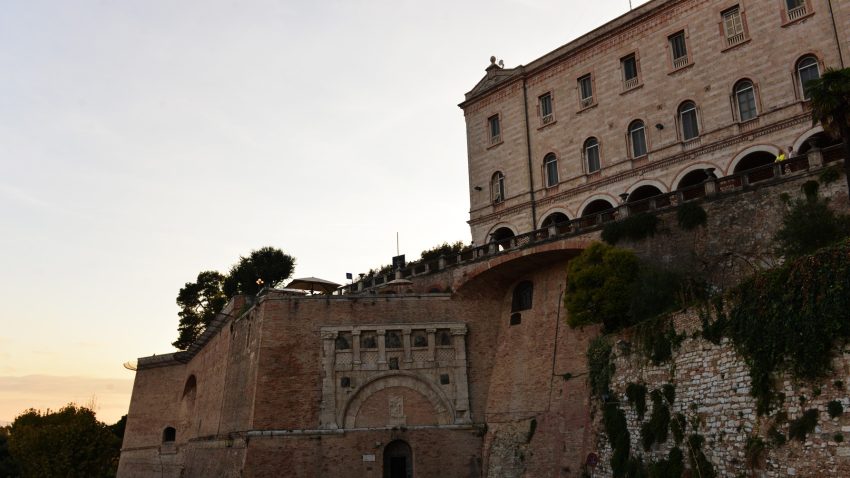
Rocca Paolina is one of those places that completely changes how you see Perugia. Built in 1540 by Pope Paul III after the city's defeat in the Salt War, this huge fortress once dominated the skyline; today, its remains form an underground labyrinth of tunnels, arches and buried streets that you walk through on your way between the bus station and the historic centre. The papal authorities demolished a whole district belonging to the powerful Baglioni family to build it, and as you wander past ancient towers, vaulted chambers and even the communal bread oven, you are literally walking through a neighbourhood frozen in stone.
What makes Rocca Paolina especially fascinating is the way past and present coexist. One of its entrances incorporates Porta Marzia, a third-century BC Etruscan gate, while inside, escalators now carry commuters and visitors up to Piazza Italia. The Centro Espositivo della Rocca Paolina (C.E.R.P.), near these escalators, hosts free art exhibitions and cultural events, and in December the vaults are filled with stalls and lights for a popular Christmas market. It is often visited on walking tours of Perugia because it offers a dramatic, atmospheric shortcut between everyday city life and its most turbulent history.
Table of Contents
- History and Significance of the Rocca Paolina
- Things to See and Do in the Rocca Paolina
- How to Get to the Rocca Paolina
- Practical Tips on Visiting the Rocca Paolina
- Where to Stay close to the Rocca Paolina
- Is the Rocca Paolina Worth Visiting?
- FAQs for Visiting Rocca Paolina
- Nearby Attractions to the Rocca Paolina
History and Significance of the Rocca Paolina
The Rocca Paolina was built as a blunt instrument of power. After Perugia's defeat in the Salt War, Pope Paul III ordered a fortress that would both control the city and punish its leading family, the Baglioni, who had long dominated local politics. Their neighbourhood was razed, and on top of its ruins rose the massive papal stronghold, a physical reminder that Perugia was now firmly under papal authority. The fortress was designed not only as a military structure but also as a symbol: its bulk overshadowed the city and made resistance seem futile.
Underneath, however, the old urban fabric was not entirely erased. Streets, houses and towers were partially incorporated into the foundations and internal structure, creating a strange layered city within a city. Over time, as the military importance of the Rocca Paolina faded and political realities changed, the fortress was gradually dismantled above ground. What remained was the underground maze: a network of vaulted corridors, stairways and chambers where you can still see bits of medieval houses and the outlines of former streets.
Today, Rocca Paolina stands as a powerful reminder of Perugia's turbulent past and the violent shifts in power that reshaped the city. At the same time, its reuse as a pedestrian route and cultural venue shows how Perugia has reclaimed this symbol of domination and transformed it into a space for daily life and public events. Walking through it, you sense both the weight of history and the resilience of a city that has learned to live with - and inside - its own scars.
Things to See and Do in the Rocca Paolina
As you enter Rocca Paolina, take a moment to adjust to the change in atmosphere: cool air, muffled sounds and the echo of footsteps on old stone. The main corridors follow the lines of former streets, and you will notice fragments of towers, doorways and arches embedded in the walls. Look out for the remains of a communal bread-baking oven, a poignant reminder that this was once a lived-in neighbourhood before it became part of a fortress.
One of the most striking features is Porta Marzia, the “Mars Gate,” where the upper part of a third-century BC Etruscan gate has been incorporated into one of the entrances. Its carved stone blocks and ancient profile contrast sharply with the later fortress walls, giving you a sense of how many layers of Perugia’s history are stacked here. As you wander, look up at the vaulted ceilings and down the side passages; some open into large chambers that once formed the interior of defensive structures or absorbed parts of medieval houses.
Do not miss the Centro Espositivo della Rocca Paolina (C.E.R.P.), located near the escalators that rise towards Piazza Italia. This free exhibition space hosts rotating art shows that make good use of the dramatic underground backdrop, blending contemporary creativity with historic stone. If you visit in December, the same spaces come alive with the Christmas market, where stalls, lights and decorations transform the fortress into a festive grotto. Even if you are simply using Rocca Paolina as a shortcut between the lower town and the centre, it quickly becomes one of the things to do in Perugia that you will remember long after you leave.
How to Get to the Rocca Paolina
Rocca Paolina sits at one of the key access points to Perugia's historic centre, with entrances near Piazza Partigiani (bus station area) and Piazza Italia at the top of the hill. Perugia is served by San Francesco d'Assisi - Umbria International Airport and can also be reached from larger hubs such as Rome and Florence before continuing by regional train, coach or hire car into the city. For the best deals and a seamless booking experience, check out these flights to Perugia on Booking.com. From the airport or bus terminals, local buses, the minimetrò and taxis can bring you to Piazza Partigiani or nearby, where you can enter the Rocca and ride the escalators up through the fortress.
If you arrive by train at Perugia Fontivegge station, frequent buses and the minimetrò connect you with the historic centre. Use Omnio to easily compare schedules, book train tickets, and find the best prices all in one place for a hassle-free journey across Italy. From there, it is a short walk to the Rocca Paolina entrances, and you can use the escalators inside as a dramatic route up to Piazza Italia and the main streets. This makes the fortress both an attraction and a practical way to move between levels of the city without tackling steep climbs outdoors.
Travelling by car, you can park in one of the car parks around Piazza Partigiani or other edge-of-centre facilities and then access the Rocca directly from the lower levels. If you are looking to rent a car in Italy I recommend having a look at Discover Cars, first, as they compare prices and review multiple car rental agencies for you. Using the escalators through the fortress brings you up into the heart of Perugia, so the Rocca becomes your gateway to the old town as well as a historical experience in its own right.
Practical Tips on Visiting the Rocca Paolina
- Suggested tips: Use Rocca Paolina as both a sightseeing stop and a vertical shortcut between the lower car parks or bus station and the upper historic centre, especially in hot or rainy weather.
- Best time to visit: Early morning offers quiet, atmospheric corridors, while evenings and December weekends are livelier, particularly when the Christmas market is on.
- Entrance fee: Free – access to Rocca Paolina and its passageways is generally free of charge.
- Opening hours: Rocca: Daily 6:15am-2:00am C.E.R.P: Tuesday to Sunday 11:00 – 19:00
- Official website: https://www.comune.perugia.it/luogo/rocca-paolina/
- How long to spend: Plan 30-60 minutes for a self-guided wander through the tunnels and exhibitions; longer if you visit during events or markets.
- Accessibility: Escalators make vertical movement easier, but some areas have uneven floors and steps; check locally for lift access and the most accessible routes if you have reduced mobility.
- Facilities: Basic facilities are available near entrances and escalators; for cafés, shops and full services, head to Piazza Italia or nearby streets at the top of the hill.
- Photography tip: Try capturing the long vaulted corridors with leading lines, and frame shots that contrast old stone arches with modern escalators to highlight the mix of past and present.
- Guided tours: Consider joining a guided tour that explains the Salt War, the Baglioni family and the fortress’s construction and dismantling; it adds depth to what you see in the walls.
- Nearby food options: Once you emerge at Piazza Italia or the surrounding streets, you will find cafés, gelaterias and restaurants where you can warm up or cool down after exploring the underground passages.
Where to Stay close to the Rocca Paolina
Staying near Rocca Paolina gives you easy access to both the fortress and the rest of Perugia's historic centre via the escalators and nearby streets. A classic, upscale option is Sina Brufani, located just a few steps from one of the main Rocca entrances and offering sweeping views over the Umbrian countryside. For something more intimate yet equally convenient, Hotel Priori Secret Garden places you within walking distance of both Rocca Paolina and Piazza IV Novembre, tucked into the medieval streets. A welcoming, budget-friendly base is Albergo Morlacchi, from which you can stroll to the fortress, main squares and many of the city’s restaurants and bars.
Is the Rocca Paolina Worth Visiting?
Rocca Paolina is absolutely worth visiting, and it often ends up being one of travellers' favourite memories of Perugia. Few places offer such a vivid sense of walking through history: you move from modern escalators to buried streets, past tower remains and old ovens, all under vaulted ceilings that once formed the belly of a papal fortress. At the same time, the Rocca is woven into daily life as a commuter route and event space, so you experience it not as a static ruin but as part of the living city. If you want to understand Perugia's character - resilient, layered and a little mysterious - this underground world is essential.
What Other Travellers Say...

Rocca Paolina, on Piazza Italia 11 in Perugia, is a mid-16th-century fortress transformed into a cultural hub with an exhibition about the city; visitors describe it as an evocative underground mini‑town where old streets, houses and alleys are absorbed into the fort, offering a theatrical, mysterious stroll beneath the modern city. Reviewers note the entrance can be hard to spot (there are escalators from a lower level), there's no admission fee, and the experience feels unique and slightly spooky—an essential stop to grasp Perugia's urban layers.


FAQs for Visiting Rocca Paolina
Nearby Attractions to the Rocca Paolina
- Piazza Italia: Terrace-like square at the top of the Rocca, offering views over the valley and easy access to Perugia's main streets.
- Piazza IV Novembre: Historic main square with the Great Fountain, Cathedral of San Lorenzo and Palazzo dei Priori, a short walk from the upper Rocca exits.
- Civic Museum at Palazzo della Penna: Cultural museum with historic interiors and modern art exhibitions, located nearby and easily combined with a Rocca visit.
- National Gallery of Umbria: Major regional art museum housed in Palazzo dei Priori, showcasing Umbrian art from the 13th to 19th centuries.
- Etruscan Well (Pozzo Etrusco): Ancient waterwork hidden in the old town, offering another glimpse into Perugia's deep, multi-layered past.
The Rocca Paolina appears in our Complete Guide to Visiting Perugia!

Moira & Andy
Hey! We're Moira & Andy. From hiking the Camino to trips around Europe in Bert our campervan — we've been traveling together since retirement in 2020!
This website uses affiliate links which may earn a commission at no additional cost to you!
Planning Your Visit
Rocca: Daily 6:15am-2:00am
C.E.R.P: Tuesday to Sunday 11:00 - 19:00
Free - access to Rocca Paolina and its passageways is generally free of charge.
Nearby Attractions
- Civic Museum at Palazzo della Penna (0.1) km
Historic Building and Museum - Piazza Italia (0.1) km
Square - National Archeological Museum of Perugia (0.3) km
Museum - Palazzo Baldeschi al Corso (0.3) km
Palace - Perugino Monument (0.3) km
Monument - Nobile Collegio del Cambio (0.4) km
Museum - Corso Vannucci (0.4) km
Street - Palazzo del Capitano del Popolo (0.4) km
Palace - National Gallery of Umbria (0.4) km
Gallery - Nobile Collegio della Mercanzia (0.4) km
Historic Building and Museum