Real Ermita de San Antonio de la Florida, Madrid
Church, Historic Building and Historic Site in Madrid
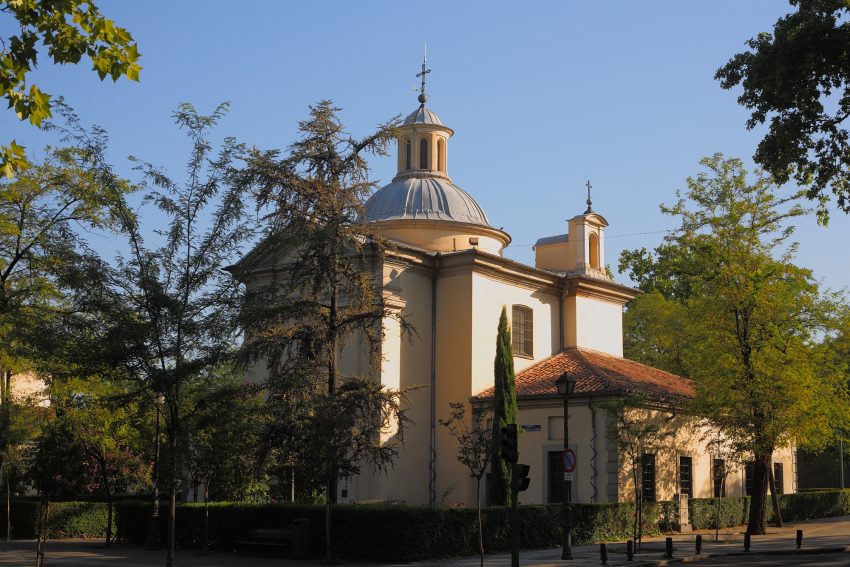
The Real Ermita de San Antonio de la Florida is a small, sober-looking chapel in Madrid that opens up into a showstopper: a dome and vaults covered with luminous frescoes by Francisco de Goya. It sits by the Glorieta de San Antonio de la Florida, close to Príncipe Pío and the green edges of Parque del Oeste, making it an easy add-on to a riverside stroll or a west-of-center sightseeing loop.
It's ideal on a walking tour that links the Royal Palace area to Príncipe Pío and Madrid Río, or as a focused art stop when you want something quieter than the big-ticket museums. The best place to “see” it is simply to stand under the central dome and then use the mirrors and side angles to catch details in the ceiling scenes without straining your neck.
Table of Contents
- History and Significance of the Real Ermita de San Antonio de la Florida
- Things to See and Do in the Real Ermita de San Antonio de la Florida
- How to Get to the Real Ermita de San Antonio de la Florida
- Practical Tips on Visiting the Real Ermita de San Antonio de la Florida
- Where to Stay Close to the Real Ermita de San Antonio de la Florida
- Is the Real Ermita de San Antonio de la Florida Worth Visiting?
- For Different Travelers
- FAQs for Visiting Real Ermita de San Antonio de la Florida
- Nearby Attractions to the Real Ermita de San Antonio de la Florida
History and Significance of the Real Ermita de San Antonio de la Florida
The current hermitage dates to the late 18th century, built under royal patronage and designed in a clean, neoclassical style that feels intentionally restrained from the outside. That simplicity is part of the point: it sets you up for the dramatic reveal once you step inside.
Goya painted the interior frescoes in 1798, creating a lively, almost cinematic religious narrative that feels unusually human and street-level for its time. The scene of the Miracle of St. Anthony of Padua is packed with expressive faces, movement, and light, and it's often described as one of the most impressive painted interiors in Madrid.
The hermitage is also significant as a memorial site: Goya’s remains were transferred to rest here in 1919. To protect the frescoes, religious services were moved to a near-identical chapel built next door, leaving the original primarily as a museum-like space focused on preservation and visitation.
Things to See and Do in the Real Ermita de San Antonio de la Florida
Start with the dome frescoes: give yourself a slow first lap around the interior, then stop and look up from a few different points to see how the composition changes with your position. The figures and crowd scenes are full of personality, and the way Goya handles light makes the ceiling feel higher and more open than it is.
Next, seek out the tomb of Goya near the front of the chapel. Even if you’re not a deep art-history traveler, it adds emotional weight to the visit: you’re standing inside a masterpiece that also serves as a final resting place for the artist.
Finally, take advantage of any on-site interpretation (often a short explanatory video or basic panels) and the mirrors that help you study the ceiling comfortably. If you're building an itinerary, this pairs beautifully with a walk through Parque del Oeste or a scenic route toward Madrid Río.
How to Get to the Real Ermita de San Antonio de la Florida
Madrid's nearest major airport is Adolfo Suárez Madrid–Barajas Airport (MAD), with easy transfers into the city by metro, bus, taxi, or rideshare. For the best deals and a seamless booking experience, check out these flights to Madrid on Booking.com.
If you're arriving by train, Madrid-Puerta de Atocha and Madrid-Chamartín are the main stations; from either, you can connect by metro or Cercanías to Príncipe Pío, which is the most convenient stop for reaching the hermitage. Train schedules and bookings can be found on Omio.
Within Madrid, aim for Príncipe Pío (metro and Cercanías) and finish on foot; several city buses also stop nearby around Paseo de la Florida and the Príncipe Pío hub. If you're traveling by car, expect limited street parking and consider using a paid garage near Príncipe Pío instead of circling the roundabout. If you are looking to rent a car in Spain I recommend having a look at Discover Cars, first, as they compare prices and review multiple car rental agencies for you.
Practical Tips on Visiting the Real Ermita de San Antonio de la Florida
- Official website: https://www.madrid.es/portales/munimadrid/es/Inicio/Cultura-ocio-y-deporte/Cultura-y-ocio/San-Antonio-de-la-Florida?vgnextchannel=c937f073808fe410VgnVCM2000000c205a0aRCRD&vgnextfmt=default&vgnextoid=797368822e3ab010VgnVCM100000d90ca8c0RCRD
- Entrance fee: Free.
- Opening hours: Closed for conservation works from March 17, 2025 until further notice.
- Best time to visit: Go early in the day for the calmest atmosphere and the best chance to linger under the dome without crowding. Weekdays are typically quieter than weekends.
- How long to spend: Plan 30–45 minutes for a satisfying visit, or up to an hour if you like to study the fresco details slowly.
- Accessibility: Step-free access may vary with conservation needs, but the site is generally manageable for visitors with limited mobility once inside. If you need guaranteed step-free entry, confirm arrangements before you go.
- Facilities: Expect minimal facilities on-site; plan for restrooms, snacks, and longer breaks around Príncipe Pío where services are plentiful.
Where to Stay Close to the Real Ermita de San Antonio de la Florida
Base yourself in central Madrid (around Plaza de España, Gran Vía, or Príncipe Pío) for the easiest sightseeing connections and quick rides to both classic landmarks and quieter neighborhoods.
Hotel Principe Pio A practical pick near the Príncipe Pío transport hub, making it easy to reach the hermitage on foot and connect to metro/Cercanías for the rest of the city.
Barceló Torre de Madrid A stylish, comfortable option with a prime location for walking to Plaza de España and quick access to the west side of central Madrid.
VP Plaza España Design Chosen for its modern design focus and excellent base for a Madrid first-timer who wants a polished stay near major sights.
Hotel Riu Plaza España Great for travelers who want a lively, well-connected area; it's an easy hop to the hermitage and ideal for evenings on Gran Vía.
Acta Madfor A convenient, good-value choice close to Príncipe Pío, especially handy if you’re prioritizing transport links and quick access to green spaces.
Is the Real Ermita de San Antonio de la Florida Worth Visiting?
Yes, it’s absolutely worth visiting, especially if you care about art, architecture, or Madrid’s quieter cultural corners. The interior delivers a “wow” factor that rivals far bigger attractions, and the experience is focused: you’re there for one extraordinary room, done at a human pace.
Honest Pivot: if you’re not interested in religious art or you dislike looking up for extended periods, you may find the visit too niche compared with Madrid’s blockbuster museums. It can also be a skip if your schedule is extremely tight and you’re already planning a full Prado visit, since you’ll get plenty of Goya there—just in a different format.
What Other Travellers Say...

Travelers rate the hermitage very highly and consistently describe it as a small but unforgettable stop, praising the breathtaking Goya frescoes and the peaceful, less-touristed feel. Many appreciate that it’s free to enter and that you can take your time admiring the ceiling paintings, with helpful staff and interpretive elements adding context. Common drawbacks mentioned include occasional waits when tour groups fill the chapel and restrictions on photography inside.


For Different Travelers
This is a small stop with a big payoff, and it fits neatly into many Madrid itineraries because it doesn't demand half a day. Think of it as a concentrated dose of Goya, plus a calm neighborhood setting that's easy to combine with parks, viewpoints, and riverside walks.
Families with Kids
Kids who enjoy visual storytelling may like the lively ceiling scenes, especially if you frame it as a “spot the characters” challenge rather than a formal art lesson. Because the space is compact, it’s also easier than a large museum when attention spans are short.
That said, it's a quiet interior where families need to keep voices low, and there's not much hands-on content. Pair it with nearby outdoor time (Parque del Oeste or Madrid Río) to balance the day.
Couples & Romantic Getaways
For couples, the hermitage is a memorable, low-stress cultural moment: intimate scale, beautiful light, and a sense of discovering something slightly off the main tourist track. It’s especially nice as a calm reset between busier attractions.
Afterward, walk toward Parque del Oeste or head to a viewpoint area around the west side of central Madrid for a relaxed continuation. It's a great “shared wow” without the crowds of the biggest galleries.
Budget Travelers
This is one of the best-value cultural visits in Madrid because entry is typically free, and you can get there easily by public transport. It's also a smart choice when you want a high-impact experience without timed tickets.
Budget tip: build a half-day around free or low-cost nearby sights (parks, viewpoints, riverside walking routes) and save paid museum tickets for one or two priority stops.
History Buffs
History lovers will appreciate how the site reflects late-18th-century Madrid, royal patronage, and the city's evolving relationship with heritage preservation. The twin-chapel setup next door also tells a story about conservation choices.
Goya’s burial here adds another layer: it’s not just about paintings, but about memory, commemoration, and how Spain has curated the legacy of one of its most influential artists.
FAQs for Visiting Real Ermita de San Antonio de la Florida
Getting There
Tickets & Entry
Visiting Experience
Tours, Context & Itineraries
Photography
Accessibility & Facilities
Food & Breaks Nearby
Safety & Timing
Nearby Attractions to the Real Ermita de San Antonio de la Florida
- Príncipe Pío Station area: A major transport hub with shops and easy connections, useful for continuing your itinerary.
- Parque del Oeste: A large, leafy park perfect for a post-visit stroll and a quieter side of Madrid.
- Temple of Debod: A famous sunset spot with an ancient Egyptian temple and panoramic views.
- Madrid Río: A scenic riverside park corridor for walking, cycling, and relaxed city views.
- Royal Palace of Madrid: One of the city's headline sights, easy to combine with the hermitage on a west-center route.
The Real Ermita de San Antonio de la Florida appears in our Complete Guide to Visiting Madrid!

Moira & Andy
Hey! We're Moira & Andy. From hiking the Camino to trips around Europe in Bert our campervan — we've been traveling together since retirement in 2020!
This website uses affiliate links which may earn a commission at no additional cost to you!
Planning Your Visit
Closed for conservation works from March 17, 2025 until further notice.
Free.
Nearby Attractions
- Templo de Debod (0.7) km
Attraction, Historic Site and Monument - Plaza de Espana (1.1) km
Attraction, Monument and Square - Jardines de Sabatini (1.2) km
Attraction, Gardens and Park - Arco de la Victoria (1.3) km
Historic Site, Memorial and Monument - Palacio Real (1.3) km
Historic Building, Historic Site and Palace - Plaza de Oriente (1.4) km
Gardens, Monument and Square - Faro de Moncloa (1.4) km
Attraction, Tower and Viewing Point - Catedral de la Almudena (1.4) km
Cathedral, Historic Building and Religious Building - Teatro Real (1.5) km
Arts Venue, Opera House and Theatre - Plaza de la Villa (1.7) km
Historic Building, Historic Site and Square