Presidential Palace, Hanoi
Palace in Hanoi
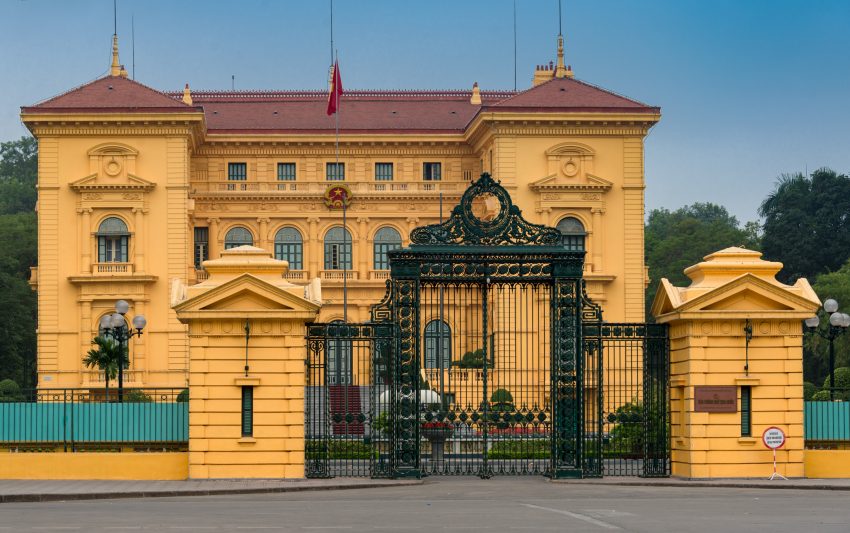
The Presidential Palace of Vietnam is one of the top sights in Hanoi, an elegant mustard-yellow landmark that stands at the heart of the capital's political district. Although the palace itself is not open to visitors, wandering its leafy grounds offers a fascinating blend of colonial architecture, modern Vietnamese history, and quiet garden paths that feel surprisingly serene for such an important national site. With its Renaissance-style design and stately presence, it remains a great place to visit on a walking tour of Hanoi's Ba Dinh District.
Most visitors pair a stop here with the nearby Ho Chi Minh Mausoleum and Museum, making it one of the must-see places in Hanoi for travelers interested in the country's turbulent twentieth century. The palace grounds offer a surprisingly personal connection to Ho Chi Minh himself, who refused to live in the lavish residence and instead built a humble stilt house on the property. Today, those choices add layers of meaning to an already compelling place.
Table of Contents
- History and Significance of Presidential Palace of Vietnam
- Things to See and Do in Presidential Palace of Vietnam
- How to Get to Presidential Palace of Vietnam
- Practical Tips on Visiting Presidential Palace of Vietnam
- Where to Stay close to Presidential Palace of Vietnam
- Add a Is Presidential Palace of Vietnam Worth Visiting?
- FAQs for Visiting Presidential Palace of Vietnam
- Nearby Attractions to Presidential Palace of Vietnam
History and Significance of Presidential Palace of Vietnam
The Presidential Palace of Vietnam was constructed between 1900 and 1906 as the Palace of the Governor-General of Indochina, designed by French architect Charles Lichtenfelder. Its Italian Renaissance elements, including a grand piano nobile, classical columns, and refined pediments, reflect the French ambition to demonstrate cultural authority in their colonial capital. Aside from the mango trees scattered around the gardens, little about the building originally indicated its Southeast Asian setting.
After Vietnam achieved independence in 1954, the palace found a new role in the nation’s evolving identity. Ho Chi Minh refused to live in the opulent structure, preferring instead to build a traditional Vietnamese stilt house nearby. Although he did not use the palace as a residence, he continued to host important diplomatic guests within its walls, weaving the site into the narrative of Vietnam’s post-colonial leadership.
The grounds were officially designated the Presidential Palace Historical Site in 1975. More recently, the palace gained global attention on February 27, 2019, when it served as the venue for the second official meeting between Donald Trump and Kim Jong-un. Today, it remains an active government site, hosting official functions while the surrounding estate remains open to curious visitors.
Things to See and Do in Presidential Palace of Vietnam
Although entry to the palace building is not permitted, the grounds offer a rich combination of architecture, historical reflection, and peaceful greenery. Many travelers enjoy walking the perimeter to admire its bright yellow façade, wrought-iron gates, and classically inspired design details.
One of the highlights is exploring Ho Chi Minh's stilt house, built to reflect simplicity and humility in contrast to the grandeur of the palace. Nearby, the carp pond adds a tranquil touch, creating a reflective atmosphere that feels detached from the energy of central Hanoi. These quiet corners provide a rare glimpse into Ho Chi Minh's personal living preferences and political symbolism.
The spacious gardens are another draw, offering shady paths lined with tropical trees and well-kept lawns. For many visitors, simply strolling the grounds offers a sense of calm and an appreciation for the layers of colonial and modern history that converge on this site.
How to Get to Presidential Palace of Vietnam
Most international visitors arrive through Noi Bai International Airport, which sits around 25 km from central Hanoi. For the best deals and a seamless booking experience, check out these flights to Hanoi on Booking.com.
Hanoi Railway Station provides domestic connections from cities such as Hue, Da Nang, and Ho Chi Minh City, making it easy to incorporate the palace into a wider journey through Vietnam's rail network. Train schedules and bookings can be found on Omio.
Reaching the palace by car is simple, and taxis or ride-hailing services can drop you at the main gate. Driving yourself is also straightforward, with major roads clearly signposted toward the Ba Dinh district.
Practical Tips on Visiting Presidential Palace of Vietnam
- Suggested tips: Plan your visit early in the morning to enjoy cooler temperatures and quieter paths around the grounds.
- Best time to visit: October to April offers cooler, drier weather ideal for exploring Hanoi’s outdoor sites.
- How long to spend: Most visitors spend 45 minutes to 1.5 hours exploring the gardens and stilt house.
- Accessibility: Paths are flat and generally accessible, though some areas around the pond may be uneven.
- Facilities: Basic facilities and small shops are located near the visitor entrance.
- Photography tip: Capture the palace façade from outside the gates for the best angle and morning light.
- Guided tours: Local guides often include the palace on city walking or motorbike tours for added historical context.
- Nearby food options: Cafés and small restaurants can be found around Ba Dinh Square and along nearby streets.
Where to Stay close to Presidential Palace of Vietnam
Hanoi offers excellent accommodation close to the Presidential Palace, with Ba Dinh and the Old Quarter providing quick access to major landmarks. A comfortable option nearby is Super Hotel Candle, known for its spacious rooms and wellness facilities. For those wanting a boutique experience within reach of key political and historical sites, Le Jardin Hotel Haute Couture offers refined interiors and a peaceful atmosphere.
Add a Is Presidential Palace of Vietnam Worth Visiting?
Yes, the Presidential Palace of Vietnam is worth visiting, especially for travelers interested in architecture, political history, and Ho Chi Minh's legacy. While the interior remains off limits, the gardens, stilt house, and overall atmosphere create a rewarding stop, especially when combined with nearby Ba Dinh landmarks.
What Other Travellers Say...

Presidential Palace, set at 2 Hùng Vương in Ba Đình, Hanoi, is a grand early-20th-century French Colonial building that now houses the offices and residence of Vietnam's president and vice president; while the palace itself is not open to the public, visitors can admire its striking yellow façade, elegant architecture and well-kept gardens from outside and in the grounds, enjoy nearby sights such as Ho Chi Minh's Stilt House and House No. 6 (with a few rooms open), and note that access is restricted so photography and close approaches are limited depending on where you stand.


FAQs for Visiting Presidential Palace of Vietnam
Nearby Attractions to Presidential Palace of Vietnam
- Ho Chi Minh Mausoleum: A solemn national monument where visitors can pay respects to Vietnam's revolutionary leader.
- One Pillar Pagoda: A small but iconic temple set on a single stone pillar surrounded by a peaceful lotus pond.
- Ho Chi Minh Museum: A modern museum exploring the life, legacy, and symbolism of Ho Chi Minh.
- Ba Dinh Square: The historic square where Ho Chi Minh declared Vietnam's independence in 1945.
- Temple of Literature: Vietnam's first national university and a serene example of traditional Vietnamese architecture.
The Presidential Palace appears in our Complete Guide to Visiting Hanoi!

Moira & Andy
Hey! We're Moira & Andy. From hiking the Camino to trips around Europe in Bert our campervan — we've been traveling together since retirement in 2020!
This website uses affiliate links which may earn a commission at no additional cost to you!
Planning Your Visit
Nearby Attractions
- Ho Chi Minh's Stilt House (0.2) km
Historic Building - Ho Chi Minh’s Mausoleum (0.3) km
Mausoleum - Ba Dinh Square (0.3) km
Square - One Pillar Pagoda (0.4) km
Buddhist Temple - Ho Chi Minh Museum (0.5) km
Museum - Imperial Citadel of Thang Long (0.8) km
Castle - Tran Quoc Pagoda (1.0) km
Buddhist Temple - Vietnam National Museum of Fine Arts (1.0) km
Museum - Lenin Park (1.0) km
Park - Vietnam Military History Museum (1.0) km
Museum